AI Predictive Maintenance for Fleets: Reduce Downtime 45%
By Alex Jordan on March 31, 2026
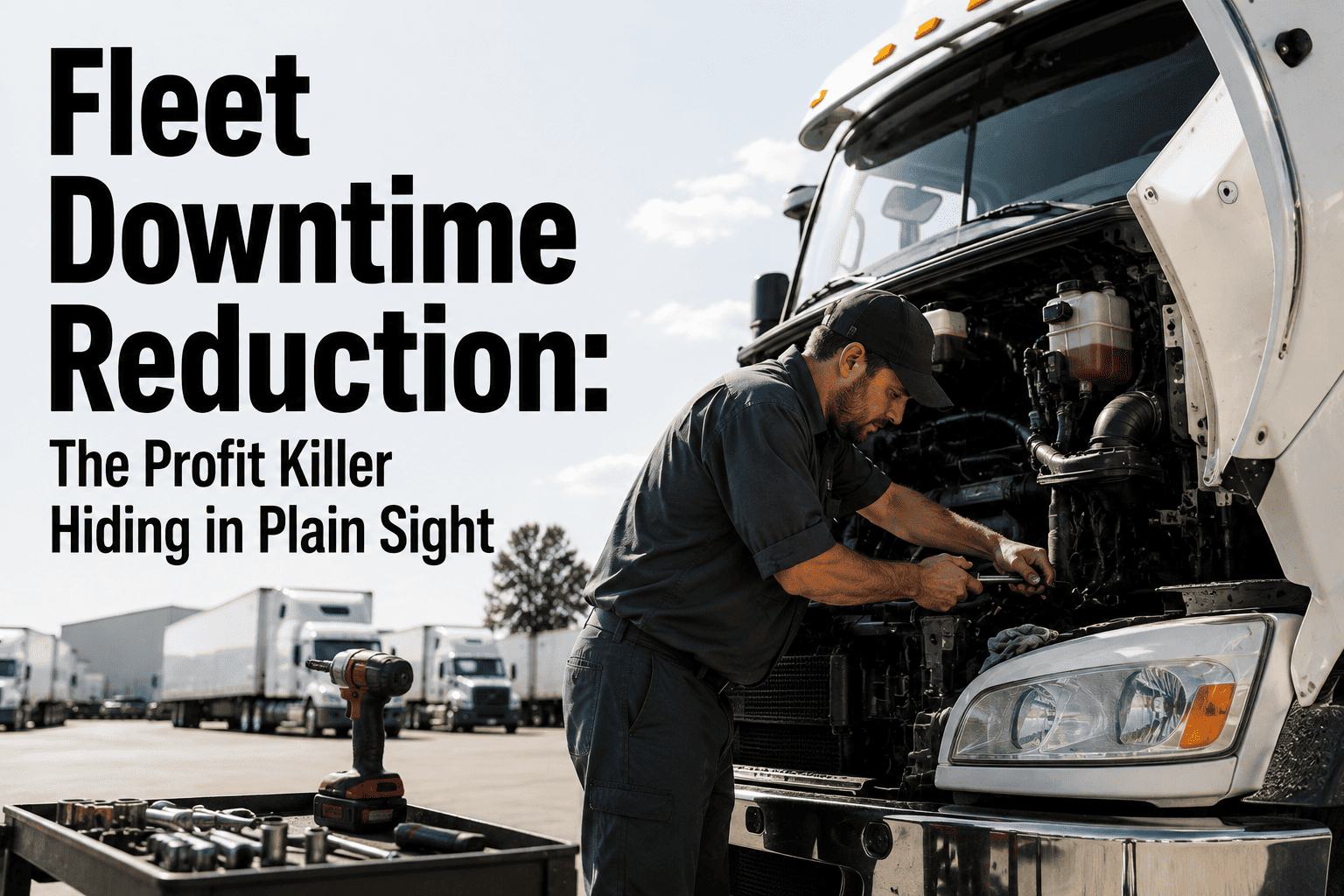
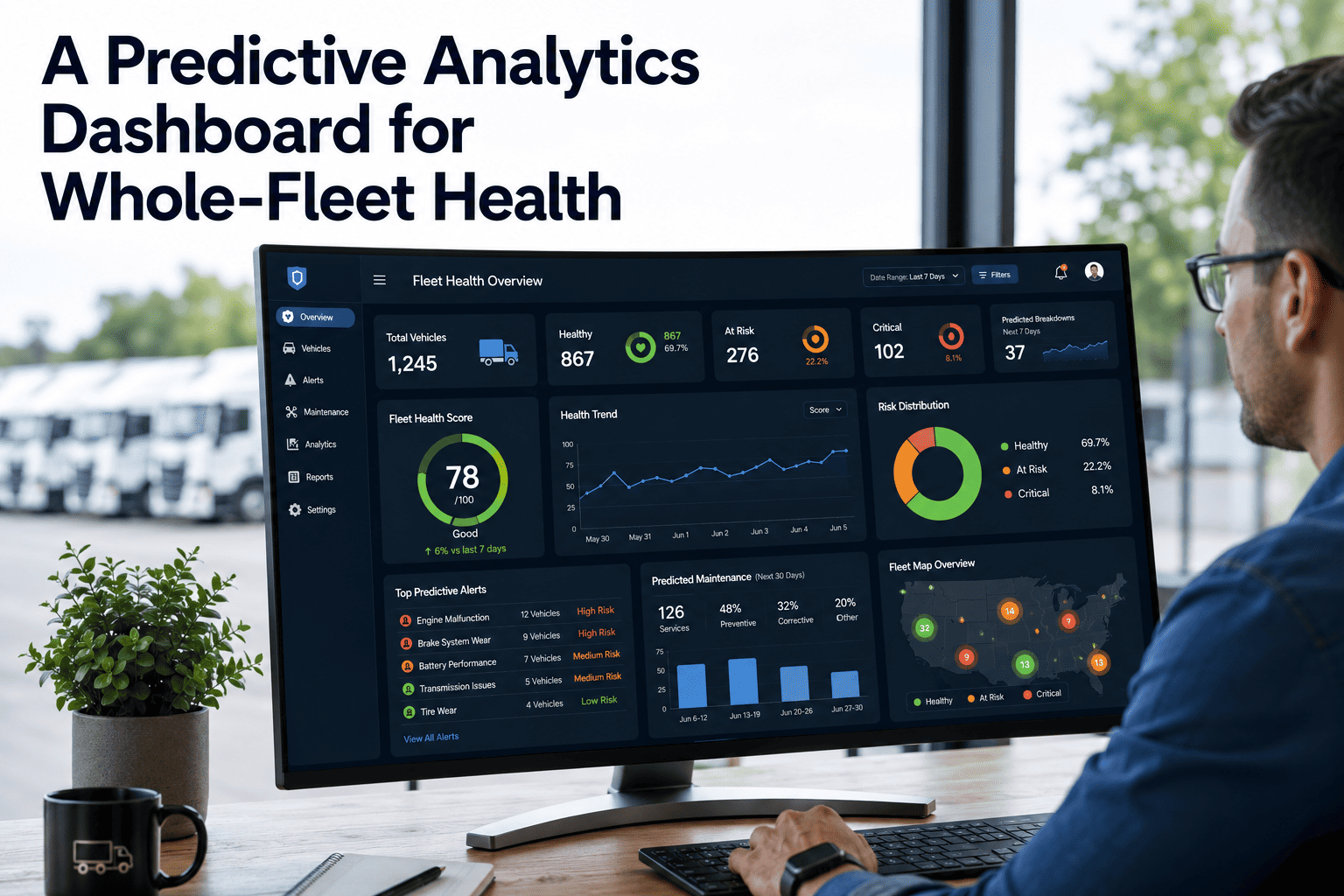
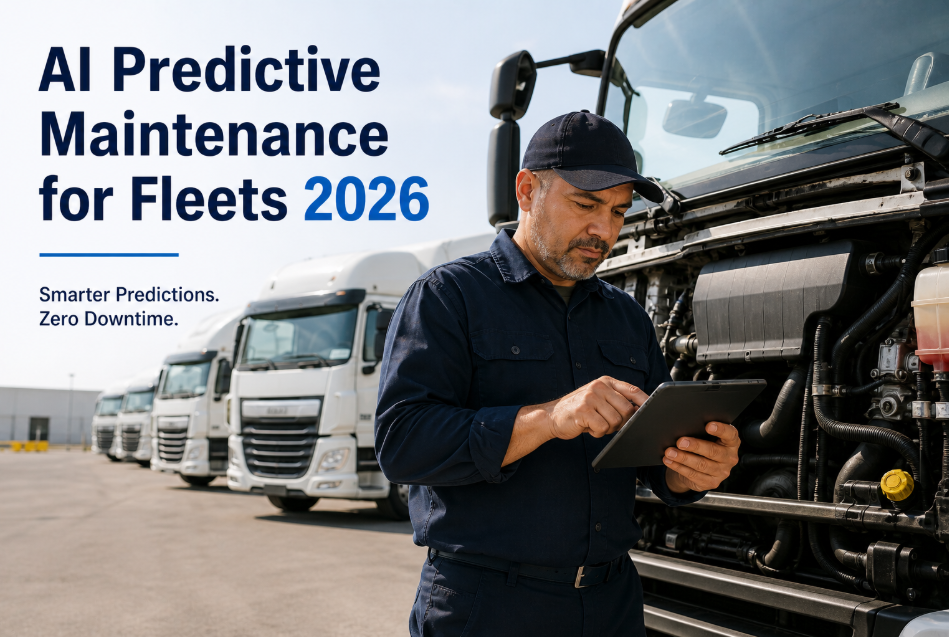
Fleet maintenance in 2026 is no longer a question of whether to use AI — it is a question of how fast your operation can adopt it before competitors do. AI-powered predictive maintenance uses sensor data, machine learning models, and real-time vehicle diagnostics to identify failures before they happen, reducing unplanned downtime by 35–45% and cutting emergency repair costs by up to 60%. Unlike traditional preventive maintenance that services vehicles on fixed schedules, predictive systems analyse actual condition data — vibration signatures, oil degradation, temperature anomalies, exhaust patterns — and intervene only when intervention is genuinely required. For fleets operating across the USA, UK, Canada, Germany, Australia, and the UAE, the ROI case is not theoretical — it is measurable within the first 90 days of deployment.
AI PREDICTIVE MAINTENANCE · OXMAINT PLATFORM
Stop Scheduling Maintenance. Start Predicting It.
Oxmaint's AI platform monitors every asset in real time — detecting anomalies, predicting failures, and auto-generating work orders before a breakdown occurs. Deployed by fleets across 40+ countries.
The 5-Layer Architecture of AI Predictive Maintenance
Every effective AI predictive maintenance system is built on five interconnected layers. Weakness in any single layer degrades the accuracy of the entire system. Understanding this stack is essential before selecting a vendor — and it is exactly how Oxmaint structures its fleet AI platform from sensor to action.
Layer 5
CMMS Workflow Integration & Action Management
Converts AI outputs into work orders, assigns priority, routes to technician, tracks completion, and feeds outcomes back as training data.
Act
Layer 4
AI Analytics & Anomaly Detection Platform
ML models trained on asset baselines identify deviation patterns, predict remaining useful life, and generate prioritised alerts with confidence scores.
Predict
Layer 3
Edge Computing & Data Preprocessing
Local nodes filter noise, apply FFT to vibration data, compute statistical features, and transmit processed data — enabling real-time alerting without cloud latency.
Process
Layer 2
Connectivity & Data Transmission Infrastructure
LoRaWAN, WiFi 6, 4G/5G, Bluetooth 5 protocols reliably transmit sensor data from fleet assets to edge or cloud — with security and redundancy.
Connect
Layer 1
Sensing & Data Acquisition Hardware
Vibration, temperature, current, ultrasonic, and oil quality sensors capture physical equipment condition at the required sampling frequency and accuracy.
Sense
Technologies That Power AI Predictive Maintenance
Six technologies have converged to make fleet AI predictive maintenance practical — not just theoretical. Understanding them helps fleet managers ask the right questions when evaluating platforms. Oxmaint supports all six out of the box, with pre-built connectors for SAP, OBD-II, and PLC/SCADA systems.
AI Camera Vision
Computer vision detects tyre wear, fluid leaks, brake thickness, and structural damage from camera feeds automatically during pre-trip walkaround inspections — no physical contact required.
AI Digital Twin
A virtual replica of each vehicle updated in real time. Simulates failure scenarios and stress-tests maintenance decisions before implementation — reducing trial-and-error in the physical world.
OBD-II & Telematics
On-board diagnostics stream fault codes, engine load, fuel trim, DPF status, and coolant data directly into the AI model — eliminating manual data entry from condition monitoring entirely.
PLC & SCADA Integration
Programmable Logic Controllers feed process variables — temperature, pressure, cycle counts — directly into the predictive model for depot assets not covered by OBD-II diagnostics.
SAP & ERP Integration
Bi-directional integration with SAP PM, Oracle, and ERP systems ensures AI-generated work orders flow into existing procurement and scheduling workflows without duplicate data entry.
Preventive + Predictive Hybrid
Best fleets layer PM and AI together. Fixed-interval services continue for compliance; AI adds condition-triggered interventions between cycles, catching what time-based schedules miss entirely.
AI Predictive vs Traditional Maintenance — Performance Comparison
The performance gap between AI-driven and traditional schedule-based maintenance is now well-documented across large fleet operations in North America, Europe, and the GCC. The comparison below uses published fleet operator data from 2023–2025 deployments — not vendor claims.
Head-to-Head: AI Predictive vs Schedule-Based Maintenance
What Oxmaint AI Predictive Maintenance Does — In Plain Terms
Oxmaint's AI platform is built around one operational promise: every sensor reading that matters becomes a work order before the vehicle fails. Here is what that looks like in daily fleet operations — and how each feature maps to your current pain points.
Asset Energy Baseline Setting
FOUNDATION STEP
Establish a consumption baseline at commissioning. Any PM revealing 5–10% deviation auto-triggers an efficiency investigation, feeding directly into Scope 2 carbon calculations.
Run Hours & Consumption Logging
DATA GENERATION
Work orders include asset run-hour readings at start and end of each maintenance period, generating estimated energy use per asset accurate to within 5–8%.
Anomaly & Fault Detection Alerts
INTERVENTION TRIGGER
When sensor readings deviate from trained baseline by a configurable threshold, Oxmaint raises a prioritised alert with confidence score and recommended action before a fault code is logged.
Carbon Intensity by Asset & Route
ESG REPORTING
Using asset-level energy data and grid carbon intensity factors, Oxmaint calculates carbon intensity per route and vehicle category, identifying which maintenance projects deliver the highest carbon reduction.
Predictive Failure Forecasting
TARGET SETTING
Historical condition trends combined with planned maintenance schedules generate a forward failure forecast for the next 12–36 months, enabling evidence-based capital planning.
Audit-Ready Evidence Chain
COMPLIANCE
Every sensor reading, alert, and maintenance intervention is stored with timestamp, technician ID, and asset reference — satisfying FMCSA, ISO 55001, and ESG assurance requirements.
"We reduced unplanned breakdowns by 41% in the first quarter after deploying Oxmaint's predictive monitoring on our 120-truck fleet. One avoided engine replacement paid for the platform for two years."
The Financial Case: Where AI Predictive Maintenance Pays Back
For fleets transitioning from reactive or calendar-based maintenance to AI-driven condition monitoring, the payback period is typically 6–18 months — and the savings compound annually as the model improves. Here are the five financial levers that drive the return, with typical values from 50–200 vehicle deployments.
5 Financial Levers of AI Predictive Maintenance ROI
Typical values — 50 to 200 vehicle fleets, first-year deployment
Avoided Engine Failures
$20,000–$40,000 per event avoided
AI detects bearing wear and oil degradation 14–21 days before catastrophic failure — converting a $40,000 engine replacement into a $600 bearing swap.
Reduced Unplanned Downtime
$1,500–$2,500/day per idle truck recovered
Fleets averaging 4–8 unplanned downtime days per truck per year reduce that to under 1 day — recovering $45,000–$75,000 per year on a 10-truck fleet.
Eliminated Unnecessary PM Services
25–35% reduction in total PM service cost
Condition-triggered maintenance replaces fixed-interval services that occur before wear justifies them — directly reducing parts and labour spend without reducing safety.
Insurance Premium Reduction
8–15% reduction with documented AI programme
Commercial fleet insurers in the USA, UK, and Germany now offer premium reductions for fleets with certified AI maintenance programmes and digital maintenance records.
Asset Life Extension
20–30% longer engine and drivetrain life
Properly maintained engines run 750,000–1,000,000 miles vs. 350,000–400,000 for neglected units. On a 50-truck fleet, this defers $2M+ in capital replacement costs over 5 years.
Oxmaint AI Platform — Key Performance Benchmarks
Published fleet operator results — 2024–2025 deployments
Downtime
Reduction
Emergency
Cost Cut
Longer
Component Life
Early Fault
Detection
Fewer
Unnecessary PMs
Fuel Efficiency
Gain
Frequently Asked Questions — AI Predictive Maintenance for Fleets
What is AI predictive maintenance and how is it different from preventive maintenance?
Preventive maintenance services vehicles on a fixed schedule. AI predictive maintenance monitors actual condition data and intervenes only when sensor readings indicate a developing fault — reducing unnecessary services and catching failures that fixed schedules miss entirely.
How quickly can Oxmaint integrate with our existing SAP or ERP system?
Standard SAP PM and Oracle integrations are pre-built and deploy in 2–4 weeks. Oxmaint's onboarding team handles all configuration — no in-house developer required for standard fleet deployments.
Does AI predictive maintenance work on older fleet vehicles without modern telematics?
Yes. Retrofit IoT sensors can be fitted to any vehicle regardless of age. OBD-II adapters cover vehicles from 1996 onwards, and camera vision systems add a visual inspection layer without any vehicle modification.
How long does it take to see measurable ROI from an AI maintenance platform?
Most fleets see measurable ROI within 60–90 days. Full payback on the platform investment typically occurs within 6–18 months depending on fleet size and current downtime levels.
Does AI predictive maintenance satisfy DOT and FMCSA documentation requirements?
Yes. Oxmaint stores every sensor reading, alert, and maintenance action with timestamps and technician IDs — meeting 49 CFR 396.3 requirements. Records are accessible at roadside via mobile app in under 60 seconds.
Is Oxmaint suitable for fleets outside the USA?
Oxmaint is deployed across fleets in 40+ countries including the UK, Germany, Canada, Australia, and UAE. The platform adapts to local compliance frameworks — DVSA, StVO, Transport Canada, and UAE RTA standards — through configurable rulesets.
OXMAINT AI PLATFORM · FREE TRIAL
Ready to Predict Failures Instead of Reacting to Them?