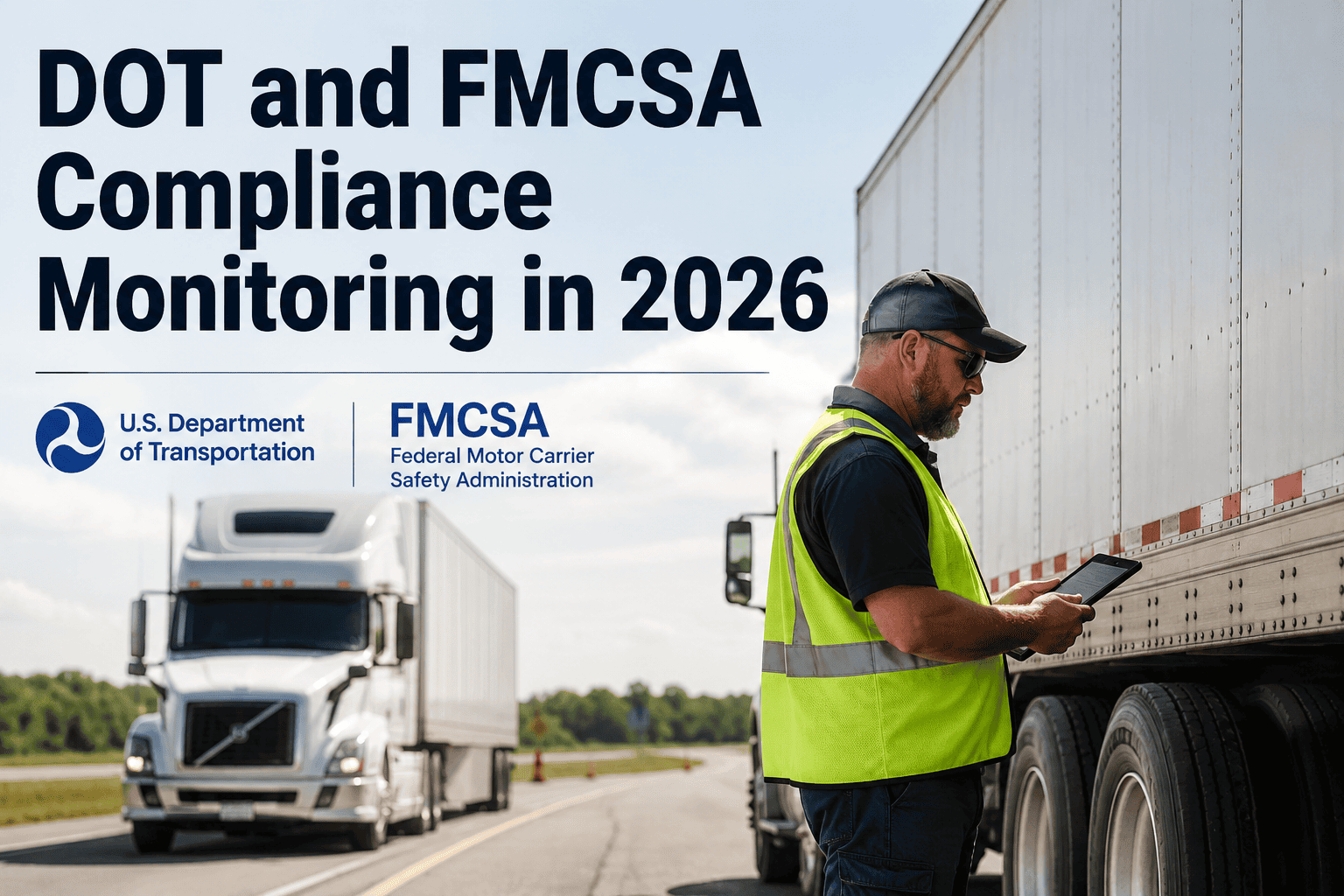
Fleet compliance in 2026 does not look like it did even eighteen months ago. FMCSA has consolidated over 950 violation codes into roughly 116 groups, moved to a two-tier severity model, tightened the scoring window to 12 months of recent activity, and formally authorized electronic DVIRs through the March 23, 2026 rule. Off-site desktop audits are replacing site visits, and carrier interventions are increasingly triggered by data trends rather than complaints. Fleets that still run compliance on spreadsheets, clipboards, and calendar reminders are operating a 2015 program inside a 2026 enforcement environment — and the math no longer works. This guide breaks down what changed, what auditors now expect, and how continuous digital monitoring inside a platform like OxMaint keeps every vehicle, driver file, and inspection record audit-ready every single day.
DOT and FMCSA Compliance Monitoring in 2026
The definitive playbook for the 2026 SMS overhaul, electronic DVIR mandate, remote audit era, and the continuous-monitoring stack that keeps fleets audit-ready 365 days a year.
What Fundamentally Changed in 2026
FMCSA moved from a documentation-based model to a data-first compliance model. The six shifts below are the ones every safety director, ops leader, and maintenance manager needs to internalize before their next Level 1 or desktop audit.
The Safety Measurement System was rebuilt on December 1, 2025 with consolidated violation categories, a two-tier severity model, and a proportionate percentile system. Carriers who checked scores in November were shocked in December — some percentiles moved 10 to 20 points overnight.
FMCSA-2025-0115, effective March 23, 2026, removed every remaining legal ambiguity around paperless inspection reports. Digital DVIRs with timestamps, GPS stamps, driver signatures, and repair verification are fully compliant — paper is now the high-risk option.
Violations in the past 6 months carry a 3x weight, 6–12 months a 2x weight, older violations a 1x weight. The old 24-month window still exists on paper, but 2026 scoring is dominated by what happened this year — for better or worse.
FMCSA has shifted heavily toward remote audits. Carriers upload driver qualification files, DVIRs, maintenance records, and ELD data through secure portals within 48 to 72 hours. Paper filing cabinets that could once buy a week are now a liability.
Under the new model, carrier interventions are increasingly triggered by data trends, not just inspections or complaints. CSA scores incorporate real-time behavioral indicators, so continuous compliance visibility replaces reactive corrections as the baseline standard.
Rules effective February 2026 require closed-loop, verifiable mechanic signatures on defect repairs. Roadside officers now expect a Digital Audit Mode — a clean locked screen showing 90-day history. Fumbling a binder often escalates a Level 2 into a Level 1.
Inside the New SMS Scoring Math
The 2026 SMS methodology stabilized percentile swings and simplified severity, but it also made recent violations hit harder and faster. Here is what actually drives the number auditors, insurers, and brokers see when they pull your file.
The Six BASIC Categories and Their 2026 Intervention Thresholds
Each BASIC has its own intervention threshold — the percentile at which FMCSA flags the carrier for potential enforcement action. Cross a threshold and you become a priority target for investigation, insurance surcharges, and shipper de-listing.
Speeding, reckless driving, lane discipline, seat belt use, and improper mobile device use captured from roadside inspections.
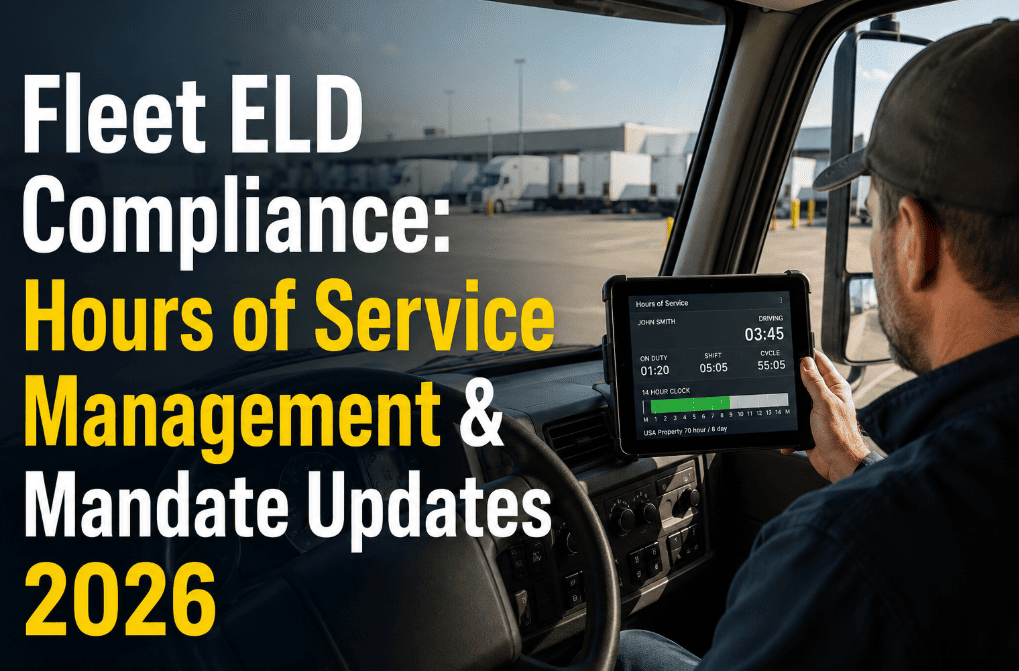
Log falsification, driving beyond limits, and ELD violations. Now flagged automatically when on-duty and drive-start timestamps drift.
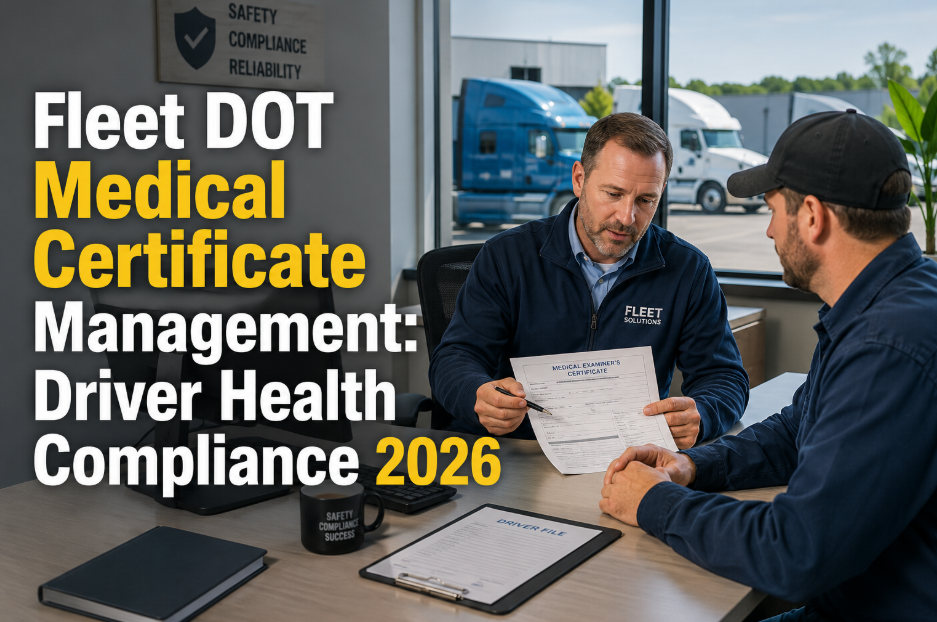
Medical certification status, CDL validity, English proficiency, and DQF completeness. Tighter thresholds increased in 2026 rulemaking.
Pre-employment testing, random testing, Clearinghouse compliance, and prohibited-status enforcement. Phase II is actively downgrading CDLs.
Now split — driver-observed defects and mechanical failures are scored separately, making eDVIR quality a direct driver of this BASIC.
Preventable and reportable crashes weighted by severity. Preventability determination through the DataQs CPDP process is now score-critical.
Stop Reacting to Violations — Start Preventing Them in Real Time
OxMaint gives fleet managers a single monitoring plane for DVIRs, driver qualifications, maintenance records, and inspection history — the exact stack the 2026 FMCSA data-first audit model expects you to run.
Reactive Monitoring vs. Continuous Digital Monitoring
The two operating models below produce very different outcomes when the auditor requests records or when a Tier 2 violation lands mid-quarter. Fleets managing more than a handful of vehicles cannot afford to run the left column.
- DVIR defects discovered days after the trip — repair certifications lag
- Medical card and CDL expirations found during audit, not before
- SMS score checked quarterly at best, usually after a violation lands
- Records scattered across email, drives, and locked filing cabinets
- Off-site audit uploads assembled manually over 48 stressful hours
- Vehicle Maintenance BASIC drifts up without any early warning system
- Mobile eDVIR captures defects in real time with photo and GPS evidence
- Driver file expirations trigger alerts 60, 30, and 7 days before the date
- Live compliance dashboard shows BASIC status and open findings hourly
- Every record indexed to the vehicle, driver, and inspection it belongs to
- One-click compliance export packages for remote audit uploads
- Predictive maintenance flags catch failures before they become citations
The Six Pillars of a 2026 Compliance Monitoring Stack
A modern compliance stack is not one tool — it is six coordinated capabilities running on the same platform. Miss one and the entire audit posture becomes fragile.
Mobile pre-trip and post-trip inspections with mandatory photo evidence, biometric signature, and offline sync for remote routes.
Every defect auto-generates a work order, blocks dispatch until closed, and captures the mechanic signature FMCSA now requires.
Digital DQF with medical card, CDL, MVR, employment history, and Clearinghouse status — all timestamped and remote-audit ready.
Auto-scheduling by mileage, engine hours, and calendar date — with 14-month retention that satisfies the 49 CFR 396 Appendix A rule.
A single view of every BASIC category with intervention-threshold proximity, recent violation trend, and open corrective actions.
Complete compliance package export for any date range, any vehicle, any driver — ready to upload to FMCSA secure portal in minutes.
What OxMaint Monitors Every Day for You
This is the operational checklist that runs continuously in the background — the difference between finding a compliance gap on your dashboard versus finding it in an FMCSA violation letter.
Rollout Roadmap — From Paper to Continuous Monitoring
Most fleets we work with complete the transition in 2 to 4 weeks. The sequencing below shows how the switch happens without disrupting daily operations or leaving compliance gaps mid-flight.
Vehicle roster, driver files, and existing maintenance history are imported and mapped to OxMaint records. Paper archives are scanned and attached so the compliance timeline carries forward with zero gaps.
Drivers download the app, complete a short training, and start submitting pre-trip and post-trip inspections digitally. Photo capture and biometric signature are enabled from day one.
Preventive maintenance intervals are set per vehicle class using mileage, engine hours, and calendar rules. Auto-scheduling starts running, and periodic inspection due dates propagate to the maintenance calendar.
The live BASIC status board is activated for the safety director and ops leaders. Automated alerts for medical card expirations, DQF gaps, and open defects begin routing to responsible owners.
A mock desktop audit is run using the one-click export package. Gaps are closed, retention policies are validated against the 3-month, 14-month, and multi-year rules, and the fleet is officially on continuous-monitoring footing.
Frequently Asked Questions
What are the biggest FMCSA changes fleet managers must act on in 2026?
Are paper DVIRs still legal after the March 2026 rule?
How does the new SMS scoring window affect my CSA score improvement plan?
What intervention thresholds should trigger immediate corrective action?
How long does it take to move a mid-size fleet onto a continuous monitoring platform?
Make 2026 the Year Your Fleet Stops Fearing the Audit Letter
OxMaint runs the continuous compliance monitoring stack that the 2026 FMCSA data-first enforcement model expects — eDVIR capture, DQF vault, live BASIC dashboard, and one-click audit exports on a single platform built for fleets that cannot afford surprises.




.png)