Every part on a fleet vehicle wears out on its own timeline — a brake pad, a battery, a turbocharger, and a wheel bearing each decline at a different pace shaped by load, heat, vibration, and duty cycle. Calendar-based service intervals treat all of them the same way, pulling parts that still have months of usable life left while missing others that fail between scheduled visits. Remaining Useful Life, or RUL, replaces that guesswork with a prediction of how much operating life a specific component has left, built from how it is actually degrading rather than how old it is or how many miles it has covered. OxMaint fleet maintenance software turns that condition data into a replacement trigger you can schedule before failure and without throwing away good service life —
book a demo
to see RUL-based replacement scheduling running against your own fleet data.
Remaining Useful Life · Component Degradation Curve
Every Component Follows the Same Curve — Healthy, Degrading, Warning, Worn Out. RUL Tells You Exactly Where a Part Sits on That Curve Right Now.
Stage 1
Healthy Operation
Condition signal is stable and well inside normal range. No action needed — the component is delivering full expected life.
Stage 2
Measurable Degradation
Wear becomes detectable and trackable. This is where a degradation model starts projecting a replacement window.
Stage 3
Warning Threshold
The signal is approaching its failure limit. RUL is now a countdown measured in weeks or operating hours, not months.
Stage 4
Replace Now
The component has crossed its safe operating threshold. Continued use risks failure, secondary damage, or a roadside breakdown.
3–5x
higher average repair cost when a fleet component is left to run to failure instead of being replaced on a planned, predicted schedule
30–50%
more a repair typically costs when it happens as an unplanned emergency versus the same job scheduled during planned downtime
Up to 9 in 10
component-related failures that early condition-based detection can catch before they escalate into an unplanned breakdown
2 Ways
Fleets lose money on component replacement in exactly two directions, and both are avoidable with real RUL data. Replace too early on a fixed calendar or mileage interval, and a fleet discards parts that still had usable life — turning a maintenance budget into a straight cost with no safety benefit. Replace too late, waiting for a driver complaint or a roadside failure, and a small part failure often cascades into secondary damage to a much larger, far more expensive assembly, plus the downtime, towing, and missed-route cost that comes with an unplanned failure. RUL estimation is the model that sits between those two extremes — using measured condition data to schedule the replacement at the point where the component has given up nearly all of its useful life, and no more.
Time-Based vs Condition-Based Replacement
Calendar or Mileage Interval
The traditional preventive maintenance approach
Every component on a given vehicle type is replaced at the same fixed interval, regardless of actual wear or operating conditions
Parts running in mild conditions are pulled with significant remaining life still in them
Parts running in harsh conditions can still fail between two scheduled service visits
No visibility into which specific vehicle in the fleet is actually at risk this week
RUL-Based Replacement
Condition-based scheduling using OxMaint
Replacement timing is calculated from the component's own measured wear rate, not a generic calendar rule
A part that is wearing slowly is left in service, extending its full useful life
A part that is wearing fast is flagged early enough to schedule the swap during planned downtime
Every vehicle in the fleet gets its own live countdown, ranked by urgency, in one dashboard
OxMaint · Predictive Component Management
Stop Guessing When a Part Will Fail. Start Knowing How Much Life It Has Left.
OxMaint fleet maintenance management software connects condition data, service history, and degradation models into a single remaining useful life score for every tracked component across your fleet.
How a Component RUL Model Gets Built in OxMaint
01
Collect the Condition Signal
Every RUL model starts with a measurable signal specific to the component — brake pad thickness, battery state of health, oil viscosity, vibration amplitude on a bearing, or backpressure across a filter. OxMaint pulls this from telematics feeds, sensor integrations, and technician-entered measurements at every inspection and PM visit.
02
Build the Degradation Trend
A single reading only tells you where a part is today. OxMaint stores every measurement against the vehicle and component, so consecutive readings form a trend line — the actual rate at which that specific part, on that specific vehicle and route, is wearing down.
03
Project the Failure Threshold
Each component type carries a known safe-operating limit — a minimum pad thickness, a maximum vibration level, a minimum battery capacity. OxMaint projects the current wear trend forward against that threshold to estimate the remaining operating days, hours, or miles before the limit is reached.
04
Trigger the Replacement Work Order
When a component's projected RUL drops inside a configurable lead-time window, OxMaint automatically opens a work order, assigns it to the right technician, and reserves the part — so the replacement happens on a planned schedule instead of a roadside call.
Fleet Components OxMaint Tracks for Remaining Useful Life
| Component | Signal Tracked | Early Warning Sign | Typical RUL Window |
|---|---|---|---|
| Battery | State of health, cranking amps, voltage under load | Capacity fade below rated spec, slow crank on cold start | 4–8 weeks advance notice |
| Brake pads / linings | Measured pad and lining thickness by axle position | Thickness approaching FMCSA minimum spec | 2–3 weeks advance notice |
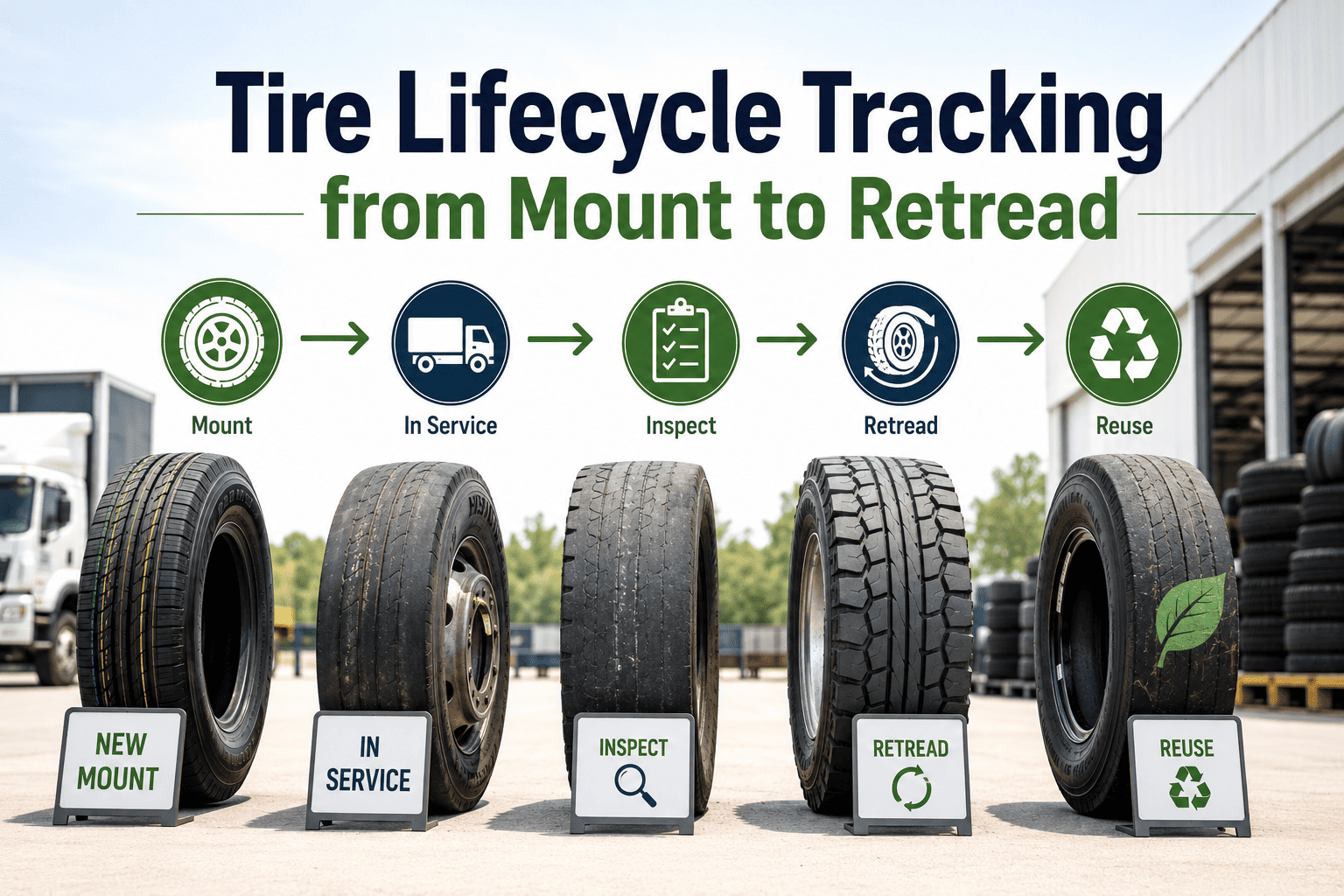
| Tires | Tread depth trend, pressure drift, wear pattern | Uneven wear or accelerated tread loss rate | 3–6 weeks advance notice |
| Engine oil | Viscosity, oxidation, and contamination trend | Additive depletion ahead of scheduled interval | 1–2 weeks advance notice |
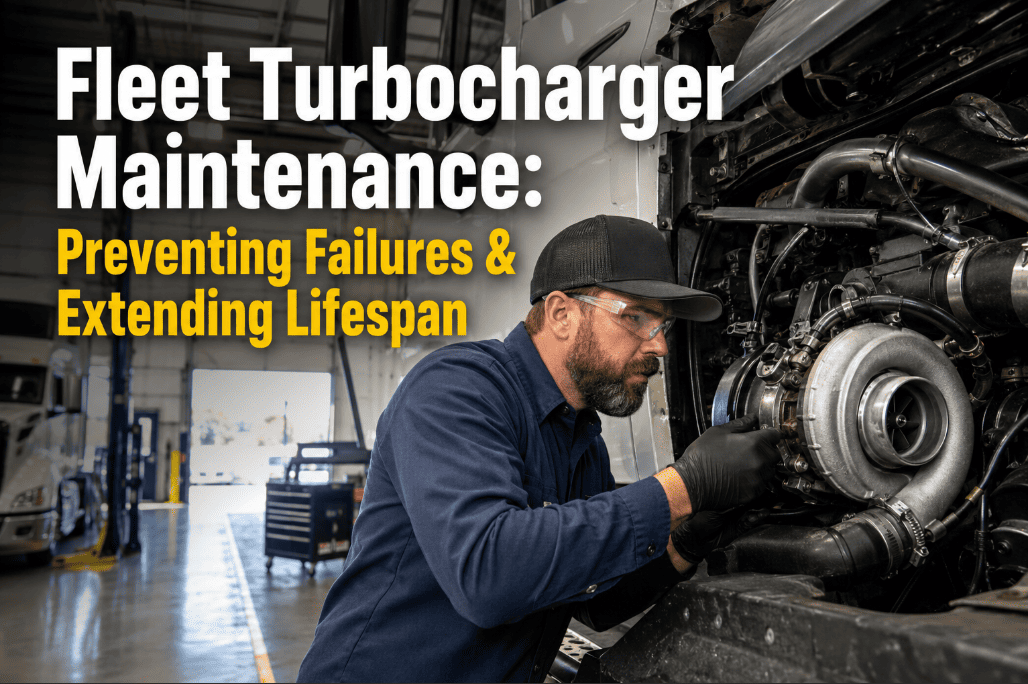
| Turbocharger | Boost lag, exhaust temperature, vibration signature | Rising vibration or slower boost response | 4–6 weeks advance notice |
| Wheel bearing | Vibration amplitude and running temperature | Gradual temperature or vibration rise under load | 2–4 weeks advance notice |
| Drive belt / alternator | Voltage ripple, belt tension, charging trend | Charging output drifting below expected range | 2–3 weeks advance notice |
What Happens When RUL Is Ignored
Costly
Secondary Damage From a Small Part
A worn bearing or a failed seal left unaddressed does not stay a small repair — it commonly takes out the far larger, far more expensive assembly around it, turning a routine part swap into a major component replacement.
Costly
Wasted Budget on Early Swaps
Replacing components on a blanket calendar rule pulls parts with real remaining life still in them, spending maintenance budget on service that added no measurable safety or reliability benefit.
Operational
Unplanned Downtime
A component that fails mid-route forces a route change, a driver reassignment, and often a tow — disruption that a predicted, scheduled replacement during planned downtime avoids entirely.
Operational
No Fleet-Wide Prioritization
Without a shared RUL score, fleet managers cannot tell which of a hundred vehicles is closest to a component failure this week — every vehicle looks equally urgent, or equally ignored.
Compliance
Thin Maintenance Records
A maintenance history built on checkmarks instead of measured values gives an auditor or an accident investigator little evidence that a failure was genuinely unforeseeable.
Compliance
Reactive Parts Ordering
Emergency part orders carry rush shipping and premium pricing — costs a predicted replacement window lets a fleet avoid by ordering on normal lead time.
OxMaint · Component Health Dashboard
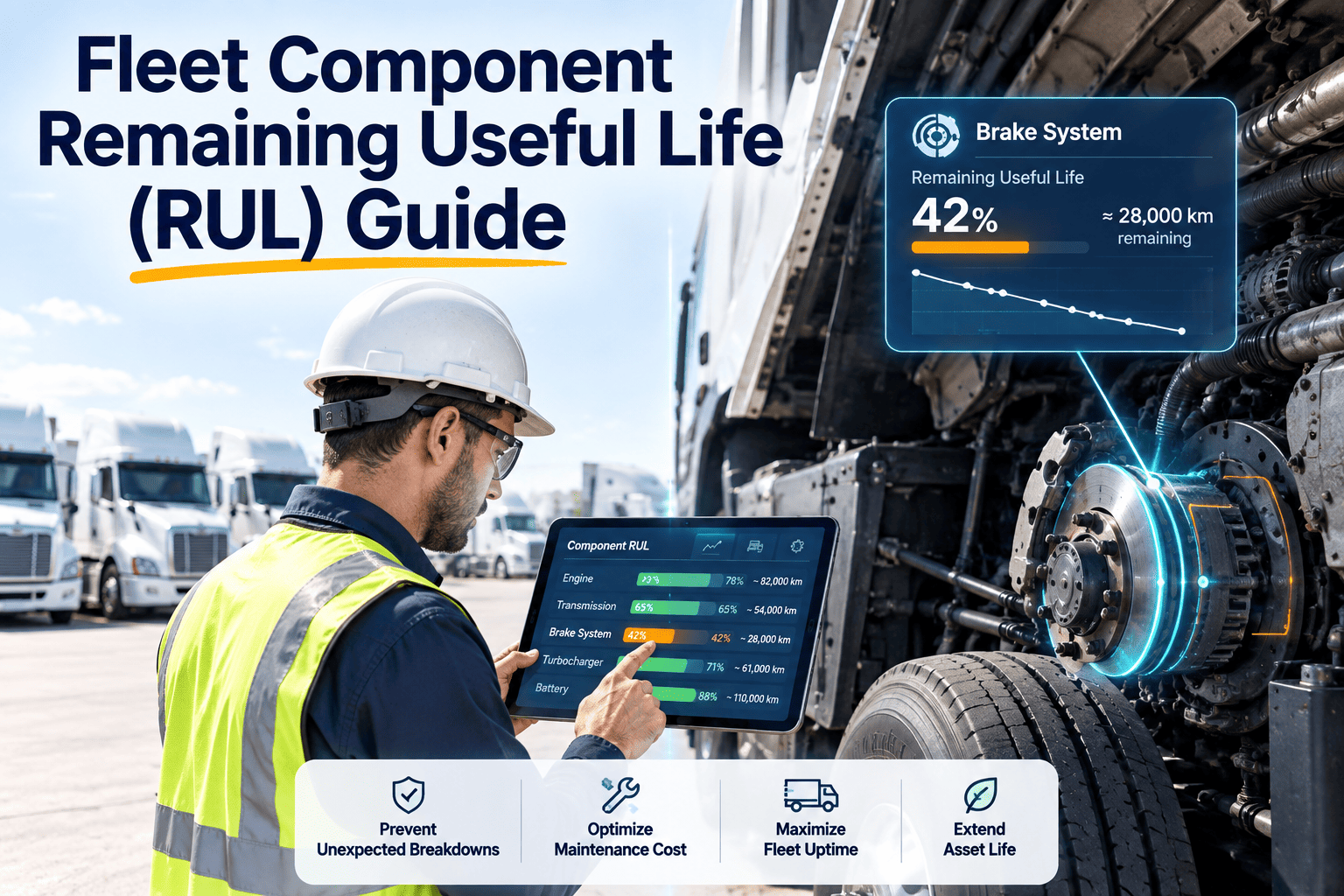
One Dashboard. Every Vehicle. Every Component's Remaining Life, Ranked by Urgency.
See exactly which vehicle needs a brake job this month and which one has a battery quietly approaching end of life — before either one turns into a roadside call.
Why Fleets Move to RUL-Based Component Management
3–5x
is roughly how much more an unplanned repair typically costs compared to the same job completed on a planned schedule
4–6 wks
of advance notice OxMaint's degradation models can provide for slower-wearing components like turbochargers and batteries
1 Score
per component, per vehicle — a single ranked remaining-life value replacing scattered inspection notes and generic PM checklists
0 Guesswork
replacement timing is driven by measured wear data instead of a fixed calendar rule applied the same way to every vehicle
We used to replace batteries and belts on a strict two-year rule across the whole fleet — some were fine at three years, others died at fourteen months on a rough route. Once we started tracking actual condition trends, we stopped throwing away good parts and stopped getting caught out by the ones wearing faster than average. The replacement schedule finally matches how the vehicle is actually being used.
— Maintenance Operations Lead, Regional Delivery Fleet · 60 Units
Frequently Asked Questions — Fleet Component Remaining Useful Life
What is Remaining Useful Life (RUL) for a fleet component?
RUL is an estimate of how much operating time, mileage, or working life a specific component has left before it reaches its failure threshold. It is calculated from measured condition data rather than a fixed age or mileage rule. Sign in to OxMaint to see live RUL scores for tracked components.
How is RUL different from a standard preventive maintenance schedule?
A preventive schedule replaces parts on a fixed calendar or mileage interval for every vehicle alike. RUL instead tracks how each individual component is actually degrading, so replacement timing reflects real wear rather than a generic assumption.
What data does OxMaint need to estimate a component's remaining useful life?
OxMaint uses measured inspection values, telematics and sensor feeds where available, and service history for each component. The more consistent the measurement history, the tighter the RUL projection becomes over time.
Can RUL tracking work without expensive new sensors on every vehicle?
Yes. OxMaint builds degradation trends from technician-entered measurements taken at routine inspections and PM visits, and layers in telematics or sensor data wherever it already exists — a fleet does not need to instrument every vehicle to start. Book a demo to see a setup matched to your current fleet data.
Which components benefit most from RUL-based scheduling?
Components with a gradual, measurable wear pattern benefit most — brakes, batteries, tires, filters, belts, bearings, and turbochargers. Parts that fail randomly rather than gradually are usually better suited to routine inspection than RUL projection.
Every Part on Your Fleet Is Somewhere on Its Degradation Curve Right Now. Know Exactly Where.
Condition data collection, degradation trending, threshold prediction, and automated replacement work orders — OxMaint turns remaining useful life from a research concept into a schedule your maintenance team follows every week.