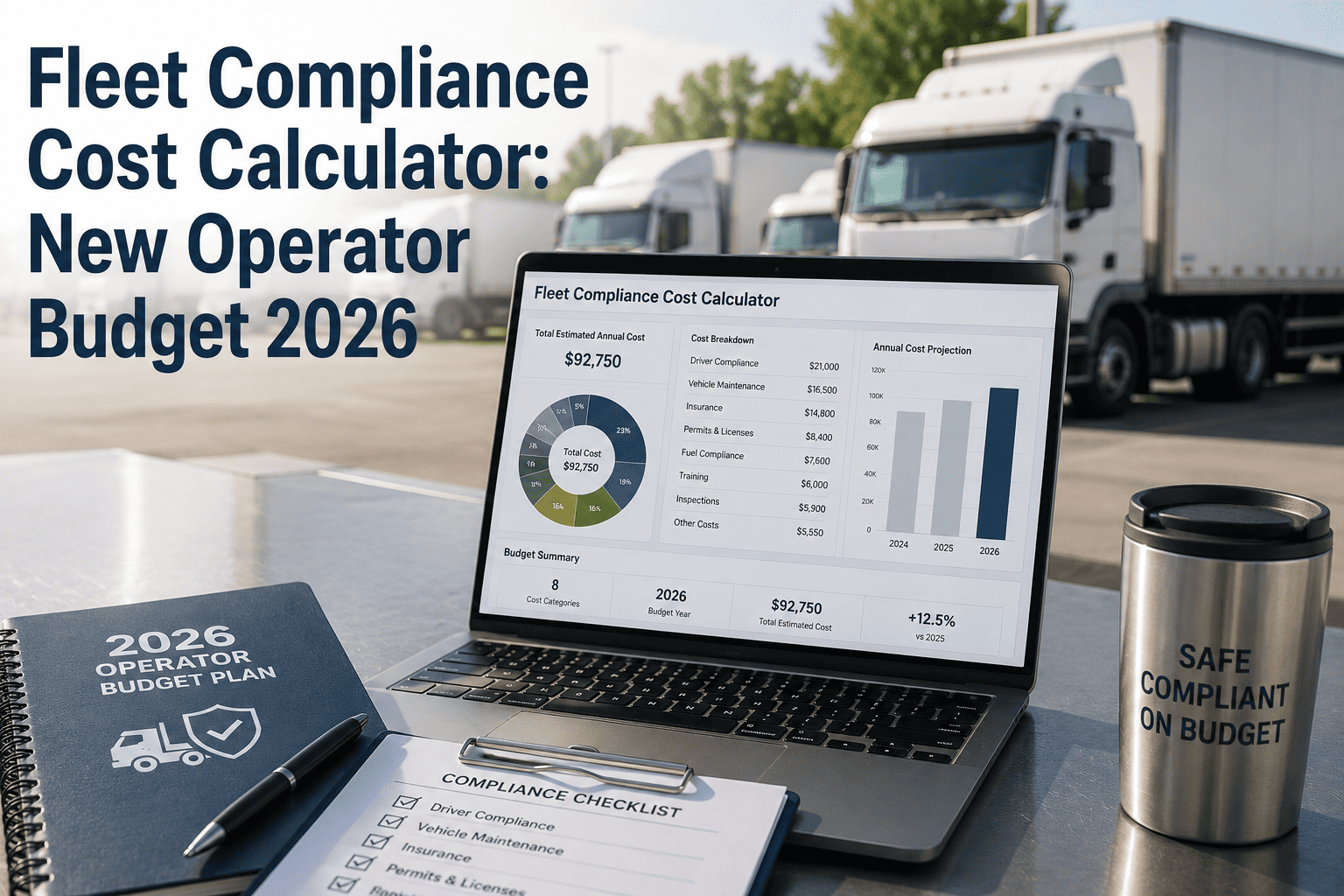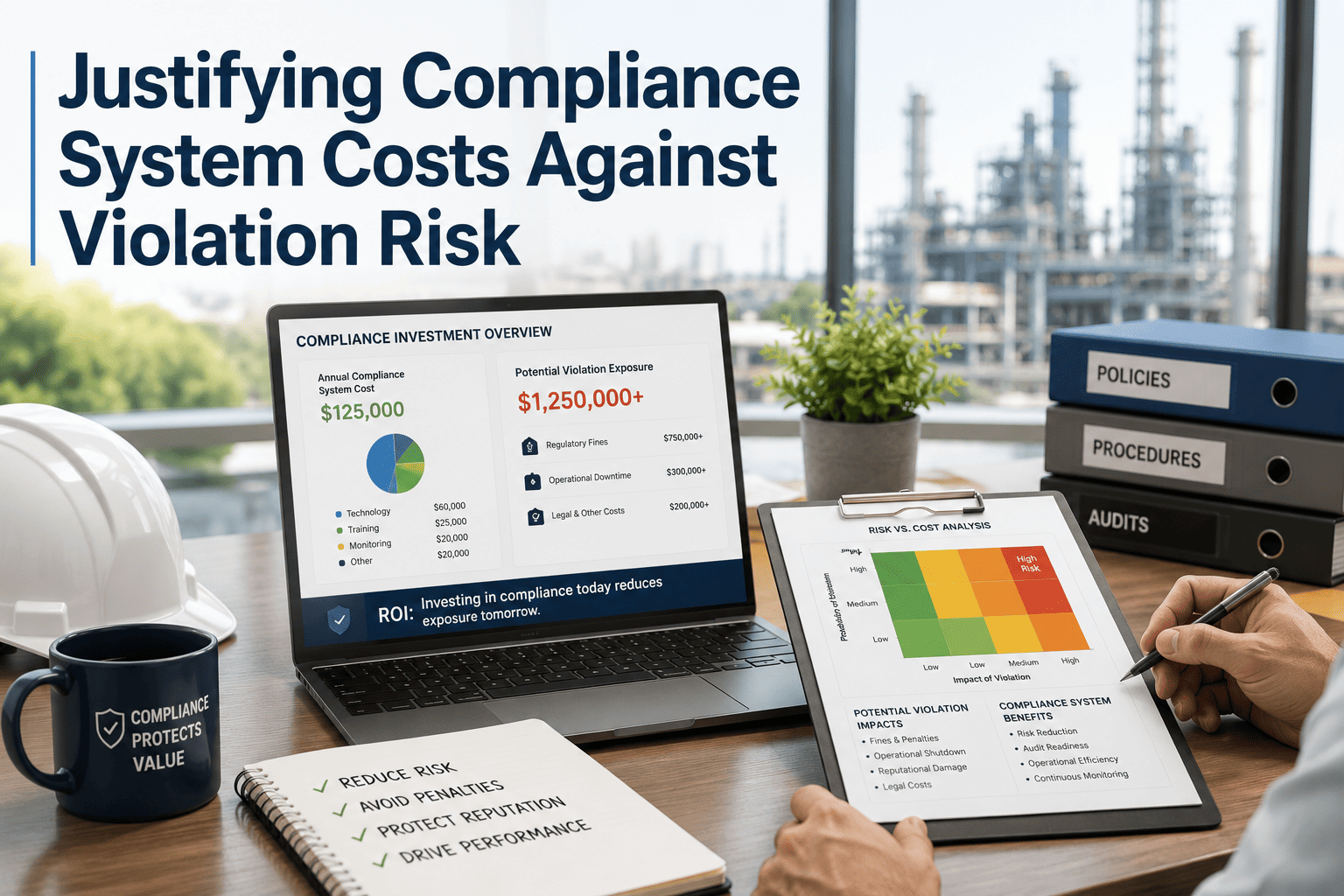
Justifying fleet compliance cost starts with understanding that the true ROI of a compliance investment extends far beyond avoided fines — it encompasses insurance savings, CSA-driven revenue protection, audit efficiency and litigation defense. For a 100-truck fleet, the aggregate value of these five pools often exceeds $500,000 annually, while a complete compliance infrastructure typically costs $50,000–$200,000 per year. When you model the full return math, the payback period shrinks to months, not years. This cost justification guide breaks down each value pool with defensible numbers so maintenance and reliability leaders can build an airtight business case and see exactly why a platform like OxMaint pays for itself — start your Start Free Trial to see the compliance ROI dashboard in action.
One prevented $16K penalty covers 12–18 months of platform cost
The real fleet compliance ROI isn't just avoided fines — it's insurance premiums, shipper contracts, audit labor and litigation exposure. Model all five value pools and the math speaks for itself.
Why fleet compliance cost is stated wrong — and how to fix it
Most fleet operators justify compliance infrastructure by counting avoided DOT fines. That number is real, but it's the smallest line item in the actual return. When safety directors frame the business case around fine avoidance alone, the investment looks optional — and gets cut. The proper fleet compliance ROI framework counts five distinct value pools, four of which dwarf the fine line. Here is what a 100-truck fleet is actually risking every month it operates without integrated compliance infrastructure.
A 100-truck regional carrier spending $42K/yr on compliance infrastructure avoided a single CSA intervention that would have triggered a targeted audit. The audit alone would have cost $28K in labor — but the shipper contract it protected was worth $3.2M in annual revenue. The platform paid for itself before the first quarterly review.
The five value pools of fleet compliance ROI
Each pool below represents a defensible, quantifiable line item. Add them together and the total annual value of compliance infrastructure for a 100-truck fleet ranges from $350K to over $1M — against a platform cost of $50K–$200K. The ratio is not marginal; it's a multiple.
Eliminate the fine run-rate
A fleet with historic compliance findings can calculate a predictable run-rate of fines being paid. Integrated compliance infrastructure eliminates most of it. For a 100-truck fleet, this ranges from $30,000–$100,000 annually in HOS violations, maintenance defects and paperwork citations.
Verified safety systems lower premiums
Insurers reward verified compliance and safety systems with 10–25% reductions in commercial auto premiums. For a 100-truck fleet paying $1M–$2M annually, that's $100,000–$400,000 in recurring savings — often the single largest ROI line item.
Protect shipper eligibility
Carriers with elevated CSA BASICs lose access to shipper contracts. A single Fortune 500 shipper contract typically represents $500K–$5M+ of annual revenue. Protecting CSA compliance often justifies the entire compliance investment on its own.
Cut audit hours by 80%
A compliance-ready fleet responds to a DOT audit in 20–40 hours; a paper-based fleet spends 200–400 hours. At $100/hour blended labor, that's a $20K+ per-audit delta — and audit frequency for elevated CSA carriers is 2–5x higher.
Document gaps cost millions
A fleet with strong compliance documentation defends nuclear verdict cases substantially better than fleets with documentation gaps. Every incident that turns into litigation puts millions on the line. Verified maintenance records are the strongest pre-trial shield a carrier can build.
Fleet compliance cost justification: the ROI formula
The compliance ROI formula aggregates all five value pools against the total annual platform cost. For most 100-truck fleets, the return is a 3–10x multiple within the first 12 months. Below is the framework OxMaint uses to model your specific numbers.
Conservative estimate (100-truck fleet): $65K + $150K + $500K + $20K − $80K = $655,000 net annual return — an 8.2x multiple on platform cost.
Cost vs. return: 100-truck fleet compliance investment breakdown
The table below maps each value pool to its annual dollar range for a representative 100-truck fleet. Even at the low end of every range, the total return dwarfs the platform cost.
| Value Pool | Annual Value (Low) | Annual Value (High) | Payback Priority |
|---|---|---|---|
| Direct Fine Avoidance | $30,000 | $100,000 | Baseline |
| Insurance Premium Reduction | $100,000 | $400,000 | High |
| CSA Revenue Protection | $500,000 | $5,000,000+ | Critical |
| Audit Labor Savings | $20,000 | $100,000 | Medium |
| Litigation Defense Value | $50,000 | $2,000,000+ | Strategic |
| Total Annual Value | $700,000 | $7,600,000+ | — |
| Platform Cost (All-In) | $50,000 – $200,000 / year | — | |
| ROI Multiple | 3.5x – 38x | — | |
How OxMaint turns compliance cost into a measurable ROI engine
OxMaint is an AI-powered CMMS and EAM platform that aggregates maintenance records, work-order history, asset tracking and compliance documentation into a single auditable system. The compliance ROI dashboard translates your operational data into a defensible cost-justification model — so you can prove the return to finance, insurance underwriters and shipper compliance teams in minutes, not weeks.
Automated compliance documentation
Every work order, PM inspection and asset repair is time-stamped and stored in an audit-ready format. DOT audit response drops from 200+ hours to under 40 — a $20K+ per-audit labor saving.
ROI dashboard for finance
Fine avoidance, insurance impact and audit efficiency are aggregated into a live cost-justification model. Present defensible numbers to your CFO and insurance broker without manual spreadsheet work.
Predictive maintenance for CSA scores
AI-driven failure prediction catches maintenance defects before they become roadside violations. Fleets using OxMaint reduce CSA vehicle maintenance BASICs by 30–50%, protecting shipper eligibility.
Audit-ready records in one click
Generate complete maintenance histories for any asset, date range or inspection type instantly. Insurance underwriters and DOT auditors get what they need in minutes — strengthening your litigation defense posture.
See OxMaint's compliance ROI dashboard on your own assets
Book a 30-minute demo and we'll model your fleet's five value pools with real numbers — fine avoidance, insurance savings, CSA protection, audit labor and litigation exposure. You'll leave with a defensible cost-justification model your CFO will approve.
Fleet compliance ROI — frequently asked questions
How do you calculate fleet compliance ROI?
Fleet compliance ROI is calculated by adding five value pools — direct fine avoidance ($30K–$100K for a 100-truck fleet), insurance premium reduction (10–25%), CSA-driven revenue protection ($500K–$5M+ per shipper contract), audit response labor savings ($20K+ per audit) and litigation defense value — then subtracting the total annual platform cost ($50K–$200K). The result is typically a 3–10x return within the first year. OxMaint's compliance ROI dashboard automates this calculation with your real operational data — Start Free Trial to see your numbers.
How much does a fleet compliance system cost per year?
A complete compliance infrastructure — CMMS, telematics integration, DQ management and safety training — typically costs $50,000–$200,000 per year all-in for a 100-truck fleet. This includes platform licensing, implementation and ongoing support. Because the aggregate value of the five ROI pools ranges from $700K to over $7M annually, the payback period is measured in months, not years.
How much can a fleet save on insurance with compliance systems?
Verified compliance and safety systems reduce commercial auto insurance premiums by 10–25%. For a 100-truck fleet paying $1M–$2M in annual premiums, that translates to $100,000–$400,000 in recurring savings — often the single largest line item in the compliance ROI model. Insurers require documented, auditable maintenance records to qualify, which OxMaint generates automatically.
How does CSA compliance affect shipper contracts?
Carriers with elevated CSA BASICs scores lose eligibility for Fortune 500 shipper contracts. A single contract typically represents $500,000–$5,000,000+ in annual revenue. Protecting CSA compliance through verified maintenance and safety documentation is often the strongest standalone justification for compliance infrastructure investment — one saved contract can fund the platform for a decade.
How long does a DOT audit take with a compliance system vs. without?
A compliance-ready fleet using a CMMS like OxMaint responds to a DOT audit in 20–40 hours, compared to 200–400 hours for a paper-based fleet. At $100/hour blended labor cost, that's a $20,000+ per-audit delta — and carriers with elevated CSA scores face audit frequency 2–5x higher, compounding the savings. Book a Book a Demo to see the audit-ready reporting module.
Turn compliance from a cost center into a revenue protector
Stop leaving $500K+ on the table. OxMaint's AI-powered CMMS gives you the documentation, predictive maintenance and ROI dashboard to defend every dollar — and prove the return to finance, insurers and shippers.
Free 14-day trial · No credit card