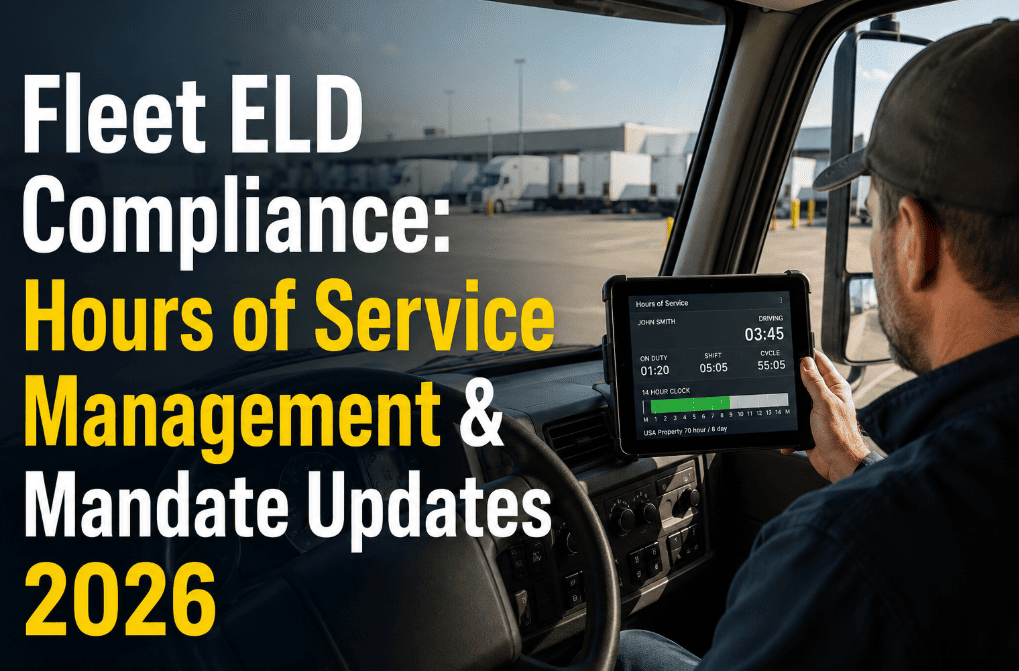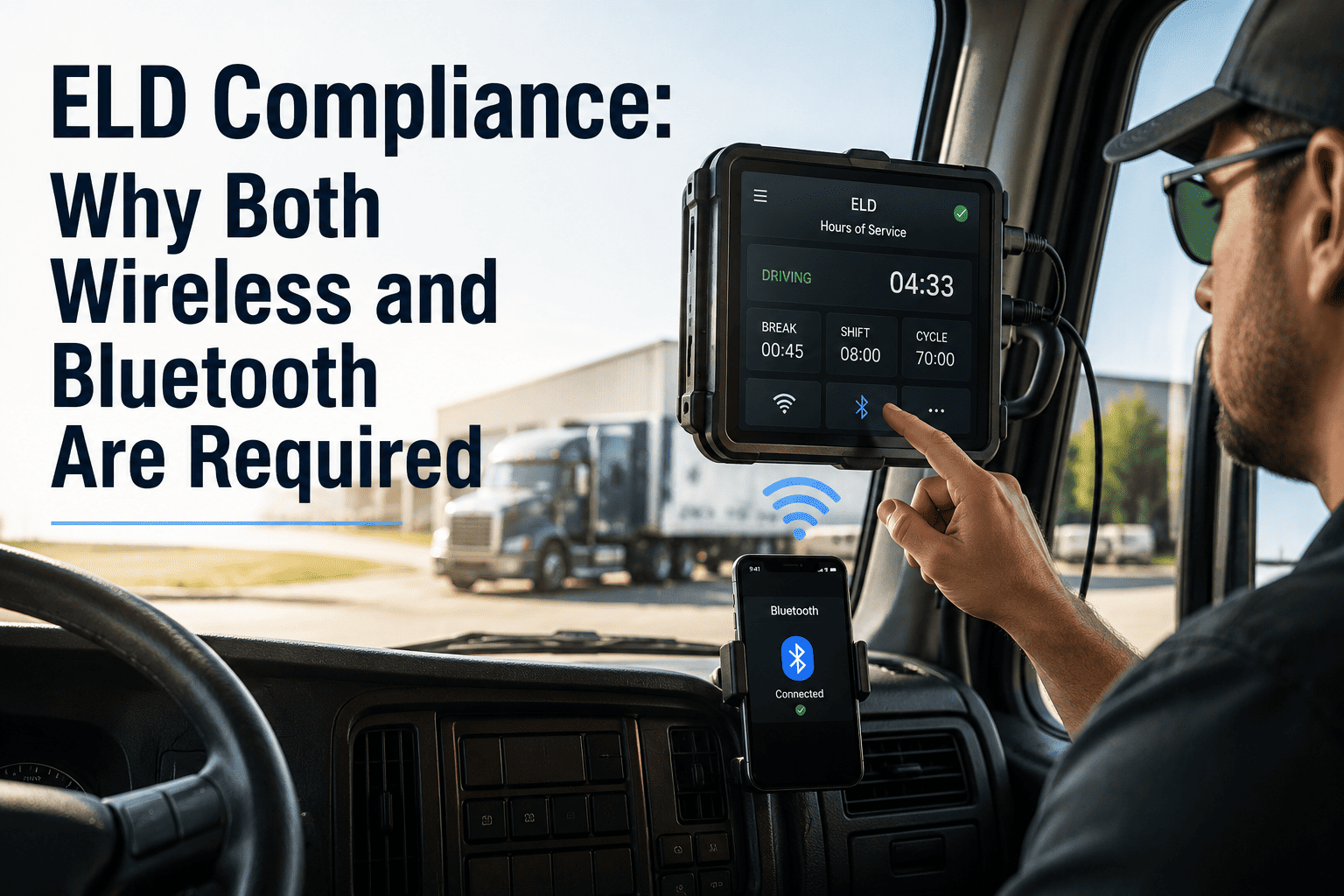
FMCSA's ELD rule does not let a device pick one transfer method and call it done. Every registered ELD must fully support one complete option: either the telematics path, which requires both web services and email, or the local path, which requires both USB 2.0 and Bluetooth. A device offering only web services, or only Bluetooth, fails the technical specification even if it appears on the registered list. Fleets running single-method devices are one roadside failure away from a "no ELD" violation and an out-of-service order. This is exactly the gap that structured device audits inside OxMaint are built to catch before an inspector finds it.
ELD Compliance: Why Both Wireless and Bluetooth Are Required
A device that only transmits over the air, or only connects locally, is not compliant on its own. This guide breaks down the two accepted transfer paths, what each one requires in full, and how to verify your fleet is not carrying a partial-compliance device.
Two Compliant Paths — Pick One, but Complete It
Section 4.9.1 of the ELD technical specification gives a device exactly two ways to be compliant. Both methods inside whichever path you choose are mandatory — not optional extras.
The device connects over its own internet connection and submits the data file directly to FMCSA's system. This is the agency's preferred method because it is fastest at roadside.
The driver hands the officer a physical connection or a short-range wireless pairing on the spot. Both methods must work — one alone does not satisfy this path.
Compliant Device vs. Partial-Compliance Device
Registry presence tells you a manufacturer self-certified. It does not tell you the device is field-verified. Here is what separates a fully compliant setup from one that fails at the worst possible moment.
| Checkpoint | Partial-Compliance Device | Fully Compliant Device |
|---|---|---|
| Transfer Methods Supported | Only one method, e.g. Bluetooth alone | Both methods of at least one full path |
| Roadside Backup | Fails if the single method has an issue | Second method available immediately |
| Registry Status Check | Rarely re-verified after purchase | Checked against the live registry regularly |
| ECM Data Connection | Manual entry or no engine sync | Automatic sync via J1939, J1708, or OBD-II |
| Unassigned Driving Events | Left unreviewed, reads as manipulation | Reviewed and assigned promptly |
| Outcome at Roadside | Risk of out-of-service order | Clean inspection, driver back on the road |
Do You Know Which Transfer Path Every Truck in Your Fleet Actually Supports?
OxMaint tracks device compliance status against the live FMCSA registry, flags single-method devices before they reach the road, and keeps replacement deadlines visible across every vehicle in the fleet.
What Happens When a Transfer Method Fails at Roadside
A single-method device does not just risk a paperwork delay. It follows a specific, escalating sequence that most drivers never see coming until it happens to them.
The inspector chooses which method to use, not the driver. If the device only supports the method the officer did not pick, the request cannot be fulfilled on the spot.
If the requested method fails, the driver falls back to showing the device screen or a printed log. This works, but it slows the inspection and draws closer scrutiny.
Officers increasingly verify the device identity against the live FMCSA registry during the same stop. A revoked or unregistered device is treated as no ELD at all.
A confirmed non-compliant or revoked device results in the driver being placed out of service immediately, with no grace period at the roadside.
Frequently Asked Questions
Does an ELD need to support all four transfer methods to be compliant?
Is a device still compliant if it only offers Bluetooth and not USB?
How can a fleet manager check if a device is still on the FMCSA registered list?
What happens if my fleet is using a device that gets revoked mid-year?
Can a tablet running an ELD app meet these requirements?
Verify Every Device in Your Fleet Before an Inspector Does
OxMaint keeps device compliance status, registry standing, and replacement deadlines visible in one place, so a single-method or revoked ELD never makes it to a roadside inspection unnoticed.