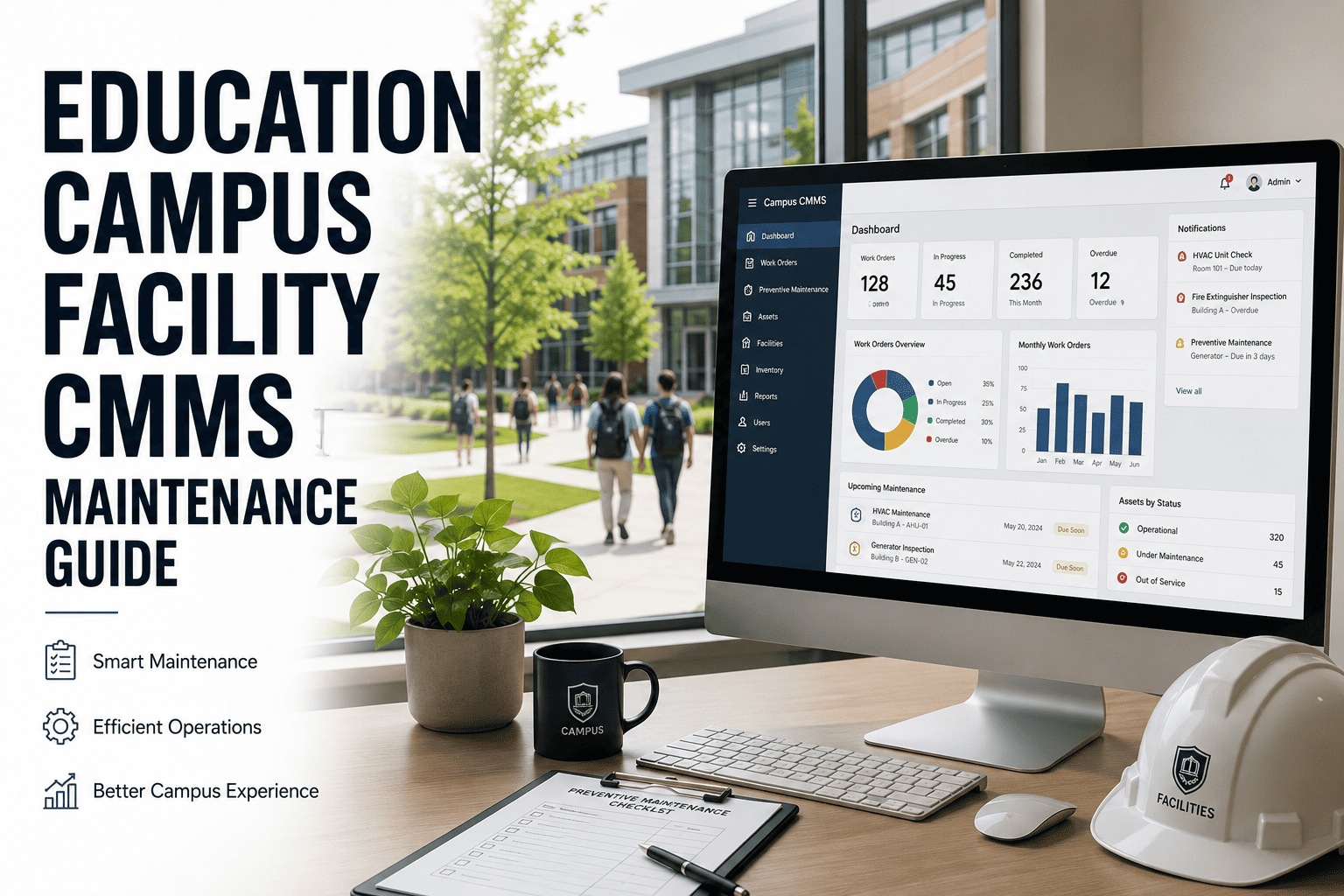
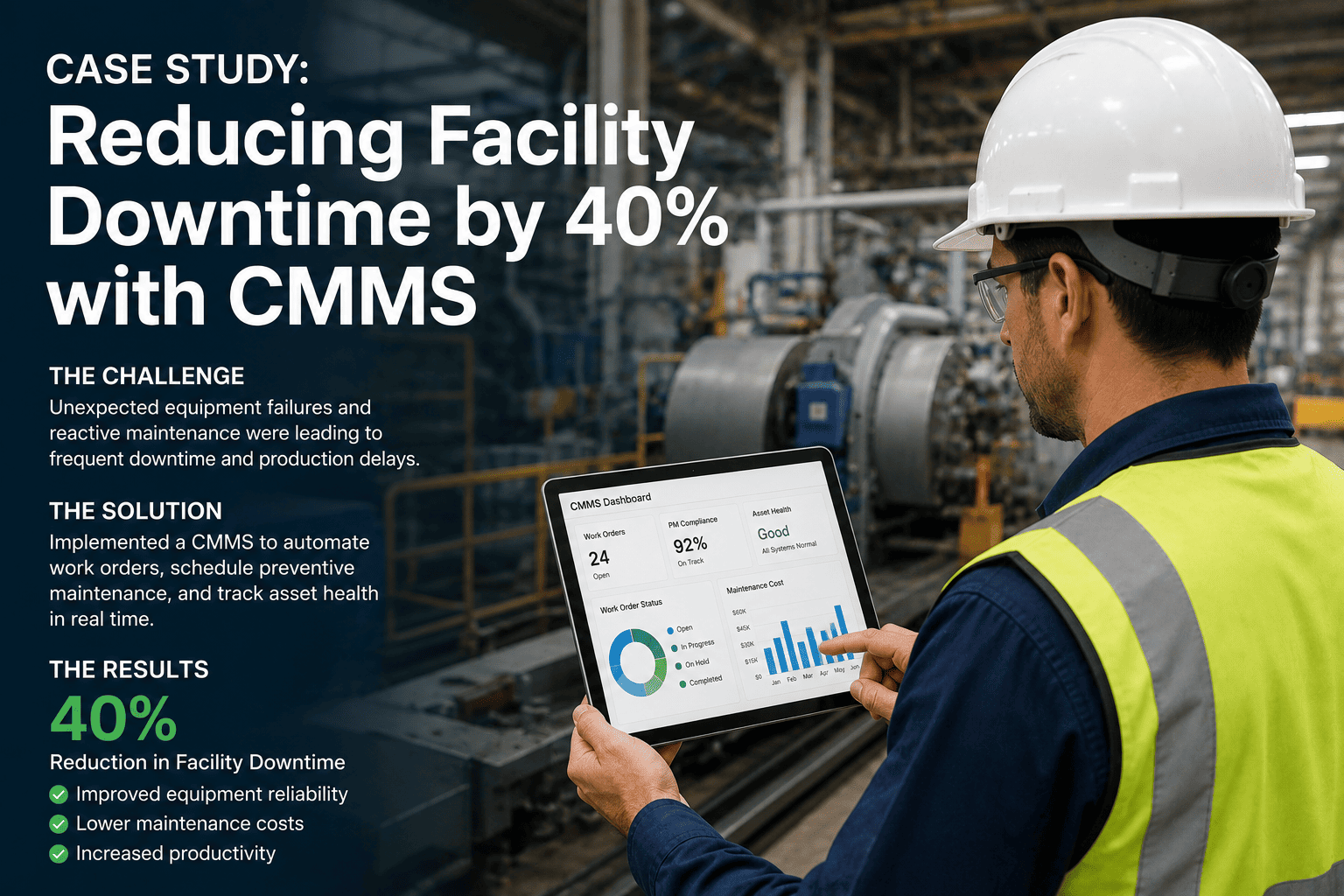
A large public research university with 80+ buildings, 2.4 million square feet of managed space, and a $112 million deferred maintenance backlog was losing $1.8 million per year to emergency repairs alone. Boiler failures during winter exams, chiller breakdowns in August move-in week, and elevator outages in high-rise dormitories were not just maintenance problems — they were student experience crises that reached the provost's desk. The 28-person facilities team managed 4,200+ assets using a legacy CMMS that no technician under 40 could navigate, with PM compliance stuck at 48%. Within 14 months of deploying OxMaint's predictive maintenance platform, the university documented $1.2 million in annual savings, reduced equipment failures by 45%, and achieved 96% PM compliance across all 80 buildings.
University Campus Saves $1.2M Annually Through Predictive Maintenance with OxMaint
80+ buildings. 4,200 assets. 28 technicians. One platform that turned reactive chaos into predictive precision — cutting equipment failures by 45% in year one.
The Problem: A Campus Running on Borrowed Time
The university's facilities department faced a convergence of pressures that made the status quo untenable — aging infrastructure with a growing deferred maintenance backlog, a workforce vacancy rate of 18%, and a legacy CMMS that cost $340,000 annually but delivered no predictive capability and minimal mobile access.
is the national deferred maintenance backlog in higher education. Universities that deploy predictive maintenance recover 15-30% of their annual maintenance budgets by shifting from reactive firefighting to data-driven asset care — turning their facilities department from a cost center into a strategic operation.
How OxMaint Delivered $1.2M in Savings
The savings came from five interconnected levers — each compounding on the others. When boiler failures dropped, emergency contractor spend dropped with them. When PM compliance rose, asset lifespans extended. When inventory tracking went digital, rush-order premiums disappeared. Sign up for OxMaint to see how these levers apply to your campus.
Predictive Failure Prevention
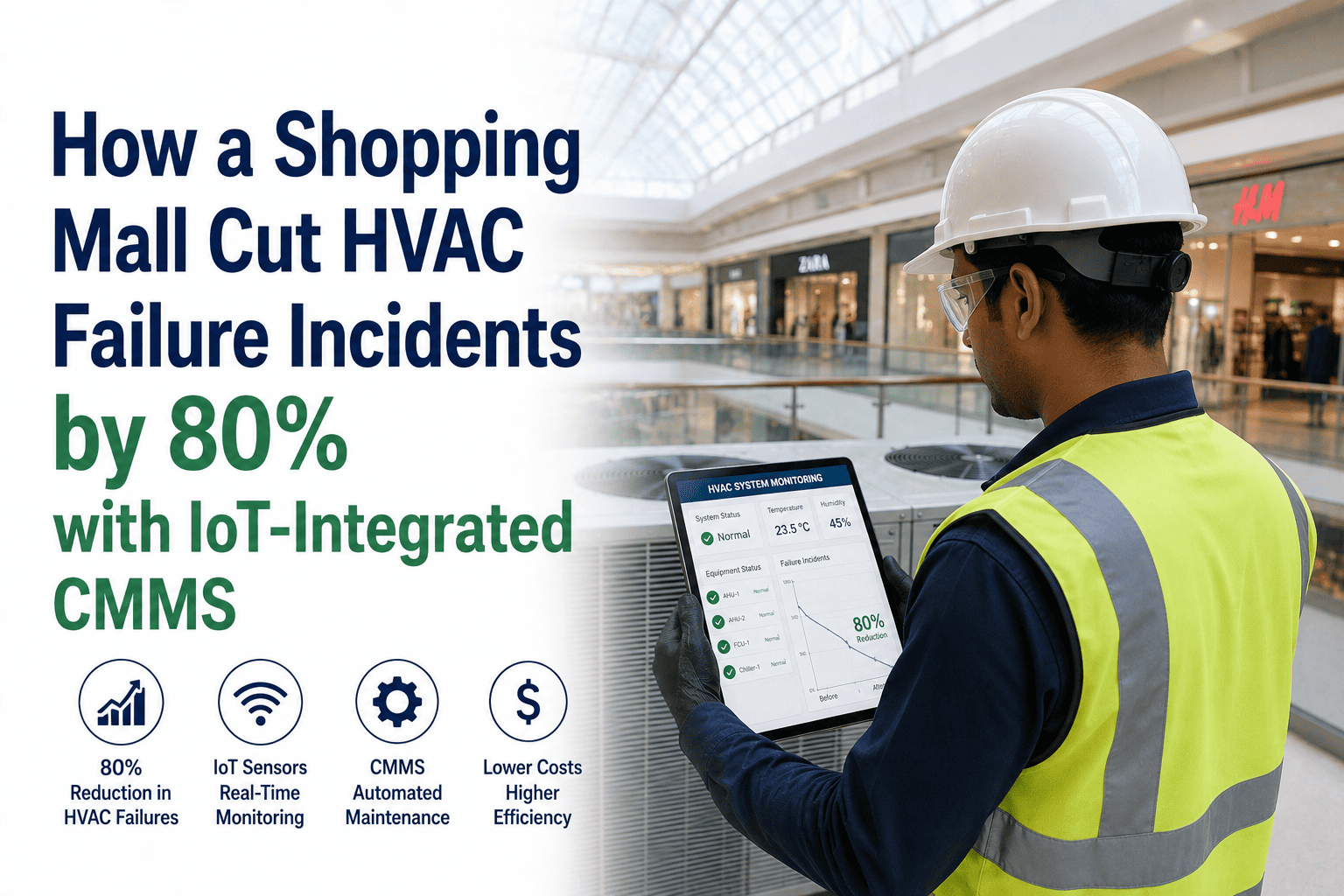
Vibration sensors on 120 critical assets — chillers, boilers, AHUs, and elevator motors — fed real-time data into OxMaint. AI algorithms detected degradation patterns 2-4 weeks before failure, converting emergency breakdowns into planned maintenance events. HVAC failures dropped from 38 per year to 9.
Emergency Contractor Elimination
With failures predicted and planned, after-hours and weekend contractor callouts dropped 62%. Emergency HVAC service alone fell from $680,000 to $258,000. Vendor performance tracking replaced underperforming contractors with data-backed alternatives.
Asset Life Extension
Consistent PM execution extended the useful life of 340+ assets by an average of 22%. Planned replacements at standard pricing replaced emergency replacements at 28-45% premiums. Capital expenditure forecasting gave the VP of Facilities a 5-year replacement schedule the board could approve.
Inventory and Parts Optimization
Min-max inventory automation eliminated both stockouts and overstocking. Rush-order premiums that inflated repair costs by 30-50% per event were nearly eliminated. Parts reserved against upcoming PMs prevented stockouts during planned maintenance windows.
Labor Efficiency Gains
Mobile work orders saved 1.5 hours per technician per day in travel and admin time. AI-based routing clustered work orders by building proximity, batching 4-6 tasks per trip. Technician productive wrench time increased from 35% to 58% of the workday.
12-Month Results by Building Category
Savings and failure reductions varied by building type — with high-occupancy residential and research facilities showing the most dramatic improvements. Book a demo to see how OxMaint models savings by building type for your campus.
| Building Category | Count | Failure Reduction | Cost Savings | PM Compliance |
|---|---|---|---|---|
| Residence Halls | 22 | 52% | $340,000 | 97% |
| Academic Buildings | 28 | 41% | $285,000 | 95% |
| Research Labs | 12 | 48% | $210,000 | 98% |
| Athletic Facilities | 8 | 38% | $165,000 | 94% |
| Central Plant / Utilities | 4 | 55% | $125,000 | 99% |
| Admin / Student Services | 9 | 35% | $75,000 | 93% |
Why OxMaint Won Over the Legacy System
The university evaluated four CMMS platforms before selecting OxMaint. The deciding factors were not just features — they were deployment speed, technician adoption, and cost predictability. Sign up free to experience the difference.
Mobile-First Design
Every technician — from the 24-year-old new hire to the 61-year-old lead — completed work orders on mobile within 2 weeks. Offline mode worked in basement mechanical rooms with zero cell signal.
AI Failure Prediction
Vibration, temperature, and runtime data from IoT sensors fed into OxMaint's AI engine. Anomaly detection established baselines for normal operation and flagged deviations 2-4 weeks before failure.
Academic Calendar Integration
Disruptive maintenance auto-scheduled for breaks, evenings, and summer. Classroom and residence hall HVAC work orders escalated to same-day priority during finals and move-in week.
Compliance Automation
OSHA, EPA (AHERA asbestos), ADA, NFPA fire/life safety, and state education facility standards tracked automatically. Overdue compliance items escalated before deadlines, not after.
Our legacy CMMS cost more than OxMaint and delivered a fraction of the capability. The moment our technicians started using the mobile app, data quality improved overnight. Within six months, we had predictive insights on assets we had been blindly maintaining for decades.
-- VP of Facilities, Public Research University
Your Campus Deserves Predictive Maintenance
Every boiler failure during finals, every chiller breakdown during move-in, and every elevator outage in a high-rise dorm is a preventable event. OxMaint gives your facilities team AI-driven prediction, mobile execution, and compliance automation — deployed in 30 days with zero disruption to campus operations.