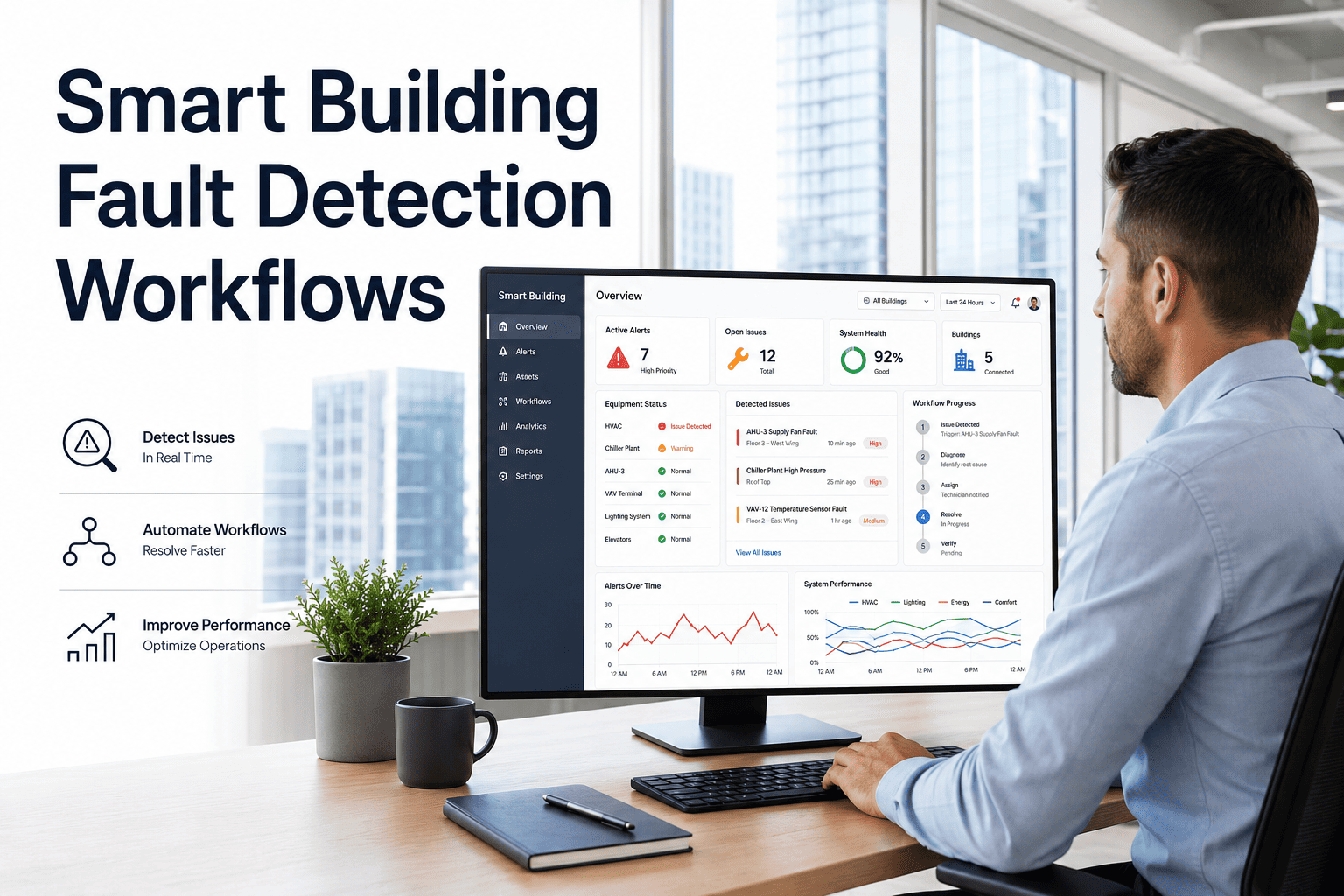
Smart Building Fault Detection Workflows

By Lewis Abbott on June 7, 2026

smart-building-fault-detection-workflows

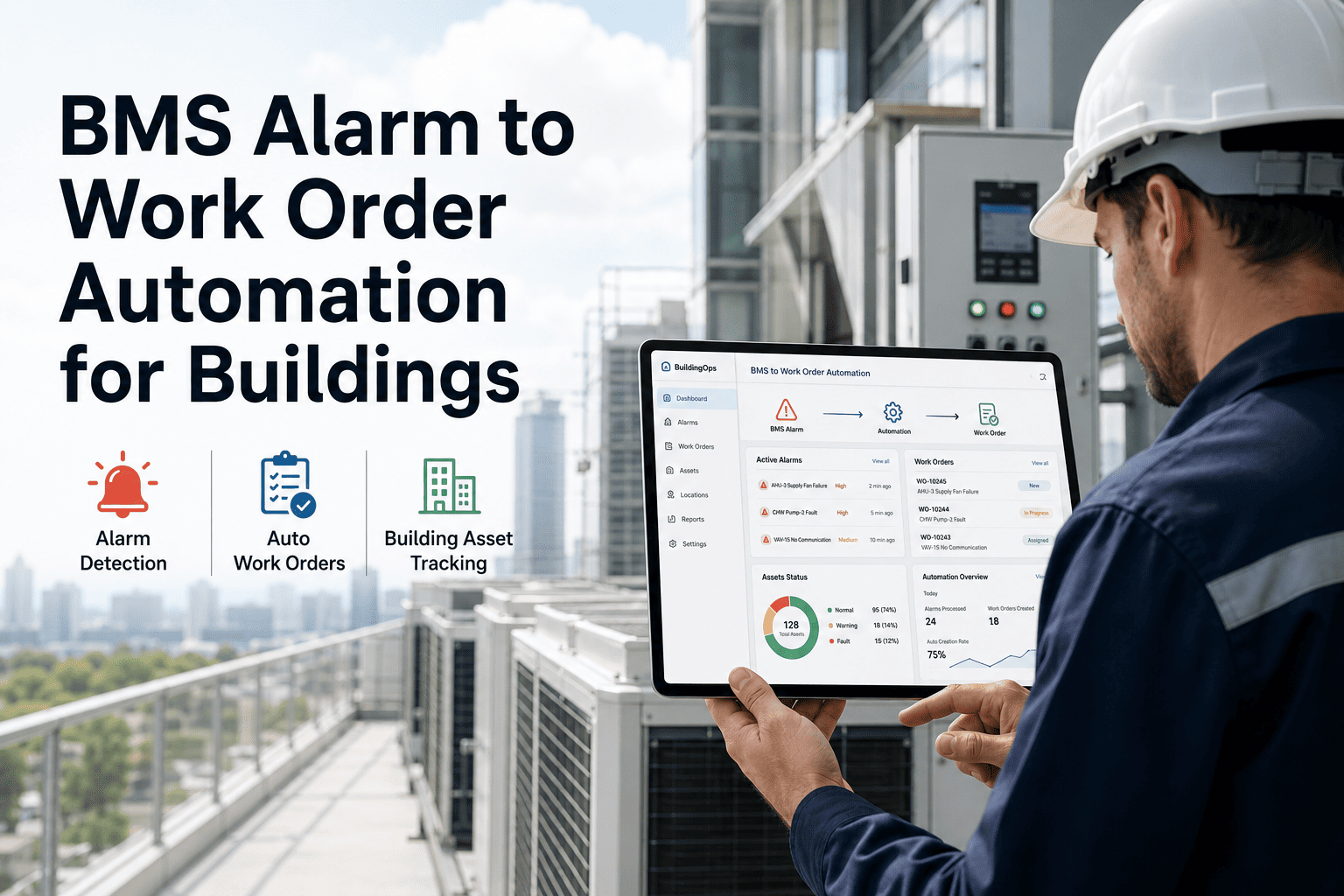
Smart buildings generate fault data across hundreds of systems every hour — but without structured detection workflows, that data sits idle while minor anomalies grow into system failures. OxMaint AI transforms HVAC, lighting, pump, and energy fault signals into tracked maintenance actions before occupants feel the impact.

Predictive Maintenance

Faults Are Happening Right Now.
Is Your Workflow Catching Them?

Building systems send early warning signals hours before failure. Without a structured fault detection workflow, those signals become work orders only after tenants complain or equipment shuts down. OxMaint converts every fault signal into a prioritized, tracked maintenance action — automatically.

Book a Demo Start Free Trial

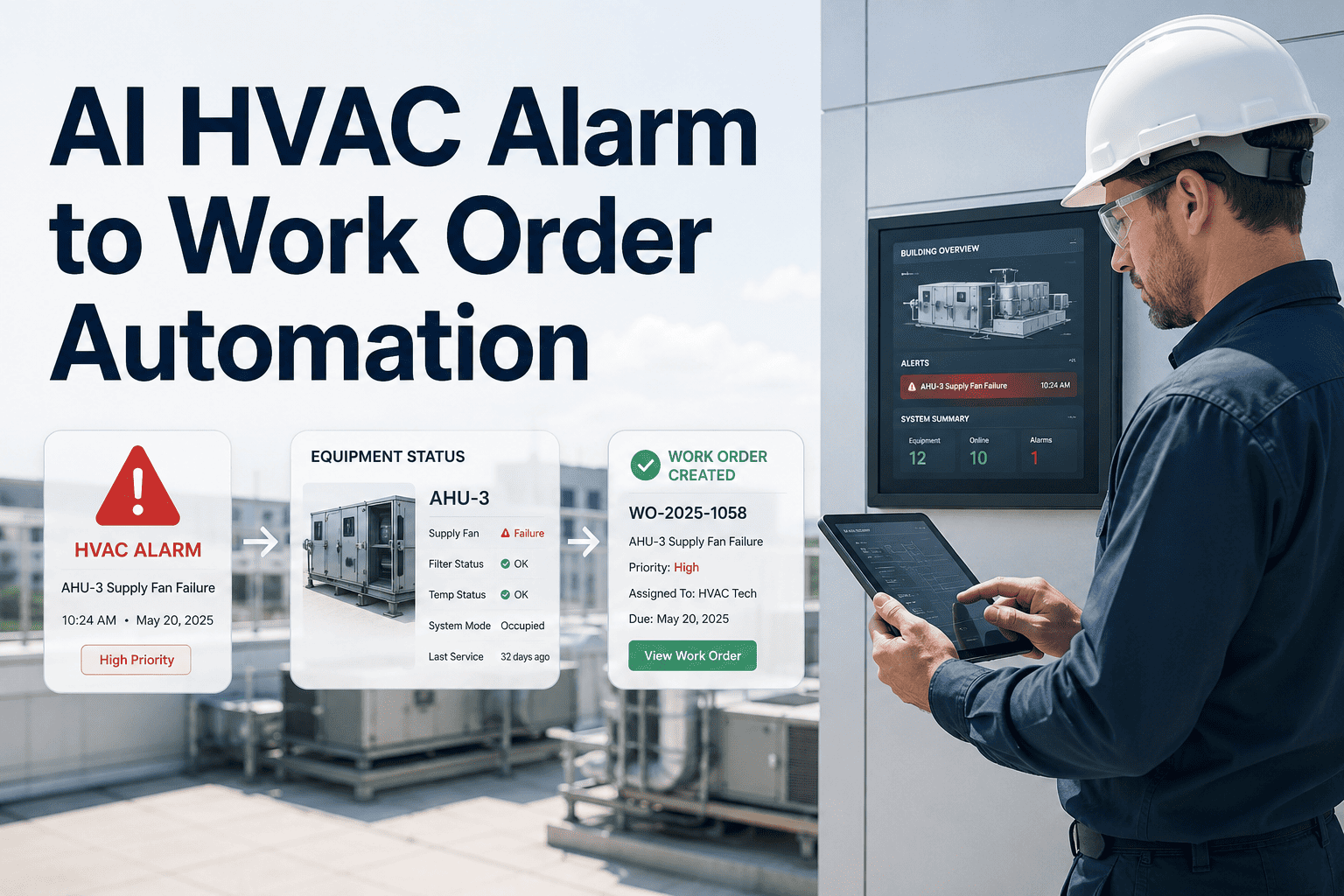
AHU-04 — Zone B
Supply Air Temp Drift
Work Order Created

Chiller-01
COP Anomaly Detected
Under Review

Pump Station — L2
Vibration Threshold
Technician Dispatched

Lighting Panel — F3
Energy Draw +18%
Logged for PM

Fault Detection by Building System

OxMaint monitors four primary fault categories, each with tailored anomaly thresholds and response workflow templates.

HVAC
HVAC System Faults
Supply air temperature deviation>2°C from setpoint
Coil delta-T degradation<8°C split
AHU runtime vs. occupancy mismatch>15% excess runtime
Chiller COP anomaly-12% from baseline
LITE
Lighting System Faults
Abnormal energy draw per circuit>20% above baseline
Occupancy-controlled zone mismatchOn during unoccupied hours
Ballast degradation patternFlickering frequency detected
Dimming response failureNo response to BMS command
PUMP
Pump & Mechanical Faults
Vibration amplitude increase>25% over 7-day average
Bearing temperature rise>10°C above ambient
Flow rate vs. power mismatchEfficiency drop >18%
Seal pressure anomalyPressure drop pattern
ENRG
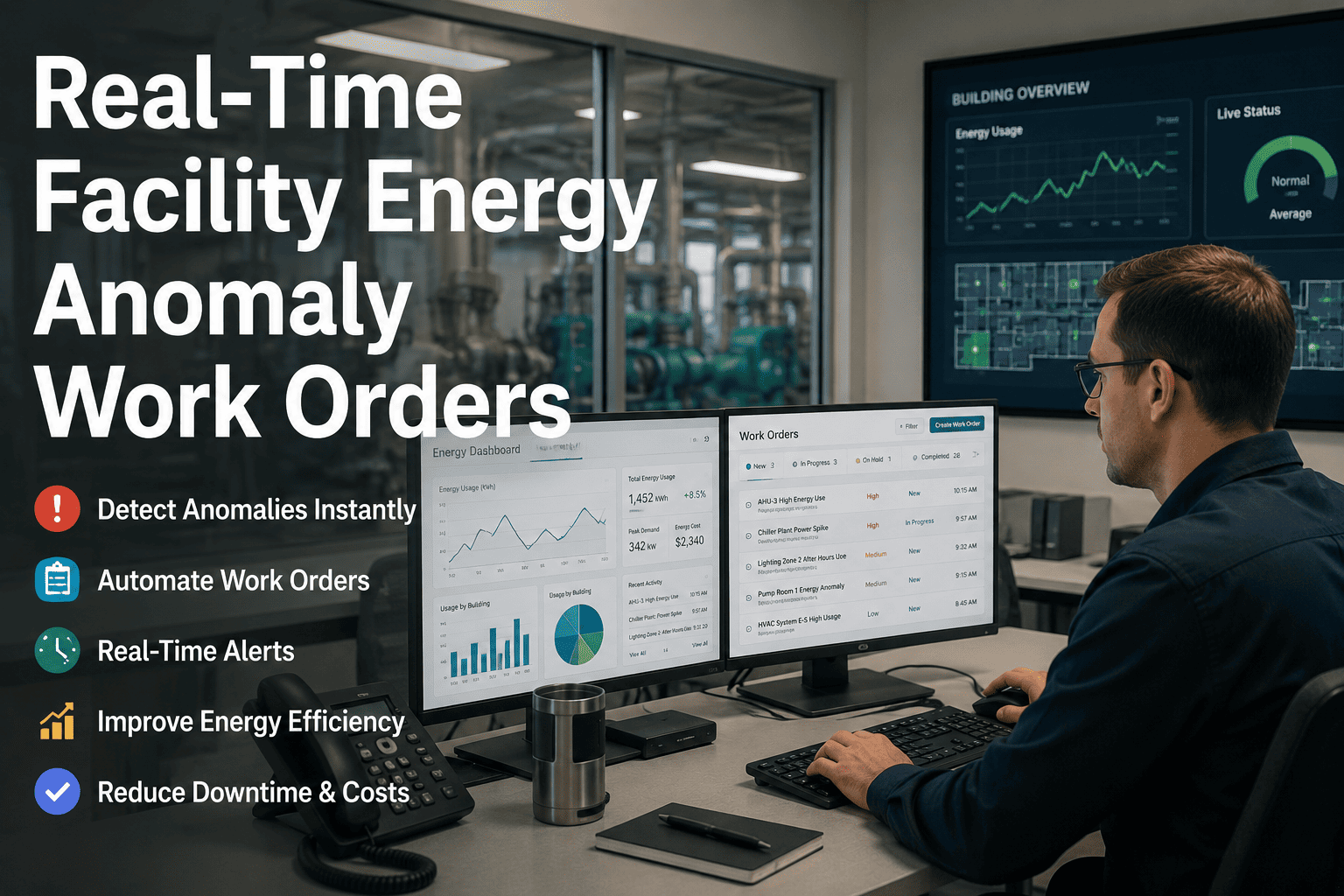
Energy System Anomalies
Off-hours consumption spike>30% above schedule
Sub-meter vs. main meter delta>5% unexplained gap
Power factor degradation<0.90 sustained
Peak demand creep+8% vs. same-period baseline

From Fault Signal to Closed Work Order

OxMaint's detection-to-resolution workflow eliminates every manual step between a sensor anomaly and a verified repair.

S
Sensor Anomaly Detected
IoT sensor or BMS data crosses configured fault threshold

A
AI Validates the Signal
Pattern check filters noise vs. genuine fault; false-positive rate under 4%

W
Work Order Auto-Created
Fault type, asset ID, location, and checklist pre-populated

T
Technician Dispatched
Routed by skill match, proximity, and availability in real time

C
Resolution Documented
Parts used, time spent, and root cause logged against asset record

Fault Detection Performance Benchmarks

Measured outcomes from facilities using OxMaint smart building fault detection workflows vs. reactive maintenance baselines.

Performance Metric Reactive Baseline OxMaint AI Detection Improvement
Average fault-to-work-order time 4.2 hours Under 4 minutes -98%
Faults detected before occupant complaint 22% 87% +295%
False-positive fault work orders N/A (manual) Under 4% Controlled
HVAC energy waste from undetected faults 11-17% of HVAC budget Under 3% -73%
Repeat fault recurrence within 30 days 34% 9% -74%
OxMaint AI — Predictive Maintenance Platform

Your HVAC, lighting, and pump faults are sending signals right now. OxMaint turns those signals into work orders before your tenants send complaints.

Expert Perspective


The difference between reactive and predictive building maintenance is not the technology — it is the workflow. Sensors and IoT devices have been generating fault signals in commercial buildings for over a decade. What most facilities lack is not data but a structured process that converts those signals into assigned, tracked actions before occupants experience consequences. Buildings that implement structured fault detection workflows — where every anomaly above a defined threshold generates a work order automatically — consistently reduce their unplanned maintenance costs by 30 to 45 percent within two years. The workflow is the leverage point, not the sensor.

Director of Facilities Technology
Commercial Real Estate Portfolio Operations — 22 Years Experience

Frequently Asked Questions

OxMaint integrates with your existing IoT sensor infrastructure and BMS data feeds — no new hardware is required for the majority of deployments. The platform supports standard protocols including BACnet, Modbus, MQTT, and REST API ingestion from third-party IoT sensor platforms such as Samsara, Willow, and PointGrab. If additional sensing coverage is needed for specific asset types, OxMaint can recommend compatible sensor vendors, but the fault detection workflows are fully functional with your current sensor estate from day one. Book a demo to map your current sensor coverage against OxMaint's fault detection requirements.
Fault thresholds are configured during onboarding by your OxMaint implementation team in collaboration with your facility engineering staff. Each threshold is set per asset class and building zone, with defaults based on ASHRAE, ENERGY STAR, and manufacturer specifications. After initial setup, facility managers have full access to the threshold configuration dashboard to adjust anomaly sensitivity, add new fault rules, or suppress low-signal alert types. Threshold performance is reviewed automatically each month, and OxMaint flags rules with high false-positive rates for tuning. Start your free trial and access the threshold configuration sandbox.
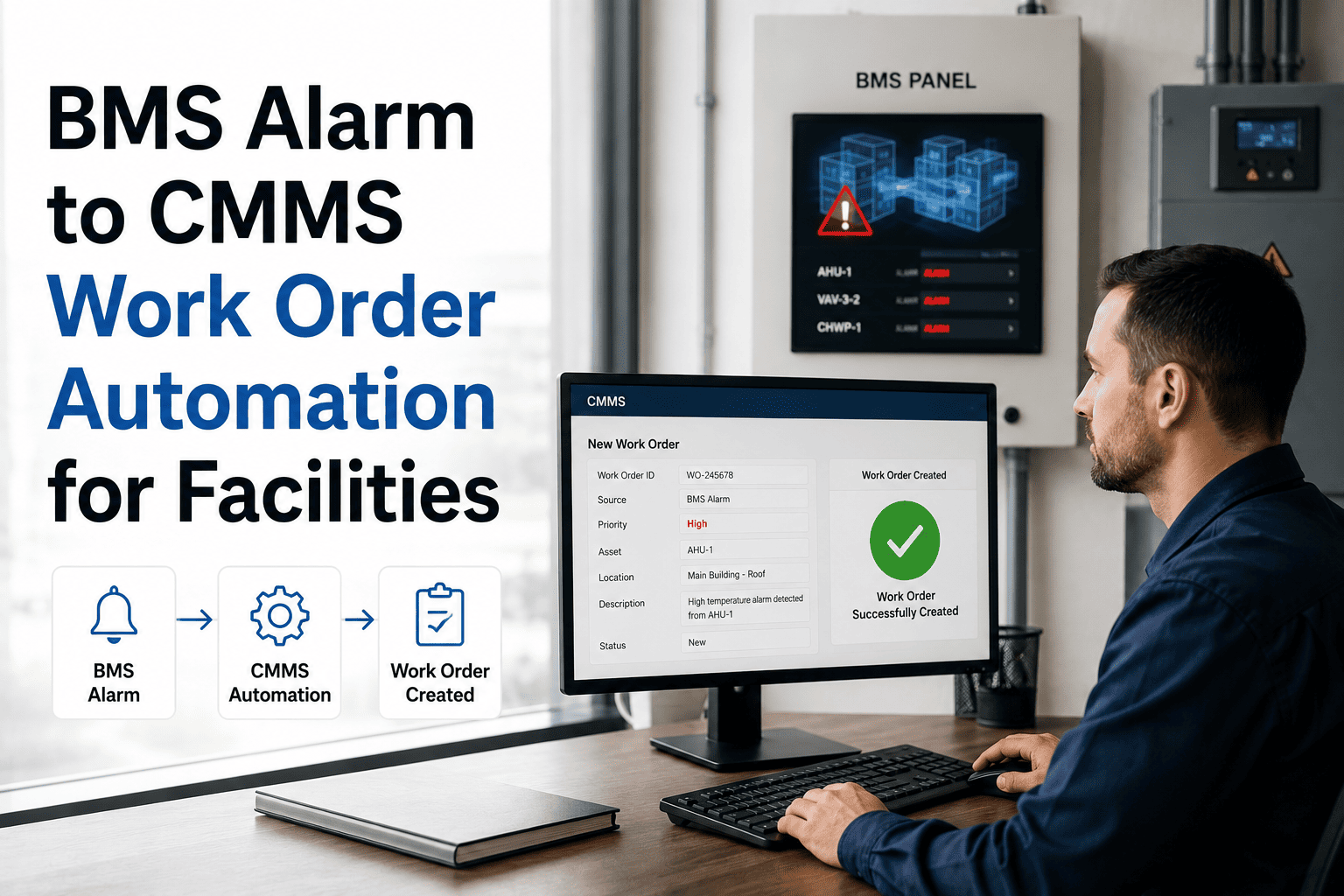
OxMaint can operate as a standalone fault detection and CMMS platform, or it can push fault-triggered work orders into your existing CMMS via API or webhook integration. Supported integrations include Maximo, ServiceNow FM, Archibus, and eMaint. When used as a detection layer feeding an existing CMMS, OxMaint appends asset data, fault context, and recommended checklist items to the work order payload before transmission — ensuring the receiving system has full fault context without manual input. Book a demo to discuss your integration architecture.
Standard fault detection workflows for HVAC, lighting, and energy systems are operational within 10 to 14 business days of integration setup. The onboarding process includes BMS and IoT data source connection, baseline period establishment (7 days of data collection), threshold configuration, work order template setup, and technician routing rules. Pump and mechanical fault detection workflows require a slightly longer baseline period of 14 days to establish vibration and performance baselines before anomaly thresholds are activated. Start your free trial and begin the onboarding process today.
OxMaint AI — Smart Building CMMS

Fault signals are already in your building data. OxMaint structures the workflow that converts them into maintenance actions — before systems fail and occupants notice.

Automated fault detection. IoT-connected workflows. Full asset history documentation.

Share This Story, Choose Your Platform!