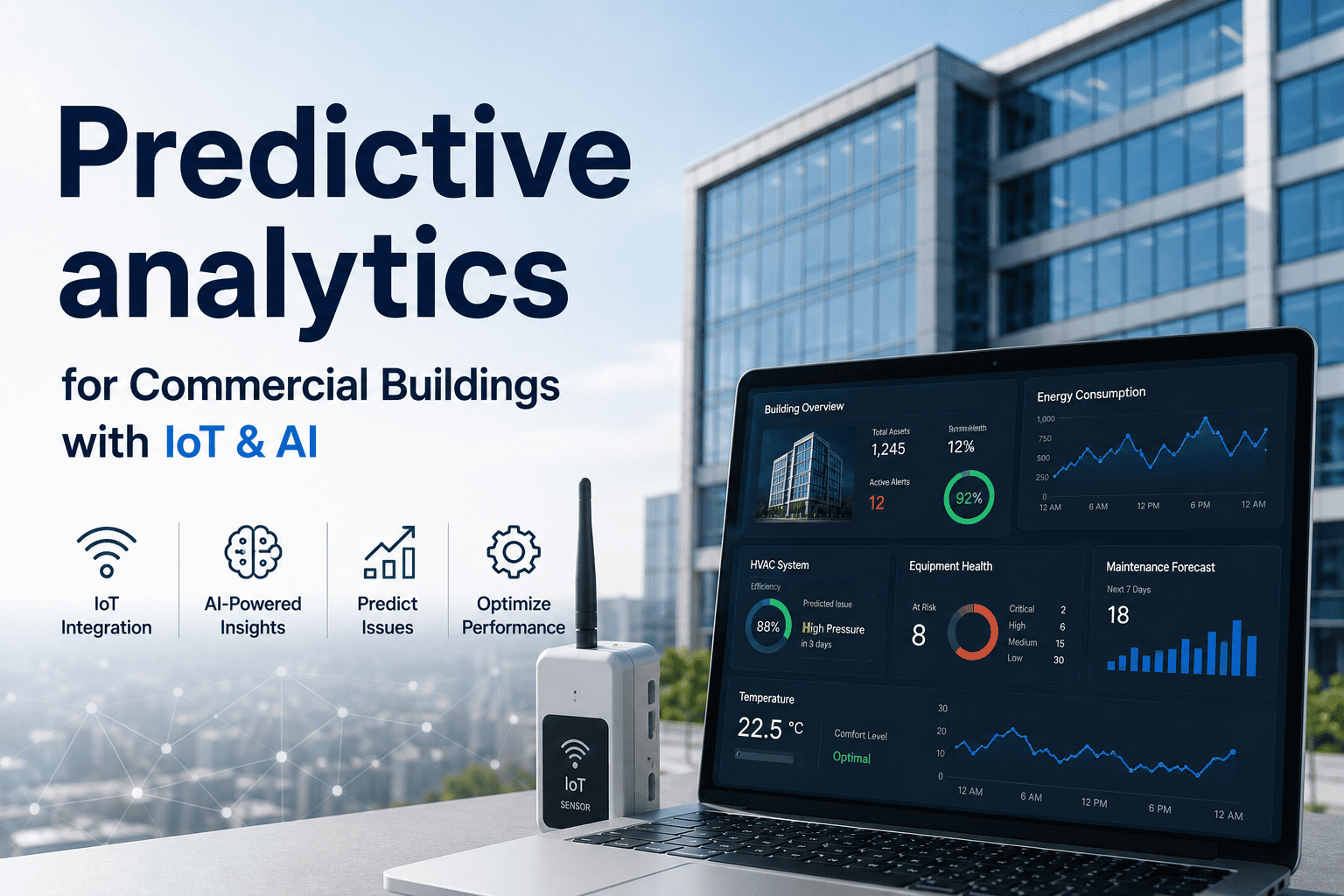
Your HVAC system can be fully operational — no faults, no alarms — and silently wasting 18–25% more energy than it should. OxMaint's AI energy drift detection compares real-time HVAC performance against calibrated baselines to surface hidden inefficiencies before they appear on your utility bill — giving facility teams days or weeks of advance warning to act.
AI Analytics · HVAC · Energy Optimization · 2026
AI Energy Drift Detection for Commercial HVAC Systems
Find hidden HVAC inefficiencies before utility costs spike. Real-time AI monitoring surfaces energy drift across chillers, AHUs, cooling towers, and VAV systems — automatically.
23%
Average hidden HVAC energy waste in commercial buildings — ASHRAE 2025
$0.89
Energy cost per sq ft annually wasted by undetected drift in mid-size office buildings
8 days
Average time AI detects drift before it becomes visible on monthly utility data
What Is Energy Drift — And Why It's Invisible
Energy drift occurs when HVAC equipment degrades gradually — not catastrophically. A chiller running 4°F above its optimal approach temperature. An AHU recirculating air due to a stuck damper. A cooling tower running at 85% efficiency instead of 98%. Each issue alone seems minor. Together across a portfolio, they add tens of thousands of dollars to annual utility bills, and no alarm ever fires because the equipment is still "running."
Common HVAC Energy Drift Sources
01
Chiller Approach Temp Drift
+8–14% energy per degree of deviation above design approach temperature
High Impact
02
Stuck AHU Dampers
Over-conditioning or under-ventilation — 10–20% energy waste and IAQ risk
High Impact
03
Condenser Fouling
Every 10°F condenser temp rise costs 3–5% in chiller efficiency loss
Medium Impact
04
VFD Setpoint Drift
Pump/fan running at higher than needed speed — 15–25% motor energy waste
High Impact
How OxMaint AI Detects Drift — Step by Step
1
Baseline Calibration
AI establishes a performance fingerprint for each HVAC asset using 30 days of historical data, weather normalization, and manufacturer specifications.
2
Continuous Real-Time Monitoring
Sensor data streams are compared to the baseline every 5 minutes — temperature, pressure, flow rates, runtime, and energy draw are all tracked simultaneously.
3
Drift Score Calculation
Each asset receives a live Drift Score from 0–100. Scores above 65 trigger investigation alerts. Scores above 85 auto-generate priority work orders.
4
Cost Impact Quantification
Every drift alert includes an estimated monthly energy cost impact — giving facility managers the business case to prioritize repairs against other work orders.
Documented Energy Savings — AI Drift Detection in Commercial HVAC
| Building Type |
Annual kWh Saved |
Annual $ Saved |
Drift Types Detected |
| 250,000 sq ft Office |
318,000 kWh |
$41,300 |
Chiller approach, AHU damper, VFD |
| 120-room Hotel |
184,000 kWh |
$23,900 |
Cooling tower, condenser fouling |
| Regional Hospital |
612,000 kWh |
$79,600 |
Full chiller plant, AHU suite |
| Retail Chain (10 sites) |
427,000 kWh |
$55,500 |
Rooftop unit drift, scheduling |
Source: OxMaint customer energy analytics data 2024–2025 · Rates normalized at $0.13/kWh
Expert Review
"AI-driven energy drift detection is solving a problem that traditional BMS alarms were never designed to catch. A BMS tells you when equipment fails — AI tells you when it's underperforming, which is where the real money is. Buildings using continuous AI baseline comparison are recovering 15–28% of their HVAC energy budgets annually, and doing it without any capital replacement projects."
— Prof. Sarah Chen, Department of Building Energy Systems, Carnegie Mellon University · Published in Energy and Buildings Journal 2025
Find Out What Your HVAC Is Wasting Right Now
OxMaint connects to your existing HVAC sensors and BMS — no new hardware in most cases. Start detecting drift within the first week.
Frequently Asked Questions
Do we need to install new sensors to detect energy drift?
In most commercial buildings, OxMaint uses data already available from your existing BMS, energy meters, and HVAC controls — no additional hardware is required to get started. For deeper asset-level monitoring (individual chiller performance, coil efficiency),
OxMaint supports low-cost IoT sensor add-ons that install in hours. The typical customer sees their first drift alerts within 5–7 days of connecting their existing data sources, before any sensor expansion is needed.
How accurate is the AI baseline, and how does it handle seasonal changes?
OxMaint's baseline model is weather-normalized using local TMY (Typical Meteorological Year) data and degree-day weighting — so summer and winter performance is always compared against the right reference point, not a fixed annual average. The model recalibrates continuously as equipment ages, so drift scoring stays accurate as your baseline naturally shifts. Customers typically see drift detection accuracy above 91% after the first 30-day calibration period,
which you can verify in a demo.
Can drift detection data be used for utility rebate and ESG reporting?
Yes — OxMaint's energy drift module generates timestamped, measurement-and-verification (M&V) compliant reports that document energy savings from maintenance interventions. These reports are accepted by major utility rebate programs including those based on IPMVP Option B protocols, and they satisfy the Scope 1 and Scope 2 energy intensity reporting requirements of GRI 302 and SASB standards. Many customers use OxMaint energy drift data as the primary source for their annual ESG disclosure reporting.
Stop Paying for Energy You're Not Using
AI energy drift detection is free to start on OxMaint. Connect your first building today and see your baseline drift score before the week is out.