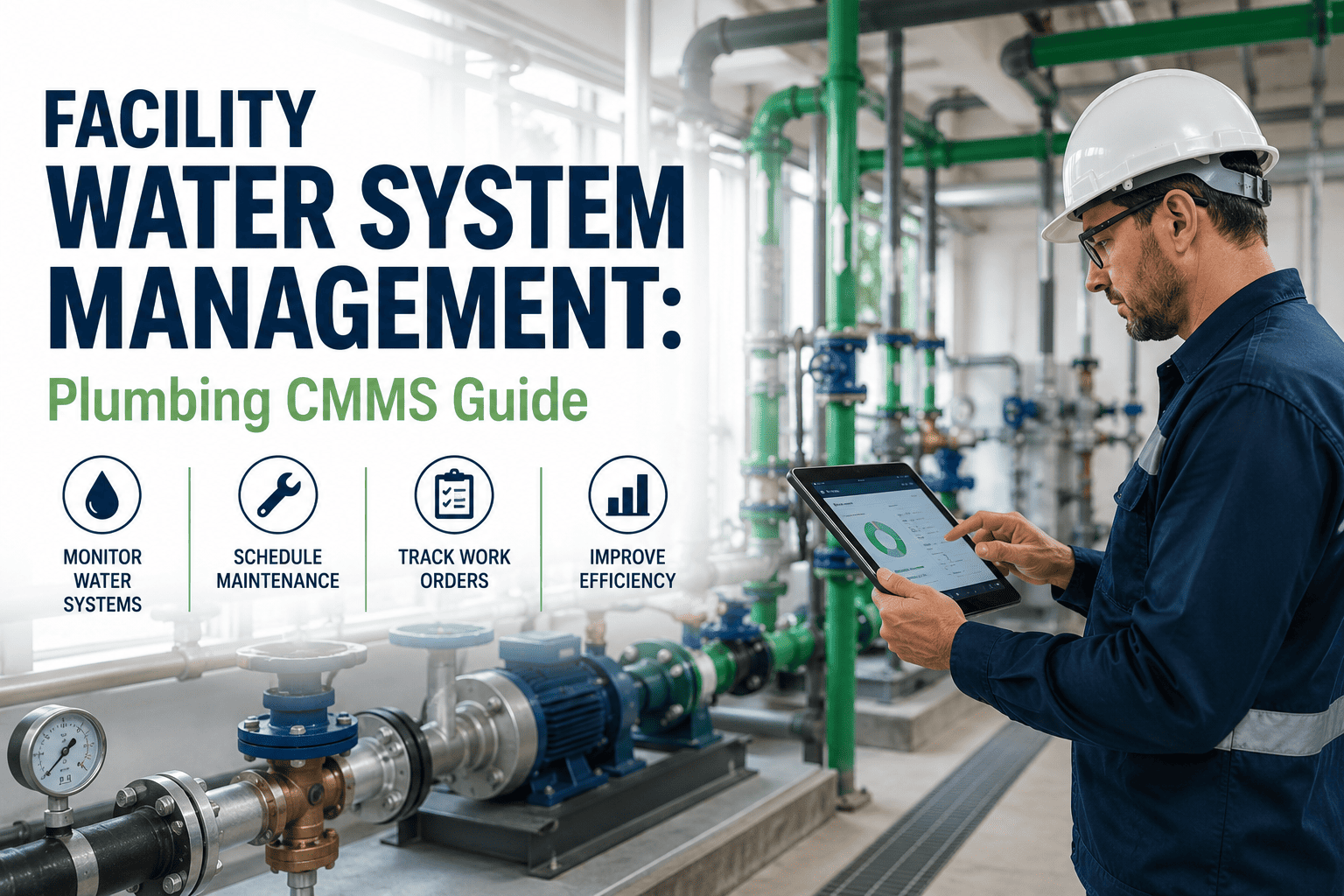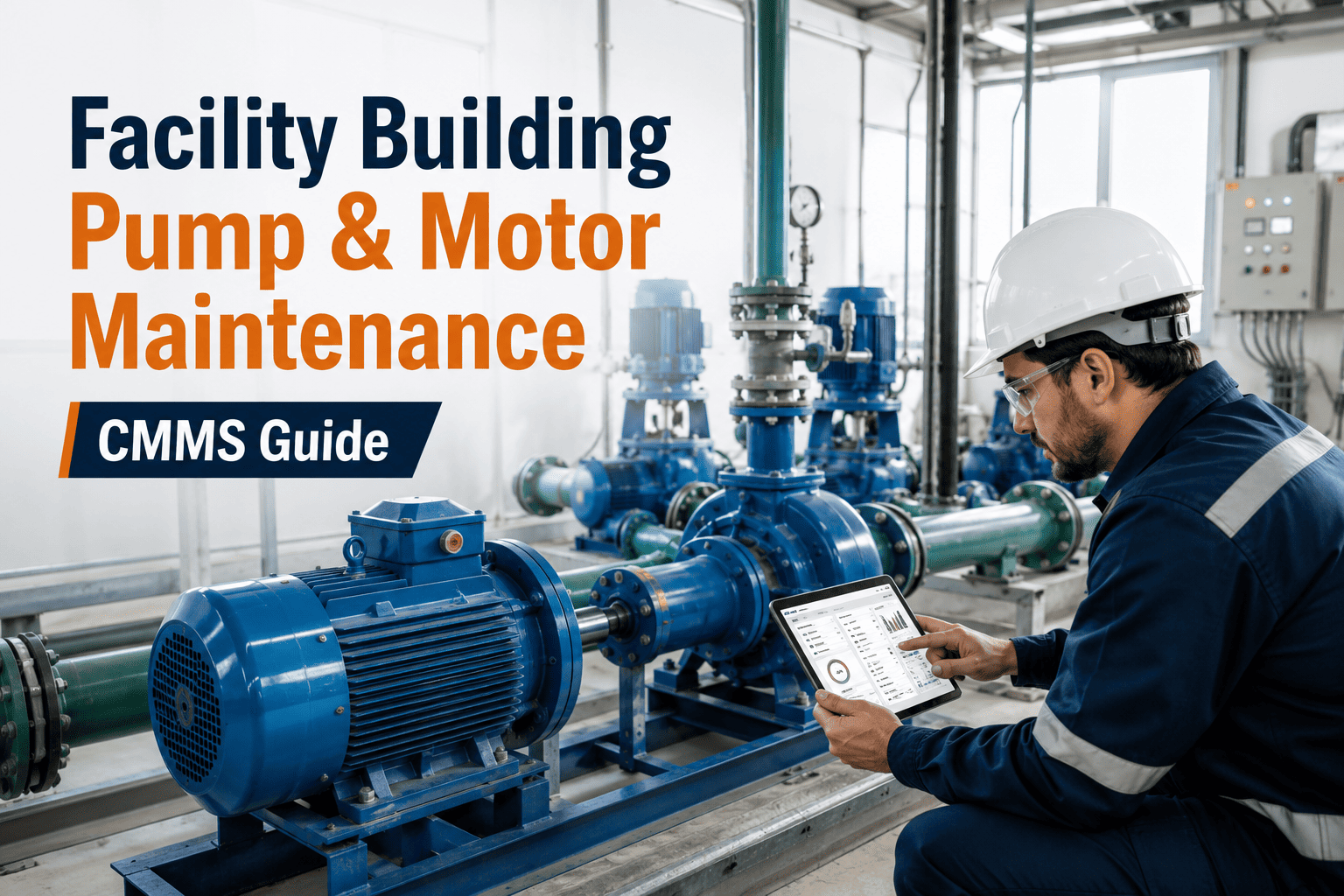
A regional hospital campus lost domestic water pressure on two patient floors on a Tuesday morning, and the work order history showed why: the booster pump's mechanical seal had been weeping for six weeks, logged once on a sticky note that never made it into a system. Three buildings away, the fire pump churn test had been skipped twice because nobody owned the schedule. Neither failure was a surprise to the technicians who walked past both pumps daily — it was a documentation gap, not a mechanical one. Facility pumps and motors rarely fail without warning; they fail without a record. Centralising domestic water, fire, sump, and motor maintenance on OxMaint facility maintenance management turns scattered notes into one asset history that actually gets acted on.
Facility Pumps & Motors · CMMS Guide · OxMaint
Every Pump In Your Building Is Trying To Tell You Something. Most Facility Teams Just Aren't Listening Yet.
Domestic water pumps, fire pumps, sump pumps, and the motors driving all of them share one failure pattern — the warning signs show up weeks before the breakdown. A CMMS is how a facility team actually catches them.
82%
Of electric motor failures are preventable with correct lubrication, alignment, and monitoring routines
54%
Of premature motor bearing failures trace back to shaft misalignment that a laser check would have caught
Weekly / Monthly
Diesel fire pumps need a no-flow churn test weekly; most electric fire pumps need one monthly under NFPA 25
6 months
Recommended interval for insulation resistance testing on critical building motors before winding failure begins
One building, four pump types, one missed schedule away from a failure.
A typical commercial or institutional facility runs domestic water booster pumps, at least one fire pump assembly, sump or storm water pumps, and the motors that drive every one of them. Each has a different failure mode and a different testing rhythm — but in most buildings they're tracked in whatever tool the last technician preferred, if they're tracked at all. A CMMS doesn't change how a pump fails. It changes whether anyone notices before it does.
The Four Pump Systems Every Facility Program Has To Cover
Domestic Water & Booster Pumps
Weekly checks
Keep potable water pressure steady to every floor. Seal weeping, pressure tank bladder failure, and cycling too frequently are the earliest signs of wear — usually reported by tenants before maintenance ever sees a gauge reading.
Fire Pumps Under NFPA 25
Weekly / Annual
Diesel units run a 30-minute no-flow churn test weekly; most electric units run theirs monthly. Every pump also needs an annual flow test at no-flow, rated, and 150% capacity, with results compared against the original pump curve.
Sump & Storm Water Pumps
Seasonal readiness
Silent until the moment they're needed most. Float switch failure is the most common reason a sump pump doesn't start, and it's almost always caught during a routine test — never during the storm.
Motor Bearings & Alignment
Run-hour based
Over-lubrication and under-lubrication cause roughly equal shares of bearing failures, and shaft misalignment drives the majority of the rest. Vibration baselines catch developing faults weeks before a bearing seizes.
OxMaint · Pump & Motor Maintenance
Your Fire Pump Test Is Overdue. You Just Don't Know It Yet.
OxMaint schedules every churn test, flow test, lubrication cycle, and vibration check by asset — and tells someone before the deadline passes, not after.
Sticky Notes And Spreadsheets vs. A Single Pump & Motor Record
Maintenance Task
Paper, Whiteboards & Memory
With OxMaint
Weekly fire pump churn test
Relies on one person remembering
Auto-scheduled recurring work order
Bearing lubrication interval
Tracked by calendar month, not run-hours
Triggered by actual operating hours
Sump pump seasonal readiness
Tested after the first flood, not before
Pre-storm check scheduled automatically
Vibration and insulation trends
Numbers written down, never compared
Plotted against baseline per motor
Insurance or inspection request
Hours spent digging through folders
One exportable asset history
Six Habits That Keep A Building's Pumps And Motors Out Of The Failure Report
01
Register Every Pump And Motor As One Asset List
Domestic water, fire, sump, and drive motors listed once, with model, install date, and criticality — so nothing depends on which technician has been there longest.
02
Automate NFPA 25 Test Intervals
Weekly diesel churn tests, monthly electric churn tests, and the annual flow test all get their own recurring schedule, so a fire pump test is never skipped because it slipped someone's mind.
03
Set Lubrication By Run-Hours, Not The Calendar
Over- and under-greasing are roughly equal causes of bearing failure. Scheduling by actual operating hours instead of a fixed monthly date removes both risks at once.
04
Track Vibration And Insulation Against A Baseline
A single reading means little on its own. A baseline taken when the motor is healthy turns every later reading into an early warning instead of a guess.
05
Flag Sump Pumps For Pre-Season Readiness
A seasonal work order that checks the float switch, check valve, and discharge line before storm season is the difference between a dry basement and an emergency call.
06
Keep One Exportable History Per Asset
Every test, lubrication event, and repair tied to the pump or motor it happened on — ready to hand an inspector, insurer, or new facility manager in minutes.
Zero
Missed fire pump churn or flow test cycles once schedules run on the asset, not on memory
1 dashboard
For domestic water, fire, sump, and motor assets across every building on the campus
Minutes
To export a full pump or motor history for an inspector, insurer, or new hire
Frequently Asked Questions
How often does a facility fire pump actually need to be tested?
Diesel-driven fire pumps need a 30-minute no-flow churn test weekly, while most electric-driven units need the same test monthly. Every fire pump also needs a full annual flow test regardless of drive type.
What actually causes most electric motor bearing failures?
Roughly equal shares come from over-greasing and under-greasing, with shaft misalignment responsible for the majority of remaining premature failures. Explore OxMaint to see how run-hour based lubrication schedules address both.
Why do sump pumps fail right when a building needs them most?
A stuck or worn float switch is the most common cause, and it typically goes unnoticed for months because sump pumps sit idle between storms. A scheduled seasonal test is what catches it in advance.
Can a CMMS track NFPA 25 fire pump test intervals automatically?
Yes. Weekly, monthly, and annual test cycles can be set once per pump and generate their own recurring work orders, so compliance no longer depends on one person's memory.
How does OxMaint connect domestic water pump upkeep with fire pump compliance?
Both live on the same asset platform, so a facility team sees booster pump wear, fire pump test status, sump readiness, and motor health in one place instead of four. Book a demo to see it on your building list.
The Pumps Are Already Sending The Warning. The Question Is Whether Anyone's Watching.
Domestic water, fire, sump, and motor assets on one schedule · NFPA 25 test tracking · run-hour lubrication · exportable history