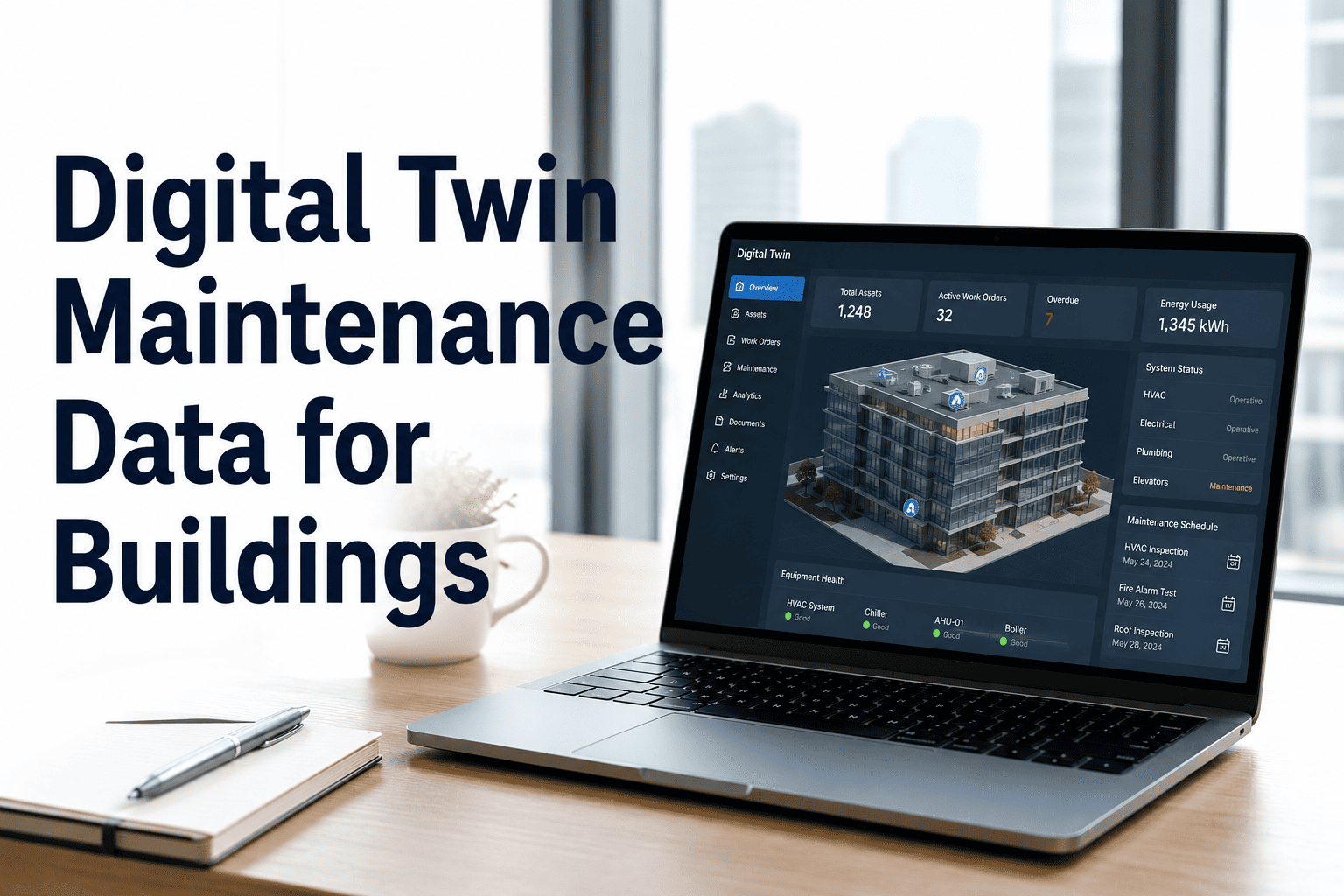
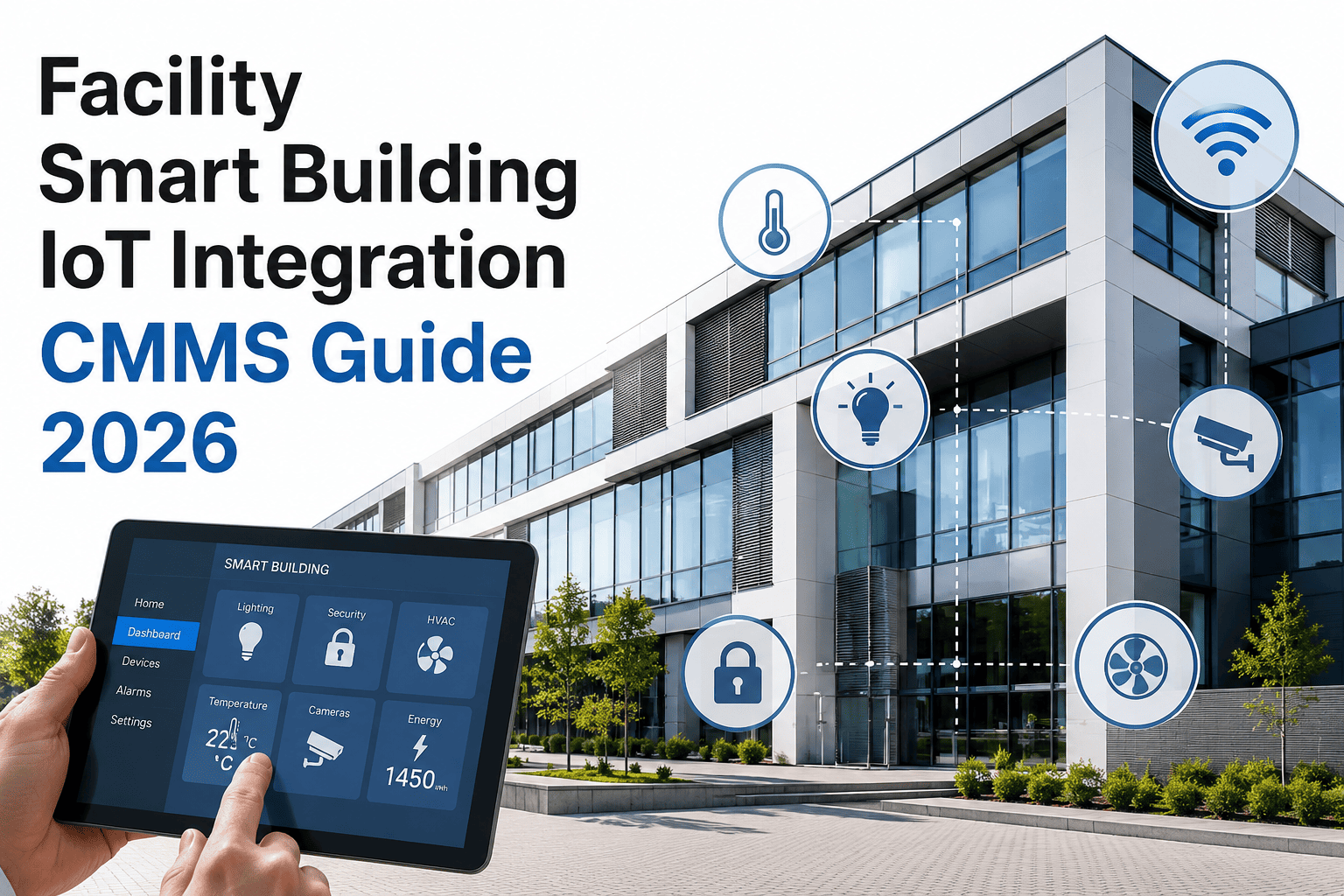
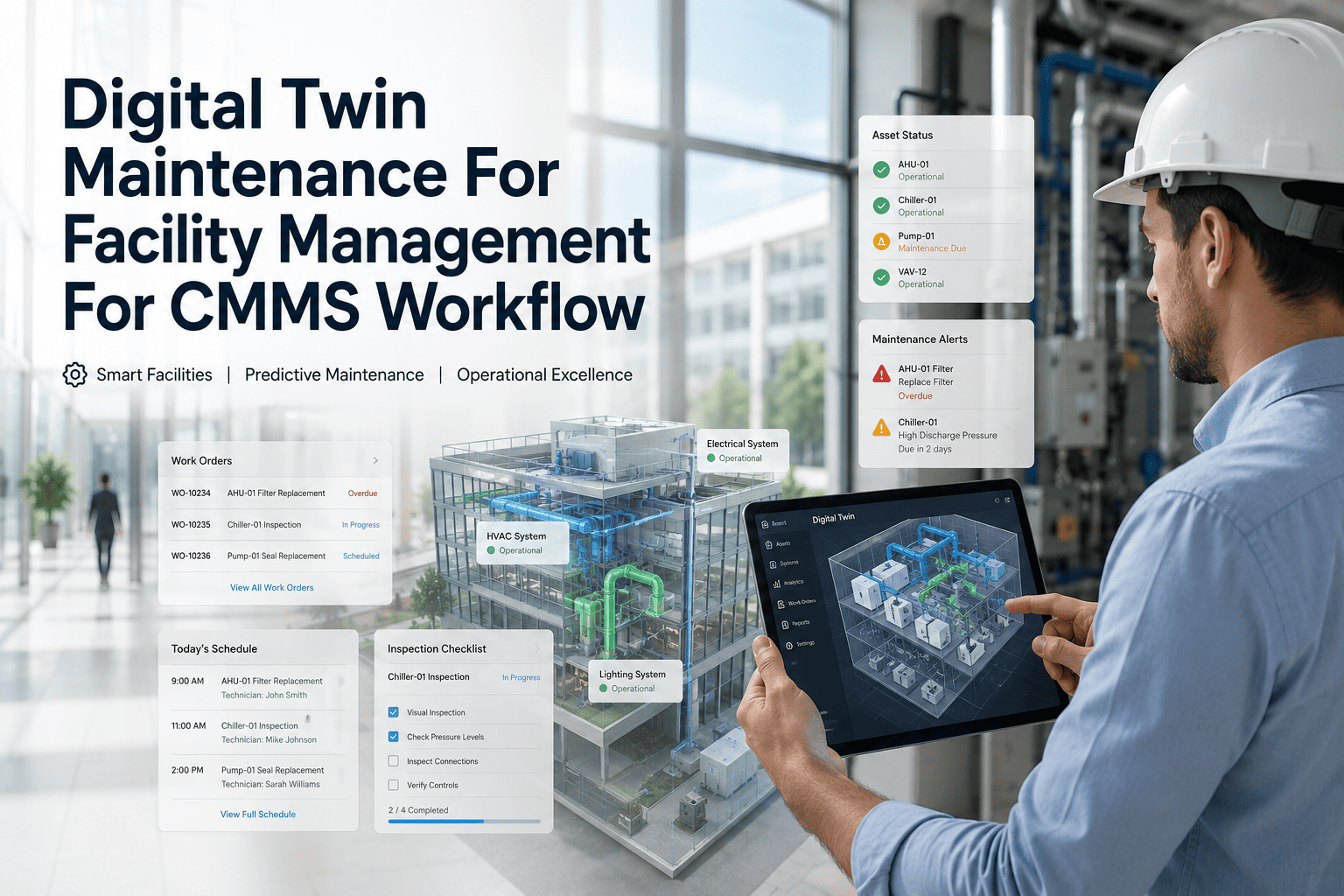
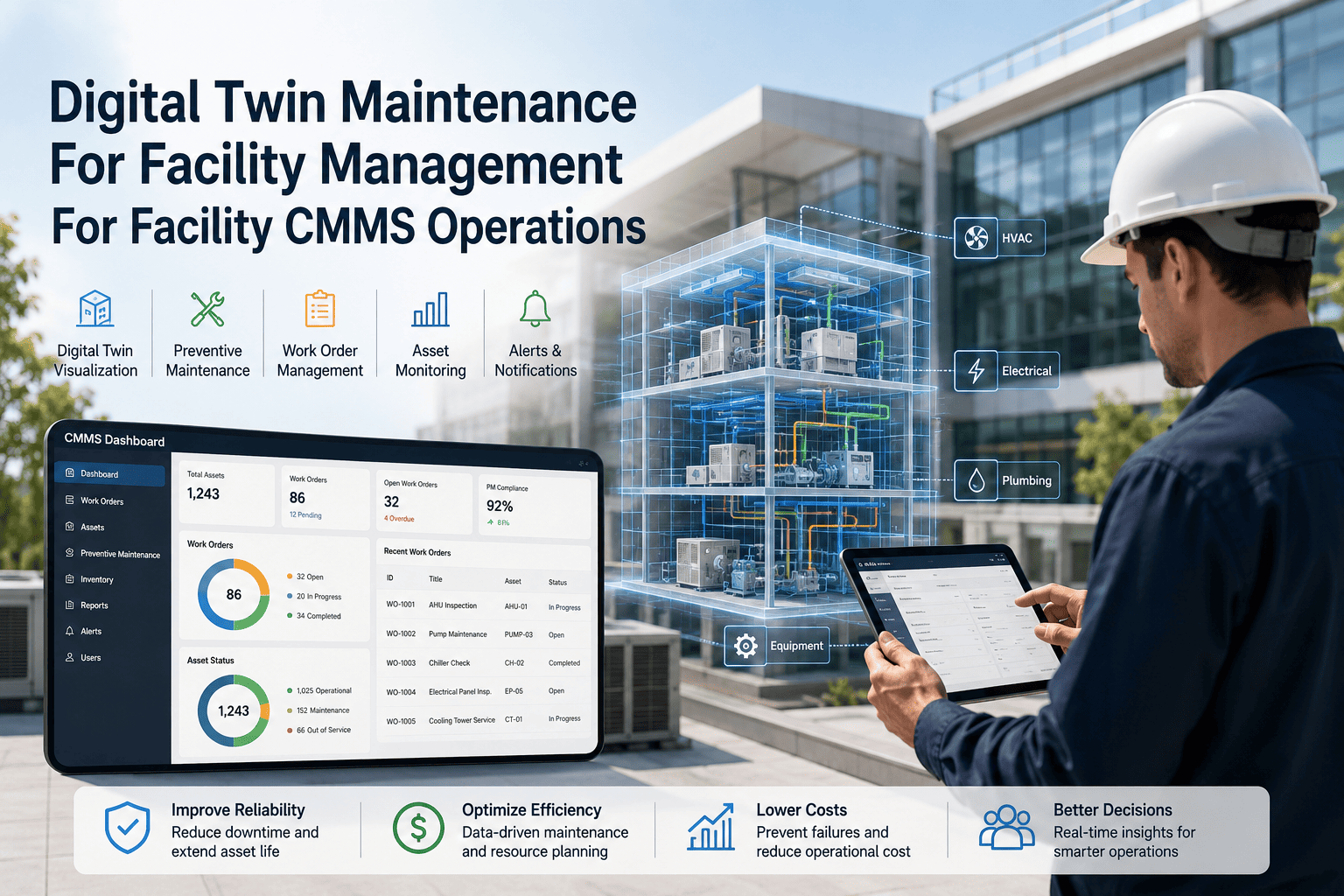
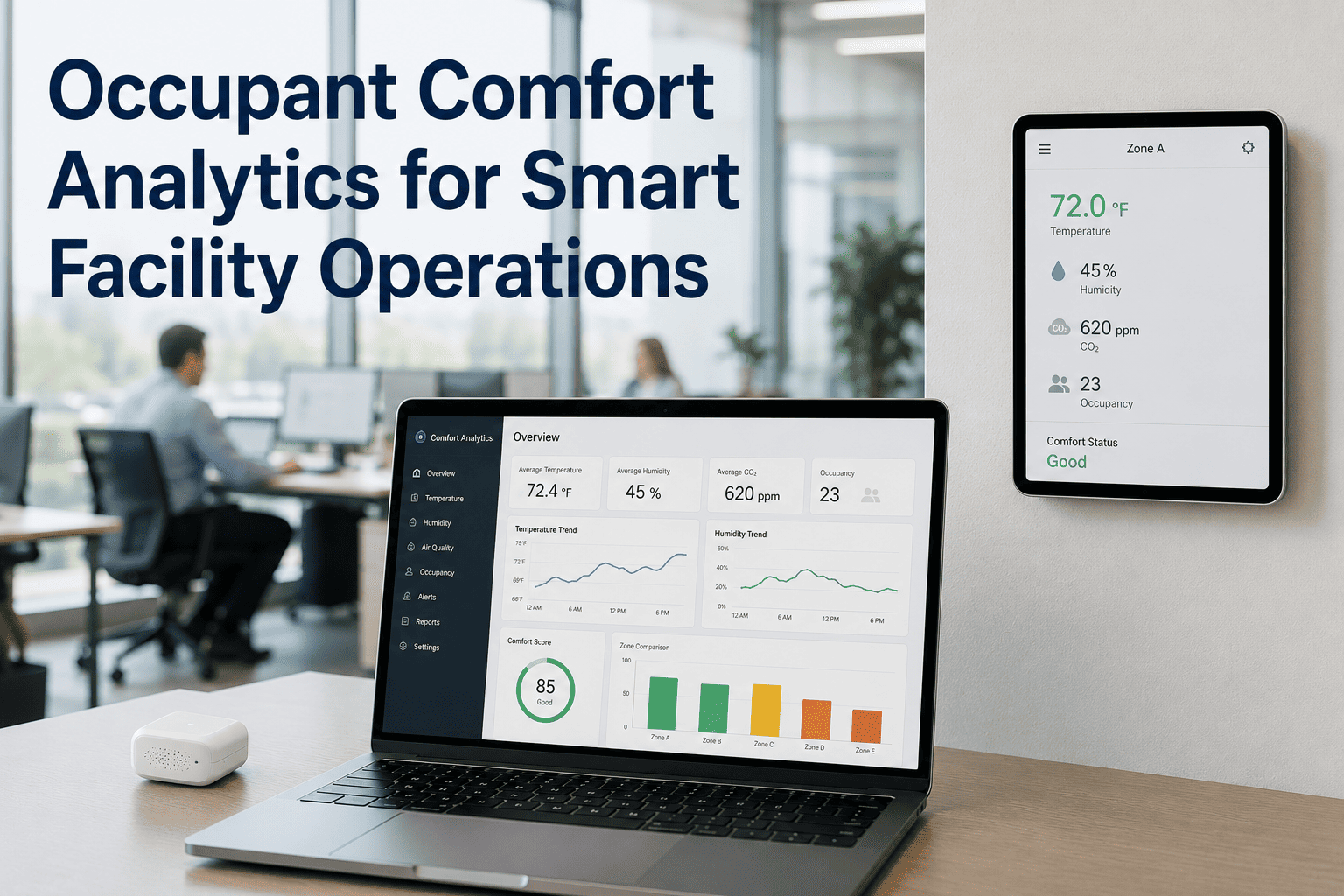
A building digital twin is only as useful as the maintenance data feeding it — and most facility teams discover this too late, after investing in a twin platform and finding that the model has no reliable operational history to reason from. The core problem is data quality, not technology: IoT sensor streams, work order records, asset histories, and preventive maintenance logs are scattered across disconnected systems that have never been reconciled into a consistent, structured format a digital twin can consume. Gartner estimates that poor data quality costs organisations an average of $12.9 million annually, and in facility operations, that cost appears as missed predictive maintenance windows, incorrect asset lifespan projections, and energy optimisation models that produce inaccurate recommendations. OxMaint's IoT Integration platform serves as the clean, structured operational data layer that building digital twins require — storing asset history, sensor readings, work order outcomes, and PM completion records in a consistent, API-accessible format from day one. Book a demo to see how facility operations teams prepare their building data for digital twin integration with OxMaint as the operational foundation.
23%
Asset records with complete maintenance history
Most building asset registers contain installation date and model number — but no work order history, failure events, or PM completion records that a digital twin needs to project future behaviour
41%
Sensor data streams reconciled to assets
IoT sensors generate continuous data but it is stored in time-series databases without linkage to specific asset records, spaces, or maintenance events — making trend analysis unreliable
89%
Data readiness achieved after OxMaint integration
When work orders, sensor readings, and PM records are unified in OxMaint, facility teams report digital twin data readiness scores above 85% within 90 days — without a data engineering project
Building Digital Twin — Data Layer Architecture
Digital Twin Platform
3D model · Simulation · Predictive analytics · Space planning
Data via API
OxMaint — Operational Data Layer
Asset history · Work orders · PM records · IoT sensor integration · Failure modes
Feeds from
IoT Sensors
BMS / BAS
SCADA
Field Technicians
Your digital twin needs clean operational data. OxMaint builds the asset history your twin model depends on — from day one.
01
Asset Master Data
Installation date · Manufacturer · Model · Location · Criticality · Warranty
Twin uses this to: initialise asset nodes, assign degradation models, set replacement horizon projections
02
Work Order History
Failure mode · Repair type · Labour hours · Parts used · Technician · Timestamps
Twin uses this to: build failure frequency curves, identify high-maintenance assets, validate simulation accuracy
03
Sensor & IoT Readings
Temperature · Vibration · Pressure · Energy draw · Run hours · Flow rate
Twin uses this to: monitor real-time asset state, detect drift from normal, trigger predictive maintenance alerts
04
PM Completion Records
Schedule adherence · Technician sign-off · Inspection findings · Deferred items
Twin uses this to: calibrate remaining-useful-life models, identify PM gaps that correlate with higher failure rates
05
Energy & Performance Data
kWh consumption · COP · HVAC setpoints · Occupancy correlation · Carbon output
Twin uses this to: optimise energy scheduling, model impact of maintenance on energy efficiency, target ESG commitments
06
Space & Asset Linkage
Floor · Zone · Room · Asset-to-space mapping · BIM reference ID
Twin uses this to: spatially locate maintenance events, correlate asset performance with occupancy patterns and zone conditions
Digital Twin Data Readiness: Where Buildings Start vs. After OxMaint
| Data Requirement |
Typical Starting State |
After 90 Days with OxMaint |
Twin Impact |
| Asset register completeness |
40–60% complete (no history) |
95%+ with work order linkage |
Enables asset-level simulation |
| Failure mode documentation |
Not recorded — anecdotal only |
Structured per work order type |
Powers FMEA in twin model |
| IoT sensor-to-asset linkage |
Sensor ID only — no asset tag |
Sensor mapped to OxMaint asset |
Enables condition-based triggers |
| PM schedule adherence rate |
Unknown — no tracking system |
Tracked per asset, per period |
RUL model calibration input |
| API-accessible operational data |
None — data in spreadsheets/email |
Full REST API on all data types |
Direct twin platform data feed |
Expert Review
Dr. Fatima Al-Rashid — Smart Building Systems Architect, 15 years, formerly Siemens Building Technologies
Every digital twin project I have consulted on has hit the same wall: the building model exists, the sensors are connected, but the operational data that gives the twin intelligence — the maintenance history, the failure events, the PM adherence record — is either missing or inaccessible. The twin becomes a visualisation tool rather than a decision-support system. What a structured CMMS like OxMaint provides is the operational data backbone that allows the twin to be calibrated against real asset behaviour. When the twin predicts a chiller failure in 30 days, it should be drawing on 3 years of work order history and sensor drift analysis — not a generic degradation curve from a vendor datasheet. OxMaint is where that history lives.
Frequently Asked Questions
How does OxMaint connect to digital twin platforms like Autodesk Tandem, Bentley iTwin, or Azure Digital Twins?
OxMaint exposes a full REST API that allows digital twin platforms to query asset records, work order history, PM completion data, and sensor readings in structured JSON format. Most major twin platforms — including Autodesk Tandem, Bentley iTwin, and Microsoft Azure Digital Twins — support external data source connectors that map directly to the OxMaint API schema.
Book a demo and specify your target twin platform — our integration team will confirm the connector pathway and typical data mapping configuration for your environment.
Can OxMaint receive real-time sensor data from a building management system (BMS) and store it against asset records?
Yes. OxMaint integrates with BMS and BAS platforms via BACnet, Modbus, OPC-UA, and REST API — receiving sensor readings that are stored against the specific asset record in OxMaint's operational database. This creates a time-series data record per asset that is accessible both within OxMaint for condition monitoring and via API for digital twin consumption.
Start a free trial to configure your first BMS data stream and see how sensor readings appear in the asset record timeline.
What historical work order data can be migrated into OxMaint when a building switches from a legacy CMMS?
OxMaint supports bulk data import from CSV, Excel, and direct API migration from most major legacy CMMS platforms. Asset records, historical work orders, PM schedules, and parts inventory can all be migrated — preserving the historical operational data that your digital twin needs to build an accurate baseline model.
Book a demo to discuss your current CMMS and confirm the migration path, timeline, and data mapping approach for your specific asset database.
How does OxMaint handle the BIM-to-CMMS asset linkage that digital twin projects require?
OxMaint supports custom asset identifier fields including BIM GUID, IFC reference ID, and space/zone tags — enabling each physical asset in OxMaint to carry the same unique identifier that locates it in the BIM model. When the digital twin queries OxMaint for maintenance data on a specific asset, it uses the BIM GUID as the primary key — ensuring spatial location in the twin and operational history in OxMaint are always synchronised.
Sign in to OxMaint to explore the custom field configuration and see how BIM IDs are mapped during the asset import process.
Does OxMaint support energy data integration for buildings targeting ESG or LEED digital twin requirements?
Yes. OxMaint integrates with smart meter systems, energy sub-metering platforms, and BMS energy monitoring via API and direct sensor connection — storing kWh consumption, peak demand data, and HVAC performance metrics against the relevant asset or zone records. This energy data is accessible via the OxMaint API for digital twin ESG modelling and LEED operations and maintenance documentation.
Book a demo to explore OxMaint's energy data integration capabilities and how they align with your building's ESG reporting framework.
OxMaint · IoT Integration · Smart Building Operations
Your digital twin is only as intelligent as the operational data behind it. OxMaint builds the asset history that makes your twin model reliable.
Asset History · Work Order Data · IoT Sensor Integration · BIM Linkage · REST API · PM Records · Energy Data