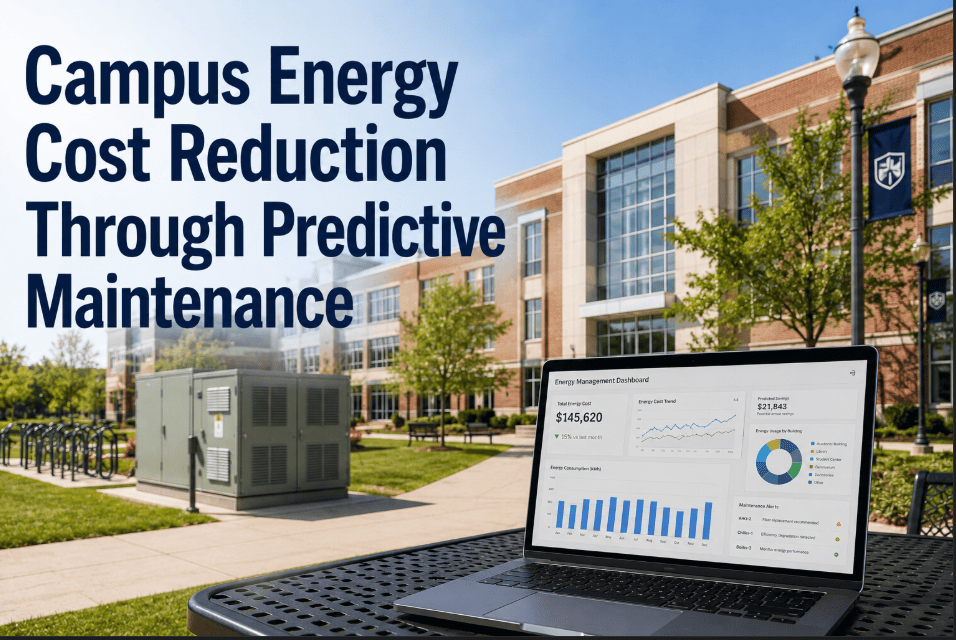
Campus utility bills are out of control — and most institutions have no idea where the money goes. HVAC systems account for the largest share of campus energy consumption, yet aging equipment runs 30 to 50 percent less efficiently than modern alternatives. Steam distribution losses alone can drop system efficiency from 85 percent to as low as 60 percent. Lighting left on in empty classrooms, labs running ventilation 24/7, and buildings heated during semester breaks silently drain budgets that could fund faculty, scholarships, or deferred maintenance. AI-powered energy monitoring transforms this blind spending into visible, controllable, and optimizable data — building by building, system by system, hour by hour. Connect your campus energy systems to OxMaint and start reducing utility waste — free trial, no credit card required.
Energy & Sustainability · Smart Campus · Education
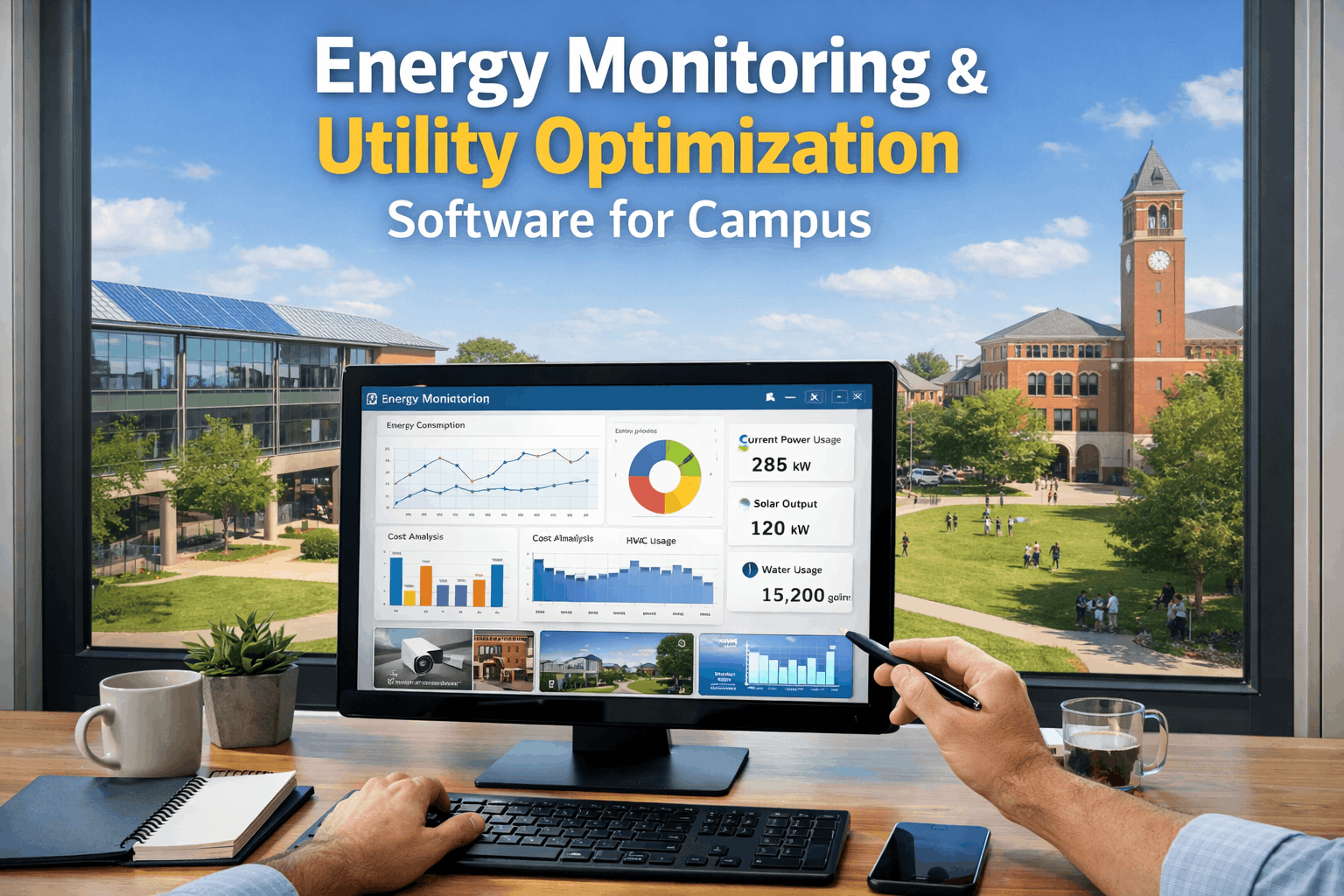
Energy Monitoring and Utility Optimization Software for Smart Campuses
Your campus is consuming energy right now in buildings that are empty. HVAC systems are fighting each other — heating and cooling simultaneously. Equipment is degrading, losing efficiency by the month. AI-powered monitoring sees what no walk-through can catch, converting raw utility data into actionable savings before the next bill arrives.
Live Campus Energy Dashboard
⚠ Science Hall HVAC running at 140% baseline — work order auto-generated
15-30%
Typical energy savings
24/7
Real-time monitoring
$1.10
Avg. Electricity Cost Per Sq Ft at U.S. Campuses
50%+
Of Campus Energy Consumed by HVAC Systems
30-50%
Extra Energy Wasted by Aging Equipment
49 Yrs
Average Age of Campus Buildings Nationwide
How It Works
What AI Energy Monitoring Does — And Why Campuses Cannot Afford to Wait
Traditional campus energy management relies on monthly utility bills reviewed weeks after consumption occurs. By the time anyone notices a spike, thousands of dollars have already been wasted. AI-powered monitoring changes the equation entirely — analyzing real-time data streams from every building, system, and meter on campus to detect waste the moment it happens.
Smart meters, BAS controllers, IoT sensors, and utility sub-meters continuously stream data — temperature, humidity, power draw, flow rates, occupancy — into an AI analytics engine. The system learns each building's normal consumption patterns and immediately flags deviations: HVAC running during unoccupied hours, simultaneous heating and cooling, equipment efficiency degradation, and anomalous consumption spikes.
The result: facilities teams fix problems in hours instead of discovering them on next month's bill. OxMaint connects energy anomaly detection directly to automated work orders — so every watt of waste gets tracked and resolved. Start your free trial.
Campus Energy Data Flow
↓
⬡
AI Analytics Engine
Anomaly Detection · Pattern Learning · Optimization
↓
⚙
Work Order Auto-Generated in OxMaint
The Hidden Drain
Where Your Campus Is Bleeding Energy Right Now
?
Simultaneous Heating & Cooling
One building zone calls for heat while an adjacent zone runs AC. Without real-time monitoring, this energy war can persist for months — invisible to walk-throughs but devastating to utility budgets. AI detects conflicting setpoints within hours.
Most common waste pattern across campuses
?
After-Hours Operation
HVAC and lighting systems running at full capacity in empty buildings during nights, weekends, and semester breaks. A single classroom building running unnecessarily overnight can add $40,000 or more per year to utility costs.
Up to 40% of energy consumed during unoccupied hours
?
Equipment Efficiency Degradation
Aging chillers, boilers, and air handlers lose efficiency gradually — consuming 30 to 50 percent more energy than rated capacity. Without continuous monitoring, this silent escalation goes undetected until major equipment failure forces emergency replacement.
30-50% excess energy from degraded equipment
?
Lab Ventilation Waste
Laboratory fume hoods are among the most energy-intensive equipment on any campus. Running ventilation at full exhaust 24/7 when experiments only occur during business hours wastes conditioned air continuously — an invisible cost multiplier.
Lab vent hoods: highest per-unit energy consumers on campus
End-to-End Process
From Energy Anomaly to Resolved Work Order — The Full Workflow
This is what integrated campus energy monitoring looks like when connected to a CMMS like OxMaint. Every step is automated. Nothing relies on someone manually reviewing a utility bill.
01
Continuous Data Collection
Smart meters, BAS controllers, and IoT sensors stream real-time energy consumption data from every building, HVAC system, and major equipment asset across campus — 15-minute intervals or finer.
02
AI Baseline Learning
The platform establishes consumption baselines for each building based on weather, occupancy schedules, academic calendar, and historical usage patterns. Baselines adapt seasonally and improve continuously.
03
Anomaly Detection & Root Cause
When consumption deviates from baseline — after-hours operation, efficiency drop, conflicting setpoints — the AI identifies the anomaly type, affected system, and probable root cause automatically.
04
Cost Impact Quantification
Every anomaly is translated into dollars — estimated daily, weekly, and annual cost if unresolved. This financial context prioritizes work orders by budget impact, not just technical severity.
05
OxMaint: Auto Work Order Created
The confirmed energy anomaly triggers an automatic work order in OxMaint — assigned to the right technician with cost impact data, affected asset history, and recommended corrective action attached.
Optimization Targets
Six Campus Systems Where Energy Monitoring Delivers the Fastest ROI
❄
Central Chiller Plants
Monitor chiller efficiency (kW/ton), condenser approach temperatures, and cooling load matching. Detect degradation weeks before it shows on utility bills.
Highest Energy Cost
?
Boilers & Steam Distribution
Steam systems lose 15 to 40 percent efficiency through distribution losses. Monitor combustion efficiency, condensate return rates, and trap failures in real time.
High Waste Potential
?
Air Handling Units
AHUs serving classrooms, dorms, and labs often run on fixed schedules regardless of actual occupancy. AI-driven scheduling aligns operation with real demand patterns.
Quick Win
?
Lighting Systems
Lighting represents 31 percent of energy use in typical classroom buildings. Monitor after-hours usage, daylight harvesting effectiveness, and LED conversion savings.
31% of Classroom Energy
?
Laboratory HVAC & Fume Hoods
Labs consume 3 to 5 times more energy per square foot than standard buildings. Optimize exhaust rates based on actual usage, not worst-case continuous operation.
3-5× Standard EUI
?
Residence Halls
Dorms have unique occupancy patterns — high evening and weekend load, variable break periods. Monitor hot water consumption, plug load waste, and HVAC scheduling accuracy.
Variable Occupancy
OxMaint Turns Energy Waste Into Tracked, Resolved Work Orders — Automatically
No manual bill review. No missed anomalies. Every confirmed energy deviation becomes a tracked, assigned, and documented maintenance action with cost impact and sustainability metrics built in.
Monitoring Comparison
AI Energy Monitoring vs. Traditional Utility Management — The Capability Gap
Detects problems weeks after they start
No building-level cost breakdown
Cannot identify root cause of spikes
No occupancy-based optimization
Manual spreadsheet reporting only
No CMMS integration
Near-real-time data, limited analytics
Building-level visibility
Manual anomaly identification
Basic scheduling only
Partial data exports
Requires custom integration
◈
AI Monitoring + OxMaint
Real-time detection within minutes
System and equipment-level attribution
AI-powered root cause analysis
Occupancy and calendar-based optimization
Auto-generated sustainability reports
Direct API integration, auto work orders
Business Case
The Numbers That Make Campus Energy Monitoring a Budget Priority
15-30%
Typical energy cost reduction in year one
Documented across universities implementing AI-powered energy monitoring with CMMS integration. Most institutions achieve full platform payback within 90 days from identified savings alone.
$1.10
Avg. electricity cost per sq ft — the baseline you can beat
40%
Energy consumed during unoccupied hours at typical campuses
54%
Electricity reduction achieved in documented case studies
OxMaint Energy Management
How OxMaint Connects Energy Data to Real Maintenance Outcomes
Energy data without maintenance action is just an expensive dashboard. OxMaint is the operational layer that converts energy anomalies into resolved work orders, tracked savings, and audit-ready sustainability records.
IoT Ready
BAS, SCADA & Meter Integration
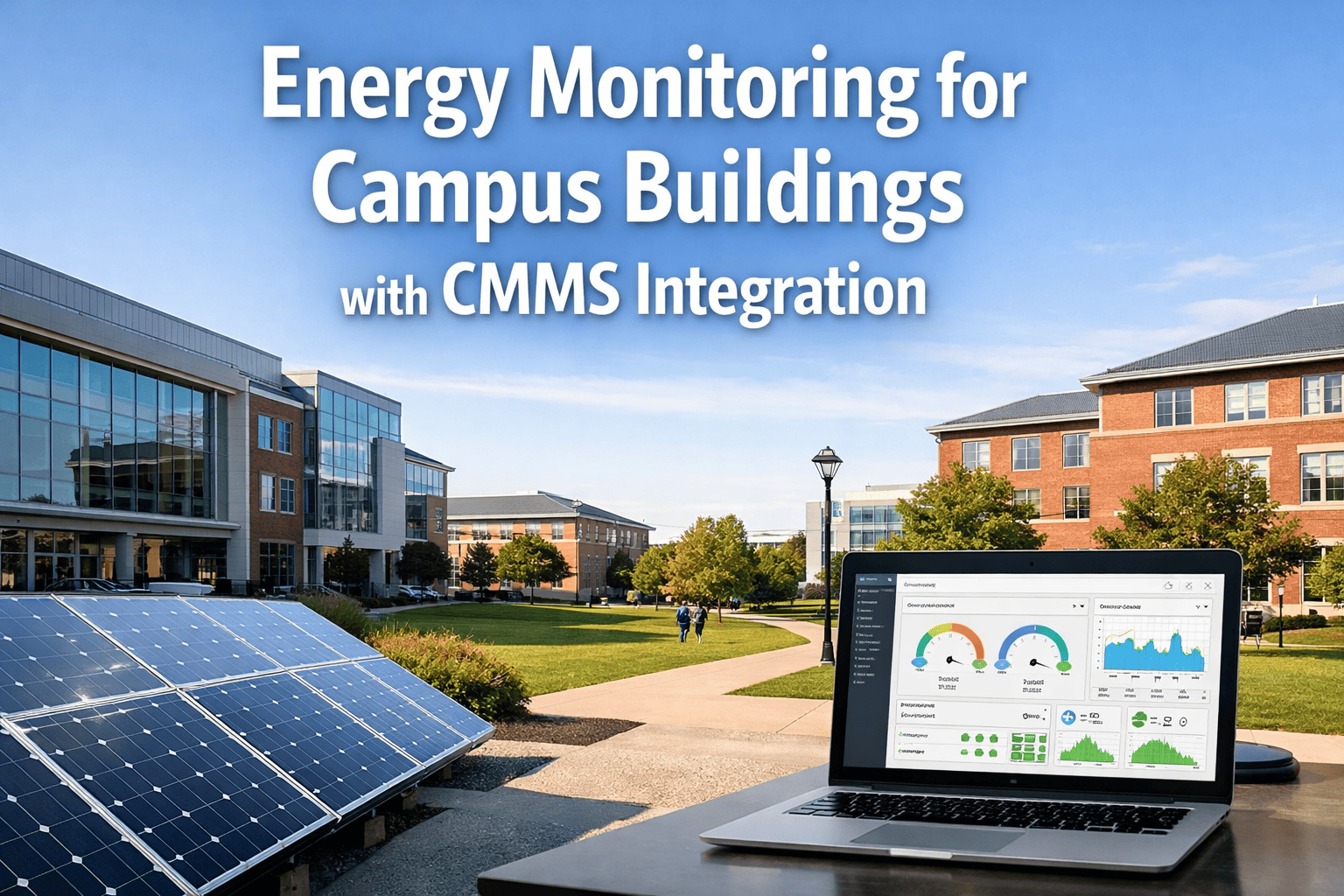
Connects to existing building automation systems, smart meters, and IoT sensors via standard APIs. Energy anomalies trigger work orders automatically — zero manual handoff between detection and dispatch.
Auto Work Orders
Energy Anomaly to Action in Seconds
Confirmed consumption anomalies generate work orders instantly — assigned to the right technician with affected building, system data, estimated cost impact, and recommended corrective steps attached.
Cost Tracking
Dollar Impact on Every Work Order
Every energy-related work order includes estimated daily and annual cost if unresolved. Facilities teams and CFOs can prioritize repairs by financial impact — not just technical urgency.
Sustainability
Carbon & Compliance Reporting
Track energy savings, carbon reduction, and utility cost avoidance over time. Generate sustainability reports for board presentations, accreditation reviews, and climate commitment milestones automatically.
Mobile First
Works Anywhere on Campus
Technicians receive energy-triggered work orders on mobile devices across campus — mechanical rooms, rooftops, basements. All data syncs automatically, even in areas with intermittent connectivity.
Multi-Site
Portfolio-Wide Energy Dashboard
Multi-campus districts see energy performance, anomaly status, and open work orders across every building and site in a single real-time dashboard — benchmark best performers and target worst offenders.
Common Questions
What Campus Facility Leaders Ask About AI Energy Monitoring
How does AI energy monitoring work with our existing building automation system?
OxMaint connects to existing BAS platforms (BACnet, Modbus, LonWorks) and SCADA systems via standard APIs. There is no need to replace your current infrastructure. The AI analytics layer sits on top of your existing data streams — smart meters, sub-meters, BAS controllers, and IoT sensors — normalizing and contextualizing all data into a unified monitoring platform. Most campuses have data already being collected that is simply not being analyzed.
Start your free trial to connect your existing systems.
How quickly can we expect to see measurable energy savings?
For fault detection — identifying current problems like after-hours operation, simultaneous heating and cooling, and failed economizers — results begin immediately upon connection. These are rules-based detections that work from day one. For predictive optimization, AI models need 2 to 4 weeks of baseline data to learn building-specific patterns, with accuracy improving over 3 to 6 months as the system learns seasonal and occupancy variations. Most campuses report measurable savings within the first 30 to 60 days.
Book a demo to discuss your timeline.
Can this integrate with our academic calendar and class scheduling system?
Yes. OxMaint can ingest scheduling data from student information systems and class scheduling platforms to align HVAC operation with actual building occupancy. This means the system knows when a building transitions from full classes to empty evenings, when semester breaks begin, and when summer sessions change occupancy patterns — adjusting baselines and triggering anomalies when systems run during confirmed unoccupied periods.
Start your free trial and configure academic calendar integration.
How does this help us meet our campus sustainability commitments?
Every energy anomaly resolved through OxMaint is automatically tracked with kWh savings, carbon reduction calculations, and cost avoidance metrics. The platform generates sustainability reports that document verified energy reductions — not estimates — for board presentations, accreditation reviews, AASHE STARS reporting, and climate commitment progress tracking. Institutions using AI-powered monitoring have documented electricity reductions exceeding 50 percent in optimized buildings.
Talk to our team about sustainability reporting — book a 30-minute demo.
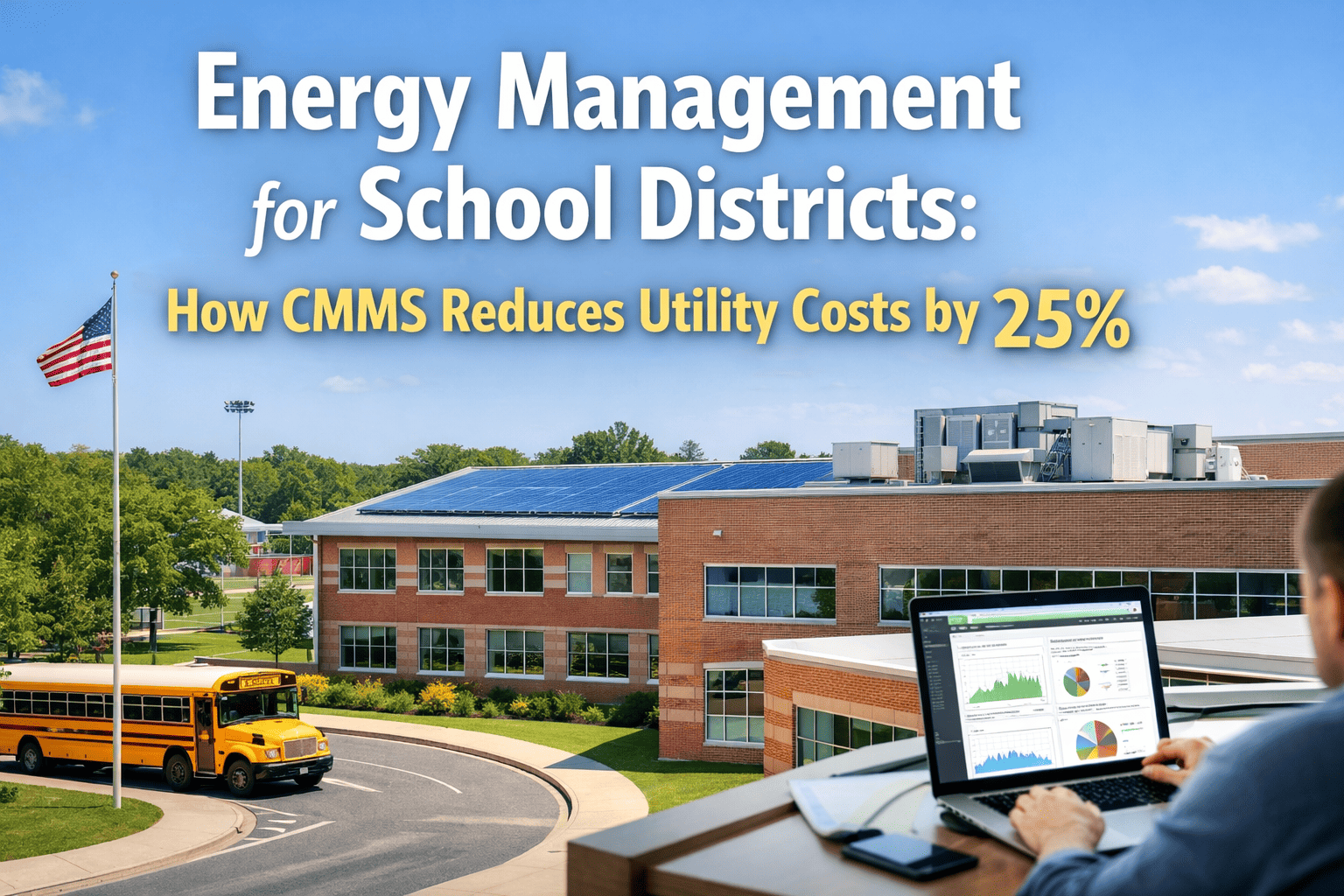
Is this practical for K-12 districts with limited technical staff?
Absolutely. OxMaint is cloud-based with no on-premises infrastructure required. The platform is designed for maintenance professionals, not data scientists. Work orders include plain-language descriptions of the energy issue, the affected system, and step-by-step corrective actions. K-12 districts with as few as 5 buildings and one facilities manager can begin monitoring and saving within days of setup.
Start your free trial — no credit card, no IT department required.
What is the difference between energy monitoring and a standard CMMS?
A standard CMMS manages work orders, preventive maintenance schedules, and asset records. Energy monitoring adds a real-time analytics layer that detects energy waste, equipment efficiency degradation, and consumption anomalies — then feeds those findings directly into the CMMS as prioritized, cost-quantified work orders. OxMaint combines both capabilities in a single platform, so energy intelligence and maintenance execution live in the same system.
Book a demo to see the integration in action.
Energy & Sustainability · Smart Campus · Free to Start
Your Campus Is Wasting Energy Right Now. Start Seeing Where.
Connect your building systems to AI-powered energy monitoring, automated work orders, cost tracking, and sustainability reporting — all in OxMaint. No heavy implementation. No long onboarding. Built for campus facilities teams who need to cut utility costs and prove sustainability progress.