Electric Arc Furnace (EAF) Robotics: Maintenance for Smart Steelmaking 2026
By John Mark on February 19, 2026
When an electric arc furnace electrode breaks mid-heat because a hairline crack went undetected during the last manual inspection, the steelmaker does not just lose a $15,000 electrode — they lose the entire heat worth $180,000 in liquid steel, face 4 to 6 hours of unplanned downtime at $50,000 per hour, and risk catastrophic arc flash injuries to any personnel near the furnace. In 2026, the EAF operations leading the global mini-mill revolution are those where robots handle the most dangerous, repetitive, and precision-critical maintenance tasks while a CMMS orchestrates every intervention based on real-time furnace condition data, not guesswork.
The Electric Arc Furnace is the beating heart of every mini-mill and an increasingly critical asset in integrated steelworks transitioning toward decarbonized production via scrap-based and DRI-fed routes. EAFs operate in the most violent conditions in all of steelmaking: temperatures exceeding 1,800°C at the arc zone, extreme electromagnetic interference, explosive off-gas atmospheres, heavy dust loading, and intense acoustic and vibration environments. These conditions make EAFs simultaneously the most maintenance-intensive and the most difficult-to-maintain asset in any steel plant. Robotic maintenance solutions integrated with CMMS platforms like Oxmaint are fundamentally changing this equation. Smart steelmakers ready to transform their EAF maintenance can start their free trial today.
2026 EAF Maintenance Intelligence
The Hidden Cost Crisis Inside Every Electric Arc Furnace
EAFs account for 30% of global steel output and growing. Yet most EAF shops still rely on manual inspection methods designed for an era before 150-ton ultra-high-power furnaces operating at tap-to-tap times under 40 minutes.
$6.1B
Global annual EAF unplanned downtime cost across mini-mill operations
40%
of EAF maintenance tasks involve direct human exposure to arc flash, off-gas, or molten steel zones
90%
of early-stage refractory and electrode faults detectable by robotic thermal and acoustic sensors
Source: World Steel Association EAF Committee & McKinsey Metals & Mining Practice 2025
The modern EAF is not just a melting vessel — it is a complex system of interdependent components: the shell and refractory lining, the electrode column and regulation system, the roof and delta section, water-cooled panels and off-gas ductwork, the hydraulic tilt mechanism, and the electrical power delivery system. A failure in any single component cascades into lost production, safety risk, and quality deviation. Robotic systems — from quadruped patrol robots and inspection drones to robotic electrode handlers and automated refractory gunning machines — address maintenance challenges across every one of these subsystems, while CMMS integration ensures that the data they collect drives optimized, predictive maintenance decisions.
The EAF Maintenance Challenge: Why Robots Are Essential
No other steelmaking asset combines the same intensity of heat, electromagnetic energy, mechanical stress, and chemical attack as an electric arc furnace. These extreme conditions create a unique set of maintenance challenges that conventional manual approaches cannot adequately address. Understanding these challenges explains why robotic solutions are not a luxury for EAF operators — they are a competitive necessity.
Extreme Thermal Environment
Arc temperatures exceed 3,000°C at the electrode tip. Shell, roof, and panel surfaces reach 200-400°C during operation. Refractory hot face temperatures exceed 1,600°C. Human access is impossible during operation and severely limited between heats.
Robotic solution: Thermal imaging robots patrol exterior surfaces between heats; drones inspect furnace interior during planned downs
Electromagnetic Interference (EMI)
Currents up to 80,000 amps generate massive electromagnetic fields that disrupt standard electronics, disable conventional sensors, and make wireless communication unreliable within the furnace bay.
Robotic solution: EMI-hardened robots with shielded electronics and fiber-optic data links operate reliably in high-field zones
Rapid Refractory Degradation
EAF refractory linings endure chemical attack from slag, thermal shock from rapid heating/cooling cycles, and mechanical erosion from scrap charging. Lining life is measured in hundreds of heats and varies dramatically by zone.
Robotic solution: Laser scanning and thermal profiling robots map refractory wear after every heat, predicting remaining life by zone
Electrode Management Complexity
Graphite electrodes consume at 1-3 kg per ton of steel and cost $3,000-$8,000 per ton. Column joints, tip condition, regulation accuracy, and breakage prevention require constant monitoring that manual methods cannot sustain.
Robotic solution: Automated electrode handlers and machine-vision monitoring systems manage jointing, consumption tracking, and crack detection
Water-Cooled Panel Integrity
Roof and sidewall water-cooled panels operate under extreme thermal load. A panel leak introduces water into the molten bath, creating an explosion risk. Detection must be immediate and continuous, not periodic.
Robotic solution: Thermal robots detect panel hot spots indicating wear-through; acoustic sensors identify micro-leaks before catastrophic failure
Off-Gas System Degradation
The fourth-hole off-gas duct, elbow, and settling chamber endure temperatures up to 1,800°C with heavy dust loading. Duct erosion leads to fugitive emissions, EPA violations, and production restrictions.
Robotic solution: Crawlers and drones inspect off-gas ductwork internally during shutdowns; external thermal robots monitor during operation
Every one of these challenges shares a common thread: the inability of human inspectors to access critical areas frequently enough, safely enough, or with sufficient measurement accuracy to detect problems before they become emergencies. Robots break this constraint entirely, providing continuous or near-continuous condition monitoring that converts reactive EAF maintenance into a predictive, data-driven discipline.
The Robotic Ecosystem for EAF Maintenance
A comprehensive EAF robotics maintenance program deploys multiple specialized robotic platforms, each designed for specific tasks and environmental conditions around the furnace. These platforms feed data into a unified CMMS that serves as the single source of truth for all EAF maintenance planning and execution.
Oxmaint CMMS
Quadruped Patrol Robots
Thermal imaging, vibration, and gas sensing across the EAF platform, transformer bay, and hydraulic room during operation
Inspection Drones
Interior furnace surveys, roof inspection, off-gas duct scanning, and overhead crane rail assessment during planned shutdowns
Magnetic Crawlers
Ultrasonic thickness measurement on shell plates, water-cooled panels, and off-gas ductwork without scaffolding or confined space entry
Automated hot repair gunning of EAF sidewalls and slag line between heats, guided by laser-scanned wear profiles from the CMMS
Machine Vision Systems
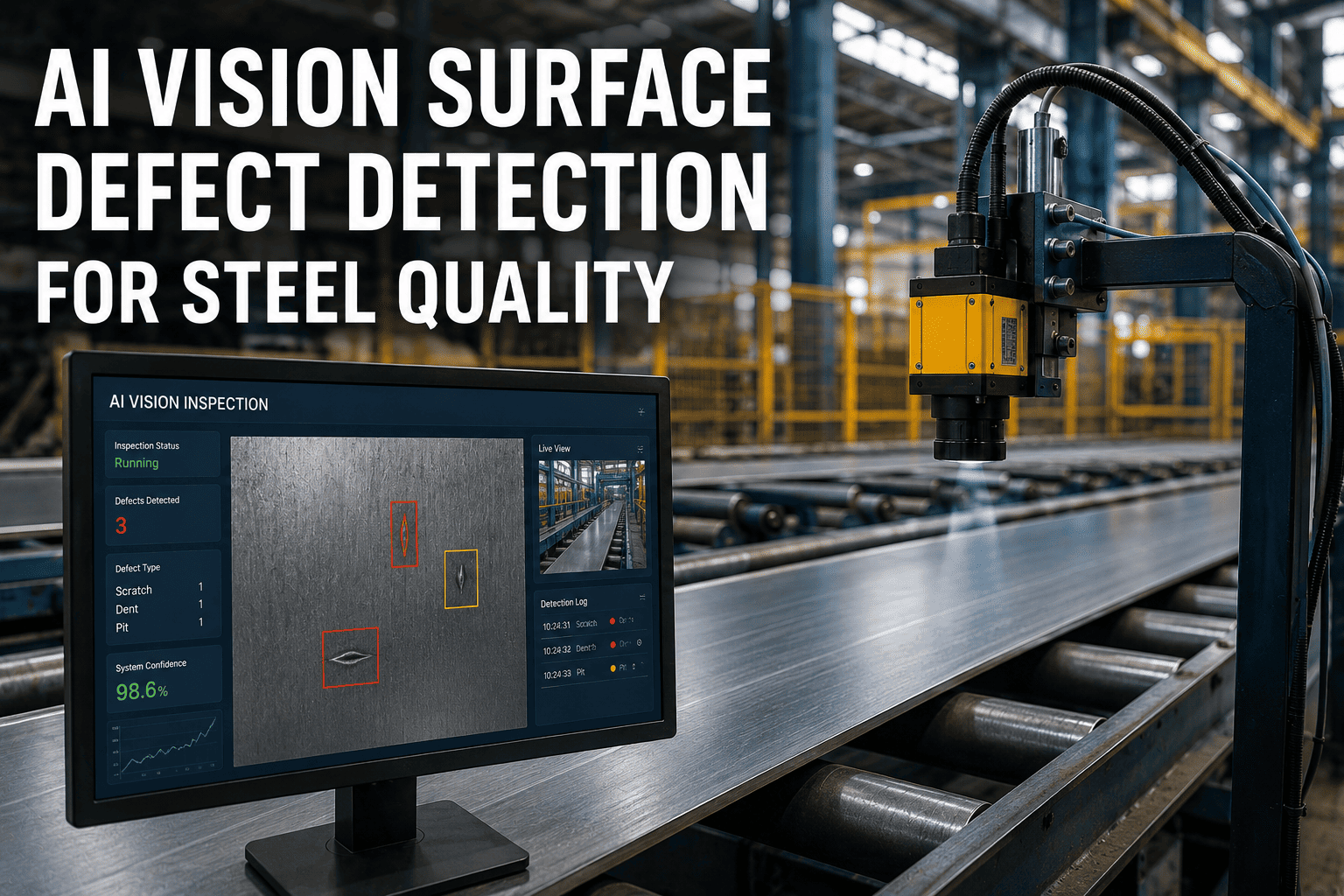
Fixed and PTZ camera arrays with AI analytics monitor electrode tip condition, charge distribution, bath foaming, and slag door buildup in real-time
The critical differentiator is that all six robotic platforms share a common data layer through the CMMS. When the quadruped robot detects a thermal anomaly on a water-cooled panel, and the machine vision system simultaneously shows abnormal slag splashing in that zone, the CMMS correlates both data streams and escalates the alert — triggering an immediate inspection by the magnetic crawler to confirm wall thickness. This multi-sensor fusion, orchestrated by the CMMS, catches failures that no single system would detect in isolation.
EAF Refractory Management: The Highest-Value Robotic Application
Refractory lining is the single largest maintenance cost in EAF operations, typically accounting for 25-35% of total conversion cost. Lining life directly determines furnace availability, tap-to-tap time, and energy efficiency. Yet most EAF shops still manage refractory through fixed campaign limits and manual visual inspection — methods that either replace lining too early, wasting material and availability, or too late, risking breakouts that endanger lives and destroy equipment.
Refractory Management: Manual vs. Robotics-CMMS Approach
Traditional Approach
✗Visual inspection through slag door — limited view, subjective
✗Laser scan only during full reline shutdowns (every 400-800 heats)
✗Gunning decisions based on operator experience, not data
✗Fixed campaign limits waste 15-25% of remaining lining life
✗Breakout risk from undetected localized wear acceleration
✗No correlation between wear patterns and operating practices
High Cost, High Risk
→
Robotics + CMMS Approach
✓3D laser scan after every heat via robotic arm — full 360° profile
✓Wear rate calculated per zone per heat in CMMS trending
✓Gunning robot targets only zones below threshold — material savings 30%+
✓Campaign extended 20-40% by zone-specific remaining life prediction
✓Breakout prevention through real-time minimum thickness alerts
✓Wear patterns linked to charge mix, power profile, and slag chemistry
Optimized Cost, Near-Zero Risk
30%
Refractory cost reduction through targeted robotic gunning and optimized campaign length
25%
Increase in average lining campaign life with zone-specific wear prediction in CMMS
95%
Reduction in unplanned breakout events when robotic scanning replaces manual inspection
$2.8M
Average annual savings per EAF from combined refractory optimization alone
Electrode Management: Robotic Precision for the Costliest Consumable
Graphite electrodes represent the second-largest variable cost in EAF steelmaking after scrap, with annual electrode spend for a single 150-ton furnace reaching $3M to $8M depending on market prices. Electrode breakage, excessive consumption, and inefficient column management are problems that manual handling perpetuates. Robotic electrode management systems address every phase of electrode lifecycle from receipt to stub disposal.
Robotic Electrode Management Pipeline
Automated handling from warehouse to furnace column to consumption analytics
01
Receipt & Inspection
Robotic unloading with ultrasonic inspection for internal defects, length/diameter verification, and CMMS registration with supplier lot tracking
02
Column Jointing
Robotic nipple installation with calibrated torque application, thread inspection, and anti-oxidant coating — eliminating manual overhead crane lifts
03
In-Service Monitoring
Machine vision tracks tip consumption rate per heat, detects lateral cracks, monitors column straightness, and feeds regulation system optimization data to CMMS
04
Stub Management & Analytics
Robotic stub removal, measurement, and recycling. CMMS correlates consumption data with power profiles, charge mix, and supplier lots to optimize procurement
The financial impact of robotic electrode management is substantial. Reducing breakage by 80% and optimizing consumption by 5-10% through data-driven regulation tuning can save $300,000 to $800,000 annually per furnace. When the CMMS links electrode consumption patterns to specific scrap grades, power curves, and operator practices, the data becomes a tool for continuous process improvement that extends far beyond maintenance into production optimization.
Financial Impact: ROI of EAF Robotic Maintenance
The financial case for robotic maintenance in EAF operations is among the strongest in all of heavy industry. The combination of extreme downtime costs ($40,000-$60,000 per hour), expensive consumables (refractory and electrodes), high safety incident rates, and the direct link between maintenance quality and steel quality creates a massive ROI opportunity for every dollar invested in robotic automation and CMMS integration.
Financial Impact Model
Single 150-Ton EAF: Manual vs. Robotics-CMMS Maintenance
Without Robotic Maintenance
Unplanned Downtime Losses$2.5M - $5.0M/yr
Excess Refractory Consumption$1.2M - $2.8M/yr
Electrode Breakage & Waste$400K - $1.2M/yr
Safety Incidents & Penalties$300K - $900K/yr
Off-Gas / Environmental Fines$200K - $600K/yr
Annual Exposure: $4.6M - $10.5M
VS
With Robotics Fleet + Oxmaint CMMS
Robotics & CMMS Investment$400K - $900K/yr
Downtime Reduction45% - 65%
Refractory Cost Reduction25% - 35%
Electrode Savings10% - 18%
Safety Incident Elimination85% - 95%
Net Annual Savings: $3M - $8M+
Transform Your EAF Maintenance Into a Competitive Advantage
Stop losing heats to unplanned failures in zones your team cannot safely inspect. Oxmaint CMMS integrates with every EAF robotic platform — from refractory scanners to electrode handlers — to auto-generate work orders, predict lining life, and optimize your entire furnace maintenance strategy.
The most successful EAF robotics programs start with the highest-value, lowest-complexity application — typically refractory scanning and CMMS integration — then expand to electrode management, external patrol robots, and finally full predictive analytics with digital twin modeling. Each phase builds on the data foundation of the previous one.
Quadruped robot for thermal patrolElectrode monitoring systemWater panel integrity sensingAuto work order generation
Phase 3
Months 10-14
Full Predictive & Digital Twin
Off-gas duct robotic inspectionDigital twin furnace modelPredictive lining life optimizationProcess-maintenance data fusion
CMMS: The Intelligence Layer for Smart EAF Steelmaking
The CMMS is what transforms individual robotic data streams into unified furnace intelligence. When refractory scan data, electrode consumption trends, thermal patrol readings, and water panel condition metrics all reside in a single platform, the maintenance team gains a holistic view of EAF health that no collection of standalone systems can provide. This is the essence of smart steelmaking maintenance.
Oxmaint CMMS Capabilities for EAF Operations
Refractory Wear Trending
Heat-by-heat wear rate curves for every furnace zone with automated campaign end prediction and reline scheduling
Predictive Work Orders
Robot-triggered work orders with severity scores, thermal images, and recommended actions auto-assigned to maintenance crews
Electrode Lifecycle Tracking
Full traceability from supplier lot to consumption rate per heat, breakage correlation analysis, and procurement optimization
Downtime Root Cause Analytics
Every unplanned delay coded and trended against equipment, zone, shift, and maintenance history to eliminate recurring failures
Compliance Documentation
Timestamped robotic inspection records for OSHA, EPA, and ISO 55001 audits — stored automatically with zero manual documentation effort
Digital Twin Integration
Robotic sensor data feeds a real-time furnace digital twin for scenario modeling, shutdown optimization, and capital planning
Smart steelmaking in 2026 is defined by the seamless connection between process data and maintenance data. When the CMMS knows that a high-chromium slag practice accelerates sidewall wear by 15%, it automatically adjusts the refractory gunning schedule and alerts procurement to stage additional material. This level of intelligence is only possible when robots provide the condition data and the CMMS provides the analytical framework. Book a Demo.
Lead the Smart Steelmaking Revolution
Join the world's most advanced EAF operators using robotic maintenance integrated with Oxmaint CMMS to slash downtime, extend refractory life, optimize electrode consumption, and build the safest melt shop in the industry.
Can robots really operate in the extreme EMI environment around an EAF?
Yes. Industrial-grade robots deployed for EAF maintenance use EMI-hardened electronics with military-specification shielding, fiber-optic communication links instead of wireless radios, and ruggedized enclosures rated for the electromagnetic, thermal, and dust conditions specific to EAF bays. Quadruped robots typically patrol during power-off intervals between heats, while fixed machine vision systems operate continuously using hardened camera housings with air-purged optical paths. The technology has matured significantly since early pilots in 2022-2023.
How does robotic refractory scanning work between heats?
A robotic laser scanning system mounted on the furnace platform or a dedicated articulated arm extends into the furnace through the electrode ports or roof opening during the tap-to-charge interval. The scanner captures a full 3D point cloud of the lining surface in 60-90 seconds, measuring remaining thickness at thousands of points. This data is automatically processed and uploaded to the CMMS, where it is compared against previous scans to calculate wear rates per zone. The entire process adds zero time to the tap-to-tap cycle because it occurs during normal furnace idle periods.
What is the typical payback period for EAF robotic maintenance?
EAF robotics programs typically achieve payback within **2 to 6 months**, making them among the fastest-returning capital investments in steelmaking. The primary drivers are refractory cost savings ($1M-$3M/year per furnace), avoided unplanned downtime ($2M-$5M/year), and electrode optimization ($300K-$800K/year). A single prevented water panel failure or lining breakout — events that cost $500K to $2M each — can cover the entire annual robotics and CMMS investment.
Does this require a complete EAF shutdown for installation?
Most robotic systems are installed during planned reline shutdowns or scheduled maintenance windows, requiring no additional production downtime. External patrol robots, machine vision cameras, and thermal monitoring systems can be installed during normal inter-heat periods. The CMMS platform setup and configuration happens entirely in parallel with production. Only the internal laser scanner mounting may require a brief planned outage for mechanical installation, typically 8-12 hours during a scheduled reline.
How does Oxmaint CMMS handle the data volume from multiple robotic systems?
Oxmaint processes robotic data through an edge computing layer installed on-site that performs initial anomaly detection and data compression before transmitting structured results to the CMMS. Raw sensor data (3D point clouds, thermal images, vibration spectra) is stored on local servers for engineering analysis, while the CMMS receives summarized condition metrics, trend data, and anomaly alerts. This architecture keeps the CMMS responsive and focused on maintenance decision-making while preserving full-resolution data for deep-dive investigations when needed.