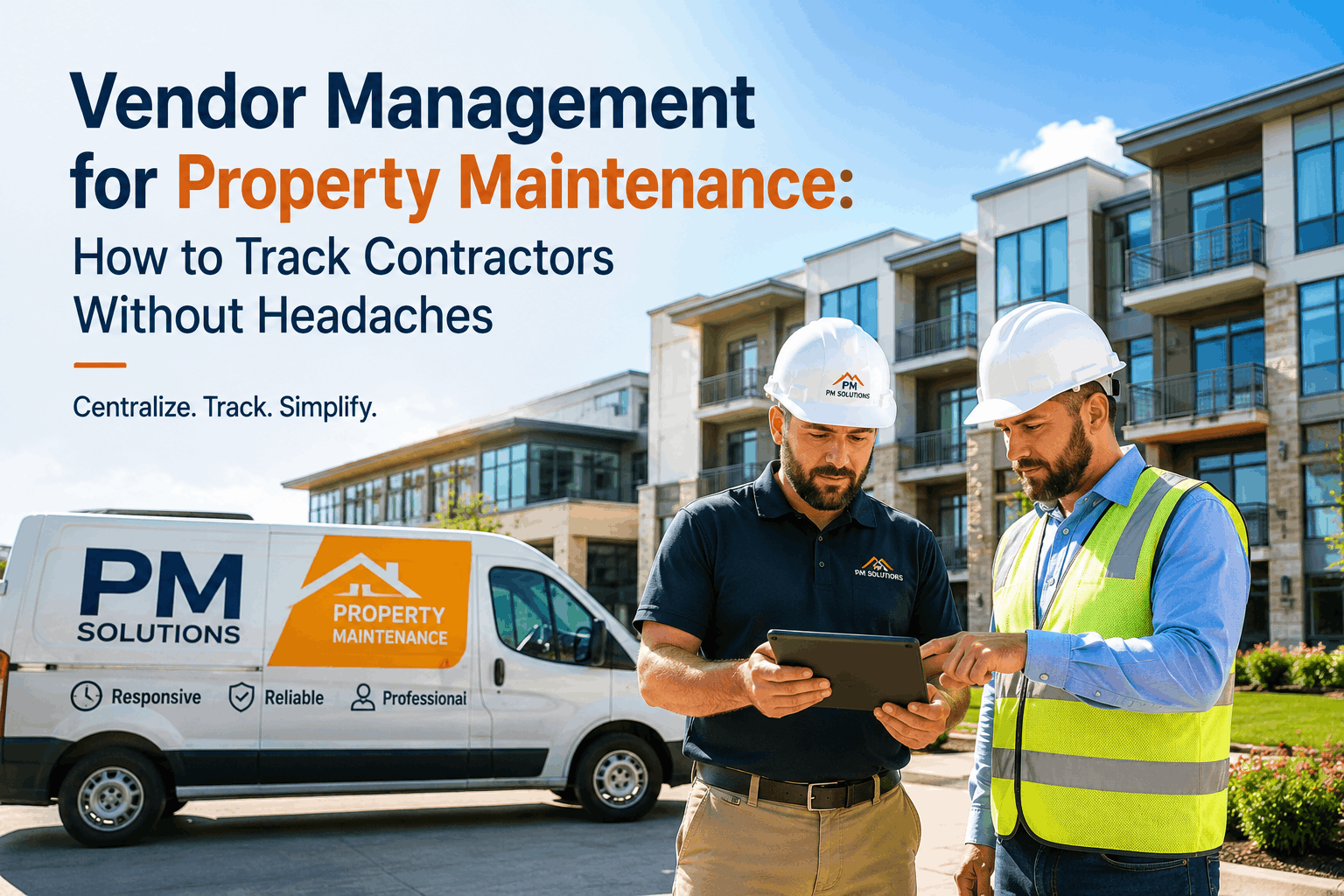
Effective vendor management represents a critical competitive advantage for USA property managers, often separating exceptional portfolios from struggling ones. Property maintenance quality directly correlates to vendor quality — the best maintenance coordinators spend as much time nurturing vendor relationships as managing schedules. An excellent vendor partnership reduces emergency calls by 30-40%, extends equipment life 2-3 years, and cuts material costs 10-15% through volume pricing and relationship trust. Conversely, poorly managed vendor relationships lead to slow response times, overpriced repairs, warranty disputes, and quality issues that cascade into resident complaints and leadership frustration. Building a world-class vendor network requires systematic onboarding, clear performance expectations, regular scorecarding, and fair payment practices. This guide provides the complete vendor management framework: qualification criteria, performance metrics, contract language, communication protocols, and relationship optimization strategies used by top-performing property teams managing thousands of units. Start free — build your vendor management system today.
Complete Vendor Management System for Property Maintenance: Onboarding, Qualification, Performance Tracking
End-to-end vendor management framework for property managers. Vendor qualification checklist, prequalification criteria, insurance verification, SLA establishment, performance scorecard design, and preferred vendor program development.
Vendor Qualification & Selection — Building Your Core Vendor Network
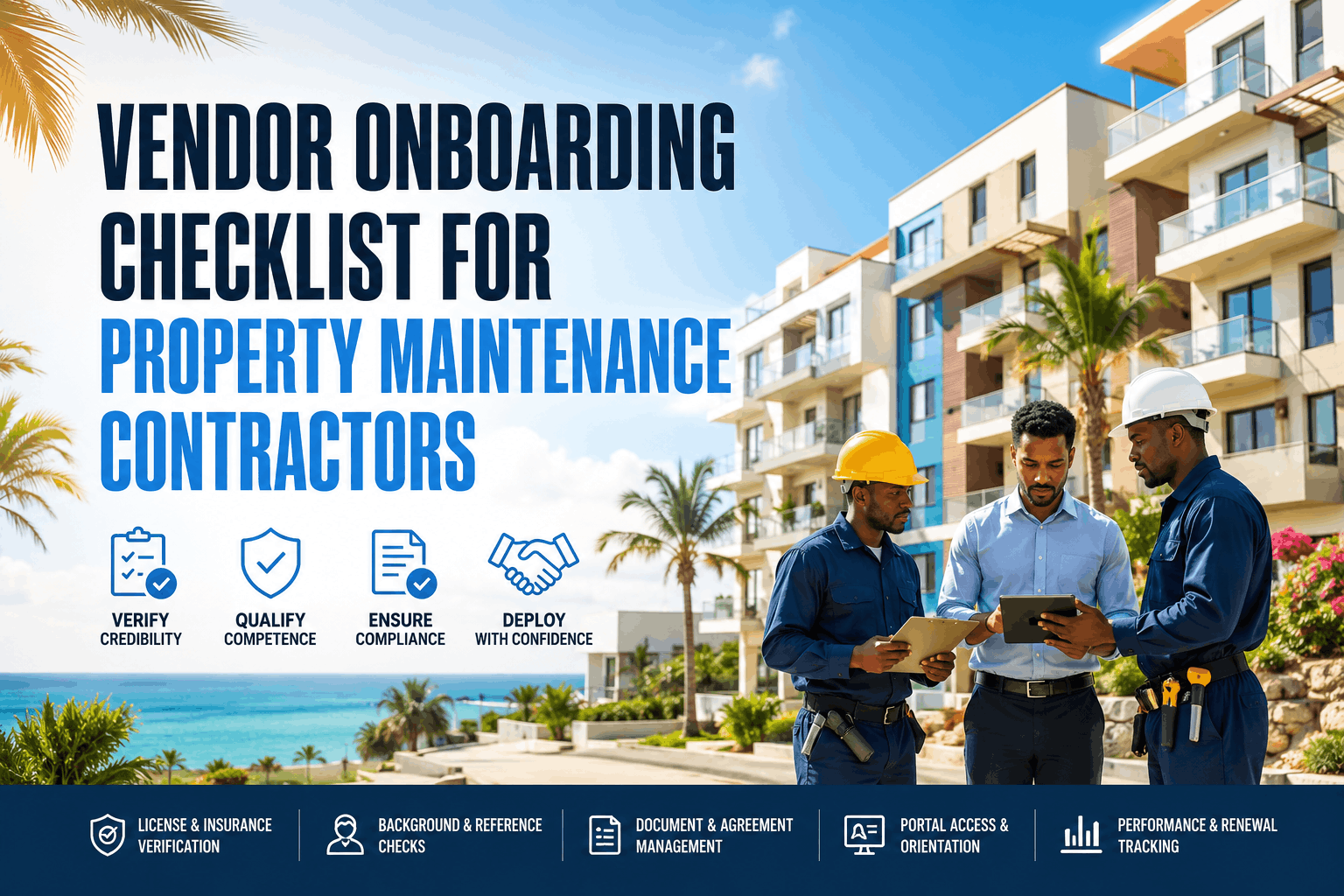
The vendor selection process often determines whether your property portfolio runs smoothly or constantly encounters problems. Best practice starts with a rigorous qualification phase rather than simply calling whoever answers the phone first. A formal qualification process includes technical competency (licensing, certifications, manufacturer training), financial stability (credit check, business longevity), insurance adequacy (general liability, workers comp, industry-specific coverage), reference checking (prior clients, job site observations), and cultural alignment (responsiveness, communication, reliability). USA-based property managers typically maintain 3-5 preferred vendors per major trade (HVAC, plumbing, electrical, roofing, appliance repair) rather than relying on single-vendor relationships. This provides redundancy (if your primary HVAC contractor is overwhelmed, you have backup), competitive pricing (bidding keeps costs fair), and specialization (selecting best-in-class for each service type). A formal vendor RFP process establishes this competitive baseline: send written specifications for a common job (HVAC tune-up, plumbing inspection, electrical testing), request pricing and timeline, and evaluate responses. This creates an apples-to-apples comparison rather than scattered phone calls producing inconsistent quotes.
Vendor Onboarding & SLA Establishment — Clear Expectations Drive Performance
Once vendors are qualified, formal onboarding establishes working protocols and performance expectations. A vendor onboarding package should include your company's maintenance standards (how you want jobs executed), communication protocols (who to call for what, preferred contact method, emergency protocols), documentation requirements (photos, certificates of completion, warranty information), payment terms (invoice submission, approval process, payment timeline), and insurance requirements (COI submission, coverage maintenance). Establishing Service Level Agreements (SLAs) prevents misaligned expectations. An HVAC contractor's SLA might specify: emergency calls answered within 30 minutes, in-person assessment within 2 hours, spare parts available for 90% of common repairs, same-day completion for routine repairs, and 24-hour completion guarantee for emergency work. For routine maintenance calls, SLA might specify 5-day scheduling for non-emergency work, 48-hour confirmation of appointment, and same-day callback if contractor can't make scheduled time. Clear SLAs eliminate the "I didn't know you needed that" conversations. Include penalty clauses for SLA violations (price reduction, incentive programs for exceptional performance) — this creates accountability. Example: if an emergency HVAC call misses the 2-hour in-person assessment window, the vendor receives 10% discount on the invoice. Conversely, if a vendor exceeds SLAs (completing emergency repairs in 1 hour vs. 2-hour target), they receive 5% bonus payment. This carrot-and-stick approach aligns vendor incentives with your property goals.
| Service Category | Response Time | Assessment Timeline | Completion Target | Penalty/Bonus |
|---|---|---|---|---|
| Emergency (No Heat) | 30 min answer | 2 hours on-site | Same-day completion | Miss target: -10% invoice |
| Urgent (Reduced Function) | 2 hours answer | 24 hours on-site | 48 hours completion | Beat target: +5% bonus |
| Routine Maintenance | Next business day | 5 days appointment | Same-day completion | On-time 95%+: annual incentive |
| Preventive Inspections | Next business day | Quarterly schedule | Same-day completion | Zero missed appointments: bonus |
| Warranty Service | Next business day | 3 days appointment | Per manufacturer specs | Claim processing: 10 days |
Vendor Performance Scorecard — Measuring What Matters
Systematic vendor performance measurement creates accountability and identifies improvement opportunities. Most property teams track 4-6 key vendor metrics: (1) SLA compliance — percentage of appointments met on time, average response times, emergency callback rates; (2) Quality — warranty claims, rework required, resident complaints related to vendor work; (3) Cost efficiency — actual cost vs. estimate accuracy, competitive bidding participation, material waste reduction; (4) Safety — OSHA incidents, safety violations, workers comp claims; (5) Communication — estimate turnaround time, quote accuracy, documentation completeness; (6) Growth opportunity — willingness to invest in advanced training, technology adoption, reliability for larger projects. Calculate quarterly scorecards rating each vendor 1-5 on each metric, with weighted averages creating overall performance scores. Vendors scoring 4.5+ receive preferred vendor status (priority scheduling, tiered pricing discounts, annual appreciation events). Vendors scoring 3.0-3.5 receive improvement plans with 90-day review targets. Vendors scoring below 3.0 may face contract termination with transition planning to replacement vendors. This transparent scorecard approach shifts vendor relationships from transactional (I call when I need something) to partnership (we're jointly optimizing property outcomes).
| Performance Category | Weight | Rating Scale | Score | Weighted Score |
|---|---|---|---|---|
| SLA Compliance | 25% | 1 (Rarely) — 5 (Consistently) | 4 | 1.0 |
| Quality & Craftsmanship | 25% | 1 (Poor) — 5 (Excellent) | 4 | 1.0 |
| Cost Competitiveness | 20% | 1 (Expensive) — 5 (Best Value) | 3 | 0.6 |
| Communication & Documentation | 15% | 1 (Poor) — 5 (Excellent) | 4 | 0.6 |
| Safety & Insurance | 10% | 1 (Non-compliant) — 5 (Exemplary) | 5 | 0.5 |
| Overall Performance Score | 4.2 / 5.0 (Preferred Vendor Status) | |||
Preferred Vendor Program & Long-Term Partnerships — Building Vendor Loyalty
Top-performing property managers cultivate preferred vendor relationships that provide mutual benefits. A preferred vendor program rewards vendors demonstrating exceptional performance with financial incentives, volume discounts, and preferential treatment. Structure the program with tiered benefits: Tier 1 (All-Star status, top 2-3 vendors per trade) receive 10% tiered pricing discount, priority scheduling for rush jobs, annual bonuses, and first consideration for larger projects. Tier 2 (Preferred vendor status, 3-5 vendors per trade) receive 5% tiered discount, priority scheduling during peak seasons. Tier 3 (Standard vendors) receive standard pricing but participate in competitive bidding. This multi-tier approach acknowledges that not all vendors perform equally while maintaining competitive pressure. Preferred vendor programs also include annual partnership reviews where property managers share strategic plans (upcoming capital projects, portfolio growth, asset replacement schedules), allowing vendors to anticipate workload and plan resources. Inviting preferred vendors to annual appreciation events (lunch, recognition at company meetings) builds genuine relationships beyond transactional vendor-customer interactions. These investments in vendor relationships pay dividends through better service, faster response times, proactive problem-solving, and willingness to invest in advanced training and equipment to serve your properties better.
Frequently Asked Questions — Vendor Management & Performance Optimization
Before systematizing our vendor management, we treated contractors as mercenaries — call when needed, pay when invoiced, move on. It showed. We had emergency call responses ranging from 30 minutes to 4 hours depending on which vendor we reached. Quality was inconsistent — some contractors cut corners, others went above and beyond. Pricing was all over the map, with no leverage. Implementing a formal qualification process, SLA-based contracts, and quarterly scorecards transformed our vendor relationships. We identified and elevated our top 3 HVAC contractors into all-star status with tiered pricing. We're now averaging 28-minute response times on emergencies instead of the chaotic 45-minute average. We've reduced rework claims from 8-10 monthly to nearly zero through quality scorecarding. Our preferred vendors now proactively suggest improvements — one HVAC contractor recommended installing demand-controlled ventilation that reduced utility costs 12%. Most importantly, we cut vendor costs 12-15% through tiered pricing while improving service quality. The key was treating vendor relationships as partnerships where both parties win. Our vendors now actively want to work with us because we're fair, reliable, and recognize excellence.
Build Your Vendor Management System — Qualification, Performance, Partnership
Vendor qualification framework, SLA establishment, performance scorecard design, and preferred vendor program development for property portfolios of all sizes.