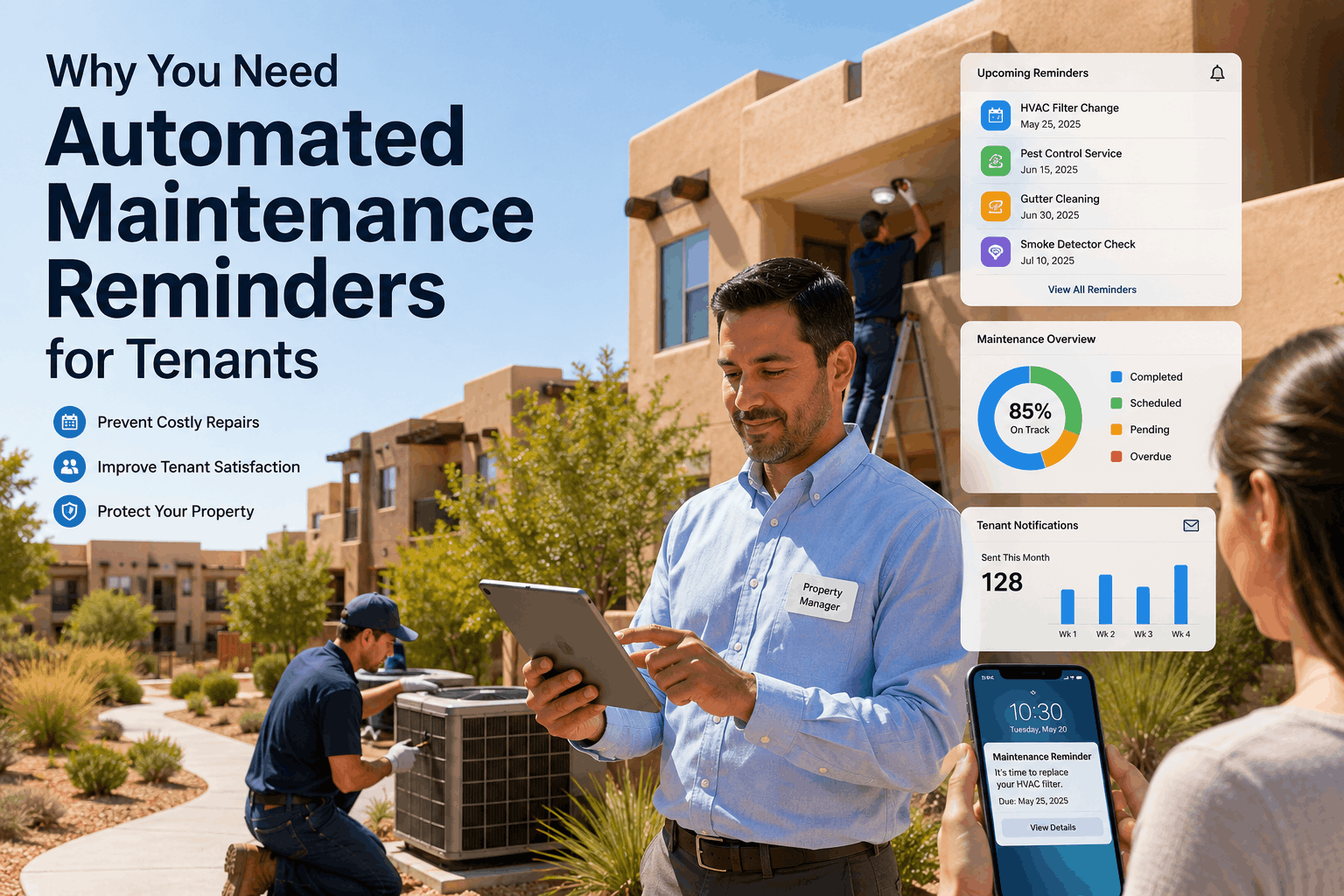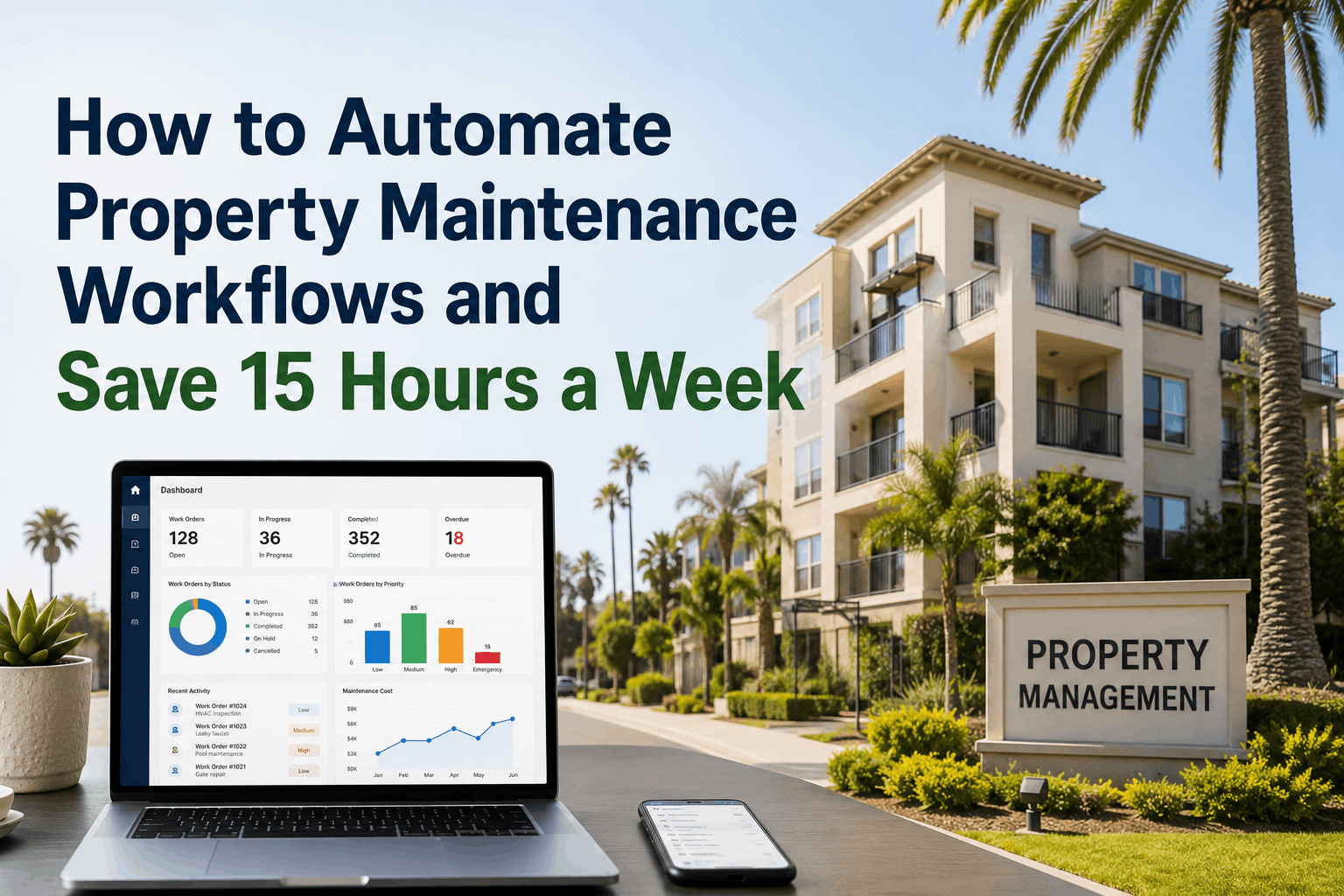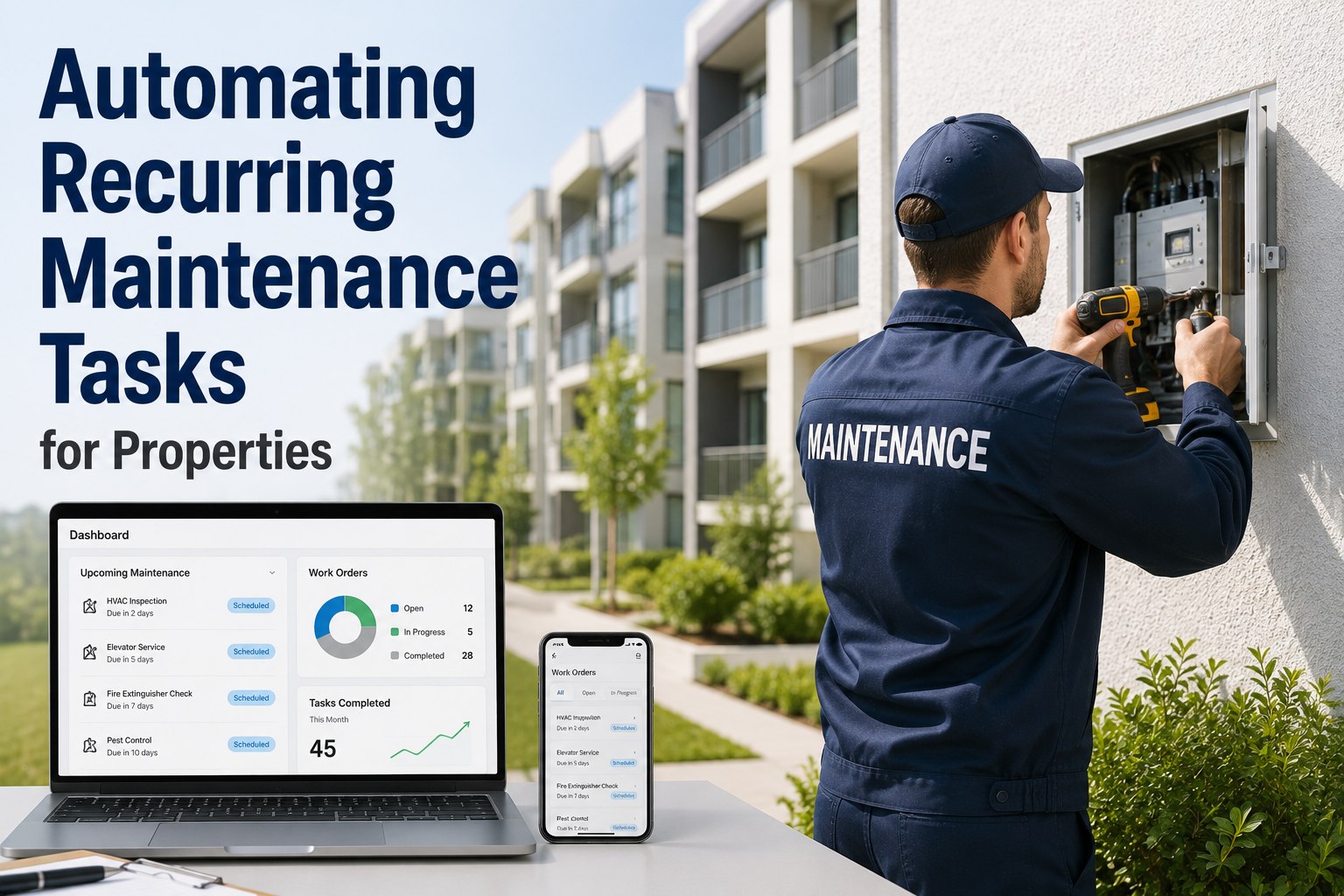
Automating recurring maintenance tasks for properties is the single most effective way to ensure filter changes, smoke detector tests, seasonal HVAC prep, and compliance inspections never slip through the cracks. When property teams rely on manual calendars or reactive work orders, preventive maintenance is inevitably delayed—accelerating equipment failure, inflating repair costs, and risking tenant safety. By implementing property maintenance automation through a modern CMMS, reliability teams can trigger work orders automatically, dispatch mobile technicians, and maintain a fully auditable trail of completed tasks. This guide breaks down how to build an automated maintenance scheduling system that scales, and you can explore the platform firsthand by choosing to Start Free Trial today.
Maintenance Scheduling Automation
Still chasing missed inspections and last-minute filter changes?
Manual recurring task scheduling guarantees that preventive maintenance gets deprioritized the moment a reactive emergency hits. Automate your property maintenance to eliminate blind spots, extend asset lifecycles, and keep your portfolio audit-ready.
The Cost of Reactive Maintenance
Why manual recurring maintenance reminders fail property teams
When property management automation is absent, recurring maintenance property tasks are typically tracked via whiteboards, shared spreadsheets, or memory. This approach fails predictably under pressure. A single deferred HVAC inspection can cascade into a $4,000+ emergency compressor replacement, while a missed smoke detector test creates severe liability exposure. Relying on manual maintenance reminders property workflows means your team is always one step behind, forcing technicians into expensive overtime and pushing capital expenditure (CapEx) budgets into the red.
Implementation Guide
How to automate recurring maintenance tasks for properties
Transitioning from manual checklists to scheduled maintenance automation requires a structured approach. By mapping your assets, defining trigger rules, and mobilizing your technicians, you create a closed-loop system where no task is forgotten. Here is a proven 4-step timeline for deploying property task automation across a single building or an entire multi-site portfolio.
Asset Registry & Criticality Mapping
Compile every asset—rooftop units, boilers, elevators, fire panels—into a centralized EAM database. Assign criticality scores based on failure impact and regulatory requirements to prioritize automated maintenance property workflows.
PM Template Creation
Build standardized preventive maintenance (PM) templates for each asset type. Define exact checklists, required spare parts, and estimated labor hours so that system-generated work orders require zero manual data entry.
Trigger & Frequency Configuration
Set up recurring maintenance reminders based on calendar intervals (monthly, quarterly, bi-annually) or meter-based usage (e.g., every 500 HVAC run-hours). The CMMS automatically generates and assigns work orders without human intervention.
Mobile Execution & Verification
Technicians receive push notifications on mobile devices, complete digital checklists on-site, and attach photos. Managers get real-time compliance verification, closing the loop on maintenance scheduling automation.
Automated Task Framework
Essential recurring task scheduling checklists by asset type
Not all automated maintenance scheduling is created equal. To maximize ROI and compliance, your CMMS must categorize tasks by criticality and frequency. Below is a breakdown of standard property task automation frameworks that should be configured in your system.
| Asset Category | Recurring Task | Automation Frequency | Compliance Standard |
|---|---|---|---|
| HVAC Systems | Filter replacements & coil cleaning | Quarterly | ASHRAE 90.1 |
| Life Safety | Smoke detector & fire panel testing | Bi-Annually | NFPA 72 |
| Plumbing | Backflow preventer inspection | Annually | Local Municipal Code |
| Vertical Transport | Elevator machinery lubrication & test | Monthly | ASME A17.1 |
| Common Areas | Lighting audits & emergency exit checks | Monthly | OSHA 1910 |
See how automated property maintenance cuts admin time by 80%
Stop letting preventive maintenance slip. Book a 30-minute demo and watch OxMaint auto-generate your entire quarterly work order schedule in seconds.
Platform Capabilities
How OxMaint powers property maintenance automation
OxMaint is an AI-powered CMMS and EAM platform built to eliminate the blind spots of manual task scheduling. By centralizing asset data and automating work order generation, OxMaint ensures your reliability team executes preventive maintenance perfectly. Here is how OxMaint solves the recurring maintenance challenge with measurable outcomes:
Smart PM Triggers
Configure calendar-based and usage-based triggers (like run-hours or mileage) that auto-generate work orders. Outcome: Eliminates 100% of missed recurring maintenance tasks and reduces manual scheduling errors by 90%.
Mobile Technician App
Technicians receive push notifications for new jobs, access digital checklists offline, and upload completion photos. Outcome: Increases first-time fix rates by 35% and provides instant, audit-ready compliance proof.
Predictive Maintenance AI
OxMaint analyzes IoT sensor data and historical work orders to predict asset failures before they happen, adjusting schedules dynamically. Outcome: Cuts unplanned downtime by 30–50% and extends asset lifecycle by 20%.
Parts Inventory Sync
Automated work orders instantly reserve required spare parts and alert managers when stock falls below reorder points. Outcome: Reduces parts hoarding by 25% and ensures zero task delays due to missing inventory.
Real-World Impact
From spreadsheet chaos to automated maintenance scheduling
Worked Example
A 12-building commercial portfolio
A property management firm overseeing 1,200+ assets was spending $42,000 annually on emergency HVAC repairs and overtime caused by skipped quarterly filter changes. Their maintenance manager used a sprawling Excel sheet to track recurring maintenance reminders, which constantly broke down across multiple staff handoffs.
After deploying OxMaint for maintenance scheduling automation, the firm mapped all assets to PM templates within 14 days. The system now auto-generates 180 preventive work orders per quarter and dispatches them directly to technicians' mobile devices. In the first year, emergency repair costs dropped by 38%, and the team achieved a 98% on-time completion rate for all recurring tasks.
Frequently Asked Questions
Common questions about property task automation
What is recurring maintenance task automation for properties?
Recurring maintenance task automation uses CMMS software to automatically generate, assign, and track preventive work orders—like filter changes or inspections—based on preset time intervals or usage metrics. This removes manual scheduling and ensures no task is missed. You can see this in action when you Book a Demo with our team.
How does automated maintenance scheduling save money?
Automated maintenance scheduling saves money by shifting work from expensive reactive emergency repairs to planned, lower-cost preventive tasks. It also reduces administrative overhead, eliminates overtime caused by sudden breakdowns, and extends the usable lifespan of expensive property assets.
Can I migrate from spreadsheets to a property maintenance CMMS easily?
Yes, modern platforms like OxMaint are designed for rapid migration. Most property teams can import their existing asset lists and maintenance schedules via CSV upload and have automated recurring task scheduling live within 7 to 14 days without requiring extensive IT support.
What happens if a technician is offline when a recurring task is assigned?
With a mobile CMMS app, the work order is pushed to the technician's device and cached locally. They can view the task, complete the digital checklist, and take completion photos without an internet connection. Once the device reconnects to Wi-Fi or cellular, the data automatically syncs to the central dashboard.
Does automated property maintenance help with compliance audits?
Absolutely. Automated property maintenance creates a permanent, time-stamped digital record for every task, including who completed it, when it was done, and attached verification photos. This provides instant, audit-ready documentation for standards like NFPA, OSHA, and ASME.
Stop missing critical maintenance deadlines
Automate your recurring maintenance tasks with OxMaint and guarantee your properties stay compliant, efficient, and safe. See how it fits your portfolio today.
Free 14-day trial · No credit card