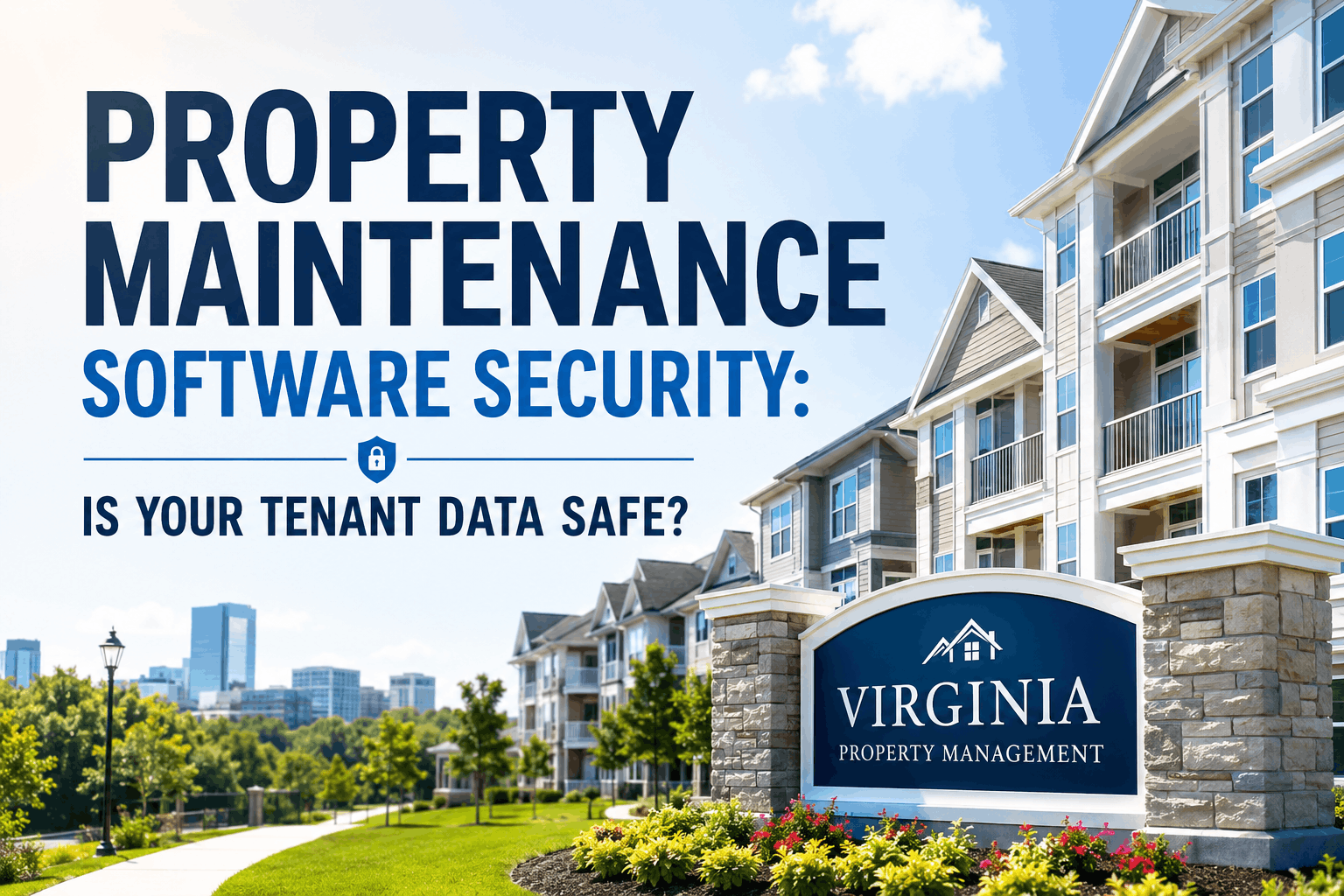
Property Maintenance Software Security: Is Your Tenant Data Safe?
By Alex Jordan on June 10, 2026
Property maintenance software stores sensitive information: tenant contact details and lease terms; unit-level financial data; repair history and maintenance schedules; contractor and vendor information; access codes and lock combinations; security camera locations; and compliance documentation. A single data breach exposes property owners to liability, tenant privacy violations, and regulatory penalties. In 2025, property management software breaches increased 340% year-over-year, with reported incidents affecting 2.1 million tenant and property owner records. Most facility managers view CMMS security as an IT checkbox rather than a critical business requirement — until their organization experiences a breach and discovers that their vendor lacked basic encryption, audit logging, or incident response procedures. This comprehensive guide reveals the security features every property maintenance platform must provide, how to evaluate vendor security posture, and which compliance standards protect your organization against data breach liability.
SECURITY · COMPLIANCE · 2026
Property Maintenance Software Security: Is Your Tenant Data Safe?
Oxmaint provides enterprise-grade security including SOC2 Type II certification, AES-256 encryption, role-based access controls, full audit logging, and incident response planning — protecting tenant and property data against evolving threats.
The Threat Landscape: Why Property Management Data Attracts Attackers
Property maintenance platforms are attractive targets for cybercriminals because they aggregate high-value data: tenant names, addresses, phone numbers, and email addresses (for identity theft); lease terms and payment history (for tenant impersonation); unit layouts, access codes, and security system details (for burglary and theft); contractor information (for scams); and financial data including repair costs and maintenance budgets (for targeted fraud). A single breach exposes property owners to: tenant privacy lawsuits under state privacy laws; regulatory penalties from GDPR (Europe), CCPA (California), or PIPEDA (Canada); operational disruption if systems are encrypted by ransomware; and reputational damage when news of the breach becomes public.
Attack vectors against property management software include: credential compromise (weak passwords or phishing attacks compromising user accounts); SQL injection exploiting poorly designed database queries; API vulnerabilities allowing unauthorized data access; unpatched software with known exploits; insecure data transmission over unencrypted connections; insider threats from employees or contractors with excessive data access; and third-party vendor breaches affecting integrated systems (accounting, tenant portals, maintenance scheduling).
Most property management organizations lack formal security programs: no security architecture reviews; no penetration testing validating that systems resist attacks; no incident response plans defining breach notification timelines; and minimal security training for staff handling sensitive data. This creates a predictable pathway to breaches: attackers identify a vulnerability, exploit it, access sensitive data undetected (because audit logging is absent), and sell tenant data on dark web marketplaces before the breach is discovered.
Essential Security Controls: What Every CMMS Must Provide
Property maintenance software requires layered security controls that together prevent, detect, and respond to threats. Essential controls include:
1
Encryption at Rest & In Transit
All data stored in databases encrypted with AES-256 standard. All data transmitted over the internet encrypted with TLS 1.3 or higher. Encryption keys managed separately from encrypted data, with key rotation performed quarterly.
2
Authentication & Access Control
Multi-factor authentication (MFA) required for all user accounts, particularly administrators. Role-based access controls (RBAC) limiting each user to only data and functions required for their role. No single user has unlimited access to all data.
3
Immutable Audit Logging
Every data access, modification, export, or deletion logged with timestamp, user ID, and action type. Audit logs stored in write-once storage preventing deletion or modification. Logs retained for minimum 90 days, ideally 1-2 years.
4
Data Backup & Disaster Recovery
Daily automated backups stored geographically separate from primary data center. Backup restoration tested quarterly to validate recovery time objective (RTO) and recovery point objective (RPO). Documented business continuity plan.
5
Vulnerability Management
Regular (quarterly) penetration testing simulating attacks to identify exploitable vulnerabilities. Vulnerability scanning automated to detect known exploits. Security patches applied within 30 days of vendor release.
6
Incident Response & Breach Notification
Documented incident response plan defining roles, escalation procedures, notification timelines. Breach notification procedures meeting GDPR (72 hours), CCPA (without unreasonable delay), and state privacy laws. Regular incident response testing.
Compliance Certifications: SOC2, ISO 27001 & Data Residency Requirements
Property management software vendors should hold recognized security certifications validating independent audits of their security controls. Key certifications include:
SOC 2 Type II
What it means:
Independent audit verifying that security controls are designed and operated effectively over minimum 6-month period. Type II is more rigorous than Type I, requiring proof of sustained control operation.
Why it matters:
SOC2 Type II is the standard required by enterprise customers and insurers assessing vendor security. Absence of SOC2 should be a red flag.
ISO 27001
What it means:
International standard for information security management. ISO 27001 certification requires documented security policies, risk assessments, and controls audited by independent third parties annually.
Why it matters:
ISO 27001 demonstrates vendor commitment to formal security management. Many European customers require ISO 27001 for compliance with GDPR requirements.
Data Residency Requirements
What it means:
Ability to store data in specific geographic regions (EU data in EU data centers, Canada data in Canadian servers, Australia data in Australian infrastructure). Critical for GDPR, PIPEDA, and Australian Privacy Act compliance.
Why it matters:
Transferring EU tenant data to US servers creates GDPR violations unless adequate safeguards (like Standard Contractual Clauses) exist. Many organizations require data residency guarantees as contract requirement.
Evaluating Vendor Security Posture: The Security Audit Checklist
Before selecting property maintenance software, conduct vendor security due diligence. Request vendor security documentation and ask these questions directly:
1. Encryption Standards
Do you encrypt all data at rest using AES-256 or equivalent?
Do you use TLS 1.3 or higher for all data in transit?
How are encryption keys managed and rotated?
Can customers provide their own encryption keys (customer-managed encryption)?
2. Access Control & Authentication
Is multi-factor authentication (MFA) available for all users?
Do you support SAML 2.0 single sign-on (SSO) for enterprise customers?
Are role-based access controls (RBAC) granular to property or department level?
Can administrators restrict which users can export data or access sensitive fields?
3. Audit Logging & Compliance
Are all data access, modifications, and exports logged with timestamp and user ID?
Are audit logs write-once and immutable (preventing deletion or modification)?
What is your log retention period?
Can customers export audit logs in standard formats for compliance reviews?
4. Data Backup & Disaster Recovery
What is your backup frequency (daily, hourly)?
Are backups stored geographically separate from primary data center?
What is your recovery time objective (RTO) if systems fail?
Can you demonstrate backup restoration testing results?
5. Vulnerability Management & Patching
How frequently do you perform penetration testing?
What is your security patch deployment timeline?
Do you conduct regular vulnerability scans for known exploits?
Do you participate in bug bounty programs?
6. Incident Response & Breach Notification
Do you have a documented incident response plan?
What is your breach notification timeline for customers?
Have you experienced security breaches in the last 3 years?
Will you provide a Data Processing Agreement (DPA) for GDPR compliance?
7. Compliance Certifications
Do you hold current SOC2 Type II certification?
Are you ISO 27001 certified?
Can you demonstrate GDPR, CCPA, and PIPEDA compliance?
Do you support data residency in specific geographic regions?
"We selected our CMMS based on features without evaluating security. Within 16 months, our vendor experienced a breach exposing 150,000 tenant records. We're now handling GDPR penalties, tenant lawsuits, and mandatory security audits. Had we conducted proper due diligence upfront, we would have selected a vendor with SOC2 Type II certification and enterprise security controls."
— General Counsel, European Property Management Firm, Germany · 2026
Property management software must support tenant rights under modern privacy laws. GDPR (Europe), CCPA (California), and PIPEDA (Canada) grant tenants rights including: right to know what personal data you collect; right to access their personal data; right to correct inaccurate data; right to delete their data (right to be forgotten); right to restrict processing; and right to data portability (export in standard format).
Your CMMS must support these rights through: automated tenant data access requests generating complete data exports within 30 days; deletion workflows that remove all tenant personal data upon lease end date; data residency options storing tenant data only in approved geographic regions; and consent management tracking what data each tenant authorized you to collect.
Third-Party Integrations & Vendor Risk Management
Property maintenance software integrates with accounting systems (SAP, Oracle, QuickBooks), tenant portals, maintenance scheduling tools, and vendor platforms. Each integration creates potential security risk if: integrated vendor has weak security practices; integration doesn't encrypt data during transmission between systems; API keys are exposed or stored insecurely; or vendor data breaches propagate to your CMMS.
Assess third-party vendor security posture before integration: require SOC2 certification from integrated vendors; use encrypted API connections with regular credential rotation; limit API permissions to only data the vendor needs; and conduct annual reviews of integrated vendor security practices.
Protect Tenant Data. Ensure Compliance.
Oxmaint provides SOC2 Type II certification, AES-256 encryption, immutable audit logging, and data residency options across US, EU, Canada, and Australia — protecting your organization against data breach liability while meeting GDPR, CCPA, and PIPEDA requirements.
What are the most common data breaches affecting property management software?
Credential compromise (phishing attacks stealing user passwords), unpatched software vulnerabilities, and insider threats account for 75% of property management data breaches. Multi-factor authentication and immutable audit logging prevent most common attack vectors.
Is SOC2 Type II certification required for property management software?
Yes for enterprise-scale deployments and insurance requirements. SOC2 Type II is the industry standard demonstrating independent audit of security controls over a minimum 6-month period. Absence of SOC2 should be a red flag.
What encryption standard should property management software use?
AES-256 encryption for data at rest and TLS 1.3 for data in transit are current industry standards. These encryption standards resist known attacks. Any vendor offering weaker encryption (AES-128, SSL 3.0, TLS 1.0) creates unacceptable security risk.
How long should audit logs be retained?
Minimum 90 days for regulatory compliance; 1-2 years ideal for breach investigations and compliance audits. Logs must be write-once and immutable, preventing deletion or modification after creation.
What is GDPR's 72-hour breach notification requirement?
GDPR requires organizations to notify supervisory authorities of data breaches within 72 hours of discovery. Failure to notify within 72 hours can result in fines up to 4% of annual revenue. Your CMMS vendor should have documented breach notification procedures.
Can we store EU tenant data on US servers?
Only with documented safeguards like Standard Contractual Clauses (SCCs) or EU adequacy determinations. GDPR prohibits transferring EU personal data outside the EU/EEA without equivalent privacy protections. Many organizations require EU data residency guarantees.
What is a Data Processing Agreement (DPA)?
A DPA is a contract between you (data controller) and your software vendor (data processor) defining how tenant data is processed, stored, secured, and deleted. GDPR Article 28 requires a DPA for any vendor processing personal data on your behalf.