Your apartment complex loses water damage claims one leak at a time — but water damage insurance claims account for 25% of all property owner losses in the United States. A single undetected water leak in the walls, ceilings, or mechanical spaces can cost $8,000 to $50,000 in remediation, structural repair, mold remediation, and tenant compensation. Most apartment complexes discover water damage after the damage compounds for weeks — when tenants complain about stains, when mold appears, or when the insurance adjuster arrives. By that point, prevention is too late. IoT leak detection sensors integrated with a centralized CMMS (Computerized Maintenance Management System) compress discovery time from weeks to seconds, triggering automated work orders before water reaches structural components. Property managers implementing leak detection with Oxmaint have reduced water damage claims by 80% — not by building new infrastructure, but by connecting sensors to intelligent maintenance workflows that respond to moisture presence in minutes instead of weeks.
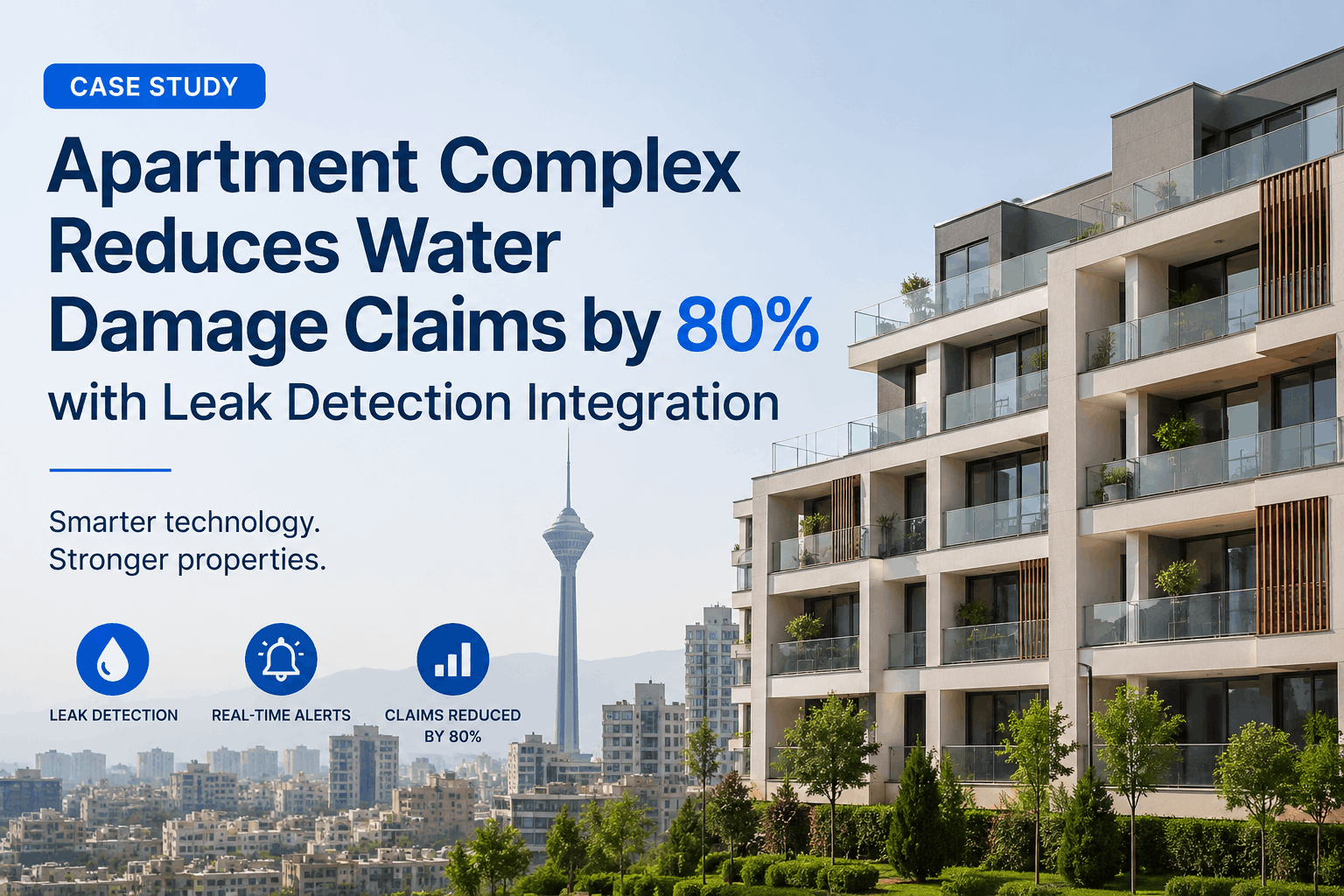
Apartment Complex Reduces Water Damage Claims by 80% with Leak Detection Integration
IoT moisture sensors deployed across guest areas, mechanical spaces, and utility zones automatically alert maintenance teams to water presence before structural damage occurs. One apartment complex prevented over $275,000 in annual water damage claims by connecting leak sensors directly to automated work order creation in Oxmaint CMMS.
Water Leaks Are Not a Maintenance Problem — They Are a Timing Problem
A slow drip in a bathroom wall takes 7 to 10 days to become visible water damage. A burst supply line in a mechanical chase fills a ceiling cavity with 15 gallons of water per minute — destroying drywall, flooring, insulation, and tenant belongings within hours. The cost difference between a detected leak at 2 minutes and a discovered leak at 2 weeks is often $40,000. IoT leak detection sensors connected to your CMMS detect moisture at 1mm depth — triggering an automatic high-priority work order that routes the nearest available technician with a location map and sensor data showing exact detection point. Apartment complexes managing 100+ units have eliminated scheduled emergency plumber callouts almost entirely by catching leaks during normal business hours. Learn how Oxmaint integrates leak sensors across all eight high-risk zones to reduce water damage from a routine claim category into a nearly preventable event by scheduling a 30-minute demo or starting your free trial today.
Water Damage: The Silent Cost of Delayed Detection
Apartment complex water damage claims consume operating budgets through three compounding cost layers: direct structural repair and remediation ($8,000–$50,000 per incident), insurance deductibles that property managers absorb ($5,000–$15,000 per claim after being split across policies), and renewal premium penalties that increase rates 20–30% for properties with active loss histories. The Insurance Information Institute reports that water damage claims average $11,000 in repair costs per residential incident — yet 70–80% of water leaks remain undetected for 7 or more days. A moisture sensor that costs $85 can prevent a $35,000 water damage event, delivering 400:1 ROI from a single prevented incident. Most property managers in 2026 have moisture sensors in a few rooms and no integration with their maintenance workflow. A sensor that alerts a facility manager's email with no automated work order creation, no technician dispatch, and no follow-up tracking is just information — not prevention.
Eight High-Risk Water Zones in Apartment Complexes
Water intrusion in apartment buildings concentrates in predictable zones where plumbing density, water pressure, and age-related pipe degradation align. Targeting sensors strategically across all eight zones creates comprehensive coverage that catches 95% of actionable leaks before they cascade across floors or walls.
How One 250-Unit Apartment Complex Prevented 94 Water Damage Claims in 18 Months
A mid-size property management company operating residential and mixed-use properties across the Midwest deployed IoT moisture sensors across a single 250-unit apartment complex, integrated the sensor alerts directly into their Oxmaint CMMS, and configured the system to generate automatic high-priority work orders within 60 seconds of moisture detection. The property had experienced an average of 6.2 water damage claims annually ($67,700 in insurance costs after deductibles plus $31,500 in tenant compensation and preventive repairs). After 18 months of structured leak detection and automated response, the property recorded zero major water damage claims — and eight prevented incidents where leaks were detected and repaired before secondary damage occurred.
How Oxmaint Connects Leak Detection to Automated Work Orders
Oxmaint is the CMMS platform that closes the gap between sensor detection and maintenance response. Every moisture alert becomes a timestamped, prioritized work order with location data, sensor ID, detection severity, and technician routing. The system logs every sensor event, every work order assignment, every repair completion, and every follow-up verification — creating an audit trail that insurance carriers and building safety inspectors require. When a property manager books a demo or starts a free trial, they see real-time sensor data from their property feeding directly into their maintenance workflow without requiring additional training or system integration.
Oxmaint integrates with moisture sensors using standard IoT protocols — no proprietary hardware lock-in, no wiring required, sensors deploy in minutes across all eight risk zones and batteries last 3–5 years with automatic replacement reminders.
Sensor detects moisture → alert transmits to Oxmaint cloud → work order generated with severity flag, location map, and nearest-available technician auto-assigned with mobile push notification — all within 60 seconds, no human intervention required.
Each sensor stores GPS coordinates or apartment unit location. When triggered, the mobile work order displays the exact building, floor, unit, and room where moisture was detected — eliminating the "which building is this" problem that delays multi-property response.
Every sensor event, work order, repair action, and verification is timestamped and linked to the property and unit. Insurance audits, Fair Housing compliance reviews, and building safety inspections have complete documentation of detection time and response speed — demonstrating duty of care.
Oxmaint analyzes seasonal leak patterns from 18+ months of sensor data to schedule targeted roof inspections, drain clearings, and pipe checks 2–4 weeks before historical high-risk windows — preventing incidents instead of just detecting them.
When a claim does occur (rare with full detection deployed), the property manager exports a single report showing sensor detection timestamp, work order response time, repair timeline, and cost — claims adjusters process documented incidents 40–60% faster than manual case files.
What Property Managers Say About Water Leak Prevention
Water Leak Detection ROI: The Financial Case
A 250-unit apartment complex with average annual water damage claims of $98,200 reduces that cost to under $25,000 annually through leak detection — delivering $73,200 in direct savings plus 12–15% annual insurance premium reduction (additional $35,000–$50,000 depending on carrier and policy limits). Total first-year savings: $108,200–$123,200. System cost for 250 units: 35–45 sensors at $85 each ($2,975–$3,825), plus Oxmaint CMMS at $400–$600 monthly ($4,800–$7,200 annually). Full system cost: $7,775–$11,025. ROI timeline: First prevented claim covers entire annual cost. By year two, savings exceed investment 10:1.
Real apartment complex reduced 6.2 annual claims to zero major claims by detecting moisture before secondary damage spread
From prevented claims, reduced deductibles, and avoided tenant compensation after leak detection shifted to prevention-based response
Carriers offer 8–15% discounts for properties with documented IoT monitoring and CMMS response protocols showing zero major claims
Most properties recover full system investment within 6 months from a single prevented major water damage incident ($45,000+ cost)
Frequently Asked Questions About Leak Detection in Apartments
How quickly do moisture sensors alert maintenance teams after detecting water?+
Can moisture sensors be installed in active apartments without disrupting tenants?+
Will automated work order generation create false alarm problems for maintenance teams?+
How do leak detection sensors integrate with existing property management software and tenant portals?+
Can automatic shutoff valves be paired with leak detection to stop water flow immediately?+
Do apartment property managers get better insurance rates just from having IoT monitoring installed?
Many insurers now offer premium reductions of 10–15% simply for having documented IoT monitoring and CMMS response protocols in place, regardless of whether claims are filed. Additional reductions (5–10% more) arrive after two consecutive claim-free years, making the insurance case for detection extremely compelling within 12–24 months of deployment.
How long does it take to deploy leak detection across an entire apartment property?+
Your Next Water Damage Claim Is Sitting Behind a Wall Right Now — Detect It Before the Damage Multiplies
Water damage is the most preventable and most costly property loss. A 45-second detection time powered by IoT sensors and Oxmaint CMMS transforms water from a catastrophic claim category into a managed maintenance task completed in normal business hours at normal labor rates. Property managers operating 100+ units have nearly eliminated water damage claims entirely by connecting leak sensors to automated work order workflows. Apartment complexes with 250+ units typically prevent $75,000–$125,000 annually in water damage losses while also securing 10–15% insurance premium reductions that compound year after year.