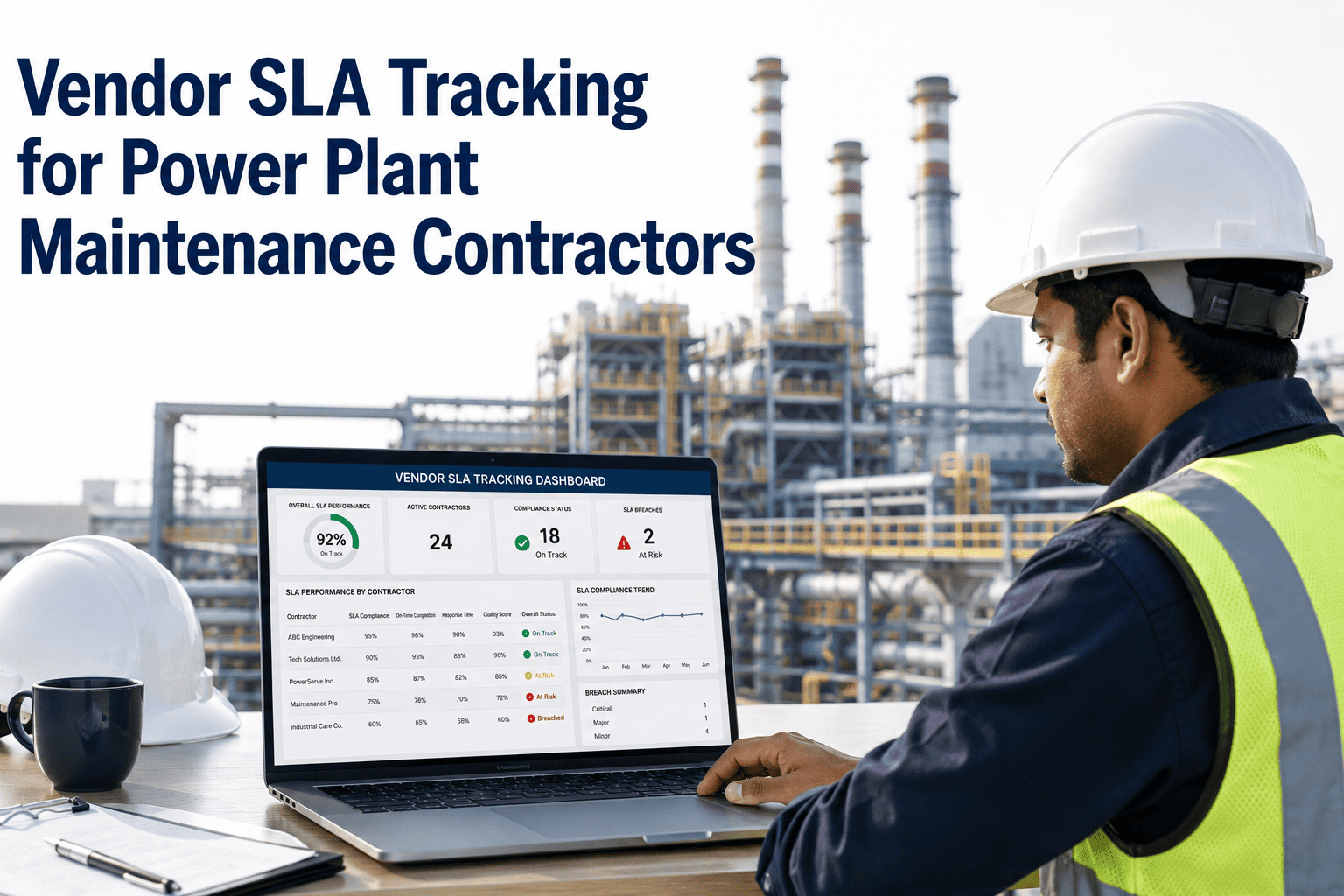
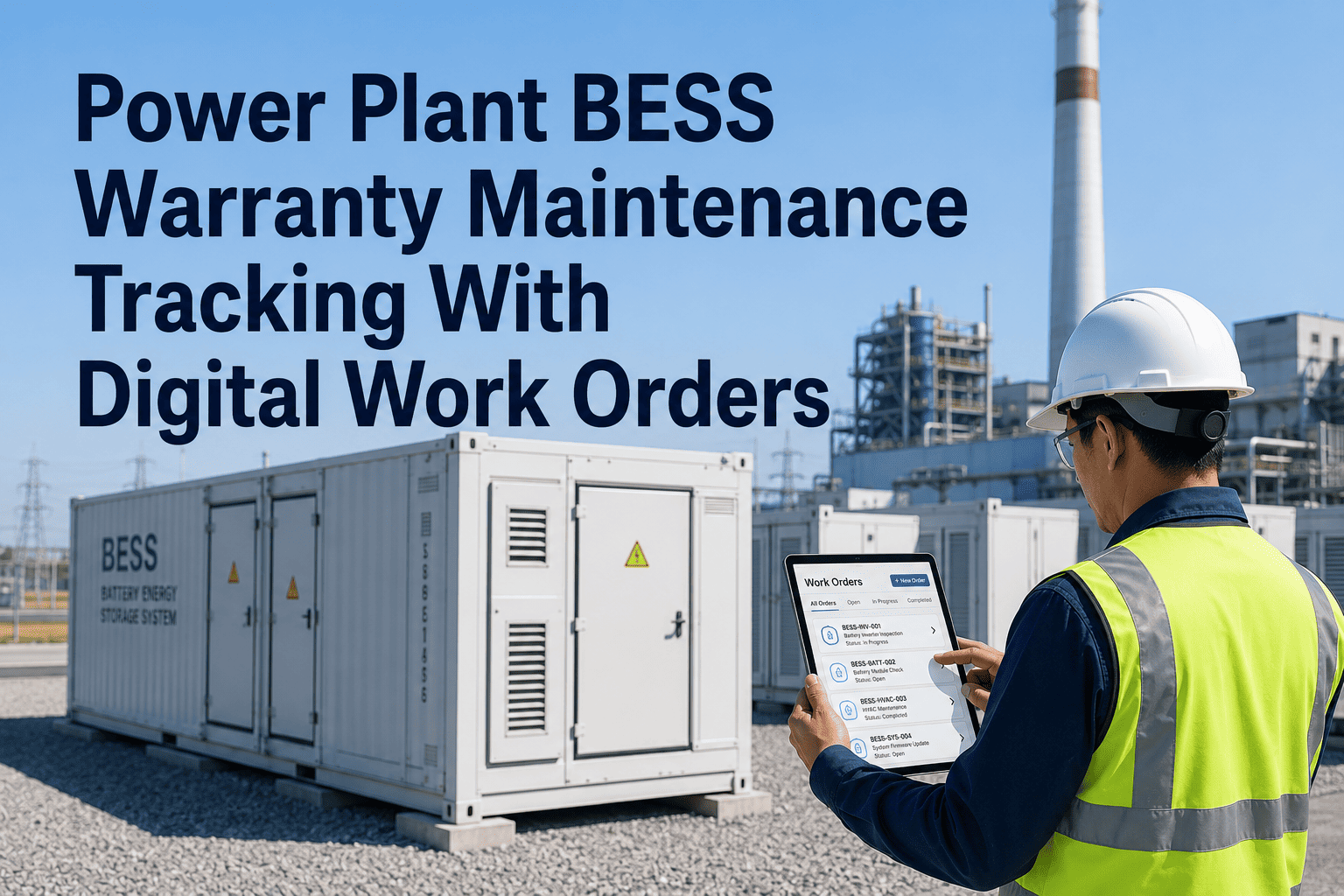
A contractor promises a 4-hour response time on critical equipment, but without a system clocking the moment the fault was reported against the moment the technician actually arrived, that promise is just a sentence in a contract nobody is verifying. OxMaint's vendor management module starts the SLA clock automatically the instant a fault is logged and stops it on GPS-validated arrival, turning every contractor commitment into a number both sides can see. Book a 30-minute demo to see SLA tracking configured for your contractor network, or start free and bring your first vendor onto live tracking this week.
VENDOR MANAGEMENT · CONTRACTOR MANAGEMENT
An SLA Nobody Is Tracking Is Just a Sentence in a Contract
OxMaint timestamps every fault, dispatch, arrival, and completion automatically — so response time, MTTR, and first-time fix rate are measured the same way for every contractor, every time, with no spreadsheet reconciliation between owner and vendor records.
~70%
of FM organizations have no documented SLA they actually measure contractors against
91%
SLA compliance achieved with automatic escalation, vs roughly 70% without CMMS tracking
68%
less admin time spent on vendor scorecards once generation is automated
THE GAP BETWEEN PROMISE AND PROOF
Most Contractor SLAs Are Never Actually Measured
Most maintenance contracts are written around effort instead of outcomes — hours on site, not results delivered. The response time clause looks precise on paper: four hours for critical faults, same business day for urgent ones. But unless something is timestamping the fault report and the technician's actual arrival, that clause is unenforceable in practice. When a dispute arises, the contractor's word competes against the plant's memory of events, and neither side has a clean record to settle it.
The fix isn't a stricter contract. It's a system that starts the clock the moment a fault is logged, captures GPS-validated arrival, and calculates the gap automatically — visible to the contractor and the plant manager at the same time, before either side has a chance to dispute what happened.
HOW THE SLA CLOCK ACTUALLY RUNS
From Fault Trigger to Settled Invoice — Every Step Timestamped
T+0
Fault Logged
Operator or sensor reports the fault. SLA clock starts automatically and is visible to contractor and plant manager simultaneously.
T+~3 hrs
GPS-Verified Arrival
Technician arrival recorded against the contractual response window — met or breached, with no manual entry to dispute later.
T+~11 hrs
Work Order Closed
Technician notes, parts used, and root-cause code logged. MTTR calculated automatically against the contractual target.
Month End
Settlement Packet
Base fee, earned bonuses, and any penalties compiled with the full event log — ready for countersignature, no reconciliation needed.
Stop Reconciling Vendor Invoices Against Two Sets of Records
See how OxMaint puts owner and contractor on the same live data — one timestamped event log, one SLA calculation, no parallel spreadsheets.
THE PRIORITY STRUCTURE THAT WORKS
A Tiered Response Framework Contractors Will Actually Sign To
| Priority Tier |
Example Fault |
Response Target |
| Critical |
Full unit trip, life safety system, main protection relay |
2–4 hours on-site |
| Urgent |
Partial output loss, single auxiliary system down |
Same business day |
| Routine |
Non-critical fault, isolated component issue |
5–10 business day window |
| Compliance task |
Certificate or inspection report submission |
3 business days post-completion |
WHAT GETS SCORED AT RENEWAL
Four Metrics That Decide Whether a Contractor Gets Rehired
Response Time Compliance
Percentage of faults where on-site arrival landed inside the contractual window for that priority tier.
MTTR Against Target
Average time from arrival to work order closure, benchmarked against the contractual repair-time commitment.
First-Time Fix Rate
Share of jobs resolved without a return visit — the clearest signal of technician competence and parts readiness.
Certification Compliance
Whether technicians dispatched hold current qualifications and submit required documentation on time.
EXPERT REVIEW
Contractor Performance & O&M Contract Specialist
13 Years — Power Generation Vendor Management and Performance-Based Contracts
Every contract dispute I have helped resolve had the same root cause — two parties with two different versions of when something happened. The plants that avoid that problem entirely are the ones running a single timestamped event log that both the owner and the contractor see in real time. Once a contractor knows the clock starts automatically and can't be argued with after the fact, behavior changes immediately. Response times tighten, documentation arrives on schedule, and renewal conversations turn into a discussion about a scorecard instead of a negotiation about who remembers what.
FREQUENTLY ASKED
Vendor SLA Tracking — Common Questions
Can contractors see their own SLA performance, or only the plant?
Contractors log into the same platform and see their assigned work orders, response time performance, and scorecards in real time — there is no separate spreadsheet the contractor is excluded from.
Book a demo to see what the contractor-facing view looks like.
How are SLA penalties and bonuses actually calculated?
Penalties and bonuses are calculated against the thresholds defined in the contract — lost MWh revenue, a penalty table, or a capped percentage — using the same timestamped event data for every calculation. Because the source data cannot be edited retroactively, the resulting settlement number is defensible to both sides without a separate audit.
What happens when multiple contractors service the same plant?
Each vendor is scored independently against their own assigned assets and SLA terms, and performance can be ranked head-to-head on availability, MTTR, and cost — giving plant leadership comparative data at renewal time rather than separate, inconsistent reports from each contractor.
Start free to see multi-vendor scorecards set up against your contractor network.
Does this require contractors to adopt new software or hardware?
Contractors work from the same platform the plant already uses, accessing only their assigned work orders and assets — there's no separate proprietary hardware or app for the vendor to install before SLA tracking can begin.
OXMAINT · VENDOR MANAGEMENT
Turn Every SLA Clause Into a Number You Can Prove
Stop settling contractor invoices on trust. Start every renewal conversation with a scorecard built from the same timestamped data both sides already agreed to.