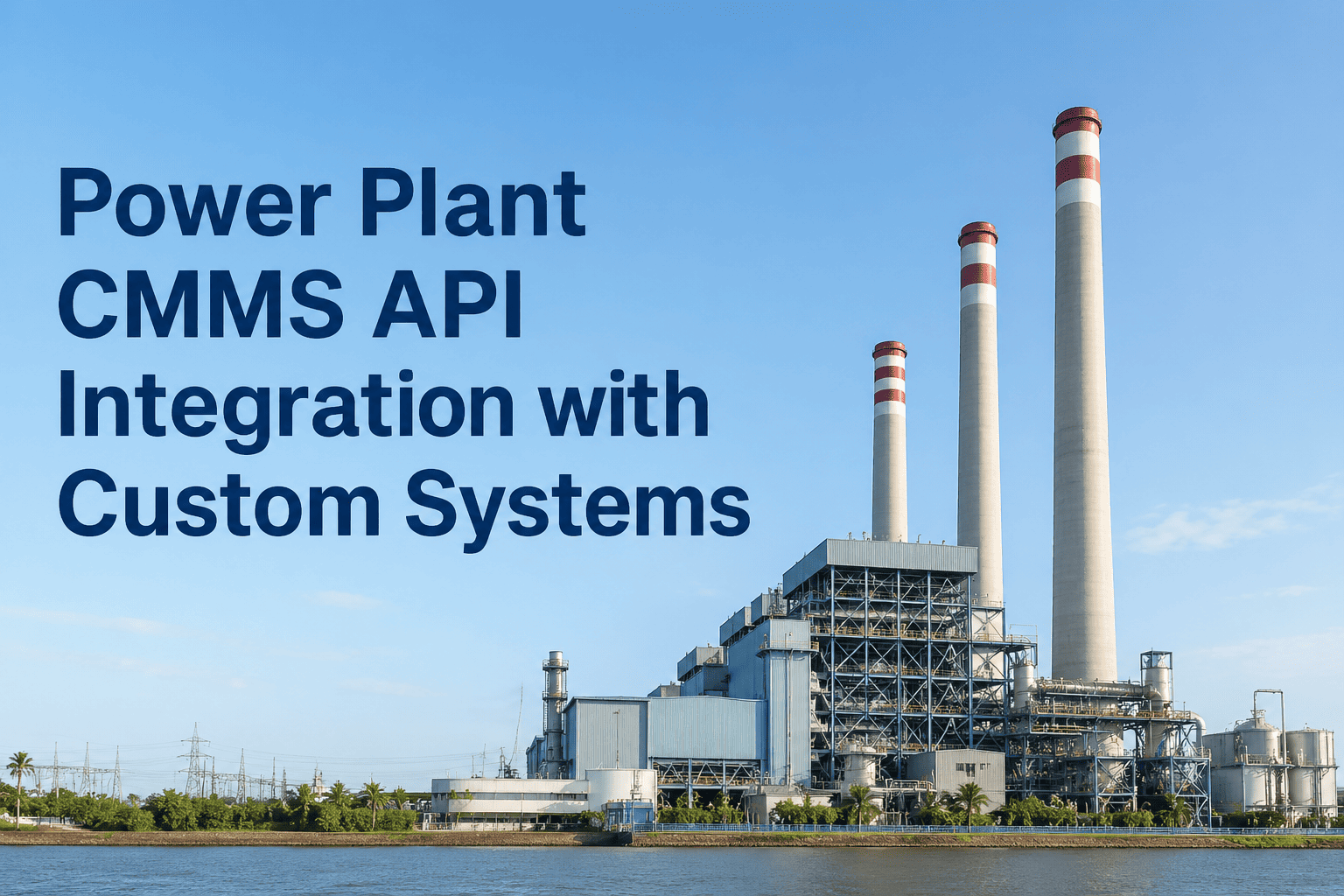
Every power plant's SCADA and DCS systems generate thousands of process alarms, threshold breaches, and equipment fault codes every single day. And the overwhelming majority of those signals vanish into the control room historian without ever triggering a single maintenance action. The gap between your operational technology layer — SCADA, DCS, historians, HMIs — and your maintenance management system is costing you forced outages, repeat failures, and decisions made on gut instinct instead of real process data. Plants that close this gap by integrating SCADA directly into their CMMS report 30–45% reductions in unplanned outages and eliminate the 15–90 minute manual delay between a control room alarm and the moment a technician is dispatched. The question is not whether integration is worth it. The question is how long your plant can afford to operate without it. Book a 30-minute demo to see how Oxmaint's SCADA-CMMS integration converts alarm events into structured work orders automatically — or start a free trial and connect your first data feed within the week.
Integration · SCADA · CMMS · Power Plant Automation
SCADA Integration with CMMS for Power Plants
When SCADA alarms flow directly into your CMMS as structured work orders — with asset context, priority, and procedures attached — your plant shifts from a reactive crisis model to a predictive operations model. Here is how the integration works and what it delivers.
45%
Reduction in unplanned outages at integrated plants
90 min
Manual alarm-to-dispatch delay eliminated by automation
$4.8B
Power SCADA market size by 2032, growing at 7.4% CAGR
60%
Less time spent on compliance documentation with integrated CMMS
The Two Universes That Are Not Talking — And the Failures That Result
Power plants operate two parallel information systems that were never designed to communicate. The silence between them is where failures are born.
Operational Technology (OT)
What SCADA and DCS see — every second
Real-time equipment state changes and fault codes
Parameter deviations logged with millisecond precision
Process alarms classified by severity and asset tag
Historian data: temperature, vibration, pressure trends
Load, efficiency, and performance metrics per unit
THE GAP
Where $28.4M failures are born
Without integration, SCADA data dies at the HMI screen — never becoming a work order, never preventing the next failure.
Information Technology (IT)
What CMMS manages — every maintenance event
Work order creation, assignment, and completion tracking
Preventive maintenance schedules and procedures
Spare parts inventory and procurement triggers
Compliance documentation and audit records
Technician hours, costs, and asset history accumulation
Real-World Cost of the Gap — February 2025
A 540 MW combined-cycle facility in Texas suffered a catastrophic HRSG tube failure that had been developing for eleven months. The economizer section showed steadily climbing stack temperatures and falling feedwater outlet temperatures — classic indicators of tube fouling progressing to failure — but the data lived in three disconnected systems: the DCS historian, a maintenance supervisor's spreadsheet, and handwritten boiler log sheets. Nobody connected the dots. The forced outage lasted 23 days, cost $28.4 million in lost revenue and emergency repairs, and triggered an insurance premium increase of $1.8 million annually. A single CMMS platform correlating DCS alarms with maintenance history would have flagged that economizer as a Priority-1 work order at least eight months before failure.
How SCADA-CMMS Integration Works — The Technical Architecture
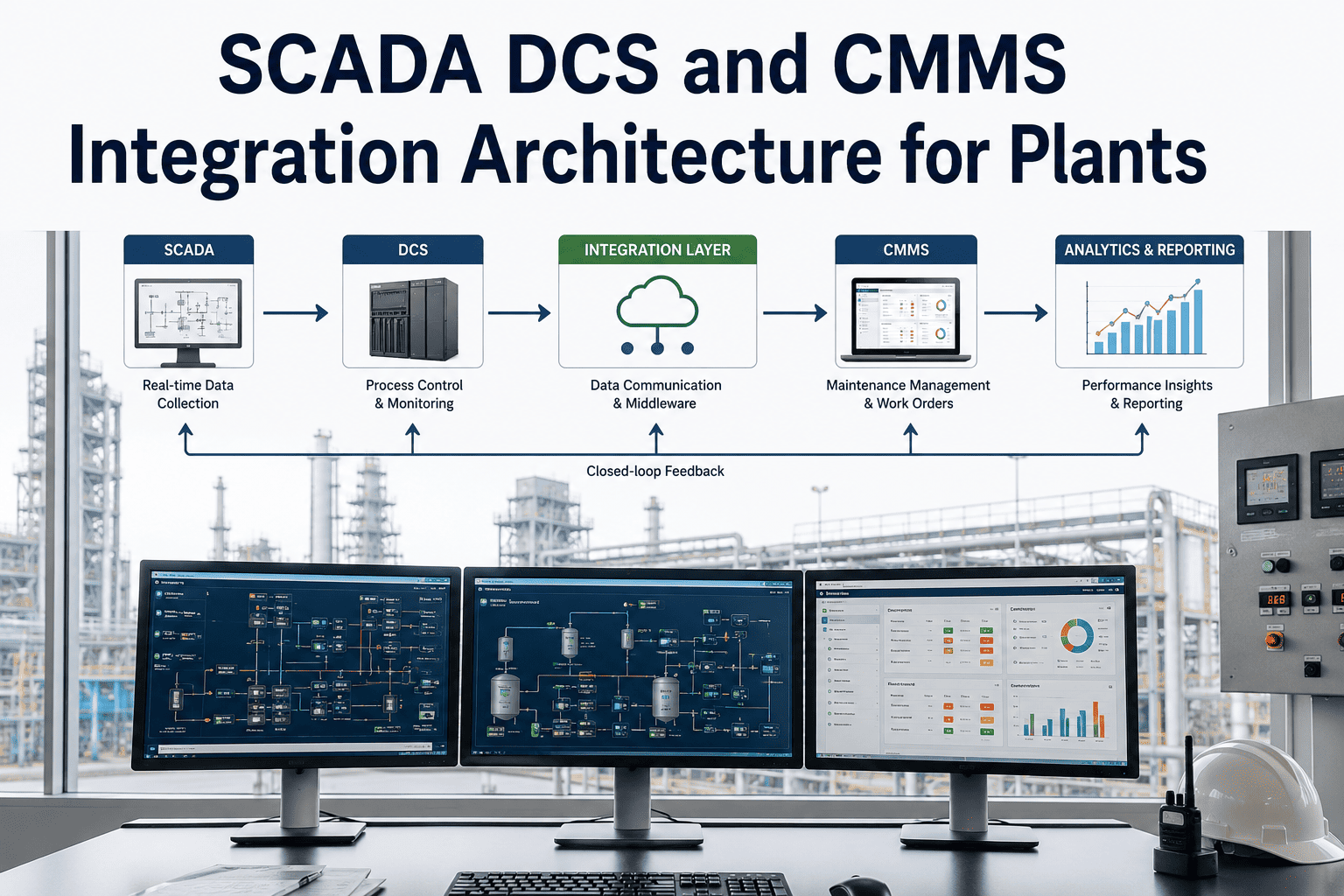
Oxmaint connects to your existing SCADA and DCS infrastructure via industry-standard protocols — no control system replacement required. The integration is additive, not disruptive.
1
Data Ingestion via OPC-UA / Modbus
SCADA and DCS historians connect to Oxmaint via OPC-UA or Modbus protocols. Alarm events, parameter readings, fault codes, and equipment status changes flow in real time. No middleware layer required. Compatible with GE, Honeywell, Siemens, ABB, and Schneider Electric control systems.
↓
2
Threshold Rules and Alarm Correlation
Configure alarm-to-work-order rules based on absolute threshold breaches or rate-of-change triggers. A seal oil purity declining at 0.15% per day fires a work order before the absolute alarm setpoint is reached. Alarm correlation in the CMMS identifies recurring fault patterns that individual shift teams would never connect across time.
↓
3
Automated Work Order Generation
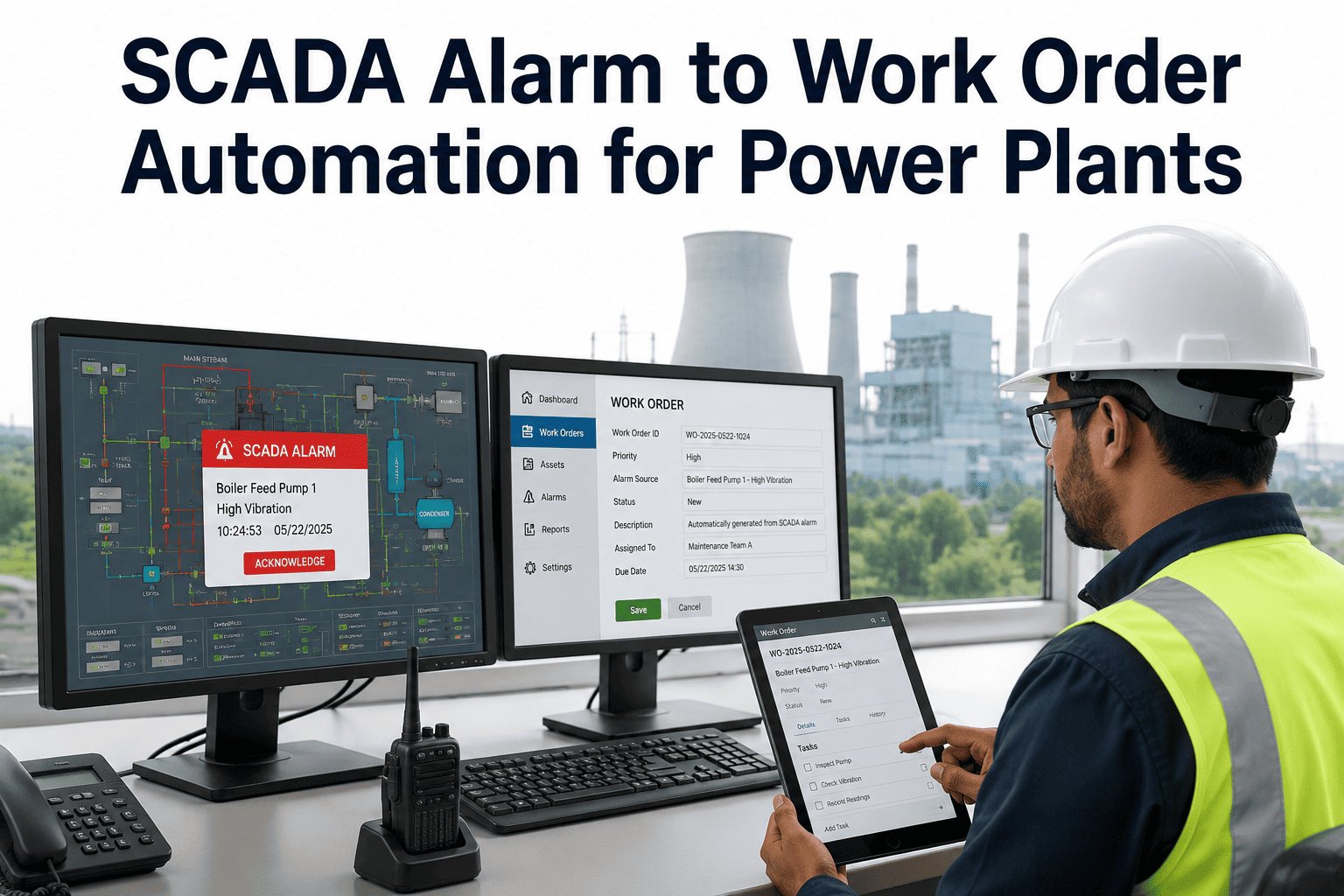
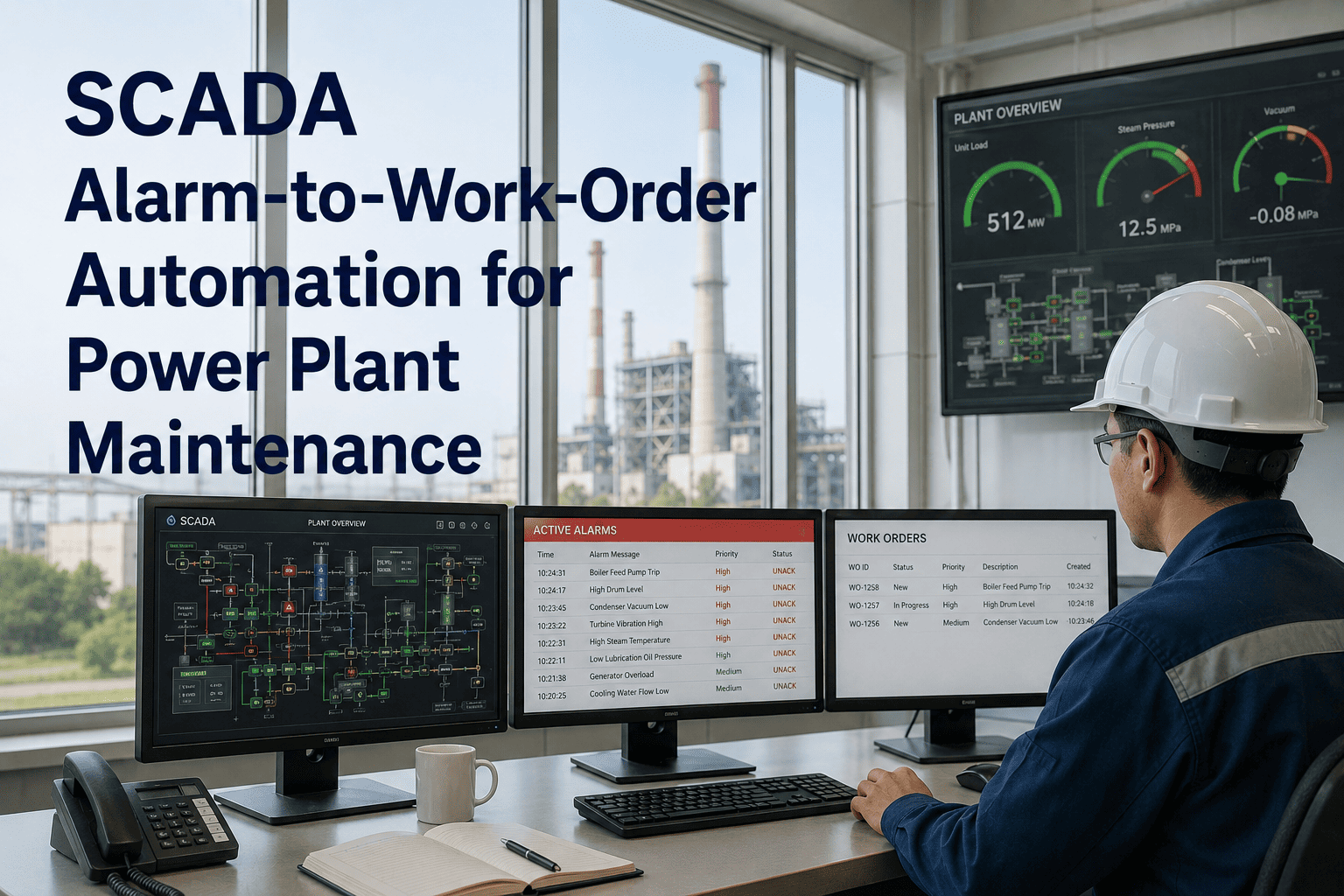
When a configured rule fires, Oxmaint creates a structured work order automatically — pre-populated with asset context, priority classification, relevant maintenance procedures, assigned technician, and SLA timer. The 15–90 minute manual handoff delay between control room alarm and maintenance dispatch is eliminated entirely.
↓
4
Asset History Accumulation and Audit Trail
Every SCADA alarm event above the configured threshold has a corresponding CMMS record — work order generated, assigned, completed, findings documented, timestamped. Full traceability for insurance audits, regulatory reviews (NERC CIP, GADS), and root cause investigations after any incident. No manual assembly before inspections.
Oxmaint connects to your existing SCADA and DCS infrastructure via OPC-UA and Modbus. No control system replacement. First sensor readings in your CMMS dashboard within a week.
What Integration Prevents — Three Scenarios Where the Gap Costs You
Seal Oil System — Hydrogen-Cooled Generator
Without Integration
H2 purity drops from 98.1% to 96.8% over 9 days — seal oil degradation developing. Operator monitors the trend, takes no action until purity drops below the absolute low alarm setpoint. By that point, the seal oil bearing has advanced damage.
With Integration
Rate-of-change rule fires a seal oil inspection work order when purity decline exceeds 0.15% per day — regardless of absolute alarm. Bearing identified with elevated bypass leakage. Corrected before purity reached de-energization level. Planned repair during next scheduled window.
HP Turbine — Vibration Trend Pattern
Without Integration
14 months of vibration alarm history lived in the DCS historian. The degradation trend was clear in retrospect — but no one in maintenance ever saw it because it never made it into a work order. The HP turbine tripped four weeks before the scheduled outage.
With Integration
The same alarm pattern on Unit 2 — after integration — triggered a work order six weeks later. Technicians found a bearing with early-stage brinelling. That bearing would have been a trip event before the next scheduled outage. The integration paid for itself on one prevented failure.
HRSG Economizer — Tube Fouling Progression
Without Integration
Eleven months of climbing stack temperatures and falling feedwater outlet temperatures — in three disconnected systems. Nobody connected the dots. Result: $28.4 million forced outage, 23 days offline, $1.8M annual premium increase.
With Integration
Correlated DCS trend and maintenance history would have flagged the economizer as a Priority-1 work order at least eight months before failure — converting a $28.4M catastrophic outage into a planned inspection during a scheduled maintenance window.
Five Integration Capabilities That Separate Power-Grade CMMS from Generic Platforms
DCS / SCADA
Real-time operating data, alarm correlation, fired hour counters, load curves
Condition-based work orders generated automatically from live process alarms
Vibration Monitoring
Bearing health trends from GE Bently Nevada, SKF, or equivalent systems
Rotating equipment failures caught 2–4 weeks before trip events
Oil Analysis Labs
Automated sample result import with trending and alarm limits per asset
Lubrication-related failures prevented before they progress to component damage
ERP / Procurement
Parts availability from inventory, PO generation for outage materials
Work orders blocked for parts shortage are identified and resolved before the scheduled window
Document Management
P&IDs, OEM manuals, and engineering change notices linked to asset records
Technicians access correct procedures at point of work — no manual document lookup
Frequently Asked Questions
Does SCADA-CMMS integration require replacing our existing control system?
No. Oxmaint connects to your existing SCADA and DCS infrastructure via OPC-UA or Modbus — industry-standard protocols supported by all major control system vendors including GE, Honeywell, Siemens, ABB, and Schneider Electric. No control system modification or replacement is required.
Start a free trial to explore integration options.
How long does integration take to set up?
DCS and SCADA data feeds connected via OPC-UA or Modbus are typically live within days — not months. First sensor readings flow into Oxmaint dashboards within the first week. Alarm-to-work-order rule configuration is completed during guided onboarding based on your plant's critical assets and alarm priority structure.
Can we configure which alarms generate work orders automatically?
How does integration support NERC CIP and regulatory compliance?
Every SCADA alarm event above the configured threshold creates a corresponding CMMS record — work order generated, assigned, completed, findings documented, and timestamped. This creates a full audit trail for NERC CIP, GADS reporting, and insurance reviews without any manual assembly before inspections.
What if we have multiple SCADA systems across different units or sites?
Oxmaint supports multi-site operations with centralised dashboards, site-specific asset hierarchies, and cross-site analytics. Multiple SCADA or DCS systems can feed into the same CMMS instance, with role-based access controls ensuring the right teams see the right data for their units.
Stop Letting SCADA Intelligence Die at the HMI Screen
Every alarm your control system generates is a maintenance opportunity your team is currently missing. Oxmaint's SCADA-CMMS integration converts that operational intelligence into structured work orders — automatically, in real time, with full audit trail.