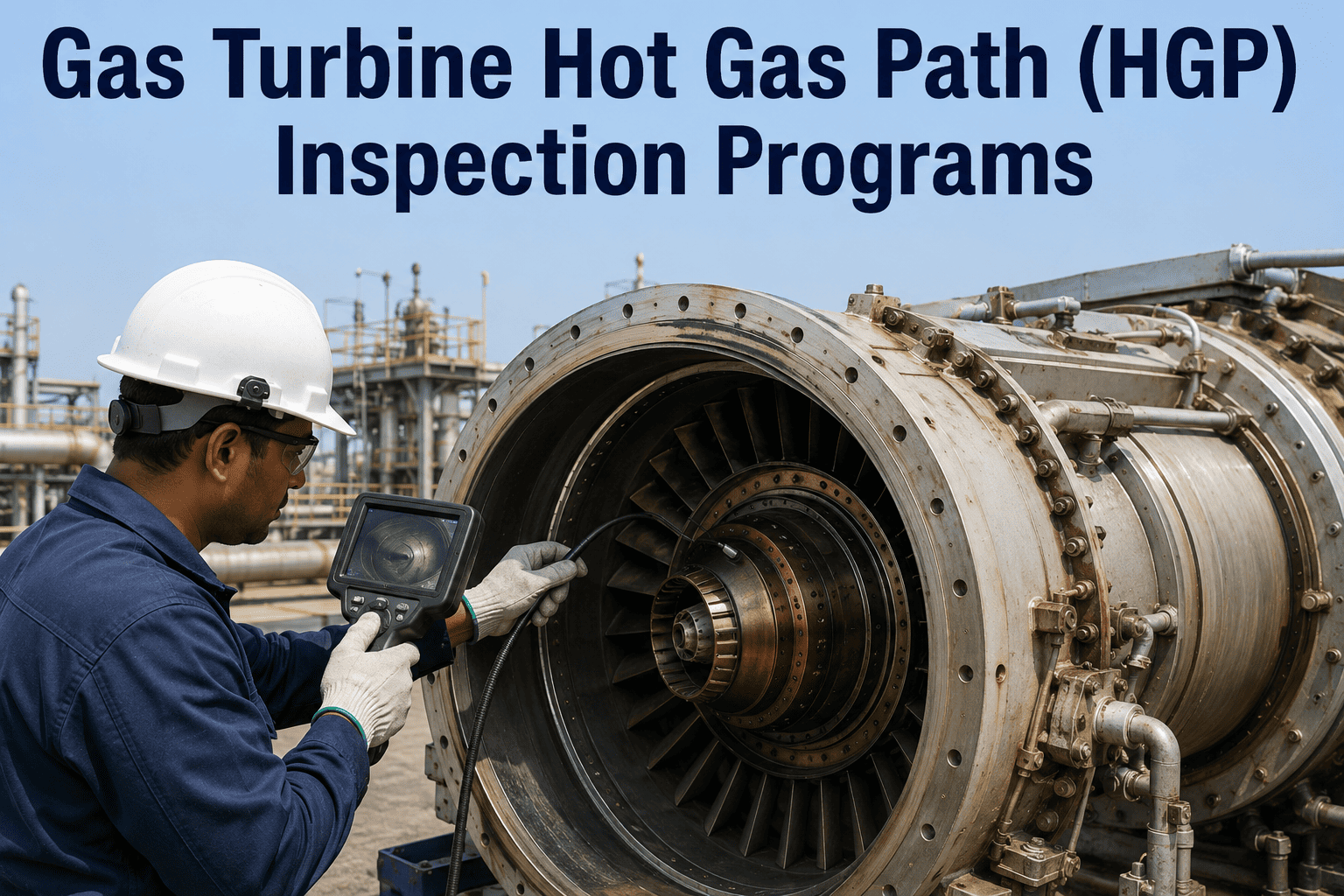
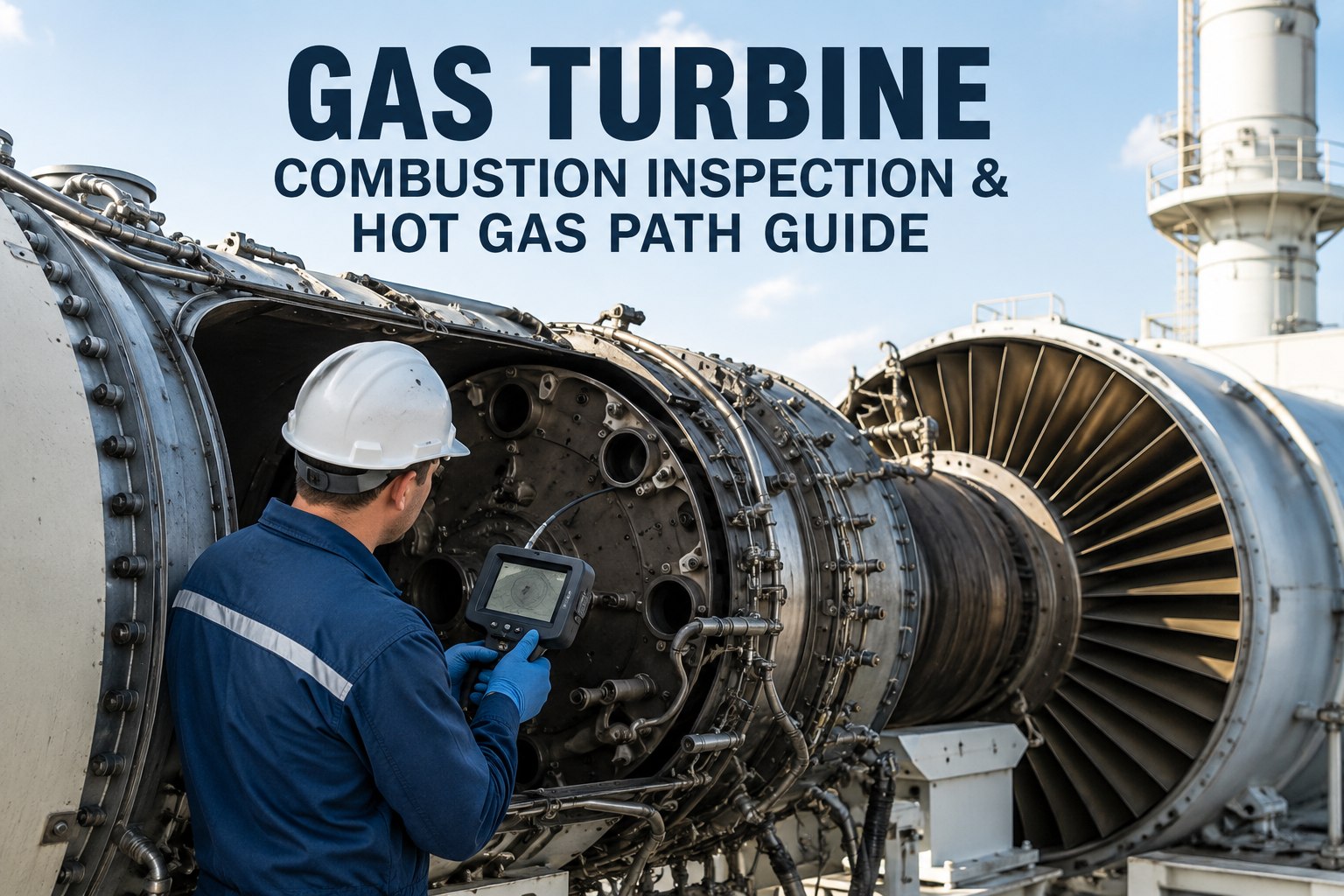
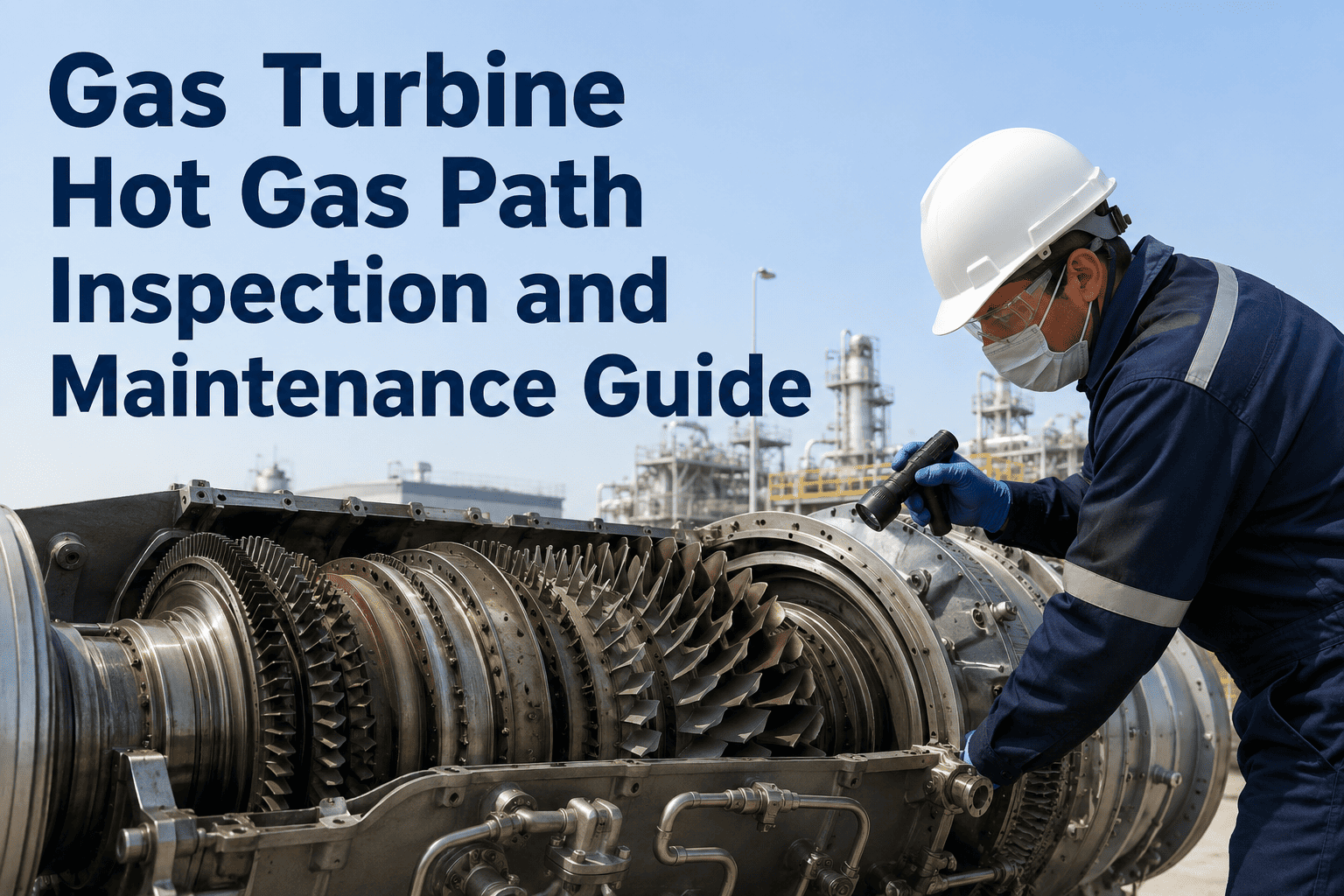
Gas turbine hot gas path (HGP) components—combustion liners, transition pieces, nozzles, and buckets—operate under extreme thermal and mechanical stress. Unplanned HGP failures lead to extended outages, costly emergency repairs, and lost revenue that can exceed millions per day. A structured inspection program integrated with a digital CMMS like Oxmaint turns reactive maintenance into predictive, condition-based campaigns, extending component life and improving fleet reliability. Without a centralized system, inspection data remains fragmented across spreadsheets and paper logs, causing missed degradation trends, unnecessary early replacements, and failed audits. Connecting every borescope image, crack measurement, and repair action to a single asset record is the only way to drive continuous improvement in HGP management.
Gas Turbine HGP Inspection Programs
Maximize Hot Gas Path Reliability with Data-Driven Inspections
From borescope inspections to full teardown—connect every HGP finding to traceable work orders, remaining life assessment, and audit-ready records.
40%
Reduction in unplanned HGP downtime with CMMS-linked inspections
$2.1M
Avg savings per avoided forced outage on a 100MW turbine
25%
Longer hot gas path part life using predictive scheduling
What Is Hot Gas Path (HGP) Inspection and Why It Matters
The hot gas path consists of all components that contact combustion gases after fuel ignition: combustion liners and transition pieces (containing flame), stage 1-3 nozzles (vanes), and buckets (blades). These parts degrade due to thermal fatigue, oxidation, creep, and foreign object damage. A HGP inspection program defines intervals—typically based on fired hours, starts, or trips—to assess condition, predict remaining useful life (RUL), and schedule repairs or replacements. Without a centralized CMMS, inspection findings remain in siloed spreadsheets, leading to missed degradation trends and premature failures.
Combustion Liners
Subject to thermal-acoustic cracking, burn-through, and coating loss. Inspections focus on crack length, distortion, and cooling hole condition. CMMS tracks liner sets by position and fired hours.
Typical inspection: 8,000-12,000 hours
Transition Pieces
Connect liners to stage 1 nozzles. Failures include buckling, cracking at the aft frame, and oxidation. Digital records link each piece to combustion dynamics data and repair history.
Common defect: axial cracking
Nozzles (Vanes)
Leading edge thinning, trailing edge burn-off, and foreign object damage. Dimensional inspections and coating assessment require traceable templates per stage.
RUL critical for life extension
Buckets (Blades)
Creep elongation, tip rub, platform cracking, and fir-tree root wear. Oxmaint links blade serial numbers to run-time parameters and borescope images.
High cost: $50k-$200k per set
| Inspection Method | Typical Interval | Key Findings | CMMS Traceability |
| Borescope (online) |
Every 1,000-4,000 hours |
Coating loss, cracks, foreign object damage |
Video/image links + work order creation |
| Partial (combustion only) |
8,000-12,000 hours |
Liner & transition piece condition |
Component-level repair records |
| Full HGP teardown |
24,000-32,000 hours |
Dimensional changes, creep, oxidation depth |
Life consumption + remaining life forecast |
Connect HGP Inspection Findings to Maintenance Work Orders
Recurring crack patterns or coating wear are often early signals of combustion dynamics or fuel nozzle issues. Oxmaint links borescope records, part history, and corrective tasks so root cause analysis reaches the equipment level—not just the component.
Best Practices for HGP Inspection Program Optimization
Duty-Based Interval Adjustment
Instead of fixed calendar days, use actual fired hours, number of starts, and trip events. A CMMS automatically recalculates next inspection due dates based on real-time operating data, avoiding both over-inspection and under-inspection.
Component Serialization & Life Tracking
Assign unique IDs to each liner, transition piece, nozzle segment, and bucket. Record installation date, fired hours, repair history, and current condition. This enables precise remaining life prediction and cost allocation per part.
Digital Inspection Checklists
Standardize findings with drop-down menus for crack severity, coating condition (0-5 scale), and dimensional measurements. Mandatory photo attachments ensure evidence is never missing. Non-conformances automatically trigger follow-up tasks.
Fleet Benchmarking
Compare HGP degradation rates across multiple turbines. Identify units with accelerated wear and investigate fuel quality, load patterns, or maintenance practices. Oxmaint dashboards highlight outliers for root cause analysis.
Classical vs. CMMS-Enabled HGP Inspection Programs
Traditional HGP Program
Paper or spreadsheet inspection logs
No automated remaining life tracking
Inspection intervals based on fixed hours only
Manual work order creation for repairs
Separate photo/video storage
Difficult to correlate failures across units
Oxmaint CMMS-Powered Program
Centralized digital inspection records per component
Predictive RUL using start/stress factors
Condition-based intervals adjusted by real-time data
Auto-generated corrective work orders from inspection flags
All borescope images linked to asset history
Fleet-wide dashboard for HGP health benchmarking
End-to-End HGP Inspection Workflow with Oxmaint
1
Schedule Inspection Campaign
Define inspection type (borescope/partial/full) based on fired hours, starts, or operating profile. Oxmaint triggers PM plans automatically.
2
Record Findings & Attachments
Inspection team logs crack lengths, coating condition, and dimensional deviations. Upload borescope images directly to each component record.
3
Generate Corrective Actions
Findings exceeding threshold automatically create work orders for repair, replacement, or further NDT. No manual data re-entry.
4
Update Life Consumption & RUL
System calculates remaining useful life based on component degradation models and maintenance performed. Plan next outage with confidence.
Key Metrics That Improve with Integrated HGP Inspection Programs
52%
Reduction in unplanned HGP-related outages
Source: EPA combined cycle study, 2023
18%
Lower maintenance cost per fired hour
Power industry benchmarking report
100%
Audit-ready traceability (ISO 55001 & ASME)
Automated compliance reporting
Frequently Asked Questions
How often should a gas turbine hot gas path inspection be performed?
Inspection intervals depend on machine duty—base load combined cycle units typically require borescope inspections every 4,000-8,000 hours and full HGP teardown at 24,000-32,000 hours. Peaking units may need more frequent checks due to thermal cycling.
Oxmaint tracks actual operating hours and starts to schedule condition-based inspections automatically.
What are the most common failure modes for HGP components?
Combustion liners: thermal-mechanical fatigue cracks. Transition pieces: aft frame cracking. Nozzles: leading edge oxidation and trailing edge burn-off. Buckets: creep elongation and tip rub. All are accelerated by fuel quality, load changes, and combustion dynamics. A CMMS helps correlate failure patterns with operational data to adjust inspection scope.
How does a CMMS improve remaining useful life (RUL) tracking?
RUL models use fired hours, starts, trips, and last inspection findings. With
Oxmaint, you record each component’s serial number, inspection results, and repair history. The system calculates degradation rates and predicts when a part will reach its retirement limit, allowing you to plan replacements during scheduled outages instead of emergencies.
What records are required for a HGP inspection audit (ISO 55001, ASME)?
Auditors expect: inspection plan and intervals, detailed findings per component (crack length, coating condition, etc.), photographic evidence, work orders for repairs, and remaining life assessment. Oxmaint consolidates all this into a searchable trail, linking each borescope image to the specific part and outage event.
Can Oxmaint integrate with borescope equipment or existing NDT systems?
Yes—Oxmaint allows manual uploads or API integration from borescope file systems. For advanced programs, inspection data can be imported via CSV or direct database connections.
Book a demo to see how we connect with your current inspection tools.
Build a Defect-Free HGP Inspection Program with Full Traceability
Stop relying on spreadsheets and isolated inspection reports. Oxmaint connects hot gas path inspection findings, component life tracking, and maintenance work orders in one platform—giving you audit-ready records and predictive insight. Start free or schedule a 30-minute walkthrough.