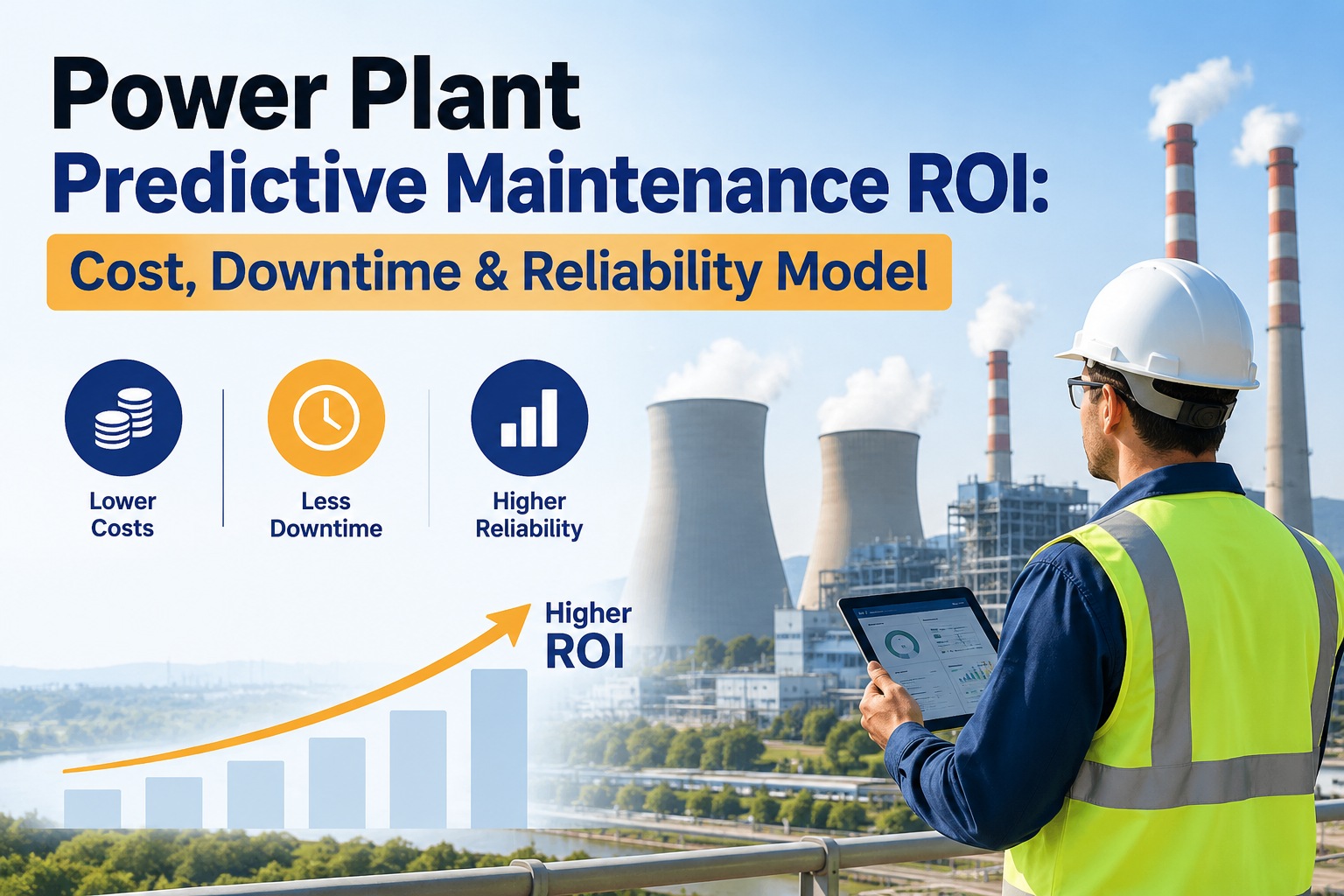
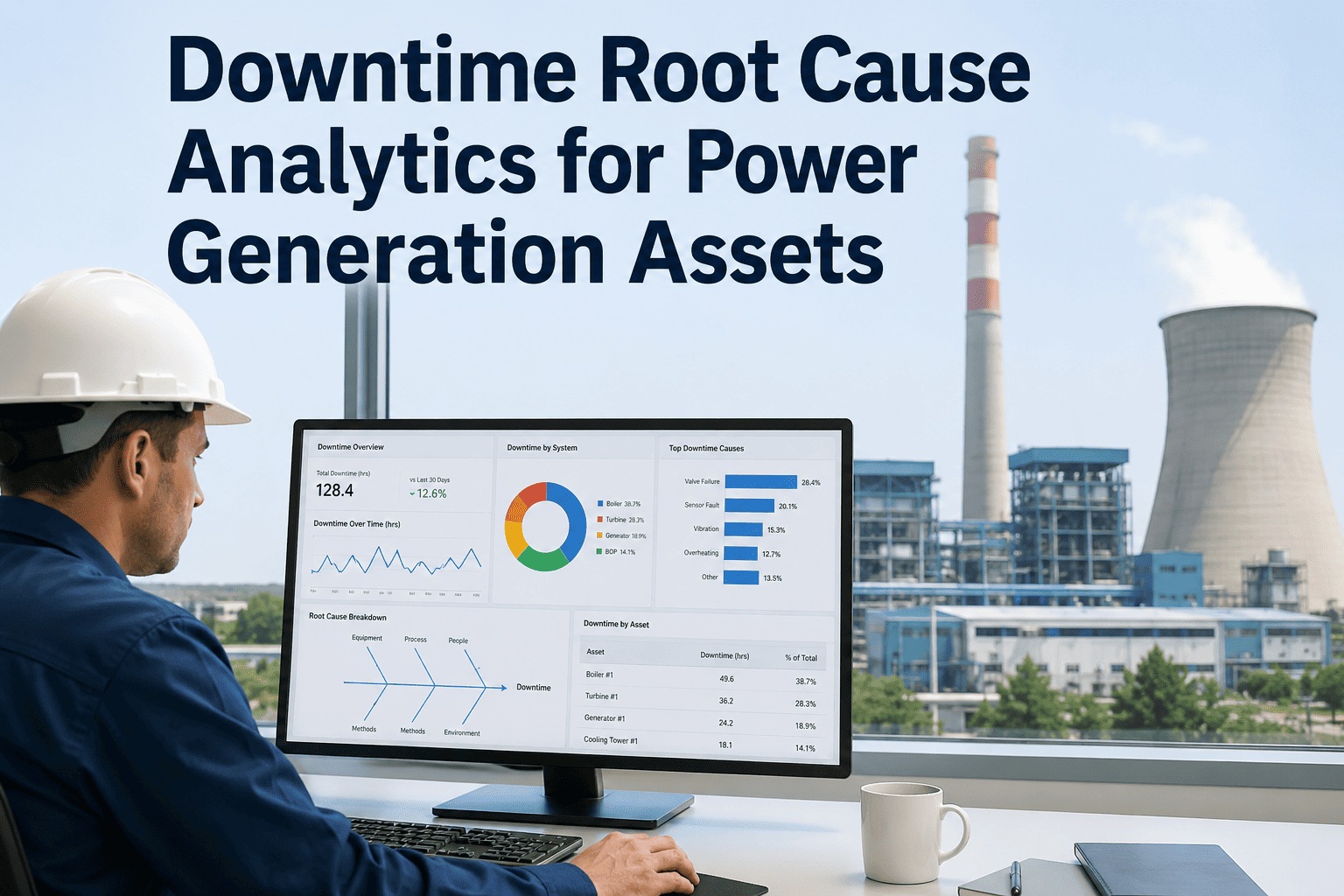
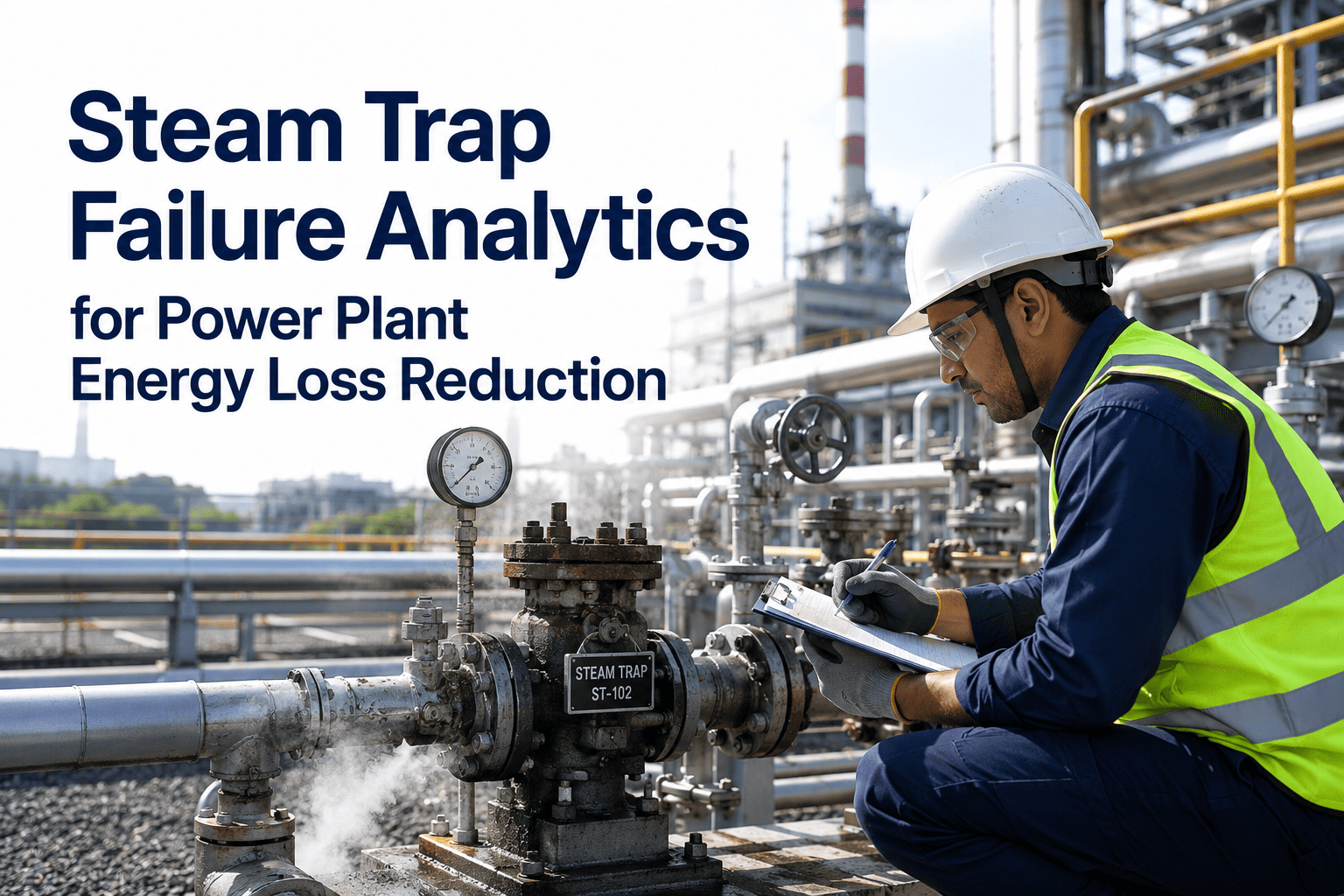
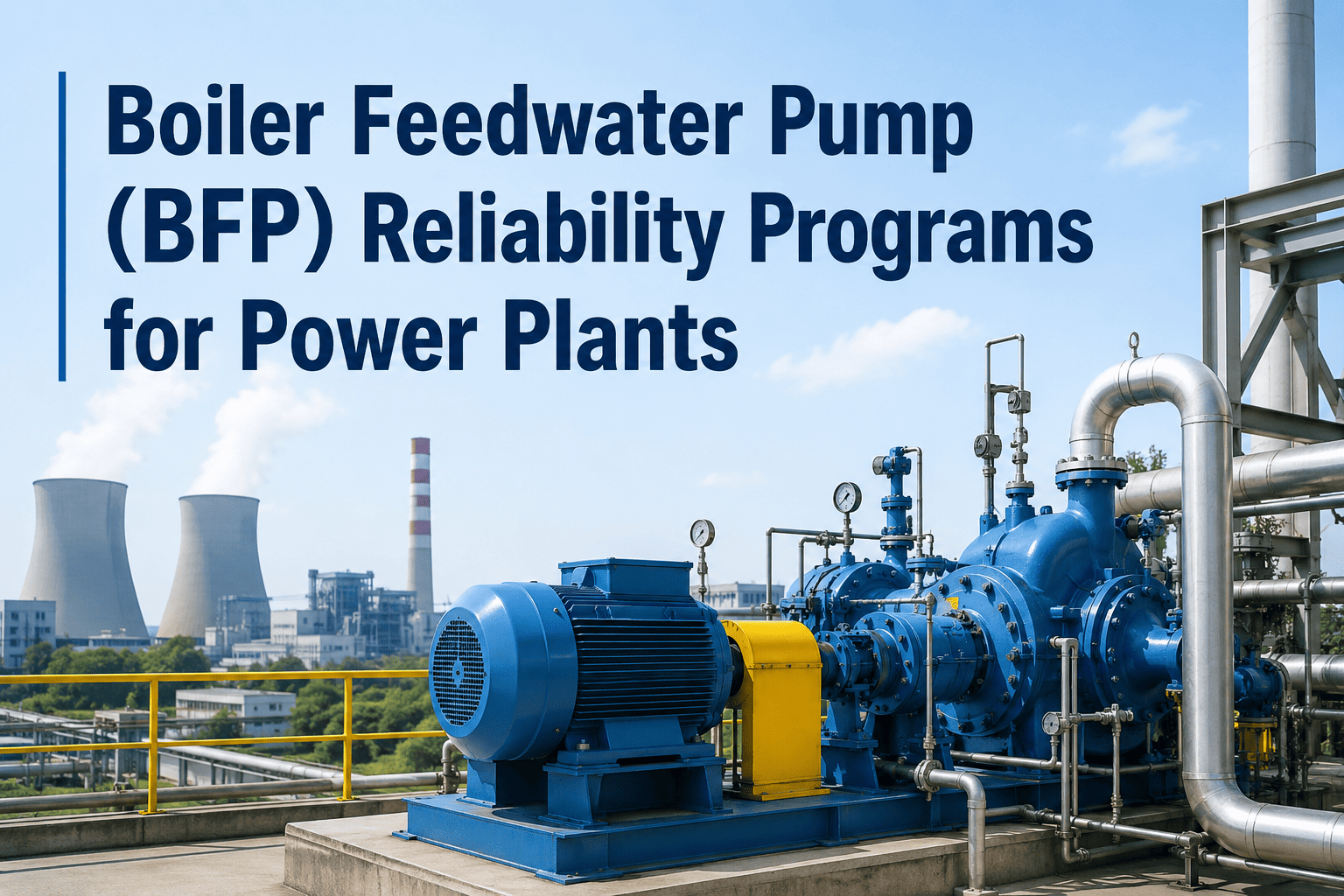
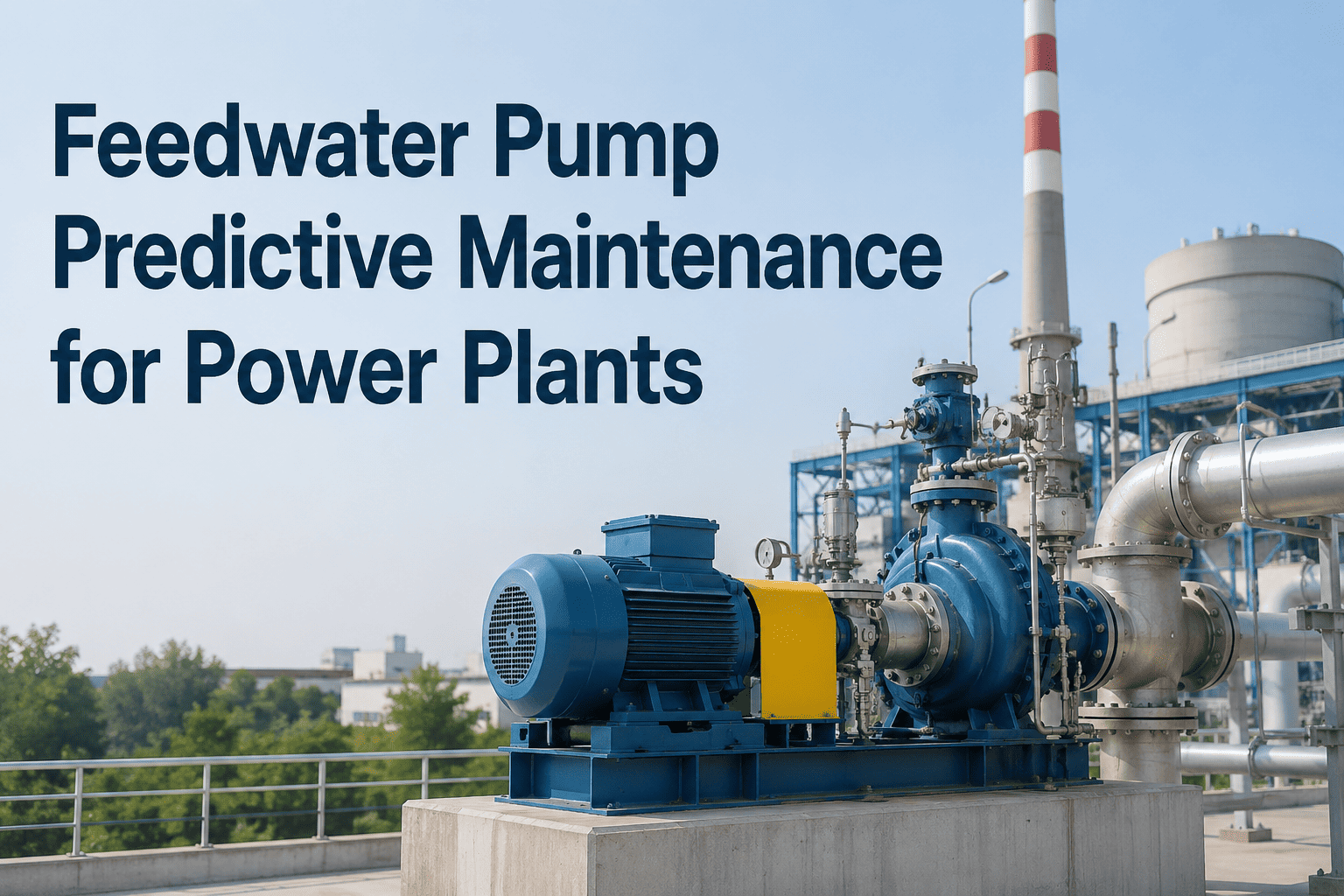
A single boiler feedwater pump failure can force an unplanned unit trip and cost a thermal power plant over $500,000 in a single day of lost generation — and most of those failures are entirely preventable. BFPs operate under extreme conditions: pressures up to 400 bar, temperatures exceeding 200°C, and flow rates up to 2,500 tonnes per hour. At those operating points, cavitation, bearing degradation, seal wear, and balance disc erosion follow predictable degradation curves — curves your maintenance team can intercept with the right monitoring and workflow. OxMaint turns vibration data, temperature trends, and flow performance readings into auto-generated work orders that bring failing pumps into planned maintenance windows before they trip the unit. Start your feedwater pump predictive maintenance programme in OxMaint free and prevent your next forced outage.
Industry Solution · Pump Reliability · Predictive Maintenance
Feedwater Pump Failures Are Predictable. Stop Treating Them Like They Aren't.
BFPs give advance warning through vibration signatures, temperature drift, and hydraulic performance decline — weeks before failure. OxMaint captures those signals and converts them into work orders your team can act on before the unit trips.
$500K+
Cost of a single BFP-forced unit outage per day
11 days
Advance warning achievable with ML-based analytics before BFP failure
61%
of reactive pump work orders occur between scheduled PM intervals
9×
cost multiplier for late-detected seal failure vs. planned repair
The Six Failure Modes
What Kills Feedwater Pumps — and the Signals That Predict Each One
BFP failure modes are not random. Each follows a distinct degradation pattern with detectable signatures across vibration, temperature, pressure differential, and motor current. Knowing which sensor to watch for each mode is the foundation of effective predictive maintenance.
| Failure Mode |
Detection Signal |
Typical Lead Time |
OxMaint Alert Trigger |
| Cavitation |
Vibration — broadband noise increase, high-frequency spikes |
Weeks to months |
Vibration velocity > 7 mm/s or suction head deviation |
| Bearing Degradation |
Temperature rise, vibration at bearing frequencies |
2–8 weeks |
Bearing temp 8°C above baseline or vibration trend crossing threshold |
| Mechanical Seal Wear |
Increased gland leakage rate, temperature at seal face |
Days to weeks |
Leakage rate or seal flush temperature threshold breach |
| Balance Disc Erosion |
Axial thrust increase, balance line flow deviation |
Weeks |
Balance line flow out of design range for 2+ readings |
| Impeller Wear |
Hydraulic performance decline — head and efficiency curves shifting |
Months |
Performance curve deviation > 5% from design at duty point |
| Coupling Misalignment |
Vibration at 1× and 2× running speed, elevated bearing temperatures |
4–8 weeks |
Vibration baseline shift post-maintenance or following thermal transient |
The Predictive Maintenance Programme
Four Phases From Sensor to Scheduled Repair
Effective predictive maintenance for BFPs is not a single technology — it is a workflow that connects condition data to action. OxMaint runs that workflow across four phases that work whether you have IoT sensors today or are starting with manual data entry.
Phase 1
Asset Registration & Baseline
Load each BFP into OxMaint with nameplate data, design performance curves, criticality rating, and permit requirements. Establish vibration, temperature, and pressure baselines during steady-state operation. Baselines are the reference against which all future readings are trended.
Phase 2
Continuous Condition Monitoring
IoT sensors feed vibration, temperature, and flow data to OxMaint in real time. Where sensors are not installed, technicians complete structured condition rounds on mobile devices — data flows into the same trending engine regardless of source, with every reading timestamped against the asset and shift.
Phase 3
Alert-to-Work-Order Automation
When any parameter breaches a threshold, OxMaint auto-generates a prioritized work order — assigned to the right technician with sensor context, historical trend data, spare parts availability status, and a recommended response window. The team acts on intelligence, not instinct.
Phase 4
Planned Repair & RCA Closure
Repairs are executed during planned outage windows with parts pre-staged. Closed work orders accumulate failure mode data that improves threshold calibration over time. Sensor-backed RCA closes 73% more findings correctly on first attempt — breaking the cycle of repeat failures.
Pump Fleet Context
BFPs Are One Asset in a Complex Pump Fleet — OxMaint Covers All of Them
A typical 500 MW combined-cycle plant operates 40–60 pumps across four critical categories. Manual tracking of runtime hours, condition data, and PM intervals across this fleet is virtually impossible without a CMMS purpose-built for power generation.
Critical
Boiler Feedwater Pumps
Multi-stage, high-pressure — up to 400 bar. Failure causes immediate unit trip. Requires the most aggressive monitoring cadence and tightest threshold tolerances.
High
Condensate Extraction Pumps
Vertical low-NPSH pumps extracting from the hotwell. Cavitation from insufficient suction head is the primary failure driver — detectable through vibration signature analysis.
High
Circulating Water Pumps
Large axial or mixed-flow pumps serving the cooling circuit. Impeller erosion and hydraulic imbalance develop slowly — invisible without performance curve trending over months.
Medium
Chemical Dosing & Auxiliary Pumps
Smaller but failure can compromise water chemistry control — triggering the boiler tube failures that make BFP protection the starting point, not the complete picture.
See how OxMaint converts BFP sensor data into scheduled maintenance
Our pump reliability engineers will show you exactly what your failure signatures look like on the OxMaint dashboard, how work orders auto-trigger from threshold breaches, and what your 12-month ROI looks like on your own fleet.
FAQ
Feedwater Pump Predictive Maintenance Questions
Can OxMaint work for BFP predictive maintenance without IoT sensors installed?
Yes. OxMaint supports manual condition round data entry through its mobile app — vibration readings, temperature logs, and performance checks entered by technicians feed the same trending engine as IoT sensors. Most plants start with manual rounds and add IoT integration over time.
Start your free trial with your existing data.
How does OxMaint handle the BFP standby pump — is it tracked separately?
Each BFP — duty and standby — is registered as a separate asset with its own condition history, PM schedule, and threshold configuration. Standby pump starts and run hours are tracked automatically to ensure the standby unit is in a known-good state when needed, not just assumed ready.
Book a demo to see the standby tracking workflow.
What specific vibration thresholds should be configured for BFPs in OxMaint?
ISO 10816-7 provides severity zones for industrial boiler feed pumps — Zone A for new equipment, Zone D for shutdown-required condition. OxMaint's BFP templates come pre-configured with ISO 10816-7 thresholds that can be adjusted to match your specific machine design and operating history.
How quickly can OxMaint be deployed across an existing pump fleet?
Initial deployment — asset registry, PM schedule activation, and work order workflows — typically takes 1–2 weeks using OxMaint's guided onboarding and pre-built thermal plant pump templates. Sensor integration and condition-monitoring-triggered work orders come in Phase 2, typically 4–6 weeks after initial deployment.
Can OxMaint import historical pump maintenance records to seed the trend analysis?
Yes. Historical work orders, vibration records, and inspection data can be imported from spreadsheets or exported from existing CMMS platforms. Historical data seeds the failure mode analysis from day one — the more history imported, the faster OxMaint's trending engine identifies meaningful deviations.
Start your import and see trend analysis immediately.
Your next BFP failure is already signalling. Is your maintenance team listening?
OxMaint connects vibration data, temperature trends, and hydraulic performance readings to scheduled repair work orders — so feedwater pump failures become planned maintenance events, not emergency outages.