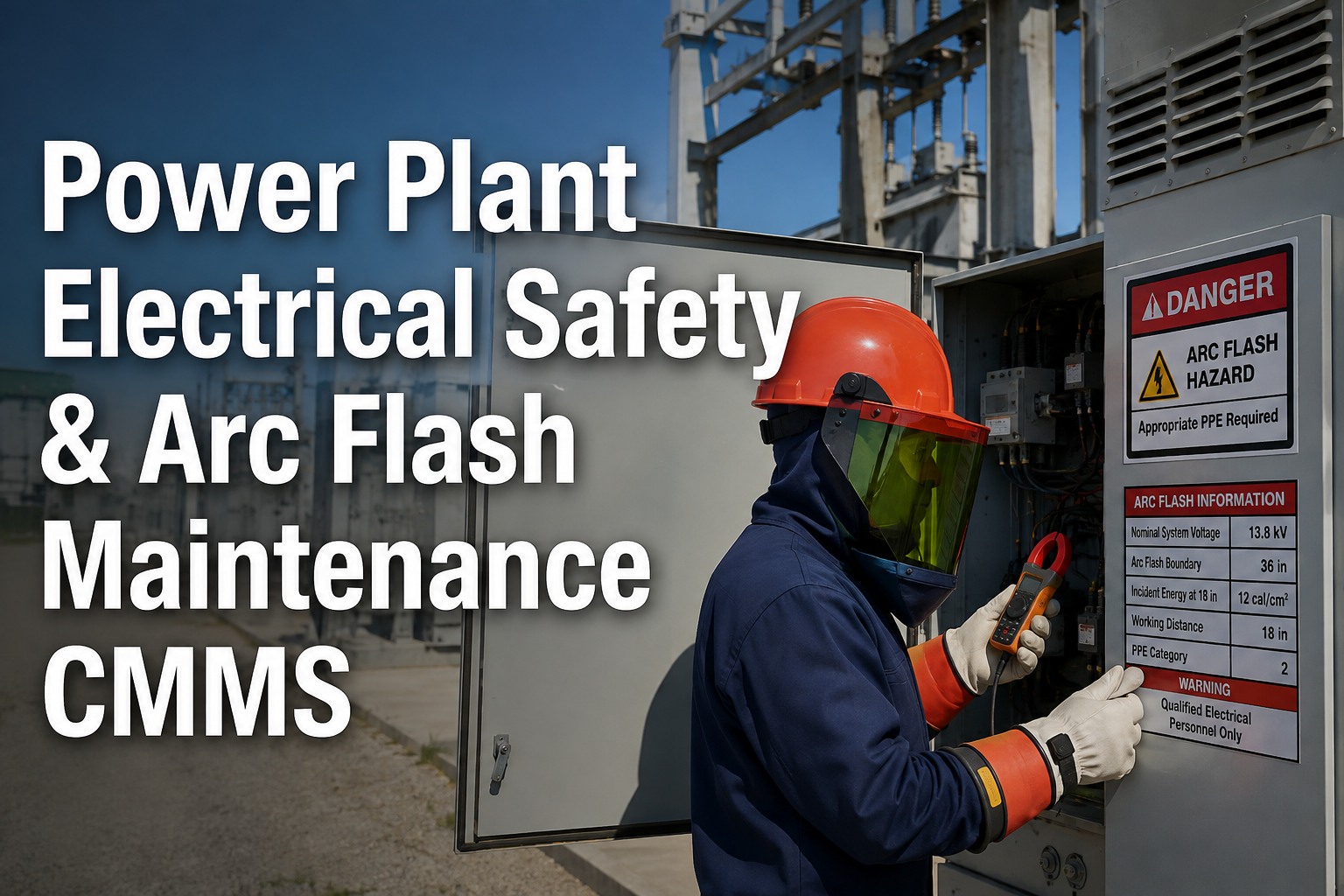
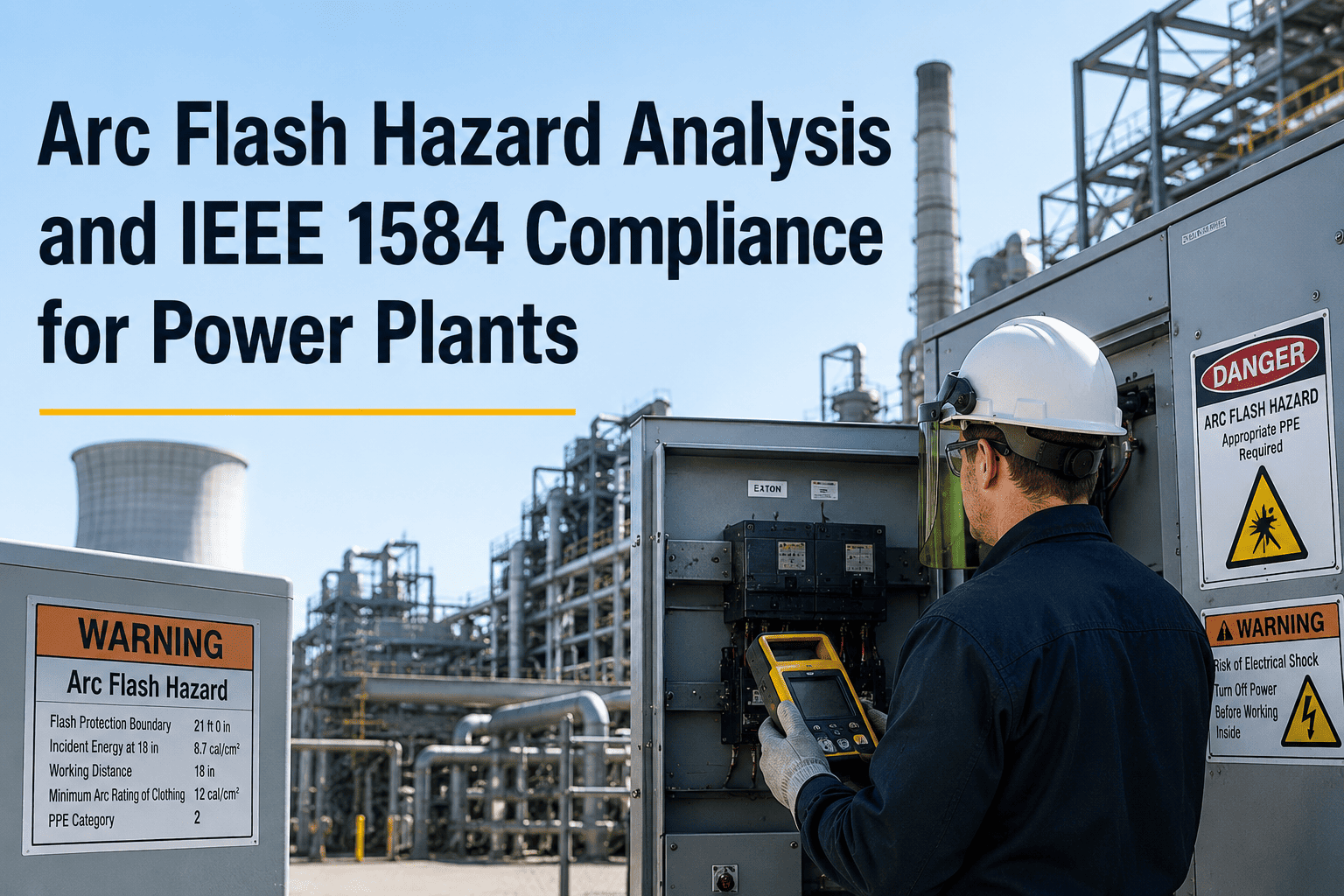
There are 5 to 10 arc flash incidents every single day in the United States. Each one releases energy measured in calories per square centimeter — the same unit used to describe bomb blast exposure. A 40-cal/cm² arc flash event, common at medium-voltage switchgear in power plants, generates a thermal pulse equivalent to having a stick of dynamite explode 12 inches from your face. Yet the vast majority of these incidents are entirely preventable: the worker was not wearing the right PPE for the incident energy level at that specific equipment because the arc flash hazard analysis had not been completed, had expired, or could not be located when the work order was issued. Sign up free on OxMaint to connect your arc flash study data, PPE requirements, equipment records, and electrical safety training into one platform — so the right protection level reaches the right worker at the right equipment every time.
Arc Flash Kills in Milliseconds. Your Safety Program Must Work in the Same Timeframe.
OSHA released its first major arc flash safety update in over two decades in November 2024 — coinciding with the 2024 NFPA 70E edition. Both now require proactive risk assessments, documented PPE selection rationale, and updated approach boundaries for every energized work task above 50V.
Four Pillars of an NFPA 70E-Compliant Electrical Safety Program
An electrical safety program at a power plant is not a single document — it is four interlocking program elements that must all function together. When any one pillar is missing or outdated, the entire program fails the OSHA General Duty Clause review that uses NFPA 70E as its benchmark. Book a consultation with OxMaint's safety team to assess where your current program stands against the 2024 standard requirements.
Arc Flash Risk Assessment
Every piece of electrical equipment where energized work may be performed must have a documented arc flash risk assessment determining incident energy levels and arc flash boundaries. The 2024 NFPA 70E now emphasizes "Operating Condition" — assessments must reflect actual maintenance state, not just design specifications. Assessments expire every 5 years or after any major system modification, whichever comes first.
PPE Selection & Tracking
The incident energy method requires matching PPE arc rating to the calculated incident energy at each specific equipment location. Under the 2024 edition, anyone inside the arc flash boundary must wear hearing protection regardless of whether they are actively working. PPE selection rationale must be documented per task — and arc-rated garment inspection, arc rating verification, and replacement tracking must all be maintained with records available for OSHA review.
Electrically Safe Work Condition (ESWC)
The 2024 NFPA 70E now requires employers to establish, document, and implement an ESWC policy that makes hazard elimination the first priority — not the fallback after PPE selection. The policy must specify how equipment is de-energized, locked out, tested for absence of voltage, and restored after work. This written policy must be referenced in all work authorizations for energized electrical work.
Qualified Worker Training & Requalification
Only "qualified persons" as defined by NFPA 70E may perform energized electrical work. Qualification is equipment-specific and task-specific — being qualified to work on 480V MCC buckets does not qualify a worker for 15kV switchgear. Training must be documented, tied to specific equipment and voltage levels, and refreshed whenever there are changes to tasks, equipment, or applicable regulations. The 2024 edition's new scope language strengthens the employer's documentation obligation.
Does Your Arc Flash Study Still Reflect Your Plant's Actual Equipment Condition?
Every protective device change, transformer replacement, or system modification that has occurred since your last arc flash study means your current labels may show the wrong PPE requirement. OxMaint tracks arc flash study status per equipment asset, triggers 5-year review alerts, and connects updated incident energy data directly to work order PPE requirements — so workers always get the right protection level.
How OxMaint Manages Your Electrical Safety Program
OxMaint connects the four pillars of your electrical safety program into a single managed workflow — arc flash data linked to equipment assets, PPE requirements embedded in work orders, training records tied to qualified person authorizations, and ESWC policy compliance tracked with every permit. Here is how each element operates inside the platform.
Real OSHA Enforcement: What Non-Compliance Actually Costs
NFPA 70E is not law — but OSHA uses it as the benchmark for General Duty Clause citations for electrical hazards. When an arc flash incident occurs and investigators find a missing risk assessment, an incorrect PPE selection, or an unqualified worker, OSHA cites the General Duty Clause and references NFPA 70E to establish what the employer should have done. The following enforcement actions from 2024 show what the documentation gap actually costs.
| Incident / Citation (2024) | Violation Found | OSHA Citation Basis | Penalty | What a Safety Platform Prevents |
|---|---|---|---|---|
| Employee electrocuted — utility pole operations (Jan 2024) | No arc flash risk assessment for specific task; PPE not matched to incident energy level present | General Duty Clause + NFPA 70E 130.5 referenced | $16,131 serious citation | Arc flash study linked to task type; PPE requirement enforced at work order issuance |
| Worker killed — energized electrical equipment contact (March 2024) | Energized work performed without documented ESWC policy; no qualified person verification | 29 CFR 1910.333(b)(1) + NFPA 70E 110.2 | $49,650 (Tesla 2024 citation) | ESWC policy compliance enforced in permit workflow; qualification check blocks unqualified assignment |
| Multiple arc flash exposures — industrial facility inspection (2024) | Arc flash study data present but not communicated to workers at point of work; labels missing on 30% of panels | NFPA 70E 130.5(C) — failure to inform workers of hazard | $15,000–$75,000 range per willful pattern | Arc flash data displayed on work order per equipment asset; missing label flagged as open compliance item |
| Repeat citations — PPE not maintained per manufacturer specifications | Arc-rated garments used beyond rated service life; wash count exceeded; arc rating not verified | NFPA 70E 130.7(E) + General Duty Clause | Up to $165,514 for willful / repeat | Per-garment wash count and service life tracking; replacement triggered before field deployment |
Frequently Asked Questions
Arc Flash Incidents Happen in Milliseconds. Compliance Failures Take Months to Build Up.
5 to 10 arc flash incidents happen every day in the United States. The workers who get hurt are almost never at facilities without safety programs. They are at facilities where arc flash study data did not reach the worker at the right time, where PPE selection was not verified before work began, or where training records could not confirm qualification. OxMaint closes every one of those gaps.