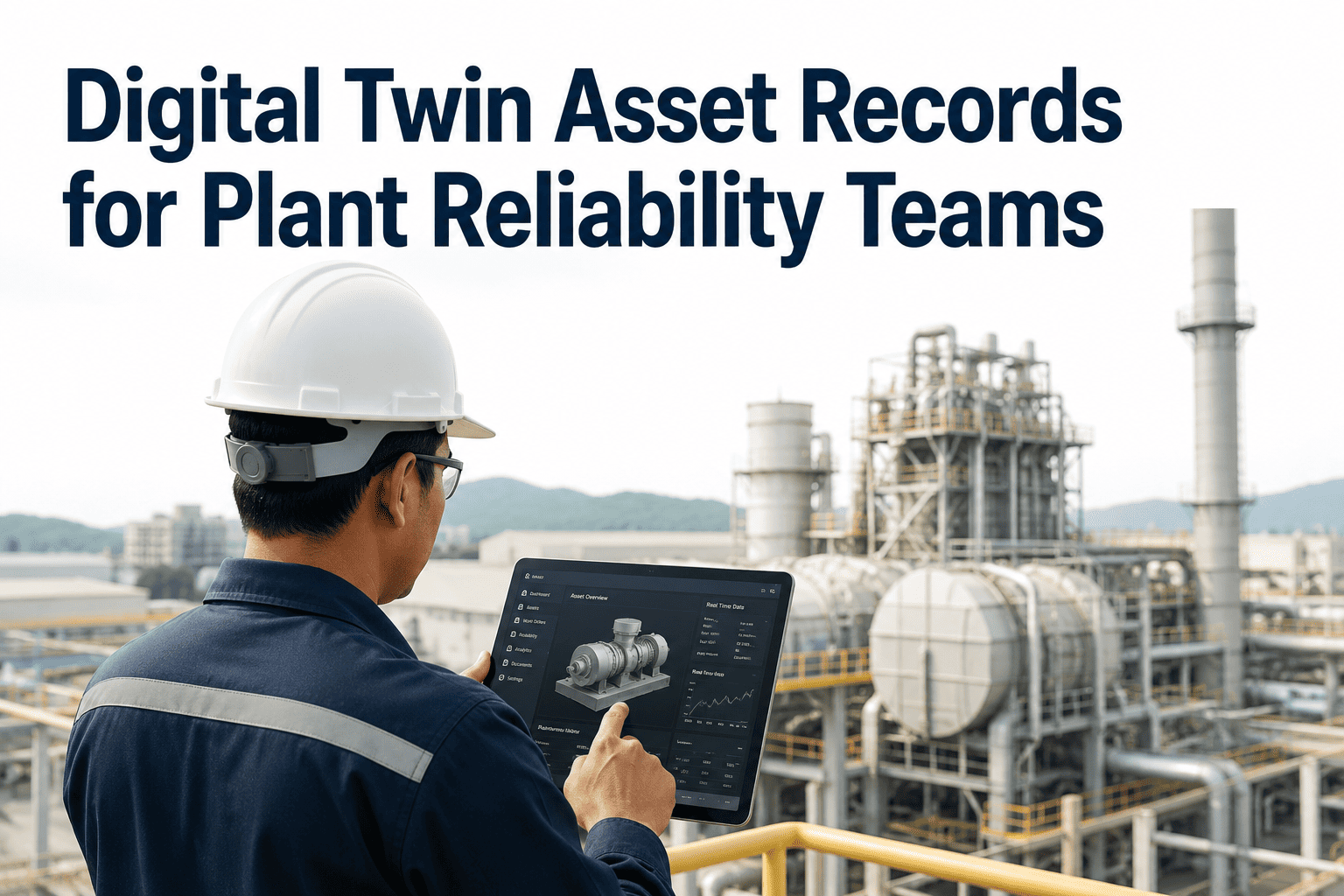
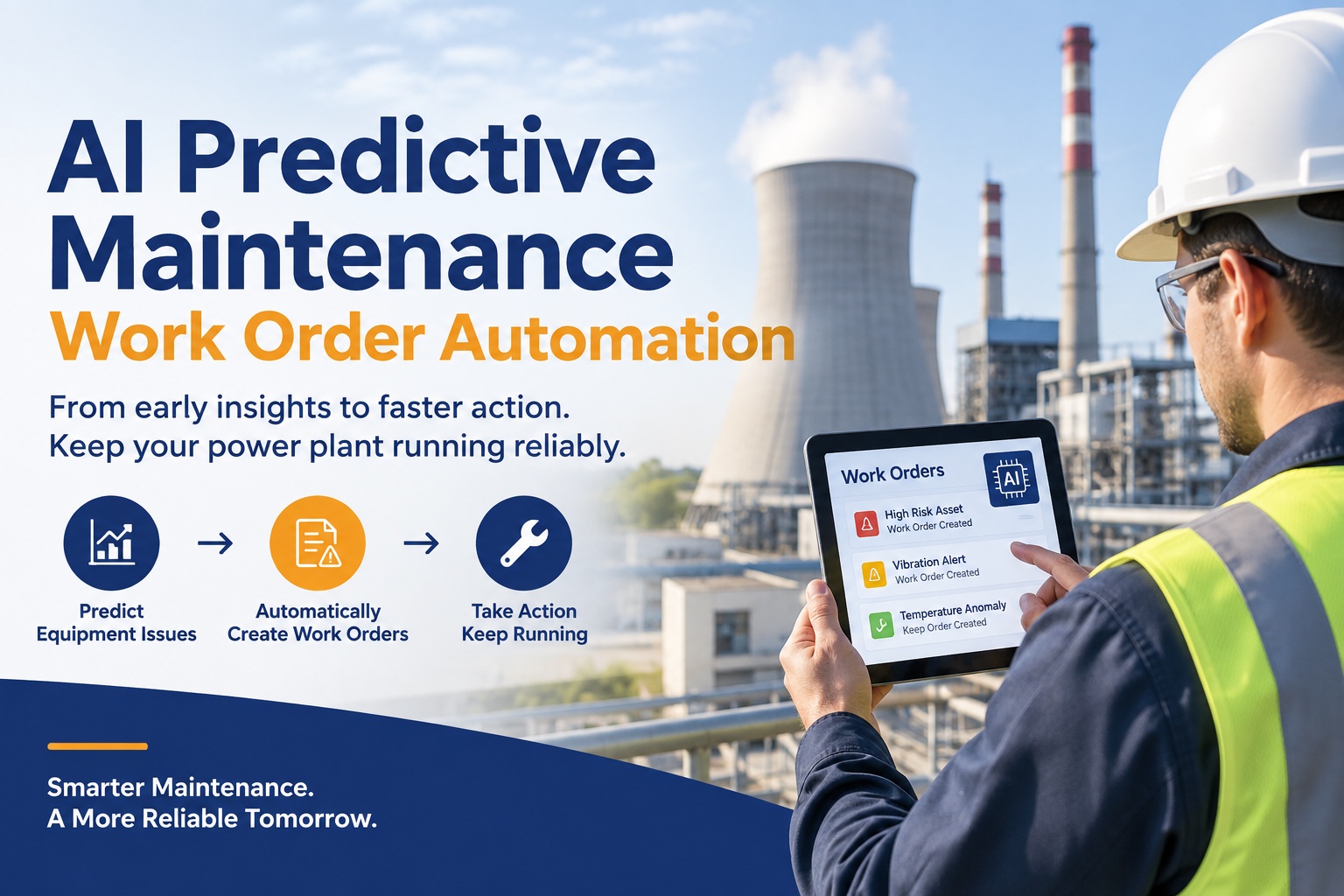
A digital twin is only as useful as the data feeding it — and for most power plant reliability teams, that data is scattered across OEM datasheets, vibration historian exports, paper inspection logs, and corrective work orders that were never linked back to the asset. The result is a digital twin that reflects what the equipment was designed to do, not what it is actually doing today. OxMaint's Asset Management module serves as the operational data layer that makes digital twin models actionable — connecting live work order history, condition-based inspection results, and runtime-based maintenance records into a unified asset record that updates in real time as your team works. Learn how leading power plant reliability teams are using structured digital asset records to close the gap between the twin on the screen and the machine on the floor.
Digital Transformation · Asset Management
Digital Twin Asset Records for Power Plant Reliability Teams
A digital twin with stale data is a maintenance liability, not a reliability advantage. OxMaint continuously enriches every asset record with work order outcomes, condition measurements, and inspection findings — building the live operational layer your digital twin model needs to be useful.
$1.1T
annual value of digital twin technology across industrial sectors by 2028 (IDC)
35%
reduction in unplanned downtime reported by power plants with mature digital twin programs
62%
of digital twin deployments fail to deliver ROI due to poor operational data quality
4.7×
higher reliability improvement when CMMS data continuously feeds the digital twin model
The Digital Twin Data Problem in Power Generation
Digital twin technology in power generation is mature at the simulation layer — GE, Siemens, ABB, and platform vendors have built sophisticated physics-based and data-driven models for turbines, generators, and control systems. The gap is not in the model. The gap is in the operational data that the model needs to reflect actual asset condition rather than theoretical performance. This gap lives in the maintenance system.
What the Digital Twin Knows
Design-rated performance parameters
Physics-based degradation models
SCADA real-time operating data
OEM failure mode libraries
Sensor telemetry — temperature, vibration, flow
GAP
Missing Operational Layer
What the Twin Is Missing
Actual parts replaced and their age
Repair history per component
Inspection findings and measurements
Real PM intervals actually performed
Technician findings on condition
OxMaint closes this gap — every work order, inspection result, and parts replacement feeds the digital asset record, making it the operational data layer your twin needs to model actual — not theoretical — asset condition.
Five Layers of a Digital Twin Asset Record in OxMaint
An effective digital asset record is not a single data point — it is a structured stack of information layers, each serving a different analysis purpose. OxMaint organises asset data across five distinct layers that together form a complete, reliable digital twin data foundation.
Layer 1
Static Asset Identity
OEM specifications, design parameters, nameplate data, installation records, and P&ID references. This layer does not change — it is the anchor against which all operational data is measured. It defines what the asset was built to do and under what conditions it was designed to operate.
Layer 2
Maintenance History (Live)
Every work order completed against the asset — corrective, preventive, predictive — with technician findings, parts used, time on tools, and cost. This layer updates every time a work order closes, giving the digital twin a continuously current view of what maintenance has been performed and what was found.
Layer 3
Condition Monitoring Data
Inspection results, vibration measurements, oil analysis reports, thermography findings, and condition-based PM outcomes. This layer provides the qualitative and quantitative assessment of current asset health — filling the gap between sensor telemetry (what the asset is doing) and physical inspection (what the asset looks like inside).
Layer 4
Parts and Component History
Every component replaced on the asset — part number, supplier, installation date, age at replacement, and replacement reason. Digital twin degradation models require knowledge of component ages and replacement history to predict remaining useful life accurately. Without this layer, the twin cannot know whether it is modelling an original component or a 6-month-old replacement.
Layer 5
Reliability and Performance Metrics
MTBF, MTTR, availability, forced outage rate, and maintenance cost per unit of output — calculated from the work order and history layers and updated automatically. This layer translates the raw operational record into the KPIs that reliability engineers, asset managers, and plant directors use to make investment and scheduling decisions.
Equipment Classes and Their Digital Twin Data Requirements
Different power plant equipment types require different operational data to make their digital twin models effective. Here is how OxMaint structures asset records for the major equipment classes in power generation facilities.
Rotating Machinery
Gas & Steam Turbines
Critical Twin Data Fields
Equivalent operating hours with start/trip multipliers
Hot section inspection findings per interval
Blade and nozzle condition measurements
Combustion liner thickness at last inspection
Vibration baseline and trend per bearing
Electrical Generation
Generators & Transformers
Critical Twin Data Fields
Winding insulation resistance trend (polarisation index)
Partial discharge measurement history
DGA results by date — hydrogen, acetylene, ethylene trend
Cooling system inspection findings
Bushings condition and oil level history
Pressure Systems
Boilers & HRSGs
Critical Twin Data Fields
Tube thickness measurements by zone and date
NDE inspection results — UT, RT, PT findings
Relief valve test records and set pressure
Waterside and fireside deposit inspection findings
Header and drum weld inspection history
Balance of Plant
Pumps, Fans & Compressors
Critical Twin Data Fields
Impeller wear measurements at overhaul
Bearing replacement history with age at replacement
Shaft alignment measurements over time
Vibration spectrum at each PM interval
Performance curve deviation from design
Build the Operational Data Layer Your Digital Twin Actually Needs
OxMaint structures asset records so every maintenance action, inspection finding, and parts replacement enriches your digital twin data foundation — automatically, from normal workflow. Stop feeding your twin stale design data. Start feeding it the operational truth.
How Reliability Teams Use Digital Asset Records in Practice
Digital twin asset records in OxMaint are not passive data stores — they are the active inputs to reliability decisions that reliability engineers, maintenance planners, and plant asset managers make every week. Here are the four highest-value use cases plant reliability teams report.
01
Overhaul Scope Optimisation
Planned overhaul scope is traditionally set by OEM schedules and engineering judgement. Digital asset records allow reliability engineers to compare actual condition measurements at each inspection against the degradation rate predicted by the twin — identifying components that can safely defer replacement and components approaching failure faster than predicted. Plants using condition-informed scope setting consistently reduce overhaul parts cost by 18–30% without increasing failure risk.
02
MTBF Variance Analysis
When a component fails repeatedly below its expected MTBF, the digital asset record provides the data to understand why — was the installation condition substandard, was the PM interval insufficient, was the operating condition outside design range? Without structured historical records, this analysis relies on technician memory. With OxMaint, reliability engineers pull the complete failure and maintenance history in seconds and apply RCA methodology to real data.
03
Operating Envelope Compliance Tracking
Digital twin models for gas turbines and rotating machinery depend on accurate knowledge of how the machine has been operated — starts, trips, peak load hours, and fuel composition deviations all affect degradation rate. OxMaint captures operating events as part of work order and inspection records, giving the twin the operational history it needs to calculate accurate remaining useful life rather than assuming design-basis operation throughout the asset's life.
04
Capital Replacement Justification
Asset replacement decisions require defensible evidence that refurbishment is no longer cost-effective. Digital asset records in OxMaint provide a complete cost history — repair cost per event, cumulative maintenance cost over asset life, and MTBF trend — that quantifies the cost of continued operation versus capital replacement. Finance and plant leadership can make replacement decisions with actual asset economics rather than projected estimates.
Frequently Asked Questions
How is OxMaint's digital asset record different from a traditional CMMS asset hierarchy?
Traditional CMMS asset hierarchies are primarily organisational structures — they define parent-child relationships between equipment and help route work orders. OxMaint's digital asset record goes further: it is a structured, queryable data layer where every work order, inspection result, parts replacement, and condition measurement is linked to the asset in a way that supports reliability analysis, not just work routing. The record is designed to be a data source for reliability decisions, digital twin models, and insurance documentation — not just a location label for work orders.
Sign in to explore the asset record structure.
Can OxMaint integrate with existing digital twin platforms from GE, Siemens, or other OEMs?
OxMaint exposes its asset and work order data through a REST API, allowing integration with digital twin platforms that accept external operational data. The integration pattern typically involves OxMaint exporting structured asset records — maintenance history, condition measurements, parts replacement dates — to the twin platform via API or scheduled data sync. This allows the twin model to consume real operational data from OxMaint rather than relying solely on SCADA telemetry and design-basis assumptions. Integration scope and method depend on the specific twin platform being used.
Book a demo to discuss your specific integration requirements.
How does OxMaint handle condition data from third-party condition monitoring systems — vibration analysers, oil analysis labs, or thermal imaging services?
OxMaint supports condition data import through several mechanisms: direct work order entry where technicians record condition measurements as part of inspection workflows; document attachment for lab reports and thermography images; and API integration for condition monitoring systems that push data on a scheduled or event-driven basis. Each condition data point is timestamped and linked to the relevant asset, building a chronological condition history that reliability engineers can trend over time. The goal is to make OxMaint the single system of record for all asset condition data, regardless of the source technology.
What level of asset hierarchy does OxMaint support — plant, unit, system, equipment, or component level?
OxMaint supports configurable asset hierarchies with typically five to seven levels — plant, unit, system, equipment, sub-assembly, and component. Reliability teams configure the hierarchy to match their plant's P&ID and equipment numbering convention. Work orders and inspection records can be created at any level of the hierarchy, and data rolls up to parent levels for system and unit-level reliability analysis. This means a bearing replacement on a specific pump can be recorded at the component level and also reflected in the pump's, system's, and unit's maintenance metrics automatically.
How do reliability teams at multi-unit plants manage digital asset records across multiple generating units?
OxMaint supports multi-unit plant configurations through its enterprise asset management structure. Each generating unit has its own asset hierarchy within the plant, but reliability engineers and plant directors can query and compare records across all units from a single dashboard view. This is particularly useful for fleet-wide comparison — identifying whether a bearing failure pattern on Unit 3 is also emerging on Units 1 and 2 using the same work order history data — and for identifying units with higher maintenance cost per MWh that may require targeted reliability improvement programs.
Sign in to see multi-unit asset management in action.
Give Your Digital Twin the Operational Data It Has Been Missing
OxMaint builds a structured, continuously updated digital asset record for every piece of power plant equipment — enriched by every work order, inspection, and parts replacement your team completes. Stop running twin models on design data. Start running them on operational truth.