Power plant boilers operating under ASME Section I and the National Board Inspection Code are among the most regulated pressure-containing assets in any industrial facility — and the gap between a compliant inspection programme and an audit-ready one is almost always a records problem, not an inspection problem. Jurisdictional inspectors across nearly every U.S. state require documented evidence of completed inservice inspections, RT and UT examination results, repair documentation, and code stamping history before renewing operating certificates. When that evidence lives in paper files, email threads, and disconnected spreadsheets, the inspection itself may have been performed correctly while the programme still fails compliance review. A structured CMMS-backed boiler inspection programme registers each pressure vessel as a maintainable asset, tracks RT/UT examination records by component, automates jurisdictional inspection scheduling, and maintains the complete audit trail that NBIC Part 2 and ASME Section I require. Facilities that treat their boiler inspection programme as a records system — not just a task list — consistently pass jurisdictional audits without corrective action items. To see how OxMaint manages ASME Section I boiler inspection records for power plants, start your free trial here or book a 30-minute demo with our team.
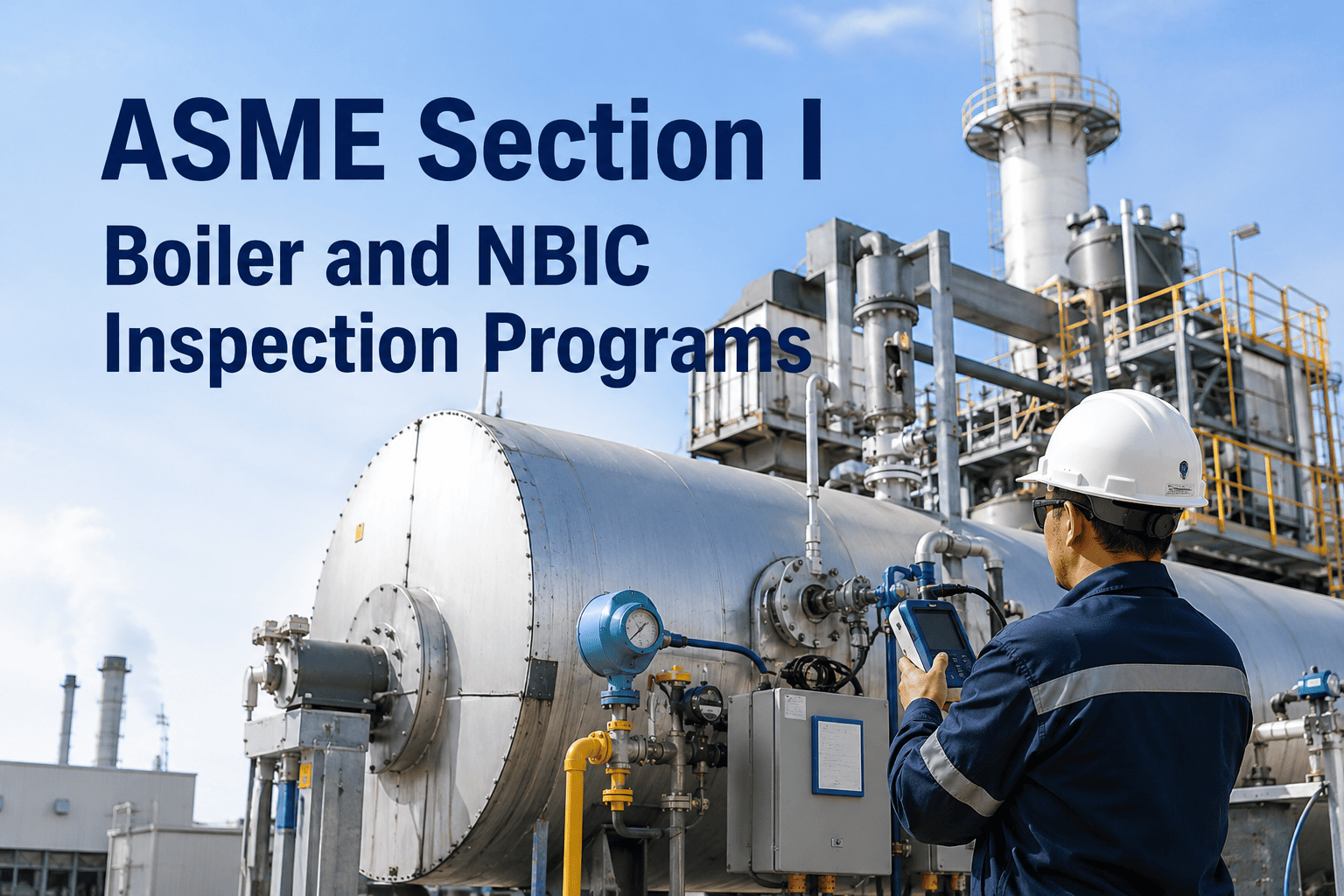
ASME Section I Boiler and NBIC Inspection Programs for Power Plants
Jurisdictional inspectors do not fail boilers — they fail records. A CMMS-driven ASME Section I programme ensures every RT/UT examination, repair, and inservice inspection is documented, traceable, and audit-ready before the inspector arrives.
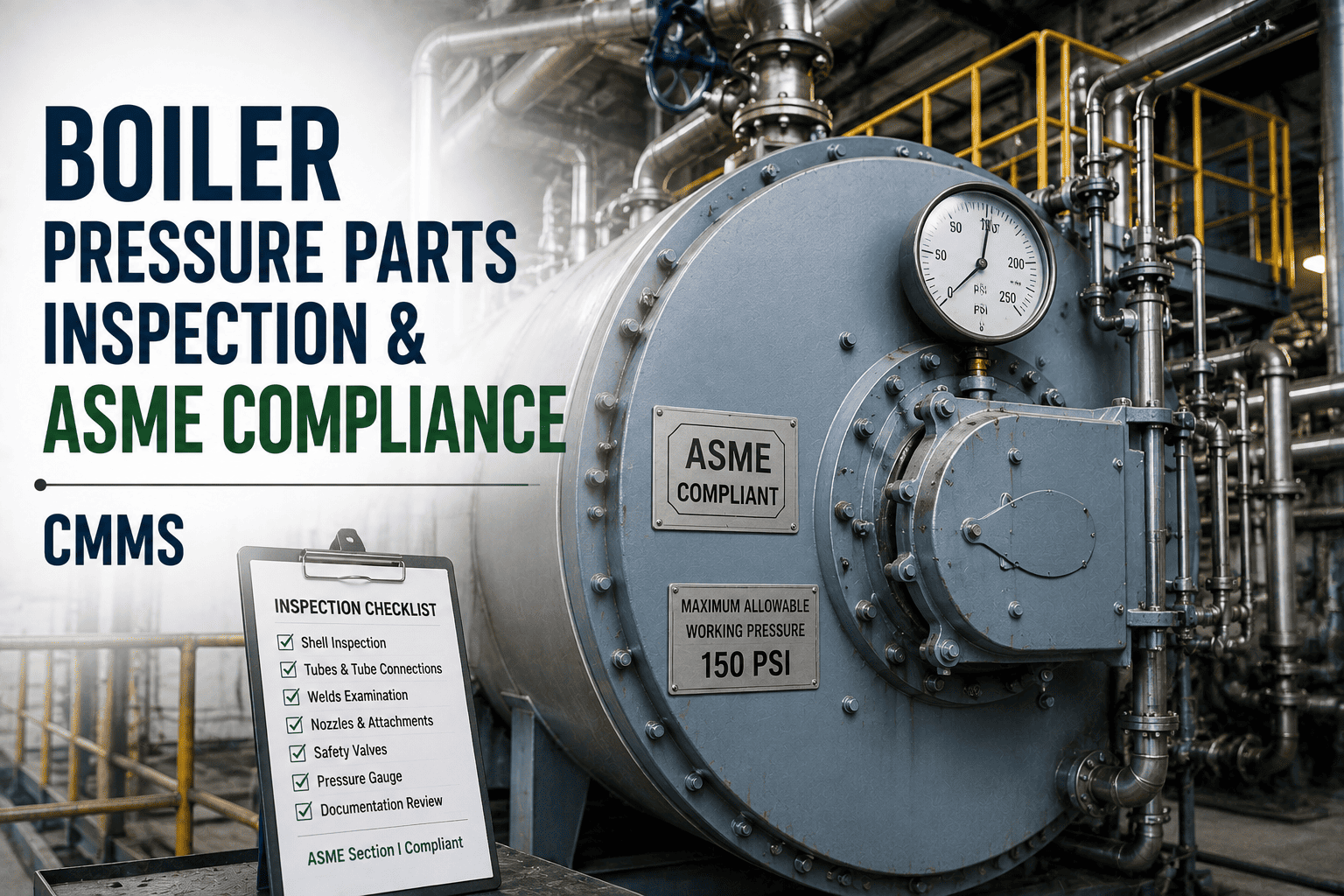
What ASME Section I Actually Governs — and Where NBIC Takes Over
ASME Section I governs the design, fabrication, and certification of power boilers — the rules that determine whether a boiler can carry the ASME stamp when it leaves the manufacturer. The National Board Inspection Code governs what happens after installation: inservice inspection intervals, repair qualification requirements, and the documentation standards that jurisdictional authorities use to evaluate operating safety throughout a boiler's service life. Both codes apply simultaneously, and neither replaces the other.
The NBIC Inservice Inspection Cycle — What Gets Inspected and When
NBIC Part 2 defines two primary inspection types for inservice power boilers: external inspections conducted while the boiler is under operating pressure, and internal inspections conducted during scheduled outages. Both require an Authorized Inspector credentialed by the National Board, and both generate reports that must be retained and available for jurisdictional review.
- Safety valve operation and condition
- Boiler external surfaces, fittings, and connections
- Water gauge glass and gauge cocks
- Pressure gauge calibration and condition
- Feed water controls and low-water cutoff devices
- Combustion controls and interlocks
- Tube interior condition — pitting, corrosion, scaling
- Drum and header internal surfaces
- Mud drum sediment and deposits
- UT tube thickness measurement at critical locations
- Refractory condition if waterwall-lined
- Manway and handhole fittings and gaskets
- Radiographic testing of welds at suspect locations
- Ultrasonic thickness mapping of tube banks
- UT examination of headers and drums at stress points
- Results documented by component and weld location
- Fitness-for-service evaluation if thinning found
- CMMS-tracked against each component asset record
Is Every NBIC Inspection Record Tied to a Specific Boiler Asset in Your CMMS?
OxMaint registers each boiler as an asset with its ASME stamp data, NBIC number, jurisdiction certificate, and inspection history. External and internal inspection work orders auto-generate on schedule. RT/UT exam results are stored against the component, not the report. When the Authorized Inspector arrives, your records are already organised.
RT and UT Examination Requirements Under ASME and NBIC
Radiographic testing and ultrasonic testing are the two NDE methods most commonly required and referenced across both ASME Section I and NBIC Part 2. Their application requirements differ depending on whether the examination is being performed on new construction welds, inservice welds, or as part of a repair under NBIC Part 3.
Category A and B butt welds in drums, shells, and headers — extent of RT determined by joint efficiency factor and design. Full RT required for efficiency factor of 1.0; spot RT for 0.85.
Condition-based during inservice inspection when visual examination identifies surface irregularities, post-weld repair verification, and corrosion mapping at weld heat-affected zones.
Film or digital image files with weld location identifier, examiner qualification, examination date, technique used, and accept/reject disposition — stored per weld location in CMMS.
Permitted as alternative to RT for certain weld configurations where geometry prevents adequate radiography. UT procedure and personnel qualification requirements per ASME Section V Article 4.
Thickness measurement of tubes, drums, and headers at accessible locations — particularly for corrosion monitoring at high-risk zones. Baseline measurements establish trend data for remaining life analysis.
Thickness readings by location with grid or isometric reference, equipment calibration records, personnel Level II/III certification, examination date, and minimum reading versus nominal wall — trended over successive inspections.
Jurisdictional Variation: Why One NBIC Programme Does Not Fit All States
The NBIC provides the baseline standard, but each of the 49 U.S. jurisdictions with boiler inspection laws adopts and amends the code independently. Inspection intervals, fee structures, certificate renewal requirements, and enforcement stringency vary significantly — and a boiler inspection programme designed for one jurisdiction may not satisfy the requirements in another when a plant expands or relocates assets.
Most jurisdictions follow NBIC annual external and biennial internal intervals, but some require annual internal inspections for high-pressure power boilers above specific MAWP thresholds. Operating certificates in some states list specific inspection due dates that do not align with the NBIC default cycle.
Jurisdictions accept National Board-commissioned Authorized Inspectors, but some states require that the AI hold a state-specific commission in addition to the National Board credential. Plants with boilers operating across multiple states need to track which AI is commissioned in which jurisdiction.
NBIC Part 3 defines R-stamp repair requirements, but jurisdictional acceptance of repair methods and documentation can vary. Some jurisdictions require advance approval for repairs; others accept post-repair notification. Both approaches require complete documentation trails stored in the CMMS.
Operating certificates are typically renewed annually following a satisfactory inspection. Jurisdictions differ on whether the renewal is automatic upon inspection completion or requires separate application submission. Missed renewal deadlines can result in boiler shutdown orders — a CMMS with certificate expiry alerts prevents this.
What a CMMS Must Track for ASME and NBIC Compliance
Most power plants inspect their boilers on schedule. The compliance gap is in the records — not in the physical inspection. A CMMS configured for ASME Section I and NBIC compliance tracks six distinct record categories per boiler asset, not just the inspection date.
Frequently Asked Questions
Your Boilers Are Inspected. Are Your Records as Ready as Your Equipment?
OxMaint registers every boiler with its ASME stamp data and NBIC certificate, automates external and internal inspection scheduling to the jurisdiction-specific interval, stores RT and UT examination results by component, tracks R-stamp repair documentation, and sends certificate expiry alerts — so the Authorized Inspector finds organised records, not a compliance gap.