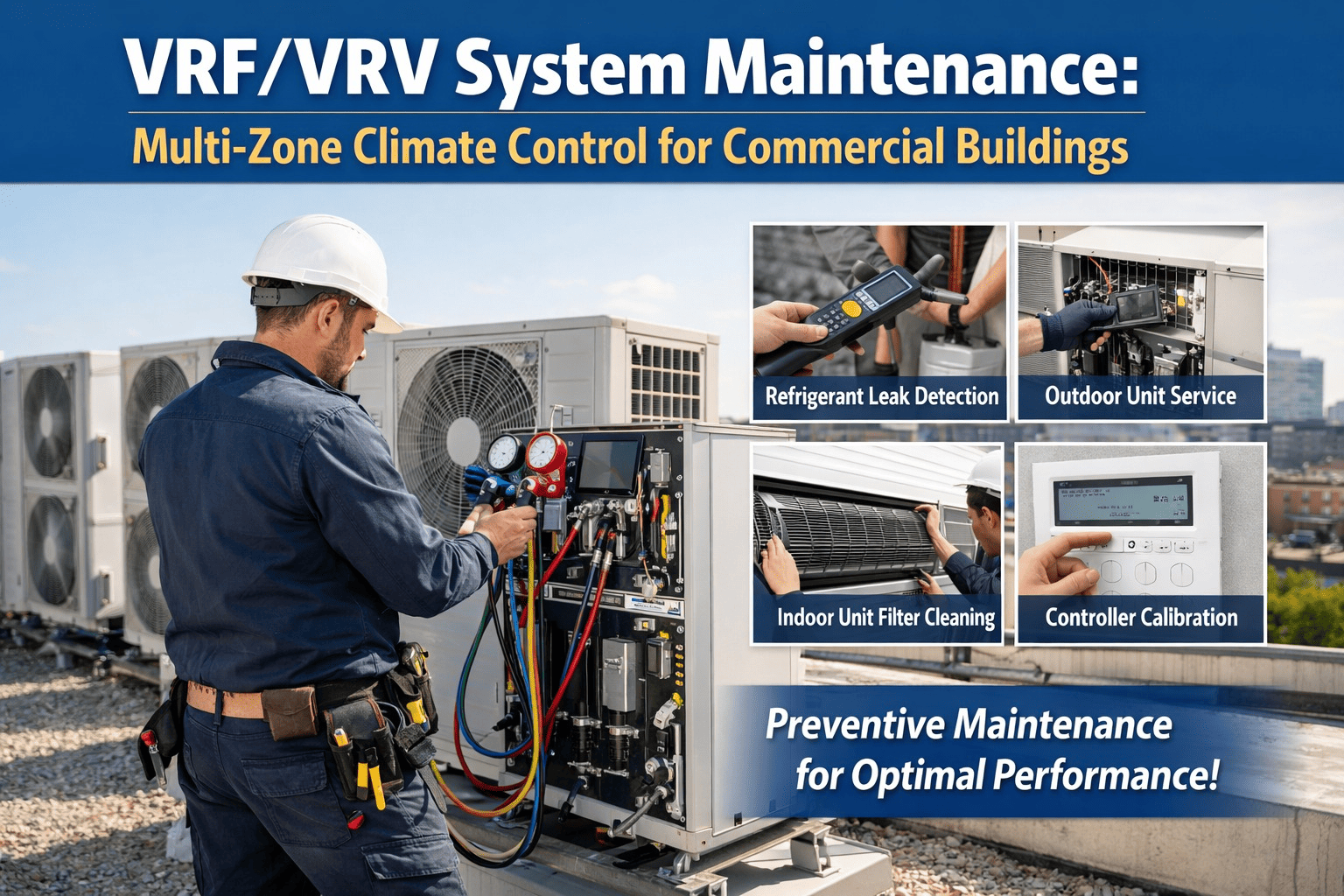
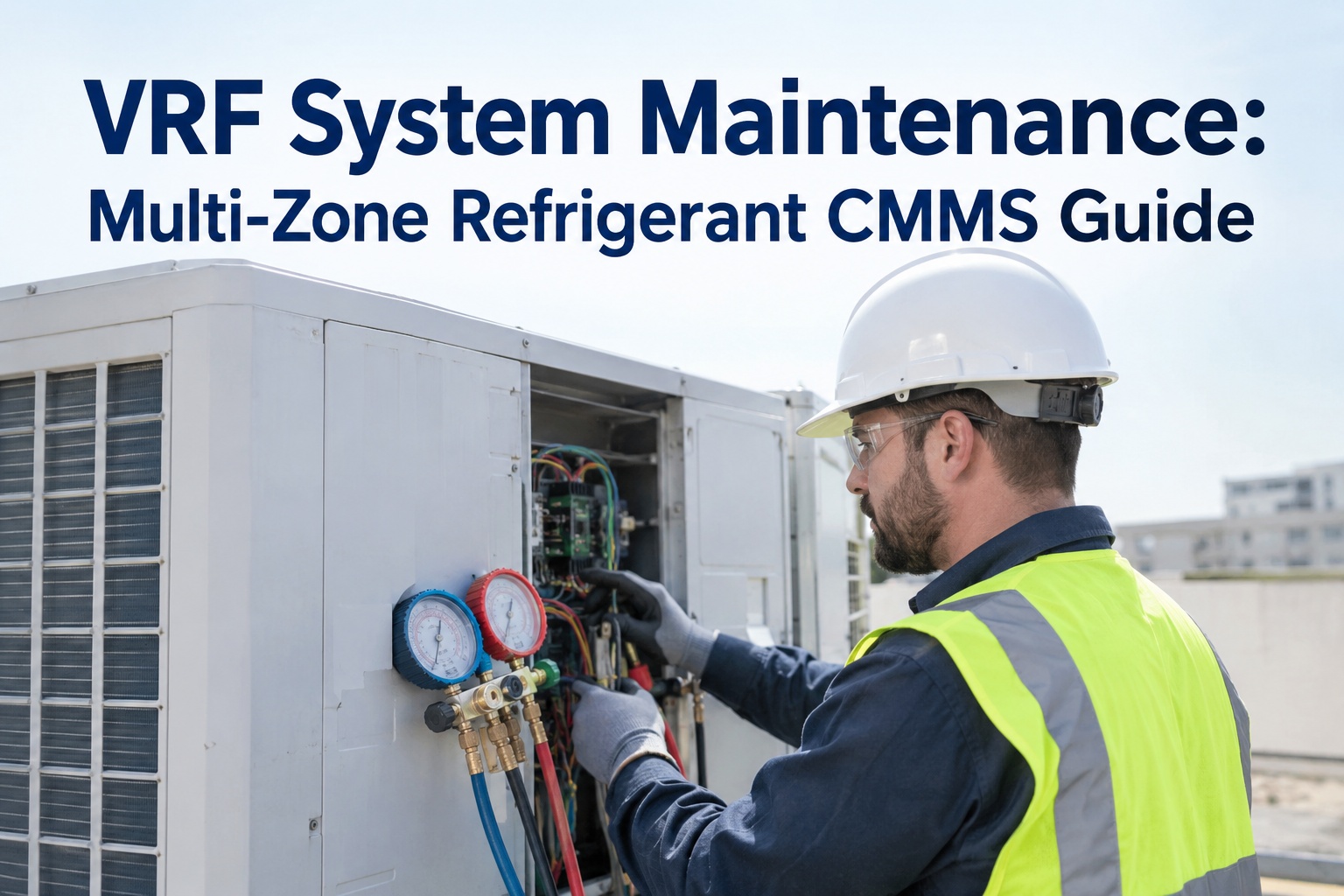
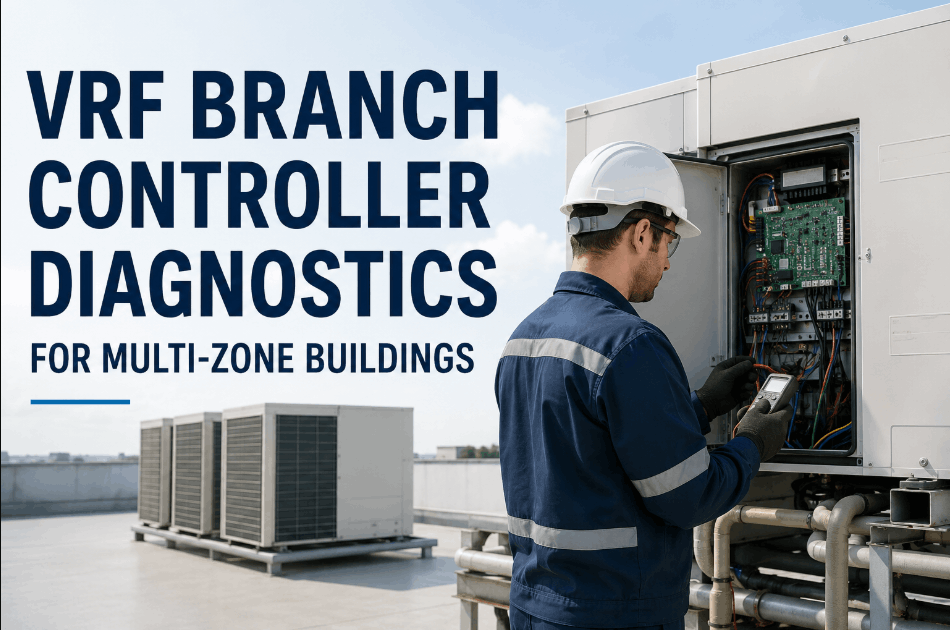
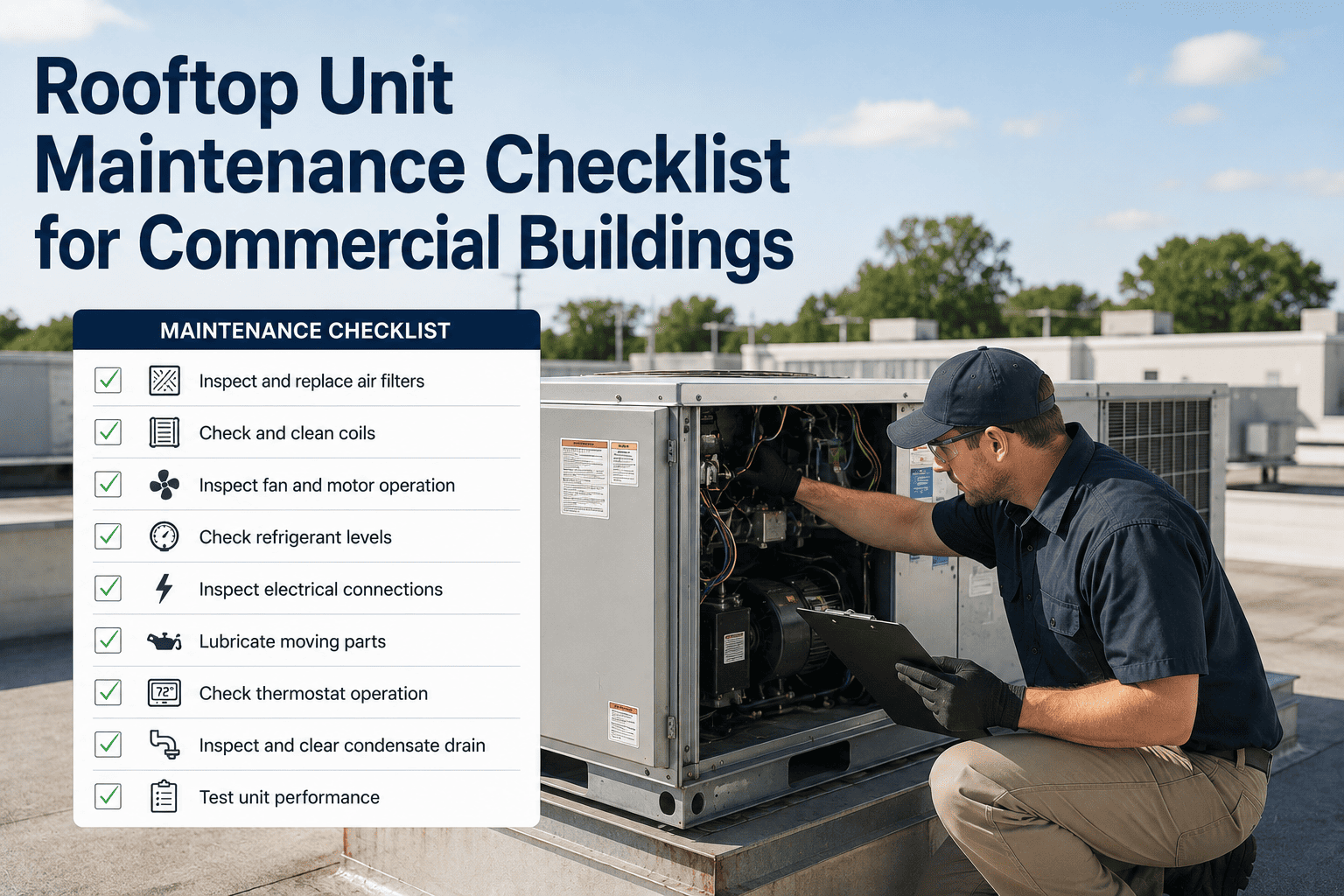
A single outdoor VRF unit serving 24 indoor cassettes across six floors does not fail the way a split DX system fails. When a split system compressor fails, one zone loses conditioning. When a VRF system develops a 5% refrigerant variance, 24 zones degrade simultaneously — compressor modulation shifts to compensate, electronic expansion valves in remote indoor units begin hunting, oil migrates away from the compressor into low-velocity pipe sections, and by the time comfort complaints reach the facilities desk, the compressor has been running in a stressed condition for weeks. VRF and VRV systems are engineered to extraordinary tolerances: a misaligned thermistor or a partially blocked outdoor coil that would be inconsequential on a standard rooftop unit becomes a system-wide efficiency and reliability issue at scale. Sign in to OxMaint to configure a structured VRF maintenance programme for every system in your portfolio — or book a demo to see VRF PM scheduling and fault tracking configured for your specific building fleet.
Why VRF Maintenance Is Different
VRF Systems Fail Differently — and the Costs Reflect That
30%+
Capacity loss from neglected VRF maintenance — refrigerant leaks, fouled heat exchangers, and sensor drift compound silently across all connected zones
4–6×
Higher cost of reactive VRF repairs versus planned interventions — cascading compressor failures triggered by oil starvation or liquid slugging are the most expensive outcome
70%
Of VRF system failures caused by gradual refrigerant leaks, inverter degradation, and control board drift — all detectable with systematic monitoring before failure
5%
Refrigerant variance threshold — a deviation this small can trigger compressor overload, zone communication faults, and cascade failures across the full multi-zone circuit
System Architecture
VRF Component Hierarchy — What Each Layer Does and What Fails
VRF maintenance must be organised around the system's four-layer architecture. Failures in any layer cascade into the layers below — an outdoor unit compressor issue affects every indoor unit on the circuit; a control communication fault in one indoor unit can trigger system-wide alarms. Understanding the cascade direction determines which maintenance tasks are highest priority. Sign in to OxMaint to register all four component layers per VRF system as linked assets.
Layer 1
Contains the inverter-driven compressor(s), outdoor heat exchanger, fans, and the system's primary refrigerant management circuitry. The compressor modulates from 10–100% capacity based on aggregate zone demand — this variable-speed operation eliminates on-off cycling but makes the compressor sensitive to refrigerant charge deviation and oil level. One outdoor unit typically serves 8–64 indoor units depending on system size.
Common failure points
Inverter-driven compressor — oil starvation from refrigerant migration; liquid slugging from charge imbalance
Outdoor heat exchanger — coil fouling from debris, pollen, cottonwood; reduces capacity and head pressure rises
Fan motor and capacitor — degraded bearing or capacitor causes reduced airflow across exchanger
PCB and inverter board — moisture ingress, voltage transients, thermal cycling failure
Layer 2
The refrigerant piping network connecting the outdoor unit to indoor units, including branch circuit controllers (BCCs) or branch selector boxes that direct refrigerant to zones requiring heating or cooling. In heat recovery systems, branch selectors allow simultaneous heating and cooling — transferring excess heat from cooling zones to areas requiring heating. Circuit integrity is the most sensitive maintenance parameter in the entire system.
Common failure points
Refrigerant leaks — braised joint micro-cracks, flare fitting wear; leak causes system-wide capacity and efficiency loss
Oil accumulation in low-velocity pipe sections — starves compressor bearings; oil return cycles must be verified
Branch selector valve failure — zone stuck in one mode; heat recovery performance degrades
Pipe insulation degradation — condensation damage on suction lines; heat gain on liquid lines
Layer 3
Wall-mounted cassettes, ceiling cassettes, concealed ducted units, and floor-standing units — each containing its own electronic expansion valve (EEV) that precisely meters refrigerant flow based on the zone load. The EEV is the most maintenance-sensitive component at the indoor unit level: sticking, hunting, or failing to respond causes zone temperature instability and risks liquid refrigerant floodback to the compressor.
Common failure points
EEV hunting or sticking — zone superheat oscillation; liquid floodback risk to compressor
Air filter fouling — most common single cause of VRF indoor unit underperformance; restricts airflow
Condensate drain blockage — overflow, water damage, mould growth in drain pan
Thermistor/sensor drift — incorrect zone temperature reading causes over or under conditioning
Layer 4
Centralised and zone-level controllers, communication wiring between outdoor and indoor units, and BMS integration points. VRF control networks use proprietary communication protocols — Daikin's D-BUS, Mitsubishi's M-NET, LG's LGAP — that are sensitive to wiring integrity and termination quality. Controller software (firmware) requires periodic updates to resolve known control logic defects that cause efficiency loss without fault codes.
Common failure points
Communication bus fault — loose or corroded terminal connection causes intermittent indoor unit alarms
Controller firmware — outdated firmware contains known control logic defects; updates resolve without hardware repair
Sensor calibration drift — zone temperature, pressure, and thermistor readings drift from baseline over time
BMS integration mapping errors — point mapping errors cause incorrect setpoint commands or alarm suppression
VRF Failures Cascade Across All Connected Zones. PM Must Catch Them Before They Do.
OxMaint structures VRF maintenance across all four system layers — outdoor unit, refrigerant circuit, indoor units, and controls — with component-specific tasks, frequency schedules, and fault-triggered work orders linked to the specific asset record for each system.
PM Schedule
VRF Preventive Maintenance by Frequency — Complete Schedule
VRF system maintenance runs across four frequency bands. Monthly tasks are typically owner/facilities-team executable. Quarterly and semi-annual tasks require EPA 608-certified technicians with manufacturer diagnostic tools. Annual tasks require manufacturer-trained technicians with access to proprietary service software for the specific VRF platform (Daikin, Mitsubishi, LG, Samsung, Panasonic). Book a demo to see VRF PM templates pre-configured in OxMaint per frequency band.
MTH
Monthly
Facilities team
Filter inspection — all indoor units
Inspect all indoor unit air filters. Dirty filters are the most common single cause of VRF underperformance — airflow restriction causes EEV hunting and triggers false refrigerant fault codes. Clean or replace per manufacturer schedule. Log completion per unit in OxMaint with unit identifier.
Sign in to activate per-unit filter PM records.
Condensate drain observation
Verify condensate drain lines are flowing freely on all indoor units operating in cooling mode. Blocked drains overflow silently — by the time water damage is visible, the ceiling void or structural element below has already been compromised. Clear any blockage and treat drain pan with algaecide tablet.
Controller display review
Review central and zone controller displays for active fault codes, error histories, and alarm logs. Document any fault codes with date, unit ID, and code description. Log in OxMaint against the specific indoor or outdoor unit. Recurring fault codes on the same unit indicate developing failures requiring escalation.
Outdoor unit visual inspection
Inspect outdoor unit clearances — debris on top, vegetation growth on intake sides, and discharge obstruction above the fan. Minimum 12–18" intake clearance; 36"+ discharge clearance. Clear cottonwood, leaves, and debris from heat exchanger face. Do not chisel ice from coil.
Log monthly outdoor unit check in OxMaint.
QTR
Quarterly
Certified technician
Refrigerant pressure check and leak survey
Measure suction and discharge pressures. Calculate superheat and subcooling and compare against manufacturer's charts for current ambient conditions. Conduct electronic leak detection survey of all accessible refrigerant connections, flare fittings, and branch circuit controller connections. Any suspected leak confirmed before additional refrigerant is added.
Book a demo to see refrigerant record tracking per VRF system in OxMaint.
Electrical connection inspection
Inspect and torque all electrical connections at the outdoor unit control panel, terminal blocks, and inverter board. Measure compressor and fan motor amps and compare against nameplate. Loose terminals cause arcing, intermittent faults, and PCB damage. High amp draw on compressor indicates developing mechanical issue or refrigerant charge problem.
Communication bus integrity test
Verify communication between all indoor units and the outdoor unit. Check terminal connections at each indoor unit PCB and at the outdoor unit communication board. Any indoor unit showing intermittent communication faults requires physical terminal inspection at the next PM. Log all fault code histories for trend analysis.
Sign in to track communication fault trends in OxMaint.
Outdoor coil cleaning
Foam-clean outdoor heat exchanger with approved coil cleaner. Straighten bent fins with fin comb. Confirm coil face airflow is unrestricted. Fouled outdoor coil raises head pressure, forces the compressor to run at higher frequency than demand requires, and degrades system-wide COP — the efficiency loss is invisible without pressure measurement but significant in energy consumption.
6-M
Semi-Annual
Certified technician
Full refrigerant charge verification
Charging by weight is the preferred method for multi-circuit VRF systems — pressure-only charging does not account for refrigerant distribution across multiple indoor units at varying loads. Verify actual charge against the system's commissioned charge weight (documented at installation). Subcooling trend below 12°F baseline indicates slow leak requiring investigation before the 6-month mark.
Sign in to log charge verification records in OxMaint.
EEV function test — all indoor units
Download controller operating logs for each indoor unit and review EEV position data and zone superheat history. EEV hunting — superheat oscillating between 2°F and 25°F in 30-second cycles — indicates a failing EEV that will cause compressor floodback if not replaced. Zone superheat consistently above 15°F indicates blockage or leak upstream of the EEV. Log per-unit EEV results in OxMaint.
Book a demo to see EEV fault tracking in OxMaint.
Compressor valve seal test
Semi-annual compressor valve seal test confirms the compressor's compression efficiency has not degraded from normal wear or contamination. Declining compression ratio with correct charge weight indicates valve wear — a leading indicator of compressor failure 6–18 months before the compressor stops starting. Caught here, the repair is a compressor reconditioning or planned replacement. Caught after failure, the repair is an emergency replacement at 4–6× the cost.
Heat exchanger thermal imaging
Infrared thermal imaging of the outdoor heat exchanger and branch selector boxes identifies hot spots from refrigerant distribution imbalance, partial blockages, and failing solenoid valves before they cause measurable capacity loss. Thermal imaging of electrical panels at the outdoor unit identifies hot terminals and components not visible to amp measurement.
Log thermal imaging results and images in OxMaint asset record.
ANN
Annual
Manufacturer-trained technician
Proprietary diagnostic software download and analysis
Run manufacturer diagnostic software — Daikin DIII-NET, Mitsubishi M-NET, LG LGAP — to download full operating history, error code log, and compressor performance data. Manufacturer tools surface issues that generic service instruments cannot detect: compressor frequency modulation trends, EEV response time degradation, and refrigerant circuit imbalance across zones. Log diagnostic report in OxMaint against the system asset record.
Book a demo to see annual diagnostic record storage in OxMaint.
Firmware review and update
Review current firmware version across outdoor unit PCB, indoor unit PCBs, and zone controllers. Compare against manufacturer's current release. Outdated firmware contains known control logic defects — efficiency losses and stability issues that are resolved by firmware update without any hardware repair. Firmware version and update date must be recorded per unit as a warranty compliance document.
Sign in to track firmware versions per VRF asset in OxMaint.
Complete control system calibration
Verify calibration of all thermistors, pressure sensors, and zone temperature sensors against a calibrated reference instrument. Sensor drift of 2–3°F causes the control system to over or under-condition each zone — the occupants notice, but no fault code is generated. Annual calibration verification prevents this invisible efficiency and comfort degradation. Recalibrate or replace any sensor reading more than 1°F from reference.
Oil acid test and return cycle verification
Sample compressor oil for acid content — acid in the oil indicates refrigerant breakdown products contaminating the oil circuit, a precursor to compressor bearing damage. Verify oil return cycle operation — the system's programmed cycle that runs the compressor at high capacity to return oil from remote indoor unit pipe sections back to the compressor sump. Oil return cycle failure is the primary cause of long-term compressor bearing wear in VRF systems.
Book a demo to configure annual oil test PM in OxMaint.
Fault Recognition
VRF Symptom-to-Cause Table — What Comfort Complaints Actually Mean
VRF system fault diagnosis is complicated by the fact that a single root cause produces different symptoms at different zones. A refrigerant leak at the outdoor unit manifests as underperformance in all zones simultaneously — but occupants in different zones report different symptoms at different times depending on their zone load. This table maps the observable symptom to the most likely root cause and the required diagnostic step. Sign in to OxMaint to log fault investigations and root cause findings against each system's asset record.
| Observed Symptom |
Most Likely Root Cause |
Secondary Cause |
Diagnostic Step |
Urgency |
| All zones underperforming simultaneously |
Refrigerant loss — system-wide charge deficit |
Fouled outdoor coil restricting heat exchange |
Measure suction/discharge pressures; inspect outdoor coil; electronic leak search |
High |
| One zone consistently cold in winter |
Branch selector valve stuck in cooling position |
EEV in that zone stuck closed |
Download branch controller log; measure EEV position; test branch selector valve activation |
Medium |
| Zone temperature unstable, swings 5°F+ |
EEV hunting — sticking or failing to respond |
Thermistor drift causing incorrect zone temperature reading |
Download indoor unit log; review superheat history over 60-minute window; check thermistor calibration |
High — compressor risk |
| Indoor unit communication fault codes (intermittent) |
Loose terminal on communication bus |
PCB moisture ingress or corrosion |
Physical terminal inspection at affected indoor unit and downstream units on same bus segment |
Medium |
| Water dripping from indoor unit |
Blocked condensate drain or drain pan |
Insufficient drain slope from installation |
Clear drain line; flush with water; inspect drain pan for debris; install algaecide tab |
Medium — property damage risk |
| Compressor runs at high frequency continuously |
Refrigerant undercharge — compressor compensating for capacity deficit |
Fouled indoor or outdoor coil reducing heat exchange rate |
Measure pressures and charge weight; inspect both coils; review compressor frequency log trend |
High — compressor wear risk |
| Energy consumption increased without load change |
Partial refrigerant loss causing compressor over-modulation |
Outdated firmware with known efficiency bug |
Compare current charge weight against commissioning record; check firmware version and release notes |
Low — monitor and schedule |
| System-wide alarm on controller display |
Outdoor unit protection fault — high pressure, low pressure, or thermal |
Communication bus fault causing false system alarm |
Read fault code; check outdoor unit pressure and temperature; inspect communication wiring |
High — system may be off |
Symptom-to-cause mapping is diagnostic guidance, not a substitute for manufacturer diagnostic tools and certified technician assessment. Always download controller operating logs before making repair decisions on VRF systems. Book a demo to see fault investigation records linked to VRF assets in OxMaint.
"
VRF is the system type where I see the biggest gap between what facilities teams think they are maintaining and what is actually being maintained. The filter gets changed. Maybe the outdoor coil gets cleaned once a year. And nobody looks at the EEV data, nobody checks firmware, and nobody has ever verified the oil return cycle is functioning — because those tasks don't exist in a generic HVAC PM template. Three years in, the compressor bearings are worn, the EEVs are hunting, and energy consumption is 20% above the commissioning baseline. The building manager thinks the system is underperforming because it was undersized. It wasn't undersized — it was undermaintained. A proper VRF maintenance programme is structured around the four layers: outdoor unit, refrigerant circuit, indoor units, and controls. Each layer has its own failure modes and its own maintenance tasks. Combining all of those into one annual visit with a generic checklist is not maintenance. It is documentation of a problem you will find in three to five years.
OxMaint VRF Capabilities
What OxMaint Delivers for VRF System Maintenance
Structure
Four-Layer Asset Hierarchy
Schedule
Multi-Frequency PM Templates
Monthly, quarterly, semi-annual, and annual PM templates pre-configured for VRF systems — each with the correct task lists and technician qualification requirements for that frequency band. Seasonal spring and autumn PM triggered automatically.
Book a demo to see VRF PM templates configured.
Refrigerant
Per-System Refrigerant Records
Refrigerant charge weight at commissioning stored per system. Every addition, verification, and leak investigation linked to the specific outdoor unit asset record. EPA Section 608 compliance records maintained automatically. Subcooling trend tracking surfaces slow leaks before threshold exceedance.
Sign in to activate VRF refrigerant tracking.
Fault
Controller Fault Code Log
VRF controller error codes logged per unit with date, fault code, description, and resolution. Recurring fault codes on the same indoor unit surface as a pattern before they become an emergency. Fault history available to technicians on mobile before arriving at the outdoor unit.
Book a demo to see fault code logging per indoor unit.
Firmware
Firmware Version Tracking
Firmware version recorded per outdoor unit PCB and per indoor unit PCB at each annual service. Comparison against current manufacturer release identifies systems running outdated firmware with known efficiency or stability defects — flagged as a work order item before the next PM cycle.
Sign in to track firmware versions per VRF component.
Compliance
Warranty Compliance Documentation
VRF manufacturer warranties typically require documented semi-annual or annual maintenance by certified technicians. OxMaint generates the maintenance record that satisfies warranty documentation requirements — technician name and certification, tasks completed, date, and system-level readings — exportable per system for warranty claim support.
Book a demo to see warranty compliance record generation.
24 Indoor Units. One Outdoor Compressor. One Maintenance Programme That Covers All of Them.
OxMaint structures VRF maintenance across every component layer — monthly filter and drain records per indoor unit, quarterly refrigerant and electrical checks, semi-annual EEV and thermal imaging, annual diagnostic and firmware tracking. Free trial — no implementation fees.
Common Questions
Facilities Managers Ask These About VRF System Maintenance
How often should VRF indoor unit filters be cleaned or replaced?
Monthly inspection is the minimum for commercial VRF installations in typical office environments — filter condition should be checked and cleaned or replaced based on condition, not on a fixed calendar interval. High-occupancy spaces, buildings in urban environments with elevated particulate, or facilities near construction should check filters more frequently. Dirty filters are the most common single cause of VRF indoor unit underperformance — they restrict airflow, cause EEV hunting, and trigger false refrigerant fault codes that generate unnecessary service calls.
Sign in to configure per-unit filter PM records in OxMaint.
What causes VRF systems to lose refrigerant and how is it detected?
VRF refrigerant leaks most commonly originate at brazed joint micro-cracks from vibration over time, flare fitting wear at indoor unit connections, and branch selector box connection points. Because VRF systems use long refrigerant pipe runs across multiple floors, leaks can be difficult to locate by smell or visual inspection — electronic leak detectors and ultrasonic detectors are required. Detection through performance data is often earlier than a physical leak search: subcooling dropping from the 12°F baseline toward 7°F over 6 weeks indicates a slow leak before efficiency drops measurably.
Book a demo to see subcooling trend tracking per VRF system in OxMaint.
Why does VRF firmware matter for maintenance?
VRF manufacturers regularly release firmware updates that resolve known control logic defects — efficiency losses, incorrect modulation behaviour, and communication protocol bugs — that cause real performance and reliability issues without generating fault codes. A system running firmware from installation (2–3 years ago) is almost certainly missing efficiency improvements and stability fixes that are available at no cost. Firmware version should be recorded per PCB at each annual service and compared against the current manufacturer release. Any firmware more than two revisions behind the current release should be updated at the next service visit.
Sign in to track firmware versions per VRF component in OxMaint.
How is VRF maintenance different from standard split-system HVAC maintenance?
Three fundamental differences: First, VRF failures cascade across all connected zones from a single failure point — a refrigerant issue at the outdoor unit affects every indoor unit on the circuit simultaneously. Split system failures affect only one zone. Second, VRF diagnosis requires manufacturer proprietary diagnostic software — generic manifold gauges and service instruments provide only partial information on a VRF system's operating state. Third, VRF warranty compliance requires documented maintenance by certified technicians at defined intervals — generic service records do not satisfy manufacturer warranty requirements.
Book a demo to see VRF-specific PM templates in OxMaint.
What is oil return cycle verification and why does it matter?
In VRF systems, refrigerant oil travels through the piping circuit with refrigerant and can accumulate in low-velocity pipe sections — particularly in remote indoor units far from the outdoor unit. The oil return cycle is a programmed sequence that runs the compressor at high capacity to sweep accumulated oil back through the system to the compressor sump. If the oil return cycle fails or is not programmed correctly, compressor bearings are progressively starved of lubrication over months. Discharge temperature trending 15°F above normal while charge is correct is the key indicator of oil level drop. Annual verification that the oil return cycle is running correctly prevents the most common cause of premature VRF compressor failure.
Sign in to configure oil return cycle verification in annual VRF PM templates in OxMaint.