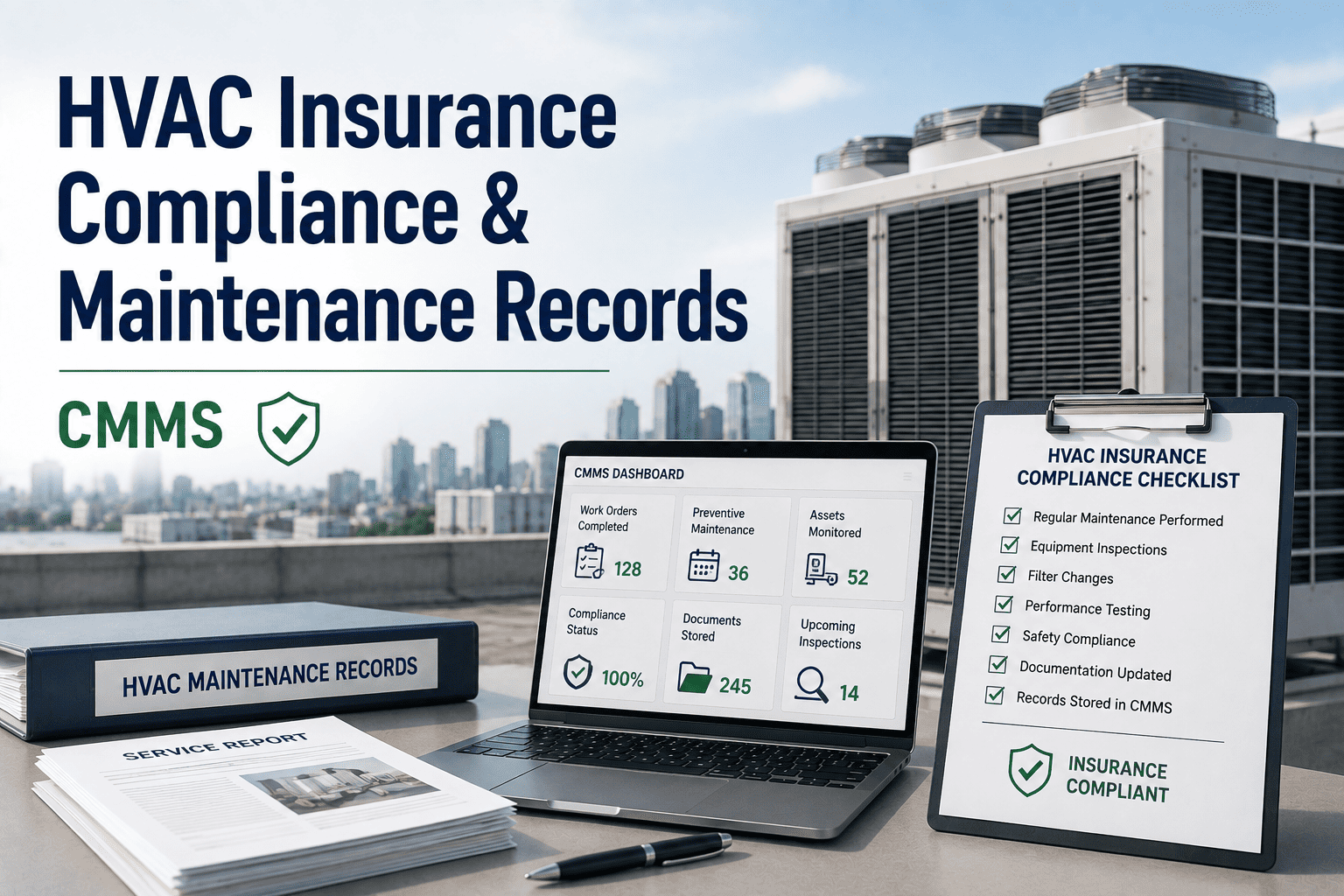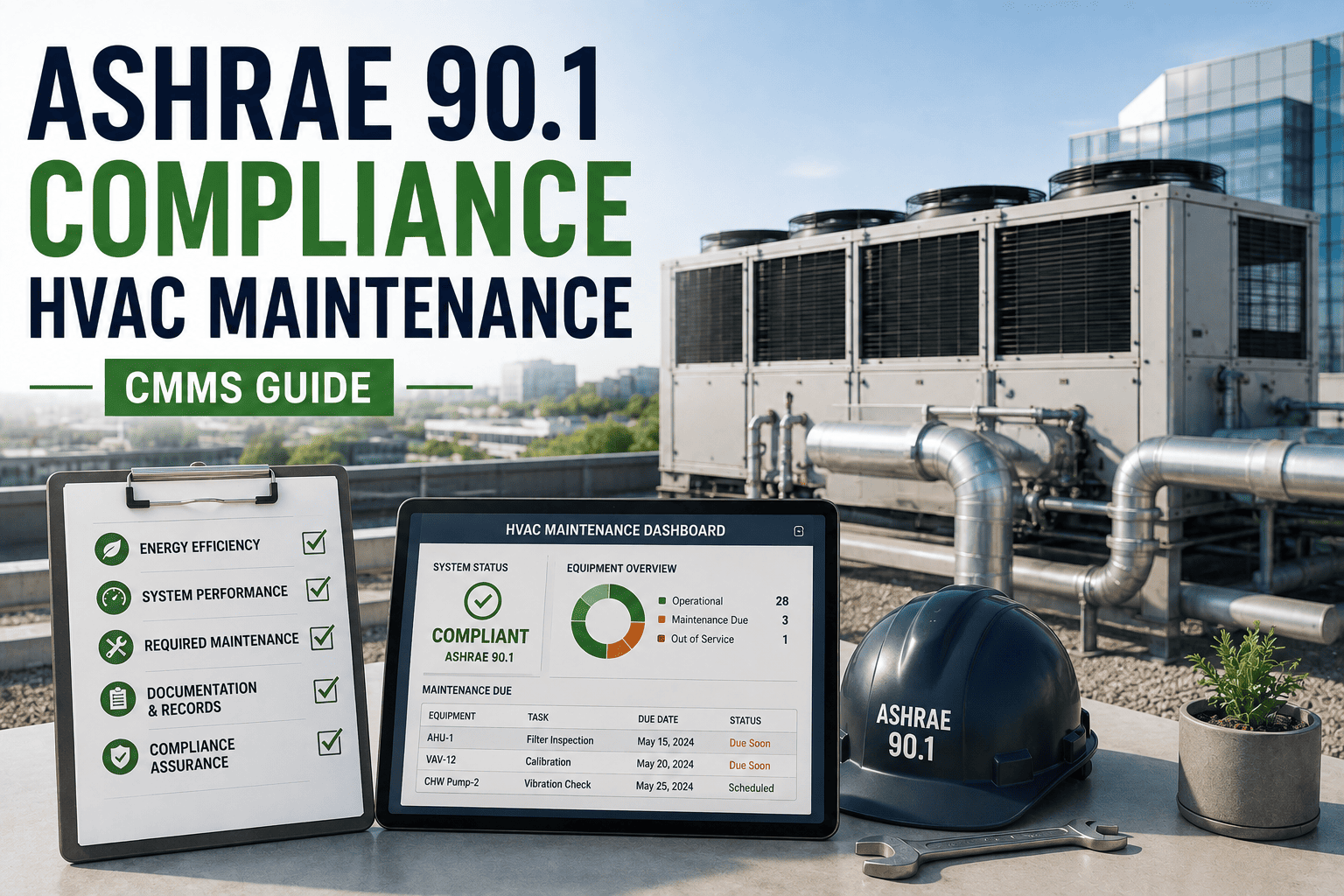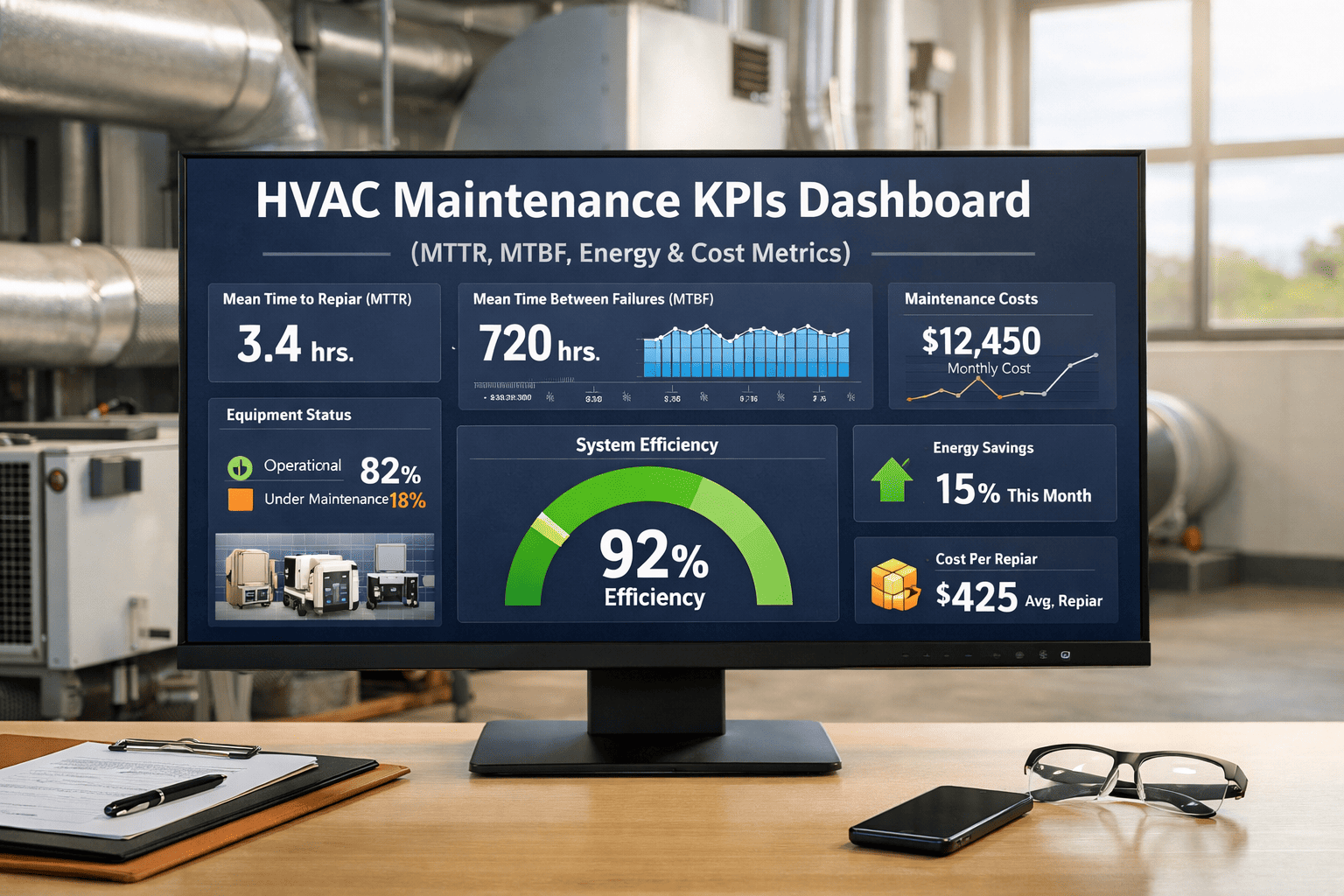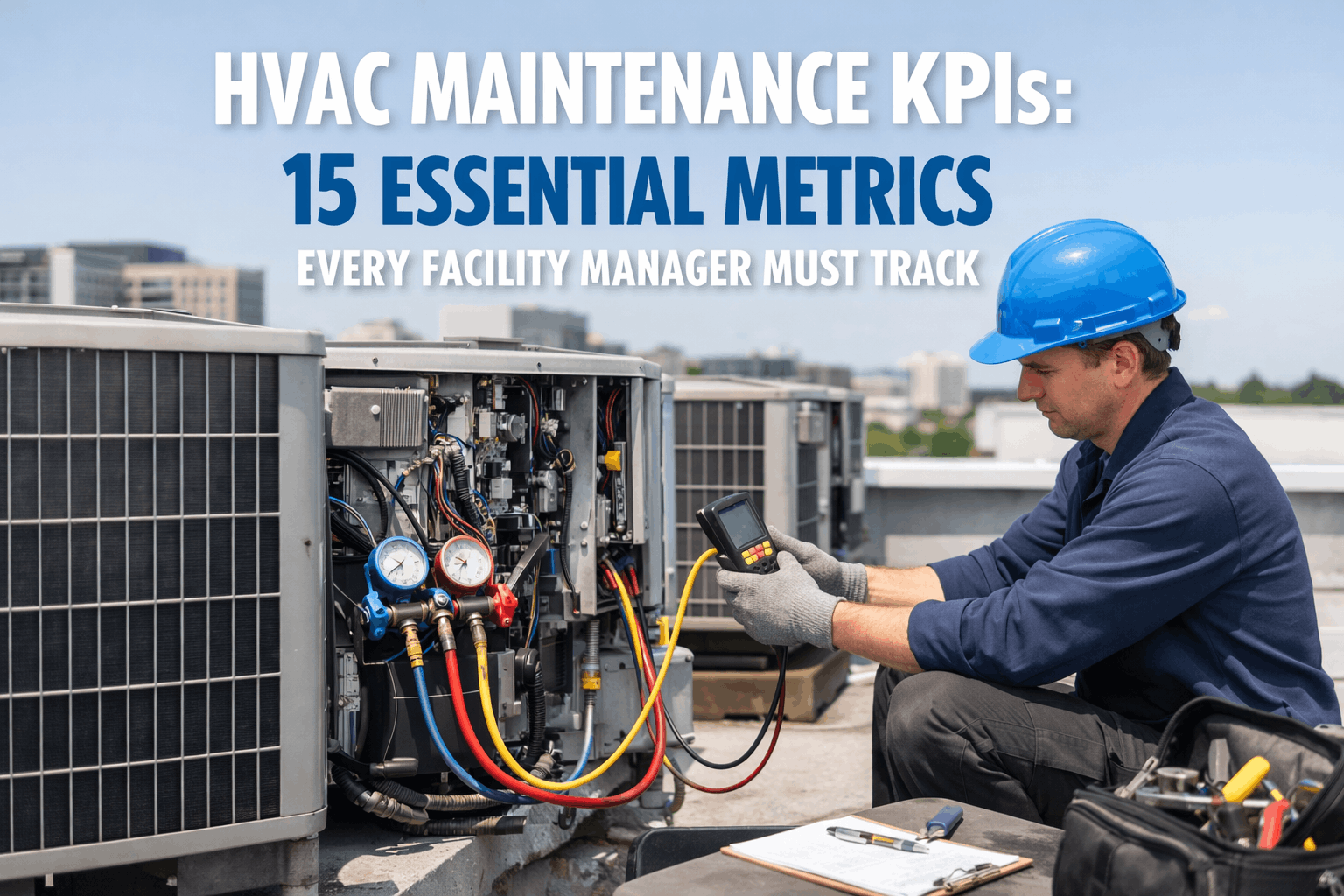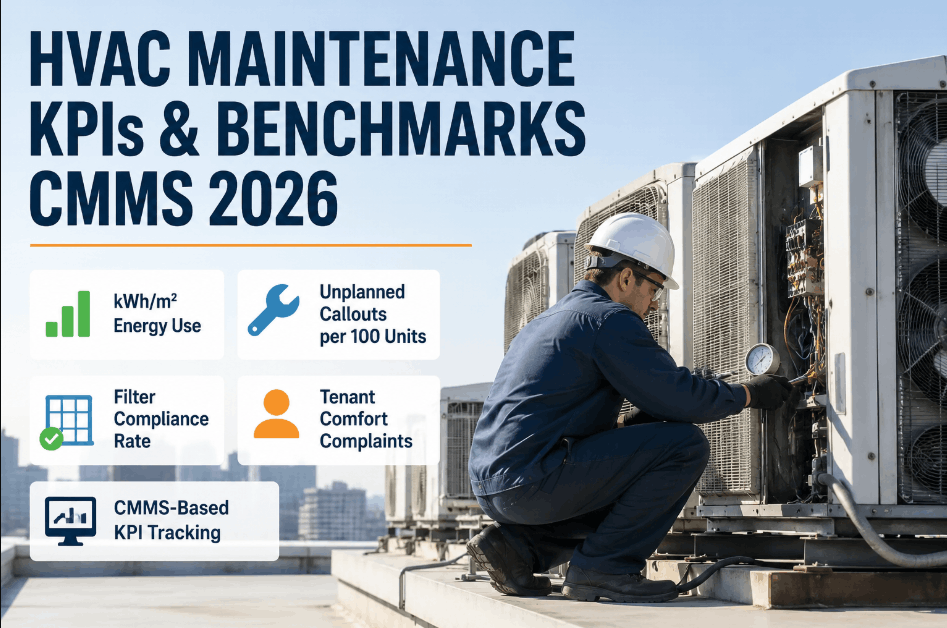
HVAC maintenance KPIs give facility teams the measurable proof that preventive maintenance programs are actually working — yet most portfolios still track HVAC performance through anecdotal callout counts and utility bills instead of structured metrics like kWh/m² energy use, unplanned callouts per 100 units, filter compliance rate, and tenant comfort complaints. Without a CMMS to capture these HVAC maintenance KPIs consistently across every RTU, chiller, and AHU, facility engineers are left guessing whether their maintenance spend is reducing downtime or simply keeping pace with it. Teams using Sign Up Free on Oxmaint can capture the work order history, PM compliance data, and asset-level readings that turn HVAC maintenance KPIs from a reporting exercise into a decision-making tool for 2026 budget and staffing plans.
Why HVAC Maintenance KPIs Need a CMMS Foundation, Not Spreadsheets
Spreadsheet-based KPI tracking breaks down the moment a portfolio grows past a handful of units, because callout counts, filter changes, and energy readings live in different systems and rarely get reconciled against the same asset record. Book a Demo to see how Oxmaint links every work order, inspection, and PM task to a single asset history, so HVAC maintenance KPIs are calculated from verified field data instead of manual estimates.
Six Core HVAC Maintenance KPIs Facility Teams Should Track in 2026
A complete HVAC maintenance KPI set combines energy, reliability, compliance, and occupant-experience metrics rather than relying on a single number. Sign Up Free to configure these six KPIs as automated reports pulled directly from your Oxmaint work order and asset data.
HVAC Energy Use per Square Meter (kWh/m²)
Tracks total HVAC electricity and fuel consumption against conditioned floor area, revealing whether preventive maintenance is keeping equipment running at design efficiency across seasons.
Unplanned Callouts per 100 Units
Normalizes reactive service calls against fleet size, exposing whether breakdown rates are improving as PM compliance rises or whether specific equipment types are driving repeat failures.
Filter Compliance Rate
Measures the percentage of scheduled filter replacements completed on time across the AHU and RTU fleet, a leading indicator for airflow, energy, and indoor air quality performance.
Tenant or Occupant Comfort Complaints
Counts logged temperature, humidity, and airflow complaints per building or zone, linking maintenance quality directly to the occupant experience that leasing and operations teams care about.
PM Compliance Rate
Tracks the share of scheduled preventive maintenance work orders completed within their target window, the foundational KPI that most other HVAC performance metrics depend on.
Mean Time to Repair (MTTR)
Measures average time from work order creation to completion for HVAC repairs, highlighting parts availability, technician routing, and dispatch efficiency across the portfolio.
HVAC KPI Benchmark Reference Table
Book a Demo to see how Oxmaint's analytics dashboards calculate each KPI below automatically from logged work orders, PM cycles, and inspection records.
| KPI | Calculation Basis | Typical Benchmark | Data Source | Oxmaint Record Type |
|---|---|---|---|---|
| Energy Use (kWh/m²) | HVAC energy ÷ conditioned area | Lower is better, tracked seasonally | Utility meter, BAS export | Asset analytics record |
| Unplanned Callouts | Reactive WOs ÷ units × 100 | Declining trend target | Work order log | Work order history |
| Filter Compliance Rate | On-time filter WOs ÷ scheduled | 95%+ target | PM work order log | PM completion record |
| Comfort Complaints | Logged complaints per building/month | Declining trend target | Request/complaint log | Request maintenance ticket |
| PM Compliance Rate | Completed PMs ÷ scheduled PMs | 90%+ target | PM schedule log | PM work order record |
Four Outcomes a CMMS-Based HVAC KPI Program Delivers
Sign Up Free to build the KPI dashboards that make all four outcomes achievable across your HVAC fleet.
Building an HVAC KPI Dashboard with Oxmaint
Book a Demo to walk through setting up KPI tracking on your existing HVAC asset list inside Oxmaint.
Register HVAC Assets with Baseline Data
Add each RTU, chiller, AHU, and cooling tower to Oxmaint with manufacturer specs, install date, and baseline energy readings.
Standardize Work Order Categories
Tag every work order as PM, reactive, or inspection so unplanned callout and PM compliance KPIs calculate accurately.
Digitize Filter and PM Checklists
Use Oxmaint's digital checklists to log every filter change and PM task with a timestamp, feeding the compliance rate KPI automatically.
Enable Analytics Dashboards
Turn on Oxmaint's analytics and reporting module to generate KPI trend charts by building, zone, and equipment type automatically.
Review Monthly and Adjust PM Intervals
Use KPI trends to adjust PM frequency, staffing, and parts stocking decisions each month as performance data accumulates.
Frequently Asked Questions: HVAC Maintenance KPIs
What are the most important HVAC maintenance KPIs to track?
Energy use per square meter, unplanned callouts per 100 units, filter compliance rate, PM compliance rate, and tenant comfort complaints together give a balanced view of HVAC performance.
How often should HVAC KPIs be reviewed?
Monthly reviews catch emerging trends early, while quarterly reviews are useful for comparing seasonal performance and setting budget priorities.
Can a CMMS calculate HVAC KPIs automatically?
Yes — when work orders, PM tasks, and inspections are logged consistently, a CMMS like Oxmaint can generate KPI dashboards without manual spreadsheet work.
What is a good filter compliance rate benchmark?
Most high-performing facility teams target a 95% or higher on-time filter replacement rate across their AHU and RTU fleet.
How does Oxmaint support HVAC KPI tracking?
Oxmaint logs every work order, PM cycle, and inspection against each HVAC asset, then surfaces KPI trends through its analytics and reporting dashboards.