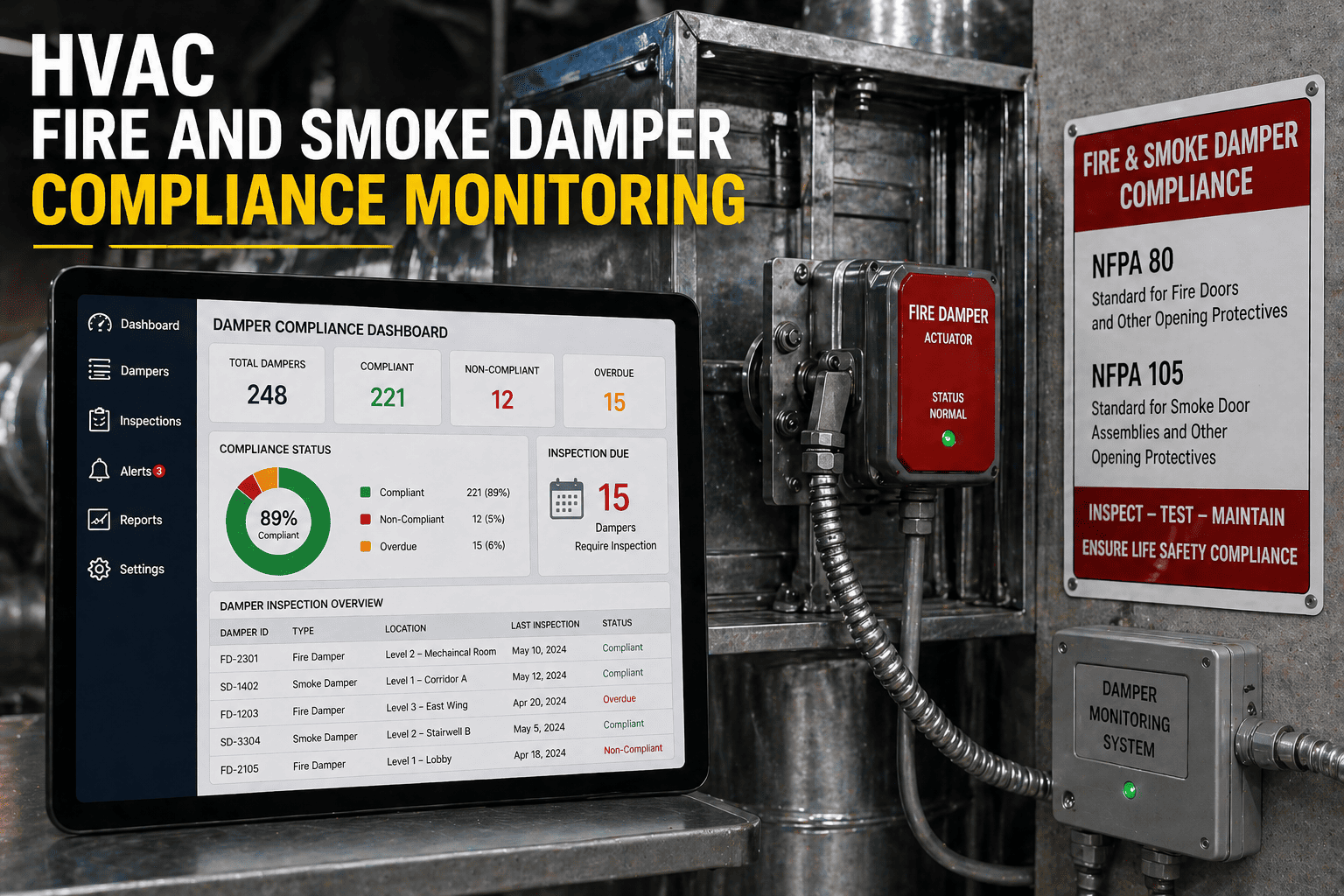
Fire and smoke dampers are your building's silent guardians, designed to seal off HVAC ductwork the moment danger strikes. Yet a staggering 70% of facilities discover critical damper failures during inspections that should have been routine. When these barriers fail, fire and toxic smoke spread through ventilation systems at deadly speeds, transforming containment zones into death traps. NFPA 80 and NFPA 105 mandate rigorous inspection protocols, but compliance isn't just about avoiding fines—it's about ensuring every occupant makes it out safely. Whether you're managing a high-rise commercial tower, a complex healthcare facility, or an industrial plant, understanding the precise maintenance requirements for fire dampers, smoke dampers, and smoke control systems isn't optional—it's survival infrastructure. Ready to transform your compliance from checkbox exercise to life-saving protocol? Sign up today to digitize your damper tracking, or book a demo to see how leading facilities eliminate compliance gaps.
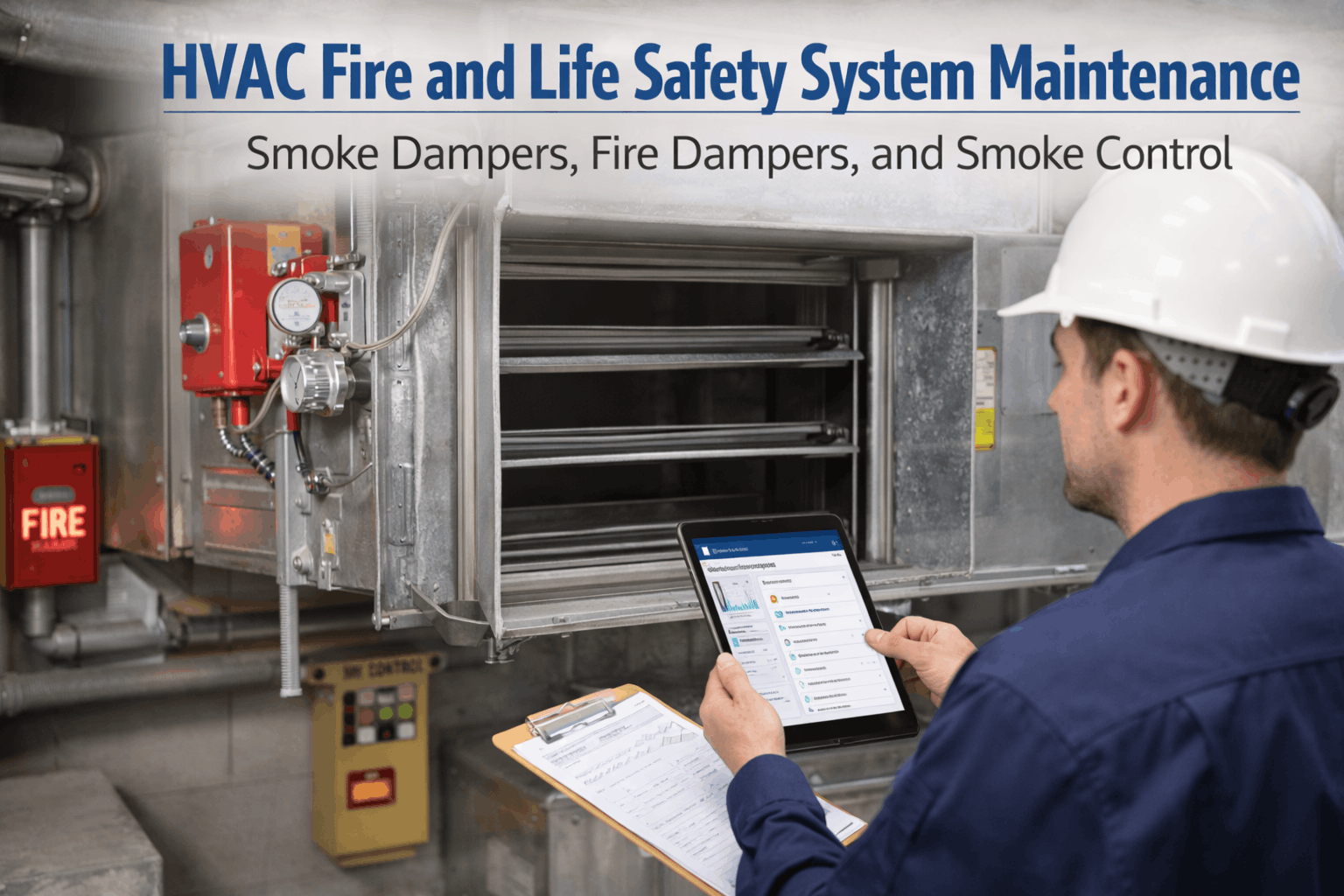
HVAC Fire & Life Safety System Maintenance
Complete compliance checklist for fire dampers, smoke dampers, and smoke control systems per NFPA 80 & NFPA 105 standards
Stop managing dampers on spreadsheets that fail audits. Facilities using digital tracking reduce inspection time by 60% and achieve 100% AHJ approval rates. Sign up now for instant compliance dashboards, or schedule a demo to see automated deficiency alerts in action.
Fire Damper Operational Testing (NFPA 80)
Fire dampers must close automatically when heat melts the fusible link or when actuated remotely. This checklist ensures your passive fire protection performs when seconds count. Track these checks digitally to maintain continuous compliance.
Smoke Damper Operational Testing (NFPA 105)
Smoke dampers prevent smoke migration through HVAC systems during evacuation. Unlike fire dampers, they respond to smoke detection systems rather than heat. Book a demo to see how automated smoke damper scheduling prevents compliance gaps.
Combination Fire/Smoke Damper Testing
Combination dampers provide dual protection but require testing for both thermal and smoke-responsive functions. These are critical in healthcare and high-occupancy buildings where both hazards exist.
Smoke Control System Maintenance
Active smoke control systems including stairwell pressurization and atrium exhaust require quarterly testing per NFPA 92. These systems work alongside dampers to create safe egress paths. Start your free trial to integrate smoke control with damper tracking.
Documentation & Compliance Tracking
AHJs require comprehensive records proving inspection completion and deficiency correction. Digital systems eliminate the 40% documentation failure rate seen with paper logs.
Special Occupancy Requirements
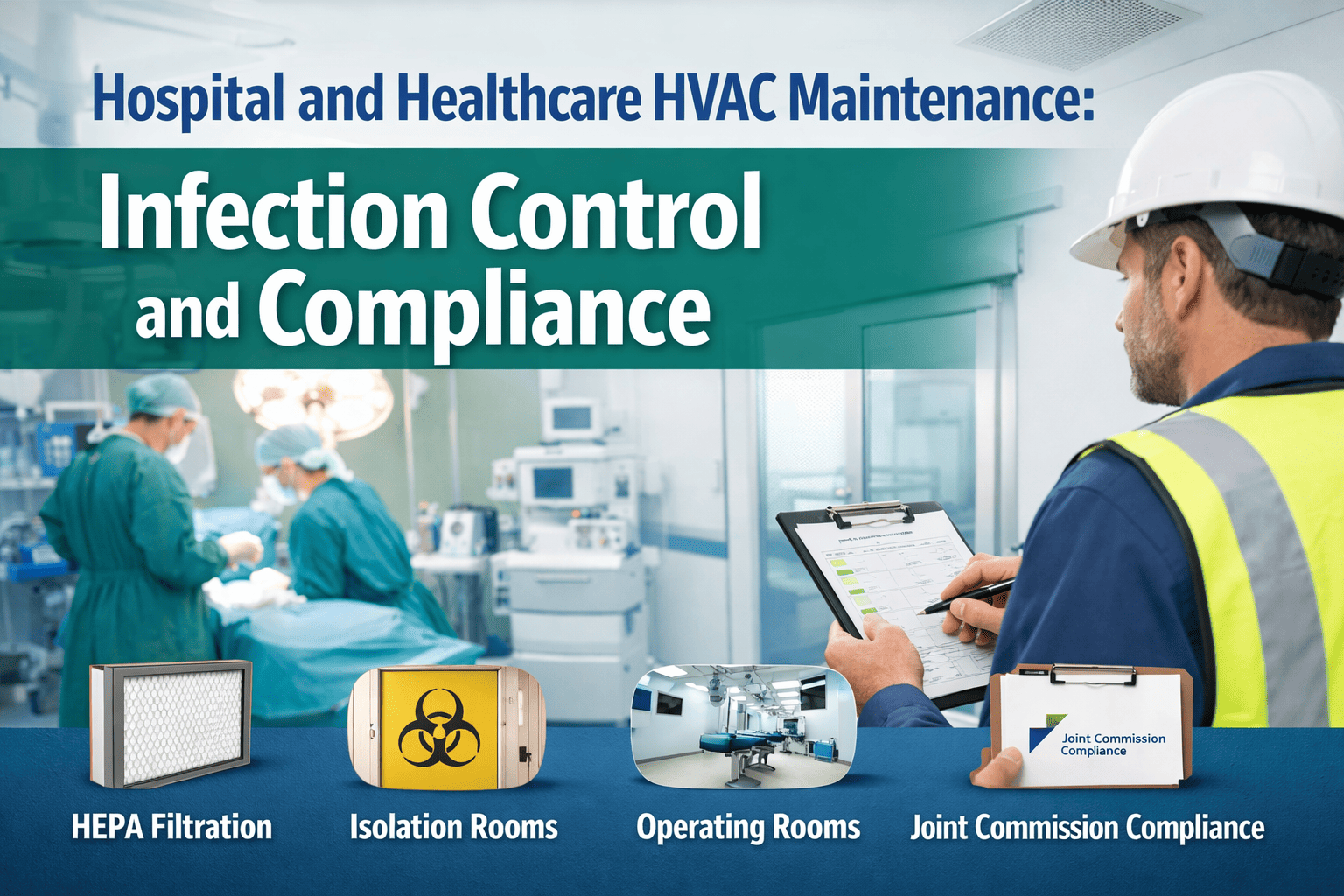
Healthcare facilities, high-rises, and cleanrooms face stricter requirements. Hospitals under CMS must test every 6 years, while other facilities follow 4-year cycles.
Deficiency Identification & Correction
Industry data shows 20-30% of dampers fail initial inspection. Immediate tagging and repair prevents liability exposure and ensures continuous protection. See how Oxmaint automates deficiency workflows.
Transform Your Fire Safety Compliance
Join 500+ facilities that eliminated spreadsheet errors and audit failures with Oxmaint's digital damper tracking. Automated scheduling, mobile inspections, and instant AHJ reporting.
Frequently Asked Questions
What is the difference between NFPA 80 and NFPA 105 damper requirements?
NFPA 80 governs fire dampers that close via heat-activated fusible links to maintain fire barrier integrity, requiring testing every 4 years (6 years for hospitals). NFPA 105 covers smoke dampers that respond to smoke detection systems to prevent smoke migration, with the same testing frequencies but different performance criteria focused on smoke leakage rather than fire resistance.
How often must fire and smoke dampers be inspected?
Standard facilities require inspection and testing every 4 years. Healthcare facilities accredited by CMS must inspect every 6 years. All dampers require initial inspection 1 year after installation. Newer buildings with specific AHJ requirements may need more frequent testing.
What happens if a damper fails inspection?
Failed dampers must be immediately tagged out of service, building management and fire authorities notified within 24 hours, and repairs completed within 30 days. Facilities must implement fire watch procedures or temporary barriers if repairs cannot be completed immediately. Digital tracking systems automatically escalate deficiencies to ensure nothing falls through cracks.
Can I perform damper inspections in-house or do I need a specialist?
While NFPA standards don't mandate third-party inspectors, they require "qualified persons" who understand damper operation, fire barrier integrity, and testing procedures. Most facilities use certified fire damper technicians or specialized contractors. Digital platforms like Oxmaint guide in-house teams through proper procedures while maintaining audit-ready documentation.
What documentation do AHJs require for damper compliance?
Authorities Having Jurisdiction require location inventories, inspection dates, technician qualifications, pass/fail status, deficiency details, correction dates, and retest results. Records must be retained for a minimum of three inspection cycles (typically 12-18 years). Digital systems provide instant access to historical data and trend analysis that paper logs cannot match.
How does digital tracking improve compliance over spreadsheets?
Digital platforms eliminate the 40% error rate in manual tracking by automating inspection schedules, providing mobile checklists, capturing photos, and generating AHJ-ready reports instantly. Facilities using Oxmaint reduce inspection preparation time by 60% and achieve 100% compliance visibility across portfolios.
Don't let a failed damper be your wake-up call. Sign up now for free and secure your first 50 dampers in the system, or book a personalized demo to see how leading facilities maintain 100% NFPA compliance.