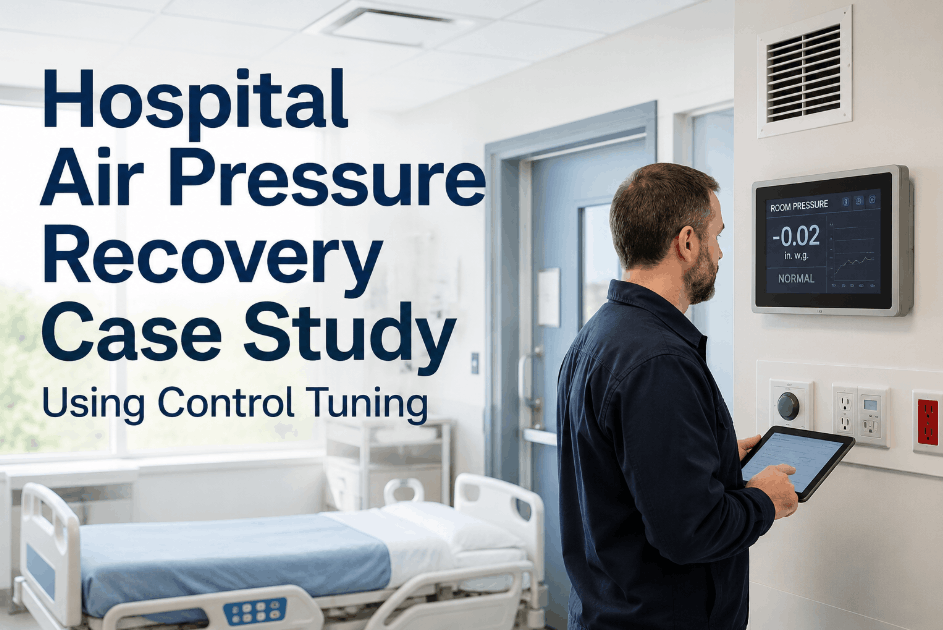
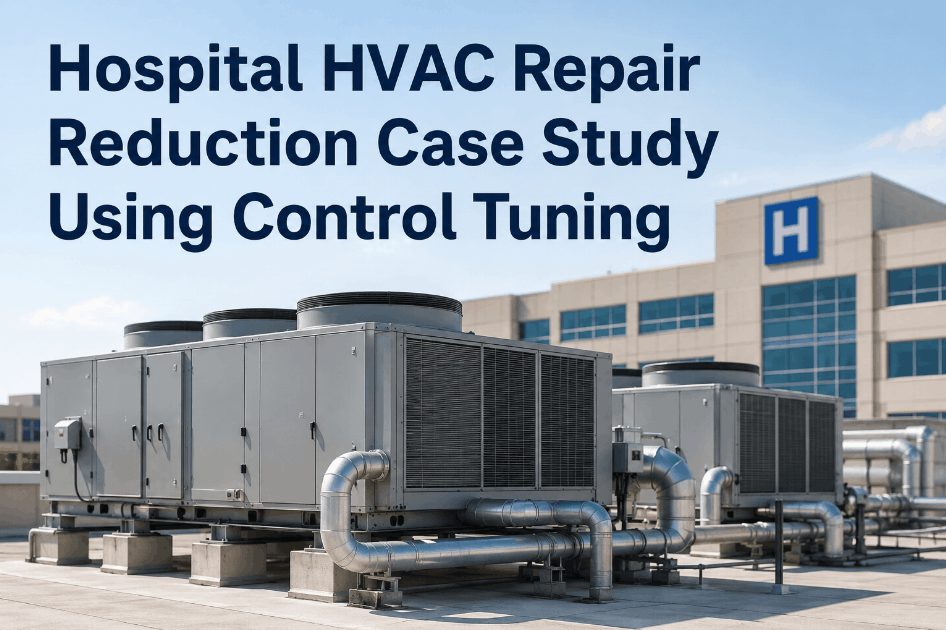
Hospitals managing room pressure relationships in critical areas — operating theaters, isolation rooms, and sterile processing — face a specific failure mode that is easy to miss until it triggers an infection control finding or a regulatory review. A regional acute care hospital managing pressure relationships across 38 critical rooms found itself unable to explain persistent variance in post-surgical suites: readings were within spec at quarterly inspection but drifting outside compliance bands between cycles. Three of six isolation rooms had developed positive-to-negative reversals that staff had been compensating for manually with door protocols. The underlying issue was not equipment failure. It was sensor calibration drift, unresolved airflow imbalance between supply and exhaust branches, and a maintenance schedule that reviewed control settings only at annual commissioning intervals. If your facility is managing the same pressure instability, Sign Up Free to see how Oxmaint structures control verification and PM scheduling for critical environment systems — or Book a Demo with a healthcare facility maintenance specialist.
Hospital Air Pressure · Control Tuning · Critical Environment Compliance
Recover Stable Room Pressure With Structured Control Verification and PM Scheduling
Sensor calibration tracking, airflow balance verification, control tuning schedules, and compliance documentation — OxMaint helps healthcare facilities maintain pressure relationships across critical areas without reactive firefighting.
Facility Profile
The Operation: Acute Care Hospital With Unresolved Pressure Variance in Critical Zones
Facility Overview
Facility TypeRegional acute care hospital — surgical, isolation, and sterile processing environments
Team12 building engineering technicians, 2 shifts, 1 facilities maintenance manager
Critical Zones38 pressure-controlled rooms across surgical suites, isolation corridors, and sterile processing
Prior SystemQuarterly manual inspections, annual commissioning reviews, paper-based pressure logs
Oxmaint FeaturesPM Scheduling · Sensor Calibration Tracking · Work Order Management · Airflow Verification · Control Tuning Logs · Compliance Reporting
Baseline Pressure Points
3 of 6
Isolation rooms with undetected positive-to-negative pressure reversals — compensated manually with door protocols rather than resolved at source
Annual
Frequency of control tuning review — sensor drift and supply-exhaust imbalance accumulating without any structured interim verification
0
Automated triggers connecting pressure drift readings to maintenance work orders — all responses reactive to staff escalation or inspection findings
Root Cause Analysis
Why Pressure Instability Persisted — And Why Inspections Failed to Catch Drift Between Cycles
A structured review of 12 months of pressure logs, control system records, and maintenance history across all 38 critical rooms identified four compounding gaps. Equipment condition was not the primary driver — HVAC assets were within expected service life and had no documented failure history. The problem was verification frequency and feedback absence: sensor calibration drift accumulated between annual checks, supply and exhaust branch imbalances developed as filter loading changed, and there was no structured mechanism to detect either condition between scheduled inspection cycles. Isolation room reversals had been present for an estimated four to six months before discovery. Sign Up Free to map your own critical environment maintenance gaps — or Book a Demo to see how Oxmaint's PM engine applies to pressure-controlled healthcare environments.
36%
Sensor Calibration Drift Accumulating Between Annual Reviews
Differential pressure sensors across critical zones were calibrated only at annual commissioning intervals. Drift accumulation between cycles meant control systems were responding to inaccurate signals — maintaining setpoints that did not reflect actual room conditions.
31%
Supply-Exhaust Airflow Imbalance Developing Without Detection
Seasonal filter loading and upstream damper creep caused supply-exhaust ratios to drift in multiple zones. Without structured interim airflow verification, imbalances compounded across HVAC cycles — reversing pressure relationships in three isolation rooms over a four-to-six month period.
22%
No Automated Trigger Connecting Pressure Readings to Maintenance Response
Pressure monitoring data existed but was reviewed manually at quarterly inspection rounds. There was no automated work order trigger when zone readings trended outside compliance bands — creating a response gap between drift onset and discovery.
11%
Control Tuning History Not Linked to Room Performance Records
Previous control adjustments, damper settings, and sensor replacements were documented in disconnected paper records. No mechanism linked tuning history to room-level PM records — so recurring drift patterns on specific zones were not visible across maintenance cycles.
The Solution
How Oxmaint Rebuilt Pressure Monitoring, Sensor Verification, and Control Tuning Discipline Across 38 Critical Rooms
The hospital deployed Oxmaint without restructuring its building engineering team or replacing HVAC assets. The platform replaced paper-based quarterly inspections with a structured digital PM schedule that assigned sensor calibration verification, airflow balance checks, and control parameter reviews at differentiated intervals matched to room criticality — surgical suites and isolation rooms on monthly verification cycles, lower-criticality areas on quarterly cadence. Pressure monitoring readings were integrated into the work order system, creating automated triggers when zone readings drifted outside defined compliance thresholds. Control tuning records, sensor replacement histories, and airflow balance data were linked to room-level PM records in Oxmaint — giving the facilities manager a complete per-room history and enabling pattern detection across maintenance cycles. Book a Demo to see how Oxmaint handles pressure monitoring and control verification scheduling for critical healthcare environments.
01
Criticality-Tiered PM Schedules for Sensor Calibration and Airflow Verification
Oxmaint replaced uniform annual review cycles with room-criticality-tiered PM schedules. Surgical suites and isolation rooms received monthly sensor calibration checks and airflow balance verification; sterile processing and corridor zones were placed on quarterly cycles — ensuring highest-risk pressure relationships received proportionate verification frequency.
02
Automated Pressure Drift Alerts Linked to Work Order Creation
Pressure monitoring data was integrated into Oxmaint's work order engine. Rooms trending outside defined compliance thresholds triggered automatic work order creation with zone ID, current pressure reading, alert classification, and required verification steps — closing the response gap between drift onset and maintenance action.
03
Structured Airflow Balance Verification at Filter Change Intervals
Airflow balance verification tasks were embedded into Oxmaint's filter change PM workflow. Every filter replacement in critical zones triggered a linked supply-exhaust ratio check and damper position verification — preventing the accumulation of balance drift that had caused the isolation room reversals under the prior system.
04
Control Tuning and Sensor History Linked to Room-Level PM Records
All control adjustments, sensor calibration results, damper settings, and airflow balance records were captured in Oxmaint and linked to per-room PM histories. Rooms with recurring drift patterns on the same parameter generated automatic review flags — converting accumulated maintenance history into proactive schedule improvements across the critical zone portfolio.
Results at 90 Days
Measured Outcomes Three Months After Deployment
100%
Isolation room pressure relationships restored and maintained — all six rooms within compliance band for full 90-day period
-68%
Reduction in pressure variance findings at quarterly inspection — from 9 flagged rooms to 3 borderline readings, none requiring corrective action
4.2×
Increase in interim verification frequency for surgical suite pressure zones — from annual to monthly structured checks
-55%
Reduction in reactive maintenance responses to pressure complaints from nursing and infection control staff
+47%
Increase in PM completion rate within scheduled window across all 38 critical rooms
100%
Digital documentation compliance for pressure verification and control tuning records — up from estimated 30% under paper system
| Metric |
Before Oxmaint |
90 Days After |
Change |
| Isolation rooms with pressure reversals |
3 of 6 |
0 of 6 |
Full compliance |
| Quarterly inspection pressure findings |
9 flagged rooms |
3 borderline (no action) |
-68% |
| Surgical suite verification frequency |
Annual |
Monthly |
4.2× more frequent |
| Reactive pressure complaints (per quarter) |
22 escalations |
10 escalations |
-55% |
| PM completion rate within window |
44% |
65% |
+47% |
| Pressure and tuning documentation compliance |
~30% (paper) |
100% (digital) |
Full compliance |
Key Business Impact
What Restoring Pressure Stability Actually Means for Healthcare Facilities Teams
"Healthcare facilities that are managing pressure relationships manually — with quarterly paper rounds and annual commissioning cycles — are structurally exposed to the same pattern I see repeatedly: compliant at inspection, drifting between cycles, and the first signal is an infection control escalation or a regulator finding. The equipment isn't the problem. Sensor drift accumulates over weeks, not years. Filter loading shifts airflow ratios every season. Control parameters that were tuned at commissioning don't stay tuned as the building's use patterns evolve. The solution isn't more inspections. It's connecting monitoring data to automatic triggers, tiering your verification frequency to room criticality, and building a complete tuning history for each room so recurring drift patterns are visible before they become findings. Once those three things are in place, the reactive escalations stop, inspection results improve, and the team is running maintenance against actual room behavior instead of a fixed calendar."
Dr. Theresa Vann, Healthcare Facility Engineering Advisor
22 years acute care and specialty hospital facility management · Former director of engineering, multi-campus health system · Specialist in critical environment compliance, HVAC control systems, and infection control engineering readiness
Pressure Stability · Control Verification · Compliance Readiness
Replace Reactive Pressure Management With Structured Verification and PM Control
Criticality-tiered PM schedules, automated pressure drift alerts, airflow balance verification, and complete tuning history — OxMaint gives healthcare facilities teams the structure to maintain critical room pressure compliance without adding engineering headcount.
FAQs
Frequently Asked Questions
How does Oxmaint help maintain stable air pressure in hospital critical zones?
Oxmaint schedules criticality-tiered PM tasks for sensor calibration, airflow balance verification, and control parameter checks — replacing annual-only review cycles with structured interim verification matched to room risk level.
Can Oxmaint detect pressure drift before it becomes a compliance finding?
Yes. Pressure monitoring data integrated into Oxmaint triggers automatic work order creation when rooms trend outside defined compliance thresholds — giving facilities teams early warning before drift conditions are identified by infection control or regulatory inspection.
Does Oxmaint support airflow balance verification as part of filter change workflows?
Yes. Airflow balance checks and damper position verification can be embedded as linked tasks within filter change PM workflows — ensuring supply-exhaust ratios are verified every time filter loading is addressed in critical zones.
Can Oxmaint maintain documentation compliance for healthcare facility pressure records?
Yes. All pressure verification results, sensor calibration data, control tuning records, and airflow balance findings are captured digitally in Oxmaint and linked to per-room PM histories — supporting audit readiness and regulatory documentation requirements.
How quickly does a hospital facility see improvement in pressure compliance after deployment?
Most facilities see measurable reduction in pressure variance findings within the first 30–45 days after PM schedule restructuring. Full compliance stabilization across critical zones typically occurs within 60–90 days.
Every Verified Room Is a Patient Safety Investment
Give Your Healthcare Facilities Team the Pressure Control Structure It Needs
Oxmaint brings tiered PM scheduling, automated pressure alerts, airflow balance verification, and complete tuning history to healthcare engineering teams — with no additional headcount required to maintain critical environment compliance.