Classroom HVAC Inspection Checklist for Schools & Universities
By Jordan Blake on January 27, 2026
The thermostat reads 74°F but students in the back row are wearing jackets. The teacher near the window has a portable fan running year-round. Three complaints hit your desk this week about "stuffy air" in Building C. These aren't random comfort issues—they're warning signs that your classroom HVAC systems need systematic inspection. With nearly 50 million K-12 students occupying school buildings daily and research showing direct links between ventilation quality and academic performance, a standardized inspection checklist isn't just good practice—it's essential for student health, learning outcomes, and regulatory compliance.
Why Classroom HVAC Inspections Matter
The connection between air quality and learning outcomes
36%
Of school HVAC systems rated as less than adequate
4-5
Additional students per 1,000 attend schools with proper maintenance
13%
Cognitive development improvement in well-ventilated classrooms
Children breathe a greater volume of air relative to body weight than adults, making proper classroom ventilation critical for their developing respiratory systems and cognitive function.
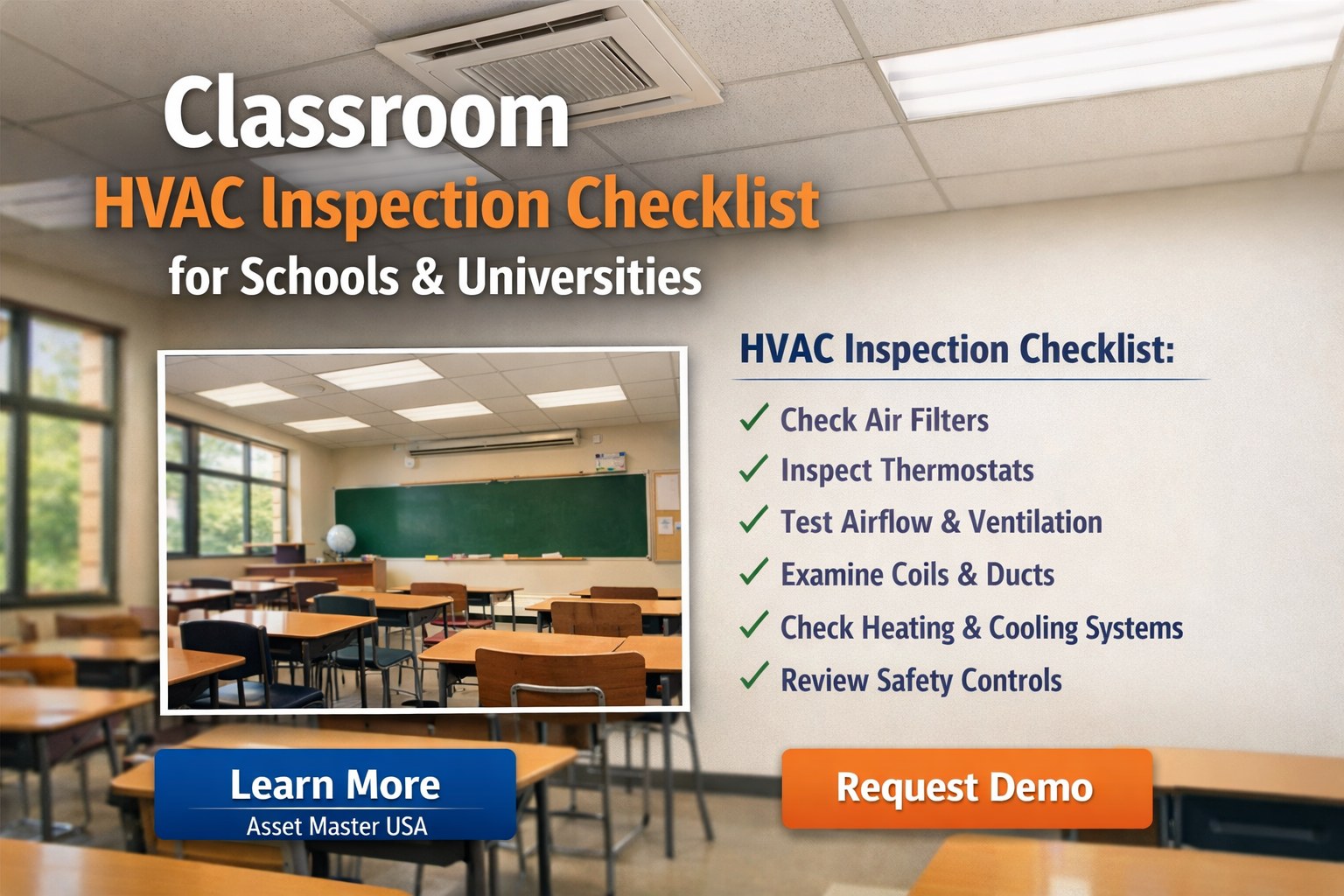
The Complete Classroom HVAC Inspection Checklist
A thorough classroom HVAC inspection covers multiple system categories—from air handling equipment to temperature controls to indoor air quality indicators. Schools that sign up for digital inspection management transform paper checklists into trackable, schedulable workflows that ensure nothing gets missed and create audit-ready documentation automatically. The following checklist covers every critical inspection point recommended by EPA's IAQ Tools for Schools program and ASHRAE standards.
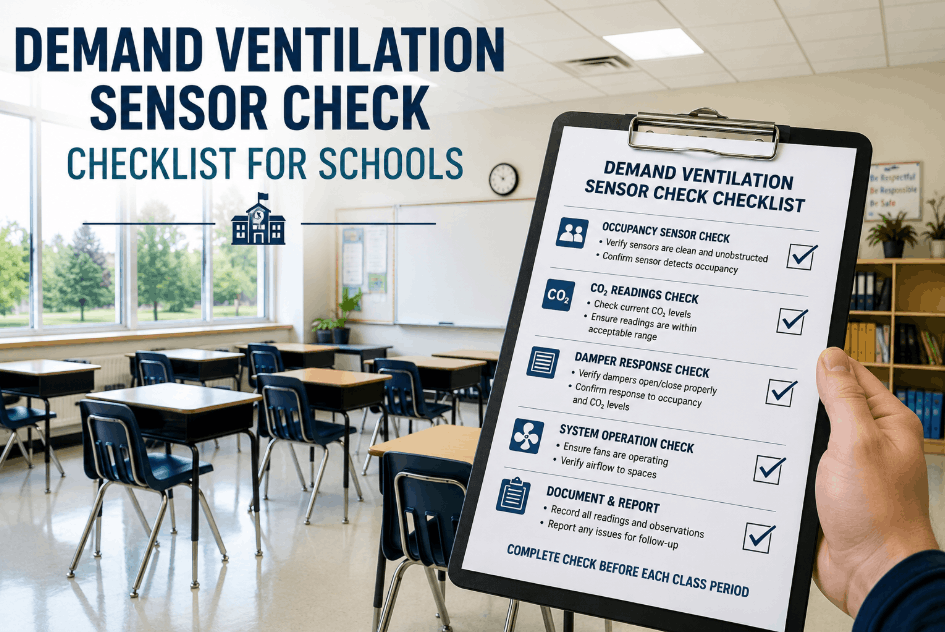
Classroom HVAC Inspection Checklist
Based on EPA IAQ Tools for Schools & ASHRAE 62.1 Standards
Air Handling Unit Inspection
Air filters inspected and replaced (MERV 13 or higher recommended)
Monthly
Belts checked for wear, tension, and alignment
Quarterly
Motors lubricated and bearings inspected
Semi-Annual
Coils cleaned (heating and cooling)
Annual
Drain pans clear of standing water and debris
Monthly
Ventilation & Airflow
Outdoor air dampers operational and positioned correctly
Monthly
Supply and return vents unobstructed by furniture or materials
Weekly
Ventilation rate meets ASHRAE 62.1 (10-15 CFM per person)
Annual
System operates 1 hour before occupancy begins
Daily
Exhaust fans functional in restrooms and specialized areas
Monthly
Temperature & Humidity Controls
Temperature maintained between 68-79°F during occupancy
Daily
Humidity levels between 30-60% relative humidity
Weekly
Thermostats calibrated and functioning properly
Annual
BMS/EMS programming verified for occupied schedules
Quarterly
Indoor Air Quality Indicators
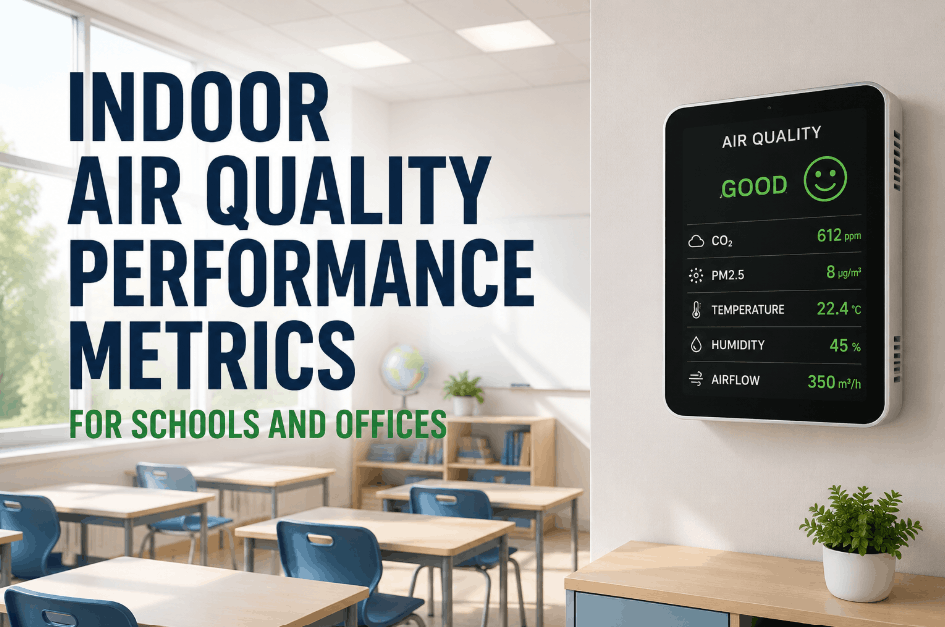
CO2 levels below 1,000 ppm (optimal: below 800 ppm)
Continuous
No visible mold or moisture on surfaces, ceilings, or walls
Monthly
No unusual odors or chemical smells detected
Daily
No pest evidence in ductwork or mechanical areas
Quarterly
Water leaks repaired within 24-48 hours to prevent mold
As Needed
Understanding ASHRAE Ventilation Standards for Schools
ASHRAE Standard 62.1 establishes minimum ventilation requirements to protect student and staff health. For classrooms serving students ages 5-8, the standard requires approximately 15 CFM (cubic feet per minute) of outdoor air per person. Classrooms for ages 9 and older require around 13 CFM per person. These rates combine a per-person component (to dilute human bioeffluents) with a per-area component (to address building-related contaminants). Facilities managers who book a demo of CMMS-integrated compliance tracking can automatically verify ventilation rates are documented and maintained across every classroom in their district.
ASHRAE 62.1 Ventilation Requirements by Space Type
Space Type
CFM/Person
CFM/sq ft
Default Occupancy
Classrooms (Ages 5-8)
10
0.12
25 per 1,000 sq ft
Classrooms (Ages 9+)
10
0.12
35 per 1,000 sq ft
Computer Labs
10
0.12
25 per 1,000 sq ft
Science Labs
10
0.18
25 per 1,000 sq ft
Gymnasium
20
0.06
30 per 1,000 sq ft
Library/Media Center
5
0.12
10 per 1,000 sq ft
Cafeteria
7.5
0.18
100 per 1,000 sq ft
Key Formula: Breathing Zone Airflow (Vbz) = (CFM/Person × Occupants) + (CFM/sq ft × Area)
The Real Cost of Skipping Inspections
Michigan's 2025 Statewide School Facilities Study revealed $7.5 billion in HVAC-related deficiencies across the state's K-12 buildings—more than one-third of the total $22.8 billion infrastructure investment need. This pattern repeats nationally: schools that defer maintenance face repair costs 3-5 times higher than preventive maintenance would have required. Beyond direct costs, poor indoor air quality triggers cascading impacts on attendance, academic performance, and staff retention. Districts that sign up for preventive maintenance scheduling can break this cycle by ensuring inspections happen on time, every time.
Deferred Maintenance Cost Multiplier
How delayed inspections compound into major expenses
Preventive
$1
Deferred
$4
Emergency
$5
$7.5B
HVAC deficiencies in Michigan K-12 schools alone
30-40%
Long-term cost reduction with preventive maintenance
20-40%
Extended equipment lifespan with proper maintenance
Digitize Your HVAC Inspection Program
Transform paper checklists into automated, trackable workflows. See how schools use OXmaint to ensure every classroom gets inspected on schedule with complete documentation.
Indoor air quality in schools isn't a one-time fix—it requires an ongoing, systematic approach that integrates inspections, maintenance, and documentation into daily operations. The EPA's IAQ Tools for Schools program provides the framework, but execution depends on having the right systems to ensure accountability and consistency across every building in a district.
Standardize Inspection Protocols
Use the same checklist across all classrooms and buildings to ensure consistency and enable meaningful comparison of system performance over time.
Document Everything Digitally
Paper records get lost, damaged, or filed away where they can't inform decisions. Digital documentation creates searchable, audit-ready records that prove compliance.
Connect Inspections to Work Orders
When an inspection identifies an issue, it should automatically generate a work order assigned to the right technician—no manual handoffs that create delays.
State requirements are increasingly mandating formal IAQ inspection programs. Connecticut now requires annual IAQ inspections using EPA's Tools for Schools program, with results posted publicly on district websites. Other states are following with requirements for CO2 monitoring, five-year HVAC system inspections by certified professionals, and MERV 13 filtration standards. Schools that book a consultation about compliance-ready inspection workflows can ensure they're prepared for current and emerging requirements.
Implementing Your Inspection Program
An effective classroom HVAC inspection program combines the right frequency, trained staff, and documentation systems. Start with your most occupied buildings, establish baseline conditions, then expand systematically across your portfolio. The goal is creating a sustainable rhythm of inspections that catches problems early—before they become expensive repairs or health complaints. Schools ready to move from reactive maintenance to proactive asset management can sign up to centralize their inspection documentation and build the foundation for long-term compliance and cost control.
Recommended Inspection Frequency
Daily
Temperature checks, unusual odors, system operation verification
Filter inspection, drain pan cleaning, damper operation, mold checks
Quarterly
Belt inspection, BMS verification, pest inspection, duct assessment
Semi-Annual
Motor lubrication, bearing inspection, seasonal changeover prep
Annual
Full system inspection, coil cleaning, thermostat calibration, airflow testing
Ready to Protect Your Students and Staff?
Join districts using OXmaint to automate classroom HVAC inspections, track compliance, and ensure healthy learning environments. Get started today with our asset management platform built for education facilities.
What should be included in a classroom HVAC inspection checklist?
A comprehensive classroom HVAC inspection checklist should cover air handling unit components (filters, belts, motors, coils, drain pans), ventilation and airflow verification (damper operation, vent clearance, outdoor air rates), temperature and humidity controls (thermostat calibration, BMS programming), and indoor air quality indicators (CO2 levels, mold/moisture, odors). The checklist should align with EPA's IAQ Tools for Schools program and ASHRAE 62.1 ventilation standards. Each item should have a defined inspection frequency—from daily temperature checks to annual system assessments.
How often should school HVAC systems be inspected?
Inspection frequency varies by component. Daily checks should verify system operation, temperature compliance (68-79°F), and absence of unusual odors. Monthly inspections cover filters, drain pans, and damper operation. Quarterly reviews include belt inspection and BMS verification. Annual inspections should include comprehensive system assessment, coil cleaning, thermostat calibration, and airflow testing. Some states now require annual IAQ inspections using EPA's Tools for Schools program, plus five-year professional HVAC system inspections by certified technicians.
What are the ASHRAE ventilation requirements for classrooms?
ASHRAE Standard 62.1 requires approximately 15 CFM (cubic feet per minute) of outdoor air per person in classrooms serving students ages 5-8, and around 13 CFM per person for ages 9 and older. The exact calculation uses the formula: Breathing Zone Airflow = (CFM per person × number of occupants) + (CFM per square foot × room area). For classrooms, the per-person rate is typically 10 CFM and the per-area rate is 0.12 CFM per square foot. Schools should also maintain CO2 levels below 1,000 ppm, with optimal levels below 800 ppm above outdoor concentrations.
How does poor indoor air quality affect student academic performance?
Research consistently demonstrates that poor indoor air quality directly impacts student learning outcomes. EPA data shows children in well-ventilated classrooms score higher on standardized tests in math and reading. Studies in Barcelona found up to 13% better cognitive development indicators—including attention and memorization—in schools with lower pollution levels. High CO2 concentrations (above 1,000 ppm) can reduce cognitive performance by 11-23%, with levels at 2,500 ppm causing drops of 44-94%. Schools without major maintenance backlogs also see 4-5 more students per 1,000 in average daily attendance.
What are the benefits of using a CMMS for school HVAC inspections?
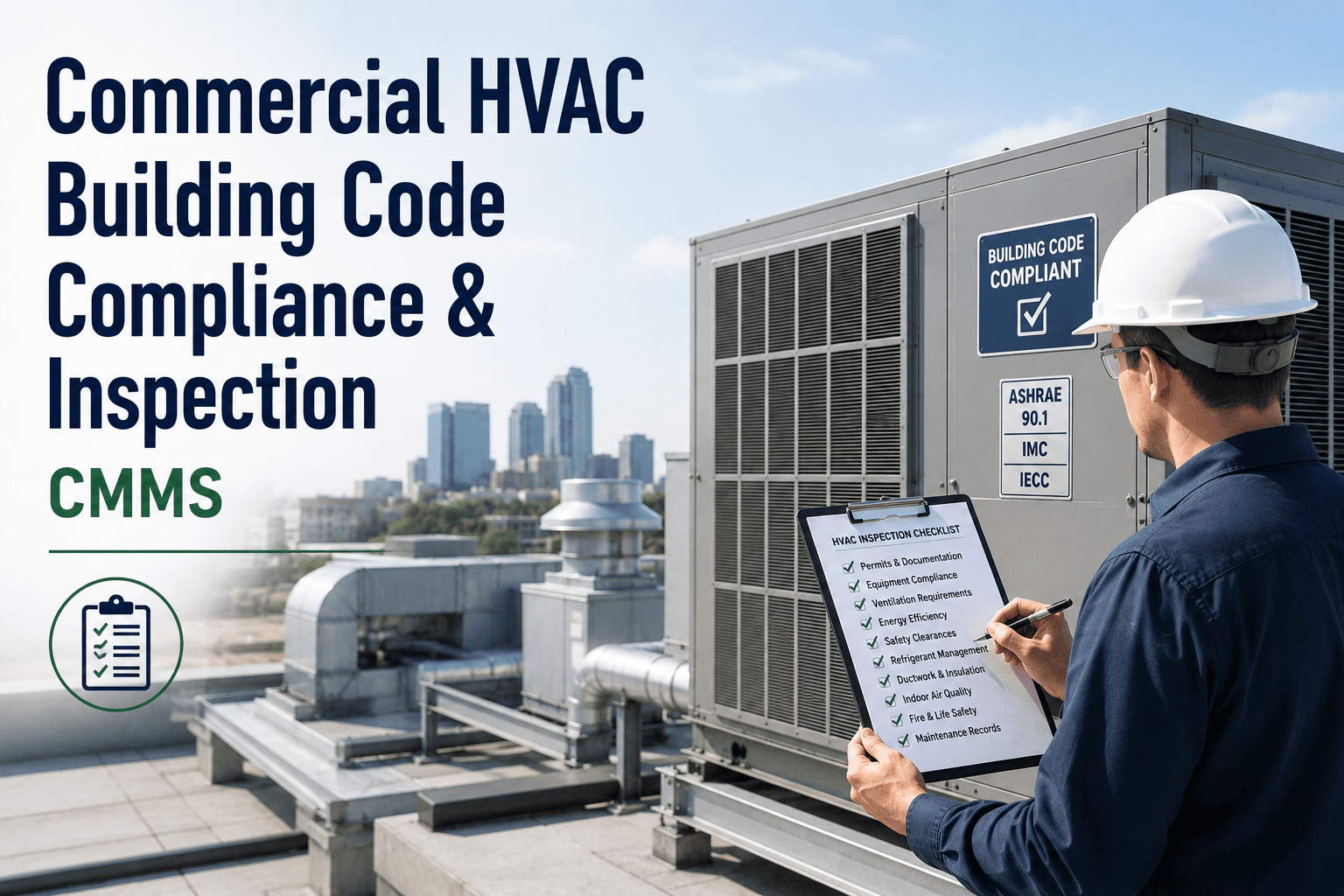
A Computerized Maintenance Management System (CMMS) transforms HVAC inspection programs by automating scheduling so inspections never get missed, creating digital checklists that standardize what gets checked across all classrooms and buildings, generating audit-ready documentation that proves compliance with state and federal requirements, automatically converting identified issues into assigned work orders, tracking inspection history and equipment performance over time, and providing dashboards that show which buildings or systems need attention. This systematic approach reduces long-term costs by 30-40% compared to reactive maintenance while ensuring consistent indoor air quality across the entire district.