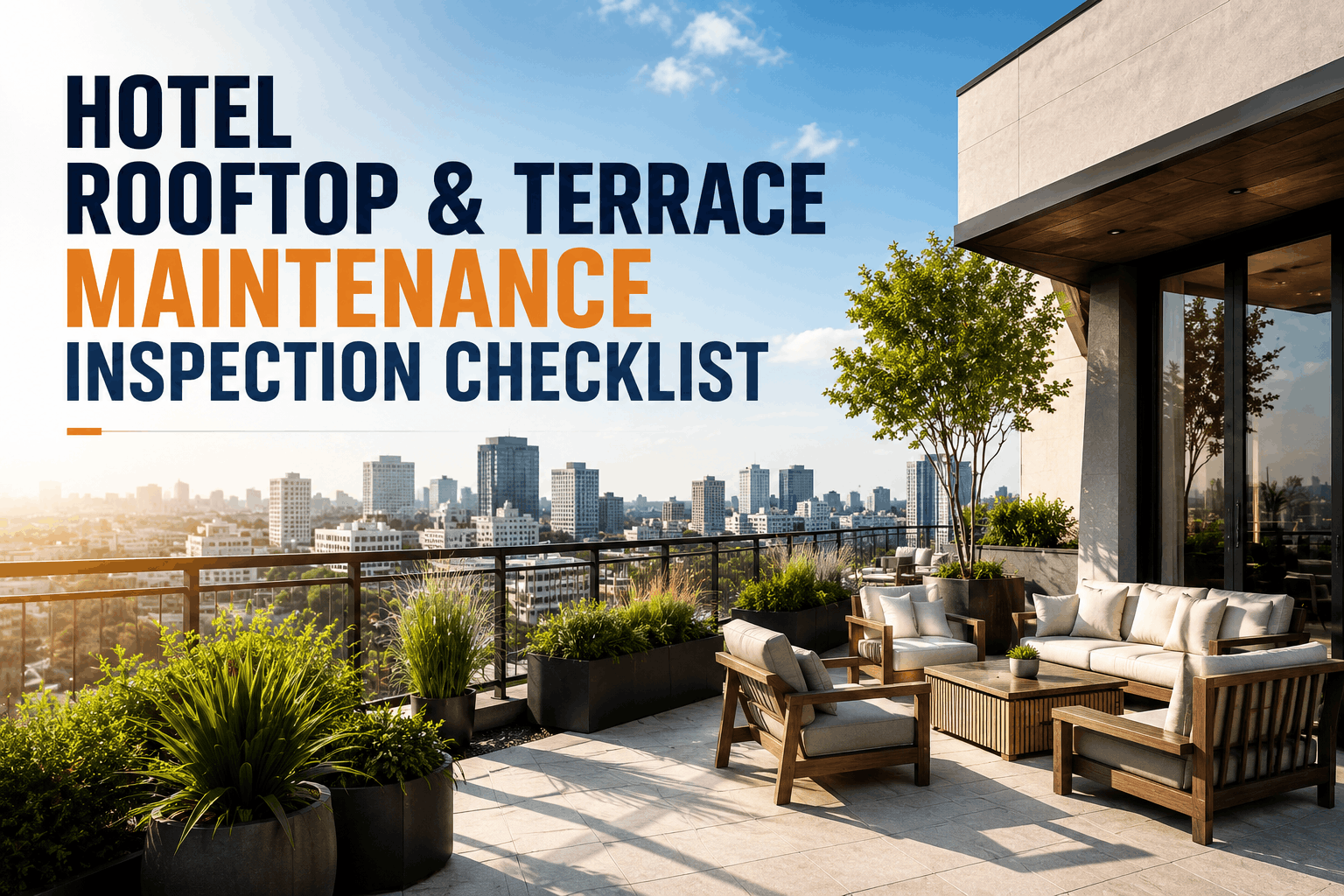
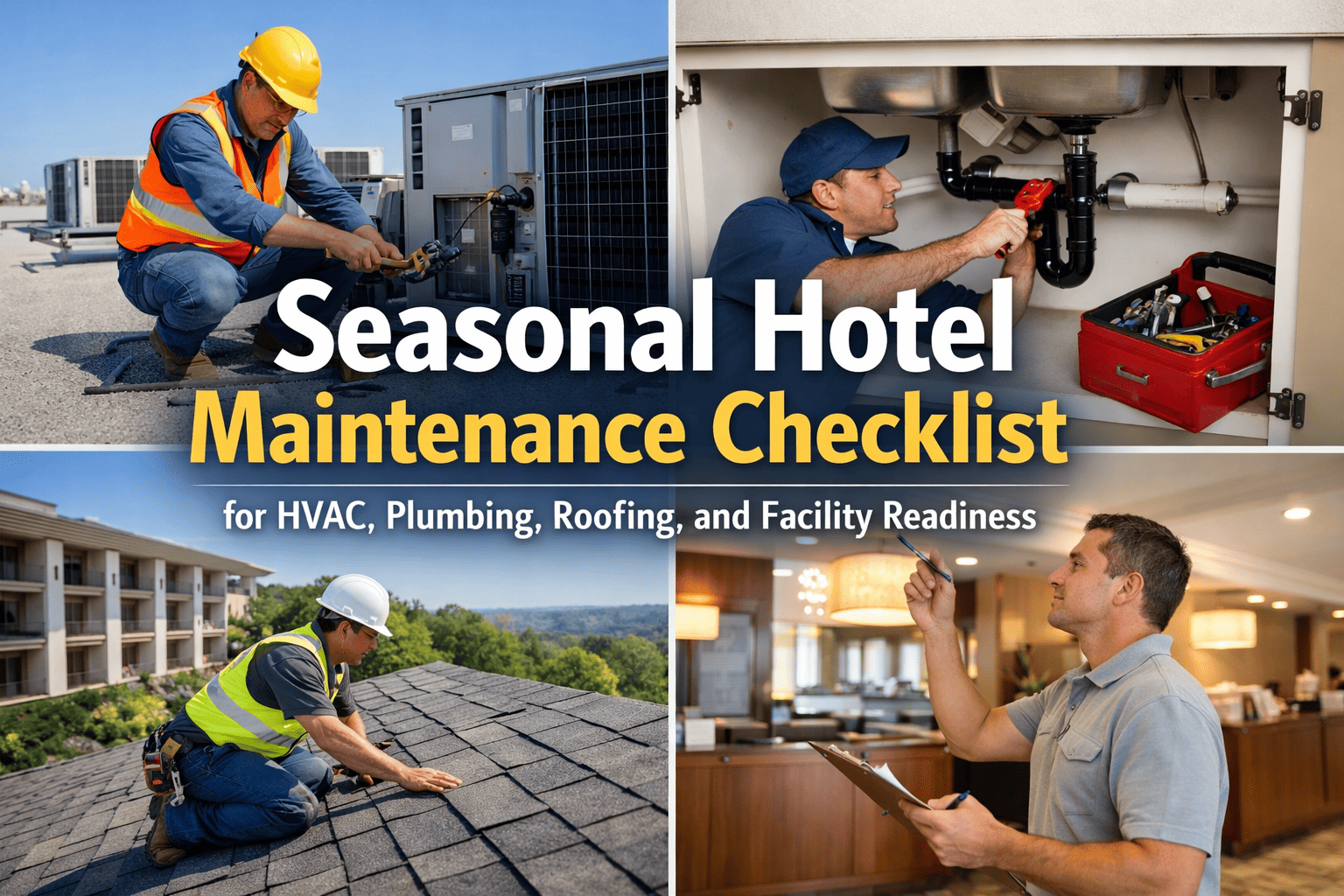
Hotel Rooftop & Terrace Maintenance Inspection Checklist
By Alex Jordan on May 30, 2026
Hotel rooftops and terraces are high-exposure outdoor spaces vulnerable to weather, structural deterioration, and guest safety hazards. Waterproofing failures cause $50,000–$150,000 in interior water damage; unrepaired railings create liability for falls; unmaintained HVAC units reduce efficiency by 40%. A structured quarterly rooftop inspection program — coordinated through Oxmaint asset management — prevents costly water intrusions, ensures guest safety compliance, and extends roof lifespan by 10+ years. Hotels across coastal, cold-climate, and high-wind regions (California, Florida, Texas, New York, Colorado) face accelerated rooftop deterioration. Quarterly inspections catching cracks, membrane damage, and drainage issues early prevent emergency roof repairs costing $200,000+. Oxmaint's seasonal scheduling automates spring and fall rooftop audits, ensuring pre-season readiness.
Maintain Safe, Weathertight Rooftops & Terraces with OxmaintQuarterly structural inspections, waterproofing verification, safety railing certification, drainage testing, and HVAC unit monitoring — all documented for insurance and regulatory compliance.
Flat or low-slope roofs deteriorate through UV exposure, water pooling, temperature fluctuation, and wind damage. Waterproofing membrane cracks, seam failures, and deterioration are leading causes of interior water damage and mold growth. Failed waterproofing spreads rapidly; a small crack (1 sq. ft.) becomes a major leak (20 sq. ft. damage zone) within 1–2 seasons. Quarterly inspections catch early deterioration, allowing cost-effective repairs ($1,000–$5,000) rather than emergency roof replacement ($150,000–$300,000). Hotels in coastal areas (salt spray acceleration), freeze-thaw zones (NY, PA, CO), and high-wind regions need more frequent checks. Oxmaint's photo-based trending tracks deterioration progression across inspection cycles.
2. Rooftop Safety Railings, Stairs & Guest Access Control
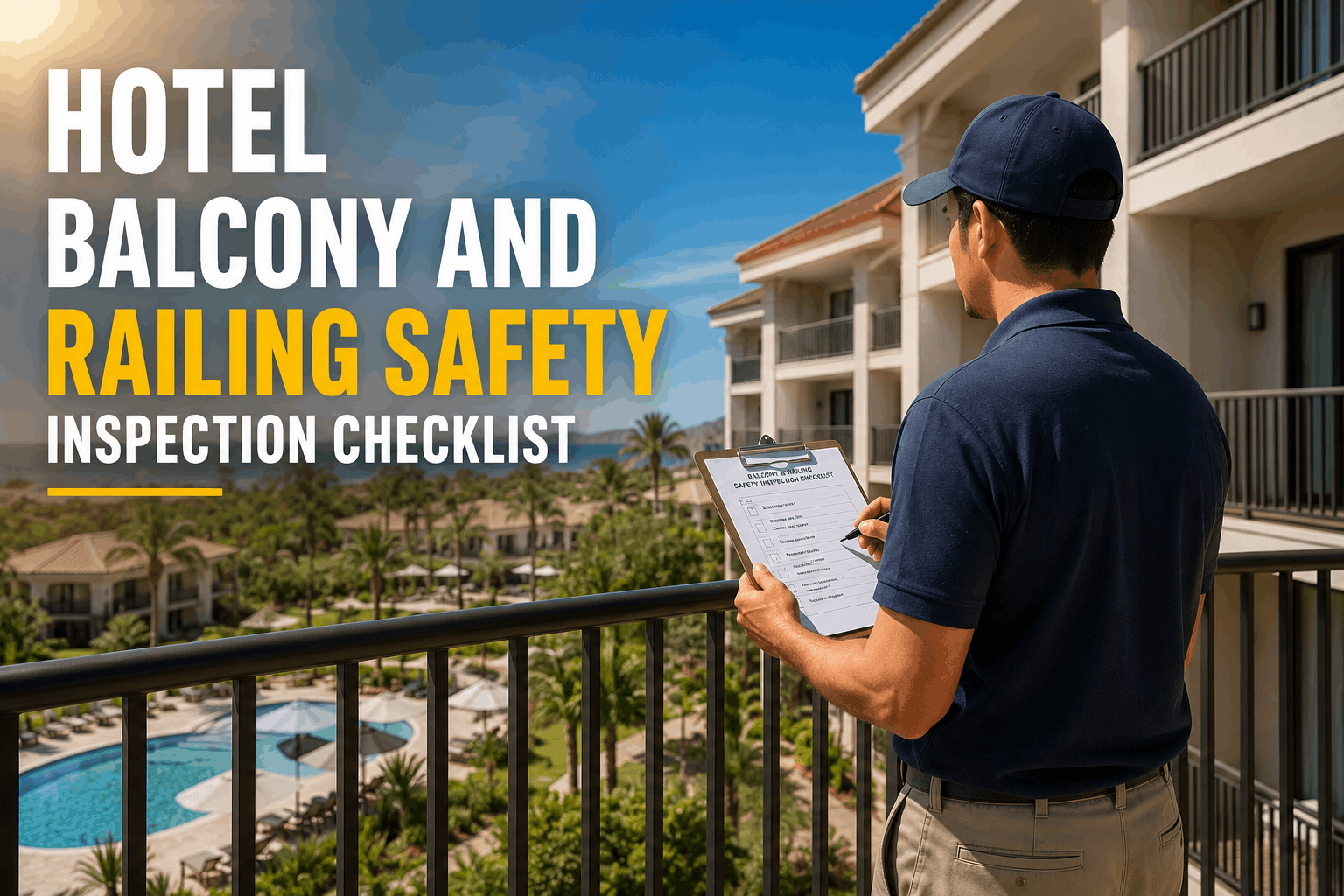
If rooftop is guest-accessible (terrace, lounge, event space), safety railings are critical. Falls from height account for 40% of hotel premises liability claims. Inadequate railings (height, stability, gaps), broken balusters, or missing safety barriers create liability and violation of building codes. OSHA and state building codes require railings 42 inches high, <4 inch sphere gaps, and ability to withstand 200 lb horizontal load. Non-compliant railings result in fines ($500–$2,000) and auto-liability if guest falls. Quarterly railing inspections ensure continued safety and code compliance. Oxmaint's compliance log documents every safety verification, providing litigation defense.
3. HVAC Equipment, Mechanical Systems & Ventilation Function
Rooftop HVAC units (chillers, condensers, cooling towers) operate 24/7 and face weather exposure, bird/debris intrusion, and vibration-induced loosening. Non-functional cooling creates building-wide temperature failures (cost: $500–$1,000/hour in lost revenue). Refrigerant leaks and electrical damage reduce efficiency and increase energy costs. Quarterly rooftop HVAC inspections detect loose bolts, refrigerant leaks, electrical corrosion, and filter degradation. Preventive maintenance on rooftop units saves $8,000–$20,000 in annual energy costs and prevents emergency shutdowns. Oxmaint's equipment sensor integration monitors rooftop units in real-time, alerting maintenance to performance drops before failure.
4. Seasonal Preparation & Weather Event Response
Rooftops face seasonal stresses: spring storms, summer heat/UV, fall debris accumulation, winter freeze-thaw cycles, and high winds. Pre-season preparations reduce weather-related failures by 70%. Spring inspections check for winter damage (cracked membrane, loose flashing). Fall inspections clear debris, secure loose items, and weatherproof before heavy rains. Snow-belt states (NY, PA, CO) require winter-specific preparations: drainage system winterization, ice dam prevention, and snow load monitoring. Hurricane-prone regions (FL, TX) require pre-season secure-down of equipment and vegetation trimming. Oxmaint's seasonal checklist triggers automated pre-season and post-season inspections based on regional climate.
5. Guest Terrace Areas & Exterior Finishes Maintenance
Guest-accessible terrace areas require enhanced maintenance: pavers/decking condition, furniture stability, planter safety, lighting functionality, and slip hazards. Non-slip pavers on wet surfaces are critical (Florida/coastal properties). Broken pavers are trip hazards and liability (guest injuries: $2,000–$15,000+ settlement). Outdoor furniture must be secured against wind or weight capacity exceeded. Planter boxes can become stagnant water sources (Legionella risk) if drainage is poor. Monthly terrace inspections in high-traffic seasons (summer, weekends) prevent guest accidents and damage. Oxmaint's mobile app enables front-of-house staff to report terrace damage in real-time.
Hotel Rooftop & Terrace Compliance & Safety Performance
Water Intrusion/Leak Prevention Rate94%
Waterproofing Extension (Lifespan)+10 years
Guest Safety Incident Reduction (Terrace)72%
Code Compliance Rate (Railings, Drainage)100%
HVAC Energy Efficiency Improvement18%
Emergency Roof Repair Avoidance68%
"Our Miami hotel's roof had multiple seam failures we discovered through Oxmaint's quarterly inspection protocol. Small cracks were documented, and we made $8,000 in preventive repairs. Two years later, we avoided the $180,000 emergency roof replacement that neighboring hotels in our area faced after Hurricane Ian. The quarterly inspections paid for themselves 20x over. Documentation also helped us secure a 14% insurance premium reduction."— Lisa Contreras, Director of Engineering, oceanfront Hospitality Group (Miami, FL)
Protect Your Roof Investment with Quarterly Digital InspectionsWaterproofing verification, structural assessments, safety certifications, HVAC monitoring, and seasonal readiness — all automated and documented in Oxmaint for insurance and litigation defense.
Frequently Asked Questions — Hotel Rooftop & Terrace Maintenance
1. How often should rooftop inspections occur, and what is the best timing?
Quarterly inspections are standard; twice-yearly (spring/fall) minimum. High-wind or coastal properties need monthly checks. Schedule spring inspections post-winter (March–April) and fall pre-storm (September–October). Cold-climate properties (NY, PA, CO) need winter-specific checks. Oxmaint automates seasonal scheduling based on regional climate.
2. What causes roof waterproofing failure, and how can it be prevented?
UV exposure, temperature cycling, poor drainage, and age deteriorate membrane. Prevention: quarterly inspections catching cracks early, professional membrane coating every 10–15 years ($1–$3/sq. ft.), proper drainage maintenance, and infrared thermal imaging annually. Early detection/repair costs $1,000–$5,000; ignored failures cost $150,000–$300,000 in replacement.
3. What building code requirements apply to rooftop railings and safety standards?
OSHA and building codes require 42-inch minimum height, <4-inch sphere gaps between balusters, 200 lb horizontal load resistance, and proper handrails. Quarterly testing documents code compliance. Non-compliant railings trigger citations ($500–$2,000) and 100% liability if guest falls. Documented quarterly compliance is defense against negligence claims.
4. What is the cost of emergency roof replacement vs. preventive maintenance programs?
Preventive maintenance (quarterly inspections + annual sealing): $3,000–$8,000/year. Emergency roof replacement: $150,000–$300,000+. Preventive maintenance extends roof lifespan 10+ years and prevents emergency failures. ROI typically 3–5 years through avoided emergency costs and energy efficiency improvements.
5. How do HVAC units on rooftops deteriorate, and how is maintenance prioritized?
Rooftop HVAC units face wind vibration (bolt loosening), UV exposure (electrical damage), and salt spray (corrosion). Quarterly bolt tightening, annual refrigerant leak testing, and monthly filter changes prevent failures. Non-functional cooling costs $500–$1,000/hour in lost revenue; preventive maintenance ($2,000–$4,000/year) is far cheaper.
6. What are the liability risks of guest terraces, and how can injuries be prevented?
Common terrace injuries: slips (wet pavers), trips (broken pavers), and falls (railing failure). Slip prevention: non-slip pavers (ASTM D2047 >0.5 coefficient), regular power-washing. Trip prevention: monthly paver inspections, <1/4-inch elevation difference. Fall prevention: quarterly railing certification. Monthly inspections in peak seasons reduce injuries by 70%.
7. How do seasonal weather events impact rooftop condition, and what is the pre-season checklist?
8. Can Oxmaint automate rooftop inspections across multi-property hotel portfolios?
Yes. Oxmaint's mobile app schedules quarterly rooftop audits across 50+ properties. Each property generates standardized reports with photos, deficiency logs, and compliance certifications. Corporate dashboard shows portfolio-wide roof condition. Multi-location hotels reduce inspection time by 40% and achieve 100% compliance documentation vs. 55% with manual processes.
Build a Resilient, Safe Rooftop with Digital InspectionsLoad this checklist into Oxmaint, schedule quarterly audits, capture photo evidence of all conditions, and create a 5-year maintenance record that extends roof life, prevents water damage, and defends against liability claims.