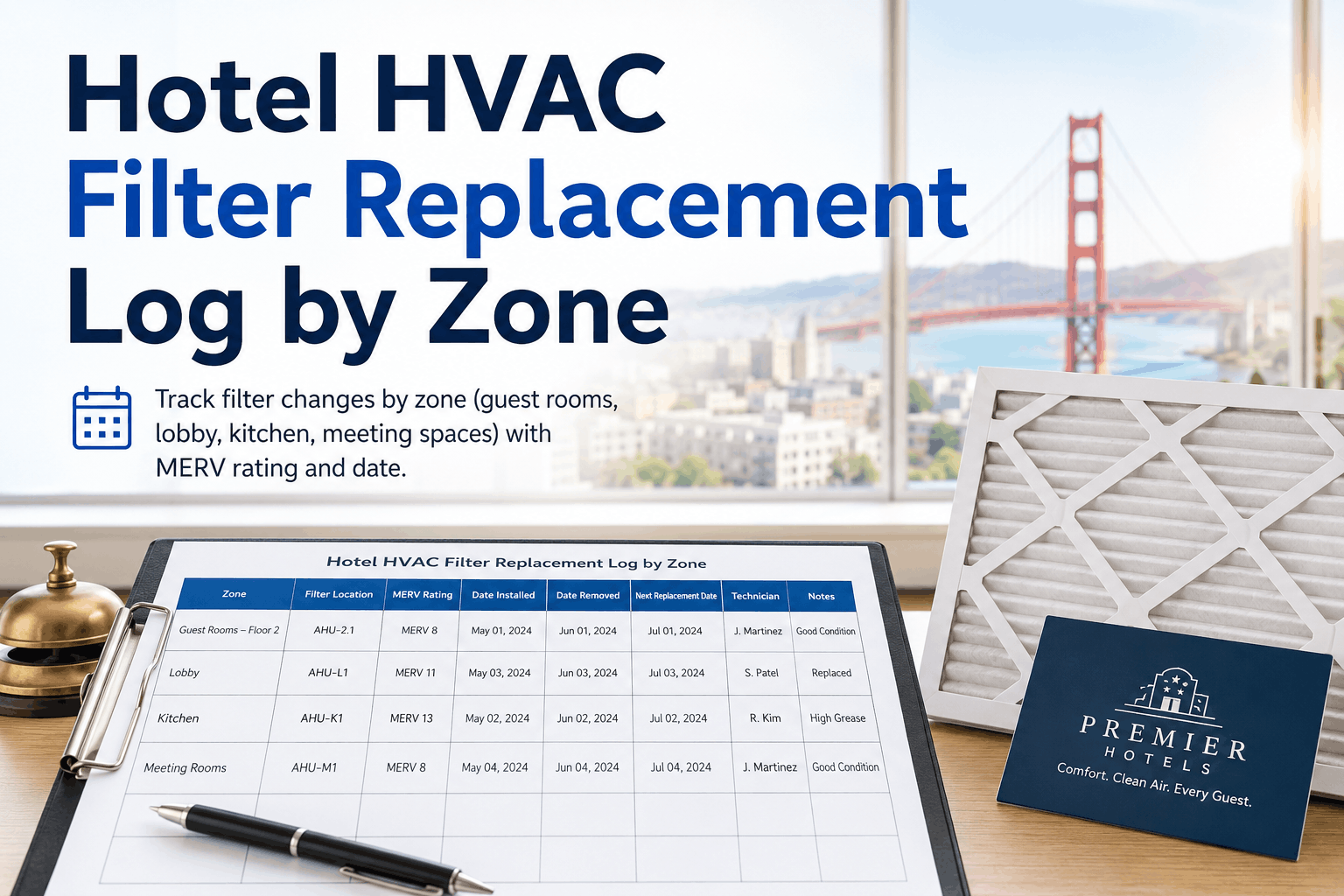
A clogged HVAC filter in a guest room goes unnoticed until a complaint about weak airflow or musty odor appears on TripAdvisor — and by then, the system has been running inefficiently for weeks, driving up energy costs and straining equipment. Hotels that use a structured, zone-based filter replacement log consistently achieve lower energy bills, fewer guest comfort complaints, and longer HVAC equipment life. Whether you operate a 50-room boutique or a 500-room convention hotel with banquet kitchens and meeting spaces, a disciplined filter replacement schedule — backed by a CMMS platform like Sign up free — ensures every zone changes filters on time, at the right MERV rating, with documented proof.
Track Every Filter Change Across Every Zone with Oxmaint Log MERV ratings, replacement dates, filter sizes, and next due dates by zone — guest rooms, lobby, kitchen, meeting spaces — all in one mobile-accessible log.
1. Zone Identification & Asset Mapping
Filter replacement fails when no one knows which units serve which zones. Map every air handler, PTAC, and return grille to a specific zone before scheduling any replacements.
2. Guest Room Filter Log
Guest rooms represent the largest filter count and highest guest comfort impact. A systematic log prevents missed changes and guest complaints.
3. Lobby & Public Area Filter Log
Lobby air handlers run continuously during operating hours and serve high-traffic spaces. Filter neglect here impacts first impressions most visibly.
4. Kitchen & Food Service Filter Log
Kitchen HVAC and exhaust systems face grease, heat, and high particulate loads. Filters here require the shortest intervals and most rigorous documentation.
5. Meeting & Event Space Filter Log
Meeting spaces have variable occupancy and HVAC demands. Filter logs here support both comfort and special event requirements (e.g., allergy-sensitive groups).
6. Filter Inventory & Supply Management
Engineers cannot change filters if the right sizes and MERV ratings are not in stock. Inventory tracking prevents last-minute shortages and substitution errors.
7. Filter Change Documentation & Compliance
Complete documentation is not just good practice — it is required for brand audits, health inspections, and liability defense. Every filter change must be verifiable.
Stop Guessing When Filters Were Last Changed Digital filter logs, zone-based scheduling, automatic due date calculation, and mobile change logging — purpose-built for hotel HVAC maintenance.
Frequently Asked Questions — Hotel HVAC Filter Replacement Log by Zone
1. How often should hotel HVAC filters be replaced by zone?
Standard intervals: guest rooms (30–60 days depending on occupancy), lobby and public areas (30–45 days), kitchen zones (30 days), meeting spaces (45–90 days depending on usage frequency). High-volume hotels, pet-friendly properties, and locations with poor outdoor air quality may require intervals 30–50% shorter.
2. What MERV rating should hotels use for different zones?
Guest rooms: MERV 6–8 (balances filtration with airflow). Lobby/public: MERV 8–11 (higher guest-facing air quality). Kitchen: MERV 8 with grease-resistant coating. Meeting spaces: MERV 8 baseline, upgrade to MERV 11–13 for allergy-sensitive events. Always verify your HVAC system can handle higher MERV ratings — excessive pressure drop reduces airflow and damages equipment.
3. How does a CMMS improve hotel filter replacement tracking?
A CMMS like Oxmaint automates the entire filter management cycle: asset filter specifications stored per unit, automatic next-due date calculation, mobile logging with barcode scanning, inventory reorder alerts, and compliance reporting. Without a CMMS, hotels typically track filters in spreadsheets that are always out of date and never fully audited.
4. What are the consequences of not logging filter changes?
Unlogged changes lead to missed replacements (clogged filters reduce airflow by 30–50%, increasing energy costs and causing freeze-ups), duplicate changes (wasted labor), and audit failures (brand standards, health inspections, and liability claims all require documented proof of filter maintenance).
5. How should filter intervals be adjusted based on inspection findings?
When inspecting a removed filter, if it is lightly loaded and clean on both sides, extend interval by 15–20%. If heavily loaded with visible dust bridging between pleats, shorten interval by 25–50%. Document condition in your CMMS to build zone-specific optimal intervals over time. Most hotels find they can safely extend guest room intervals during shoulder seasons but must shorten them during high summer occupancy.
Document Every Filter Change — From Guest Rooms to Kitchens Oxmaint gives your engineering team the mobile tools to log filter replacements at the unit, track inventory, and prove compliance — zone by zone, change by change.