Hotel Exterior Lighting and Signage Inspection Checklist
By Alex Jordan on June 9, 2026
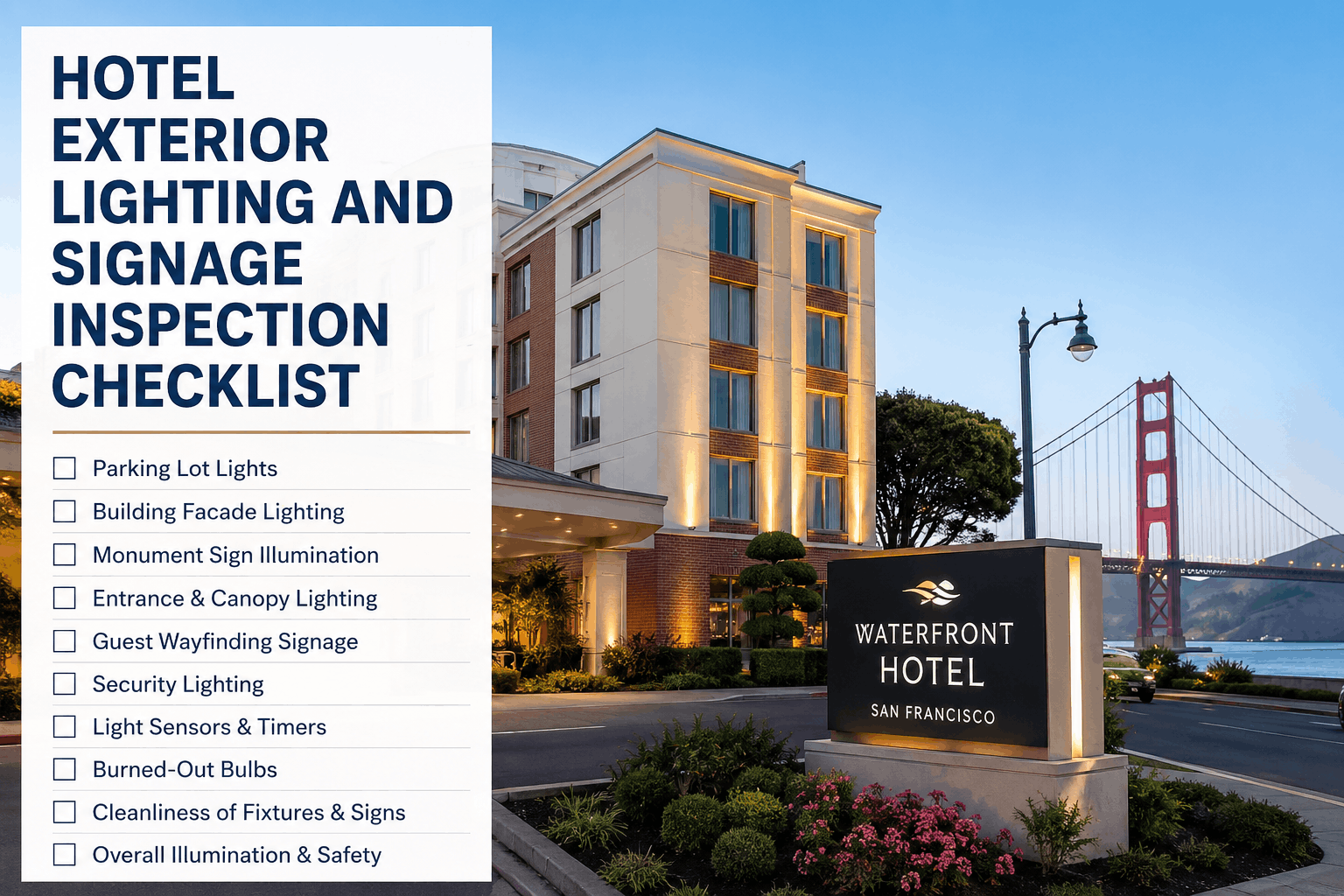
Weekly exterior lighting and signage inspections are essential for maintaining guest safety, enhancing curb appeal, and ensuring compliance with local building codes. Hotels that implement structured lighting inspection checklists using a digital maintenance platform like Oxmaint's free CMMS consistently reduce lighting-related guest complaints by 60%, improve energy efficiency across parking facilities, and maintain brand visibility around the clock. From parking lot illumination to monument signage and building facade lighting, a systematic approach backed by real-time asset tracking prevents costly emergency repairs and extends the lifespan of expensive LED and HID systems.
Manage Your Hotel Exterior Lighting with OxmaintDigital weekly lighting and signage inspections, automated replacement schedules, energy tracking, and compliance documentation all in one mobile-first platform — visible to your entire maintenance team in real time.
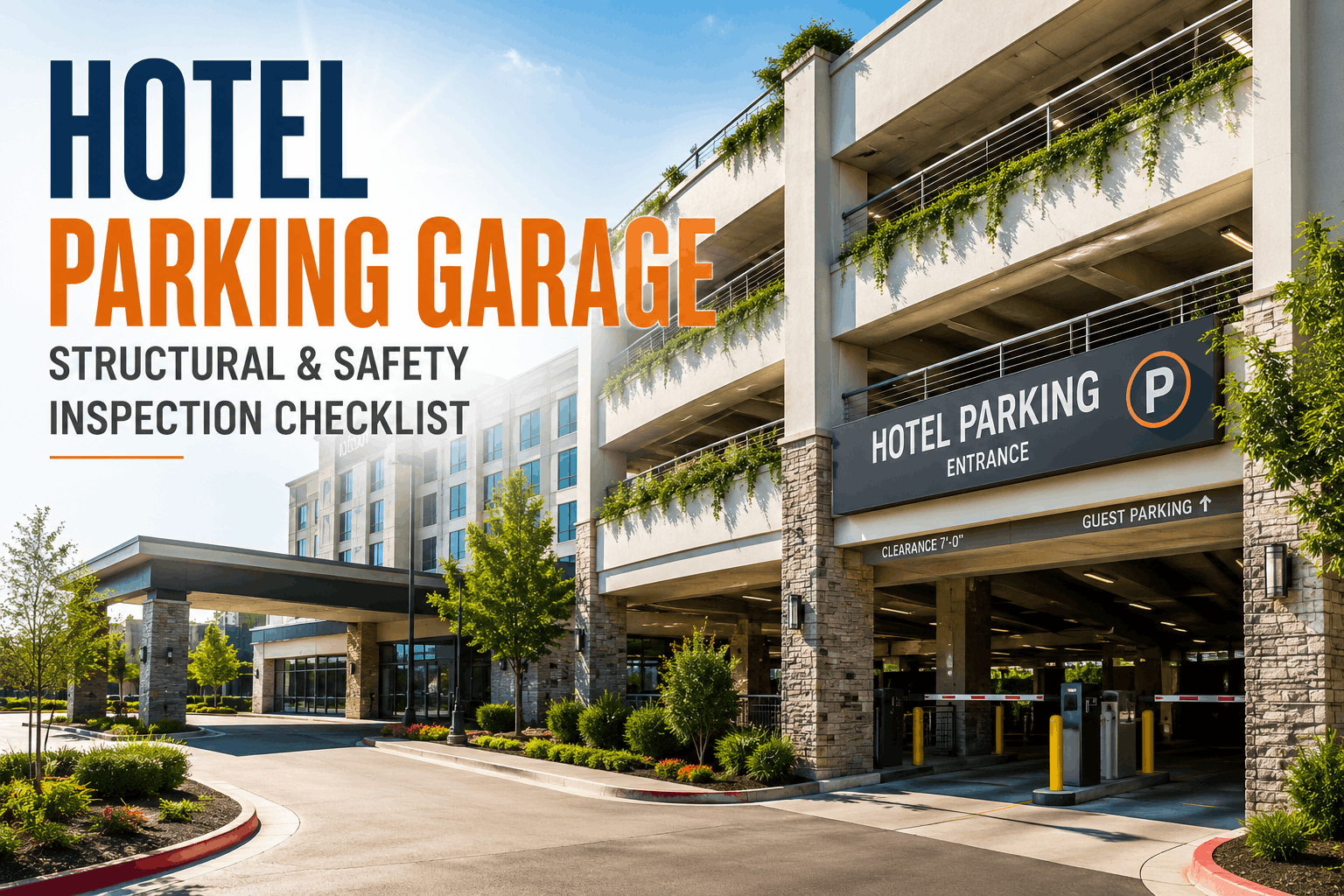
Well-lit parking areas reduce liability risk, enhance guest security perceptions, and improve emergency vehicle visibility. Weekly checks ensure consistent illumination coverage and early detection of fixture failures.
Check Pole-Mounted FixturesInspect all parking lot pole lights for proper alignment, physical damage, and lens clarity. Replace any cracked or discolored lenses immediately to maintain visibility and prevent water infiltration that degrades electronics.
Test Illumination LevelsUse a handheld light meter to verify minimum lux levels across parking zones (typically 20–50 lux for parking lots per IESNA standards). Document readings in your mobile CMMS to establish baseline trends and identify fixtures operating below specification.
Verify Photo-Sensor OperationConfirm dusk-to-dawn photocells respond correctly by testing override switches. A malfunctioning photo-sensor causes lights to remain on during daylight, consuming energy and creating maintenance confusion. Schedule a demo to see how Oxmaint automates fixture control tracking.
2. Building Facade and Accent Lighting Assessment
Facade lighting defines your hotel's brand presence and guest experience after sunset. Dimmed, flickering, or burned-out accent lights reduce perceived property quality and deter bookings. Structured inspection prevents dark zones and maintains visual impact.
3. Monument Signage and Entrance Illumination Checks
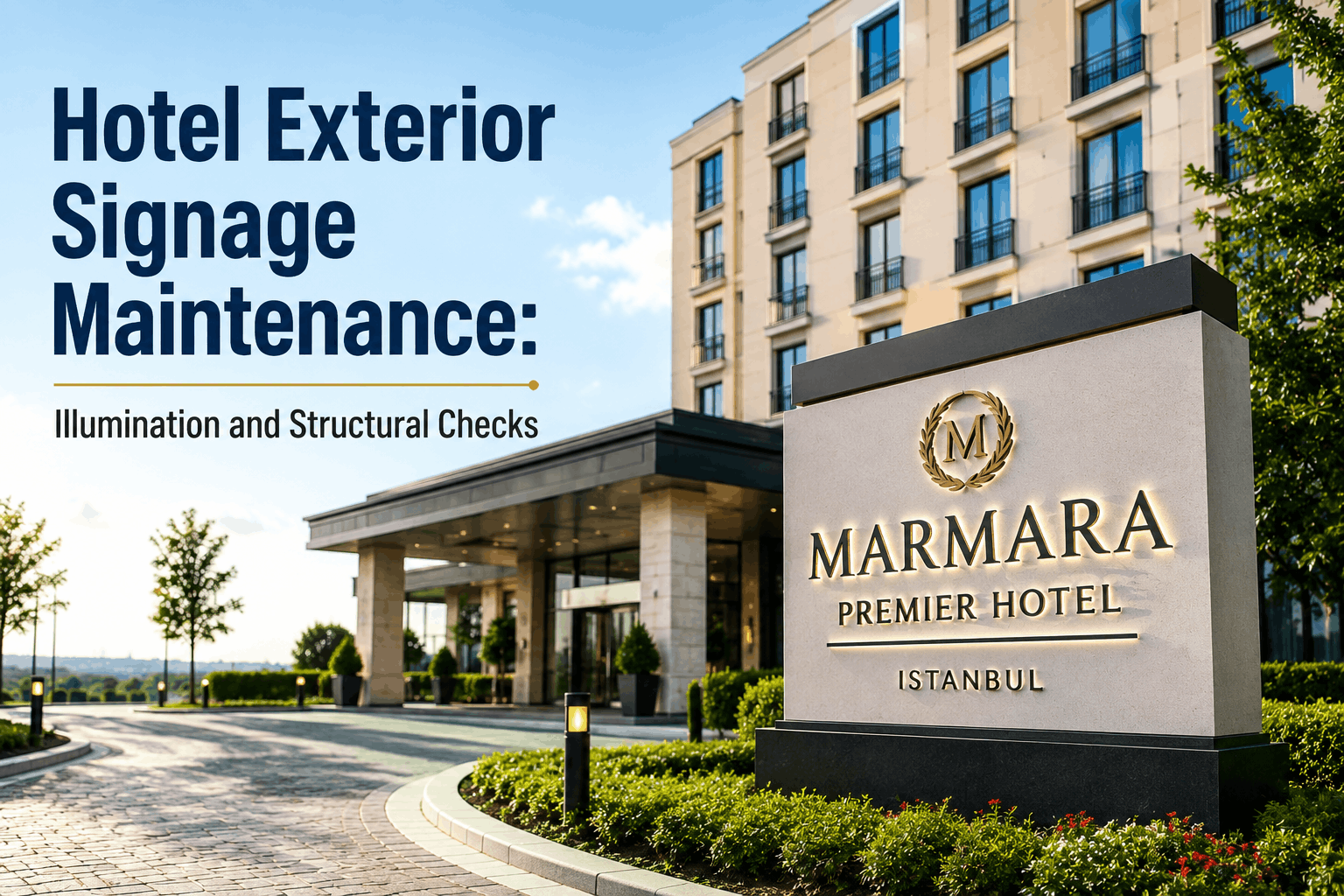
Illuminated monument signs and entrance archways are the first impression guests receive. Proper lighting visibility directly influences booking decisions and guest perception of property maintenance standards. Monthly sign illumination audits prevent brand erosion.
Test Front Sign LED ModulesAll LED modules in letter-form or channel-letter signage should produce uniform brightness with no dark pixels or broken diodes visible from the street. Even one failed module degrades the entire sign's visual impact and suggests poor maintenance standards.
Verify Entrance Portal and Canopy LightingCheck all lights above guest entry doors and covered dropoff zones. Dim or flickering entrance lighting creates safety concerns and negative first impressions. Measure minimum 100 lux at entry thresholds to meet accessibility standards.
Inspect Sign Electrical Connections and SealsWater infiltration is the leading cause of sign failure. Check all weatherproof seals around electrical conduit entries, ballast housings, and transformer boxes. Corroded connections reduce efficiency and create fire hazards in older neon or mercury vapor systems.
4. Emergency and Security Lighting Verification
Exit signs, emergency egress lighting, and security spotlights require 100% uptime to meet life-safety code and protect guests in emergencies. Weekly functional tests prevent lapses that create liability and violate building permits.
5. Energy Efficiency and Timer Control Optimization
Lighting accounts for 15–25% of hotel energy costs. Systematic timer and sensor audits eliminate wasted illumination and reduce monthly utility spend by 10–20%. Digital tracking reveals opportunities for LED upgrades and smart control investments.
Audit Photoelectric Timer AccuracyPhotoelectric timers should activate lights no earlier than 15–20 minutes after sunset. Timers set too early waste energy and create guest complaints about nighttime light intrusion in room windows. Quarterly recalibration prevents drift.
Verify Motion Sensor Timeout SettingsMotion sensors in low-traffic areas should turn lights off after 10–15 minutes of inactivity. Sensors with excessive timeout periods waste energy; those too short cause guest frustration in restrooms or corridors. Test sensor coverage and sensitivity quarterly.
Track Energy Consumption TrendsCompare monthly lighting energy usage against occupancy and seasonal baselines. Unexpected spikes indicate fixtures left on unnecessarily or control failures. Book a demo to see Oxmaint's energy analytics dashboard that identifies high-consumption zones instantly.
Schedule Your Weekly Exterior Lighting Inspections in OxmaintAutomated weekly inspection checklists, photo documentation, LED replacement scheduling, energy tracking, and full compliance audit trails — designed specifically for hotel maintenance teams.
"After implementing Oxmaint's weekly exterior lighting checklists, we reduced emergency lighting replacements by 45% and cut our energy spend by $12,000 annually. Every team member can see the lighting schedule from their phone, so nothing falls through the cracks anymore. The photo documentation also proved invaluable when we had a guest slip in our parking lot—we had timestamped proof that our lighting met code."— Marcus T., Facilities Director, 187-Room Boutique Hotel, Los Angeles, CA
Frequently Asked Questions — Hotel Exterior Lighting and Signage Inspection
1. How often should hotel exterior lighting be inspected for compliance?
Weekly inspections are standard for guest-facing areas and emergency lighting; monthly audits suffice for decorative facade lighting. Most building codes require annual fire safety certifications that include exit sign and emergency lighting verification.
2. What is the standard minimum lux level required for hotel parking lots?
IESNA standards recommend 20–50 lux for parking lot general lighting and 100+ lux for active entrances and emergency routes. Local jurisdictions may require higher levels; always verify your jurisdiction's building and safety code before setting specifications.
3. Why do LED facade lights fail prematurely in outdoor hotel installations?
Water infiltration into junction boxes and corroded electrical connections are the leading causes of LED driver failures. Poor weatherproof sealing, inadequate conduit protection, and temperature cycling from direct sun exposure accelerate component degradation.
4. How can hotels reduce lighting energy costs without dimming guest perception?
Upgrading to smart LED systems with motion sensors and daylight harvesting, optimizing photoelectric timer settings, and scheduling accent lighting on/off timers for off-peak hours typically reduce consumption by 15–25% while maintaining visual impact.
5. What records must be maintained for emergency lighting compliance?
Fire codes require monthly functional tests, annual professional inspections, and battery backup tests to be documented with dates and technician signatures. All records must be retained for 3 years and available for fire marshal audits at any time.
6. How does exterior signage lighting affect guest booking decisions?
Studies show well-lit hotel signs increase perceived safety and property value by 35–50%, while dark or flickering signage triggers the assumption of poor maintenance and safety concerns, reducing booking rates and online review scores.
7. Can hotels integrate exterior lighting controls with their property management system?
Yes, modern networked lighting systems (via DALI, DMX, or IoT protocols) integrate with building automation systems, enabling occupancy-based scheduling, remote control, and energy reporting alongside PMS data for complete operational visibility.
8. What is the cost difference between reactive lighting repairs versus preventive inspection schedules?
Emergency lighting repairs cost 3–4x more than preventive maintenance due to emergency contractor rates, expedited parts shipping, and operational disruption. Structured weekly inspections catch failures before they impact guest experience or create compliance violations.
Ready to Eliminate Lighting Failures and Cut Energy Costs?Oxmaint automates weekly exterior lighting inspections, schedules proactive LED replacements, tracks energy consumption, and generates compliance audit trails—all visible to your maintenance team on mobile devices in real time.