U.S. hospitals can lose billions annually to medical equipment downtime, with costs extending beyond repairs to lost revenue, rescheduled patients, rentals, and overtime. Since many failures are preventable, predictive maintenance ROI can be calculated from a hospital’s own downtime data. This guide explains the calculation and how OXMAINT AI provides the condition data needed to measure it.
Healthcare · Biomedical Equipment · Predictive Maintenance ROI · 2026
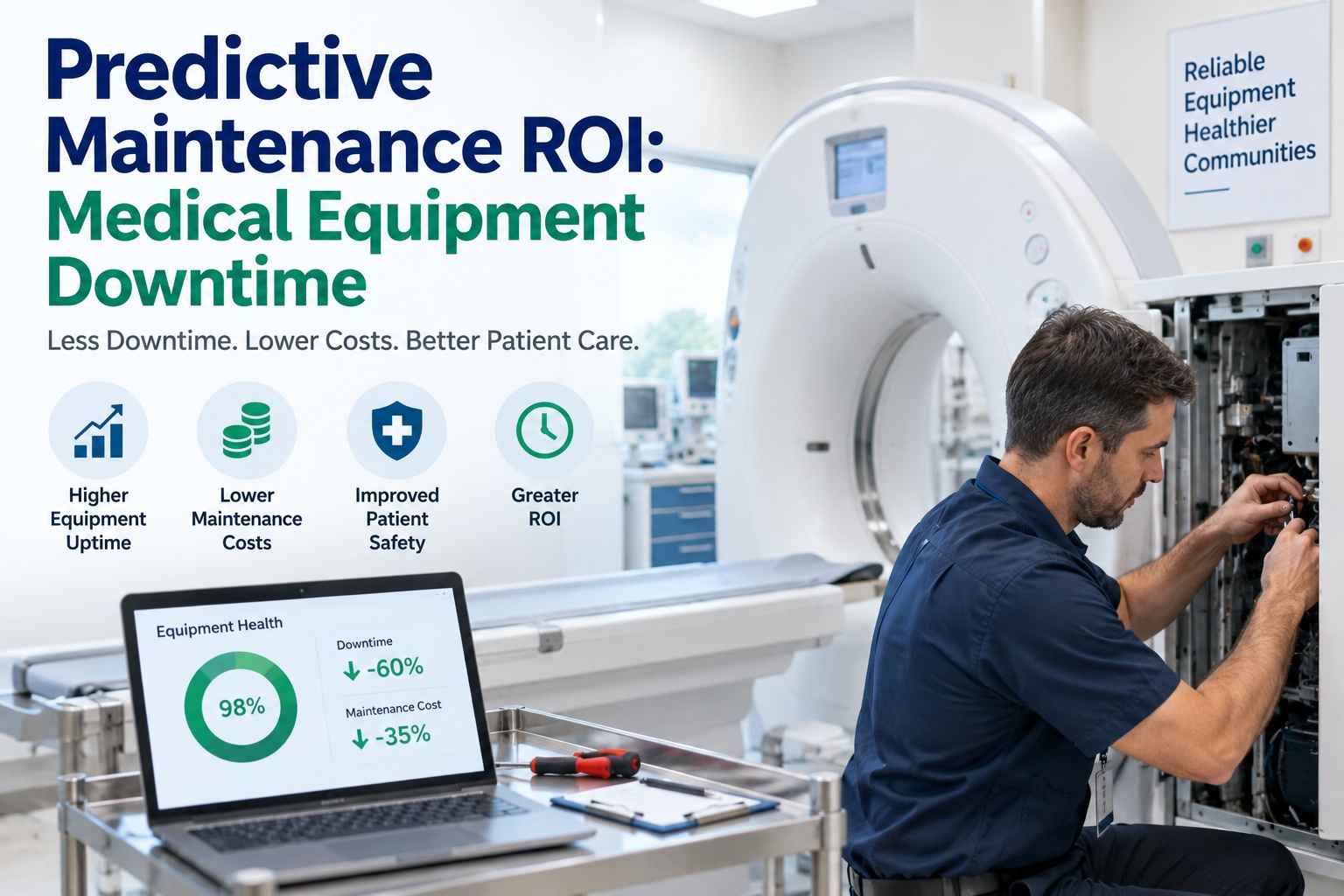
Predictive Maintenance ROI: Medical Equipment Downtime
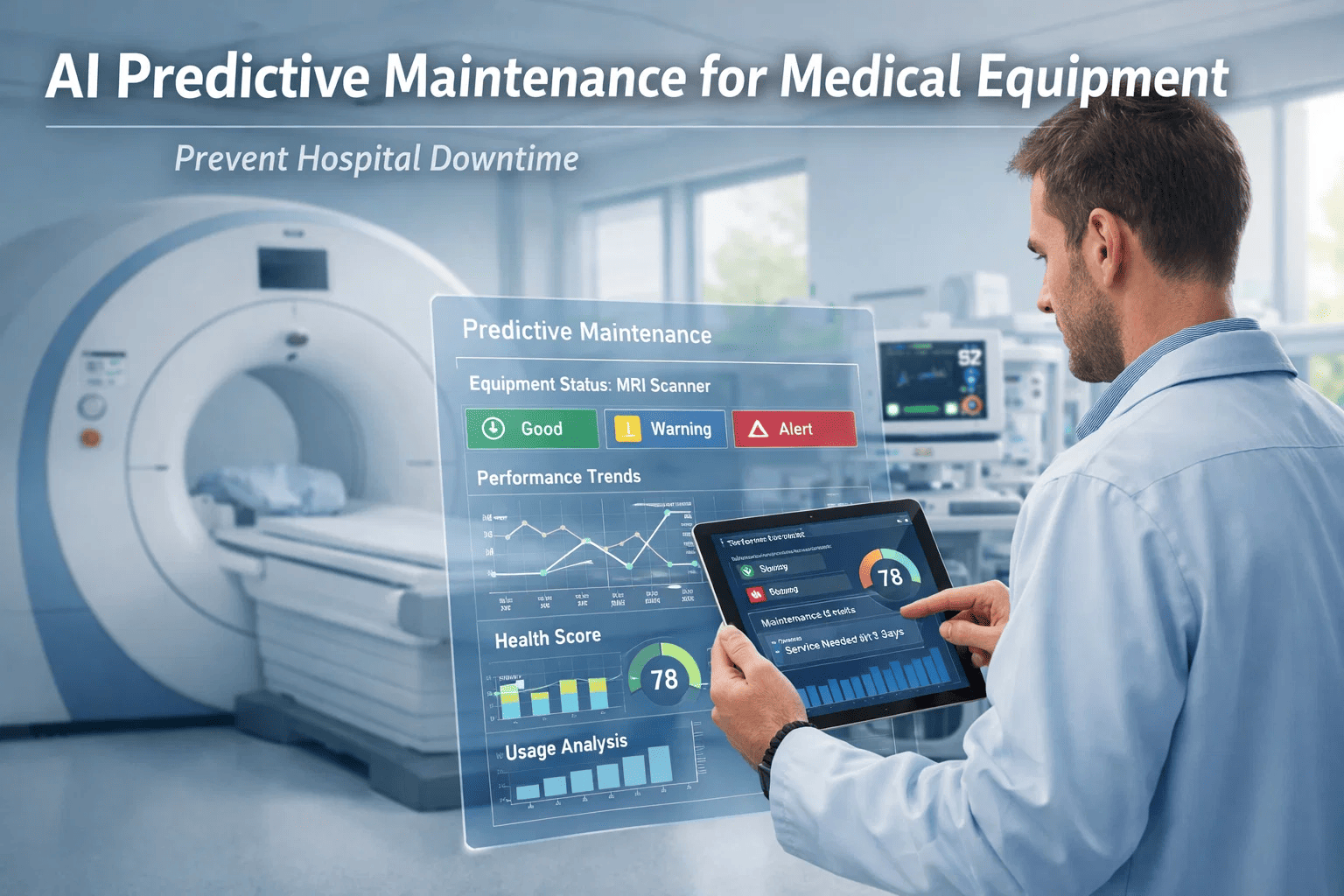
MRI and medical equipment failures can cost far more than repairs. OXMAINT AI monitors equipment condition data, detects early deviations, creates work orders before failure, and tracks downtime and repairs to measure maintenance ROI.
Equipment Condition Monitored
→
Deviation Logged
→
Work Order Created
→
Downtime Avoided & Tracked
$20B–$30B
lost annually across U.S. hospitals to medical equipment downtime
$50K/hr
typical lost imaging revenue when an MRI unit goes down unexpectedly
80%
of medical equipment failures are preventable, according to WHO estimates
40–50%
typical downtime reduction reported within 12 months of a structured predictive program
The Real Cost of Medical Equipment Downtime
Most hospitals dramatically underestimate failure cost because they only count the repair invoice. A complete model captures five distinct financial dimensions. Sign up free and start tracking these dimensions against your own equipment.
Direct Revenue Loss
Cancelled procedures, diverted patients and delayed discharges generate an immediate revenue shortfall — often the largest single line.
Emergency Repair Premium
Emergency service calls, expedited parts and after-hours labor typically cost several times a scheduled repair.
Rental & Backup Equipment
Temporary rental units bridge the gap during a failure — a cost that disappears entirely when the failure is prevented.
Patient Rescheduling
Rebooking diagnostic and surgical slots carries administrative cost and, in some cases, delayed-diagnosis clinical risk.
Overtime & Staff Disruption
Clinical and biomedical staff absorb the disruption in extra hours and rescheduled shifts that rarely get costed out.
Build Your ROI: A Three-Step Framework
This is the exact model hospital finance teams use to size the business case — run it with your own numbers, not a vendor's assumptions. Book a demo and we'll help you build this model on your own equipment inventory.
Step 1
Calculate Current Downtime Costs
Total the annual cost of unplanned failures — direct revenue loss per hour by asset class, emergency repair invoices, rental costs and rescheduling expense. Most hospitals find this ranges from $1.5M to $7.5M annually depending on size and inventory.
Step 2
Apply Predictive Maintenance Impact Rates
Industry data consistently shows comprehensive predictive programs reduce downtime by 40–50% and cut maintenance costs by 25–35% within the first 12 months. Apply these rates to your baseline to project savings.
Step 3
Factor Equipment Lifespan Extension
Predictive maintenance extends medical equipment lifespan by an estimated 20–40%. For a $1.5M MRI, a 30% lifespan extension defers a full capital replacement cycle by years — real budget relief, annualized.
Reactive vs. Predictive Cost Profile
Reactive, Calendar-Only Maintenance
Equipment serviced on a fixed schedule regardless of condition
Failures discovered when the machine actually stops
Emergency repairs at premium pricing, after-hours labor
Downtime cost tracked only as the repair invoice, if at all
Predictive, Condition-Based Maintenance
Service scheduled from real condition signals per asset
Degradation caught weeks before it becomes a failure
Repairs planned during off-peak hours, at standard rates
Full downtime and cost-avoidance data tracked per asset
An ROI Estimate Without Your Own Downtime Data Behind It Is Just a Vendor's Number.
OXMAINT AI tracks condition signals, work orders and downtime hours per asset — so your ROI model runs on your hospital's actual history, not an industry average alone.
What OXMAINT AI Gives Biomedical & Facilities Teams
Continuous Condition Monitoring
Vibration, temperature and performance data from imaging, ICU and OR equipment tracked continuously against each asset's baseline.
Deviation-to-Work-Order Routing
A flagged deviation becomes a scoped work order automatically, routed before the equipment reaches failure.
Downtime & Cost Tracking Per Asset
Every unplanned event, its duration and its resolution logs against the specific asset — the data your own ROI model needs.
Emergency Event Rate Tracking
See emergency work order rate trend down over time as condition-based scheduling replaces reactive repair.
Audit-Ready Maintenance Records
Documented service history supports Joint Commission, FDA and CMS equipment maintenance recordkeeping expectations.
Multi-Asset-Class Coverage
MRI, CT, ventilators, infusion pumps, HVAC and chillers tracked in one system instead of separate departmental logs.
"
We built our business case the way any finance team would want us to — pulling our own baseline downtime cost from the prior year, then applying the industry impact ranges to see what a predictive program could realistically move. The number our CFO actually believed wasn't a vendor's promised savings figure, it was our own $1.5M downtime baseline with a documented 40% reduction target applied to it. A year in, our emergency work order rate has dropped noticeably, and we can finally show exactly which MRI units are consuming the most unplanned service hours.
Director of Clinical Engineering · Regional Hospital System
Frequently Asked Questions
How do I calculate my hospital's current downtime cost baseline?
Total the direct revenue loss per hour for each equipment class, plus emergency repair invoices, rental equipment costs, overtime labor and patient rescheduling expenses from unplanned failures over the past year. Most hospitals find this baseline ranges from $1.5 million to $7.5 million annually, depending on size and equipment inventory.
How long does it typically take to see ROI from predictive maintenance?
Full program ROI, including sensor hardware, software and implementation, is commonly reported within 18 to 24 months, with returns compounding as the condition-monitoring models mature on each asset class over time.
Does predictive maintenance replace scheduled preventive maintenance entirely?
No. Predictive maintenance adds condition-based intervention on top of a preventive maintenance foundation — critical, high-consequence equipment gets both a baseline PM schedule and continuous condition monitoring that can trigger earlier intervention when a real deviation appears.
What data does OXMAINT AI need to help model our downtime avoidance value?
Historical work order records, unplanned downtime events and their duration, and revenue-per-hour figures for critical asset classes are the core inputs. OXMAINT AI can begin tracking these going forward even without complete historical data, building the baseline your ROI model will use.
Run the Numbers on Your Own Equipment, Not a Vendor's Average.
Downtime cost, emergency repair premium, lifespan extension — OXMAINT AI tracks the data your own ROI model actually needs, per asset.



![]-(1)](./manage-post-2k26/uploads/]-(1).jpg)

