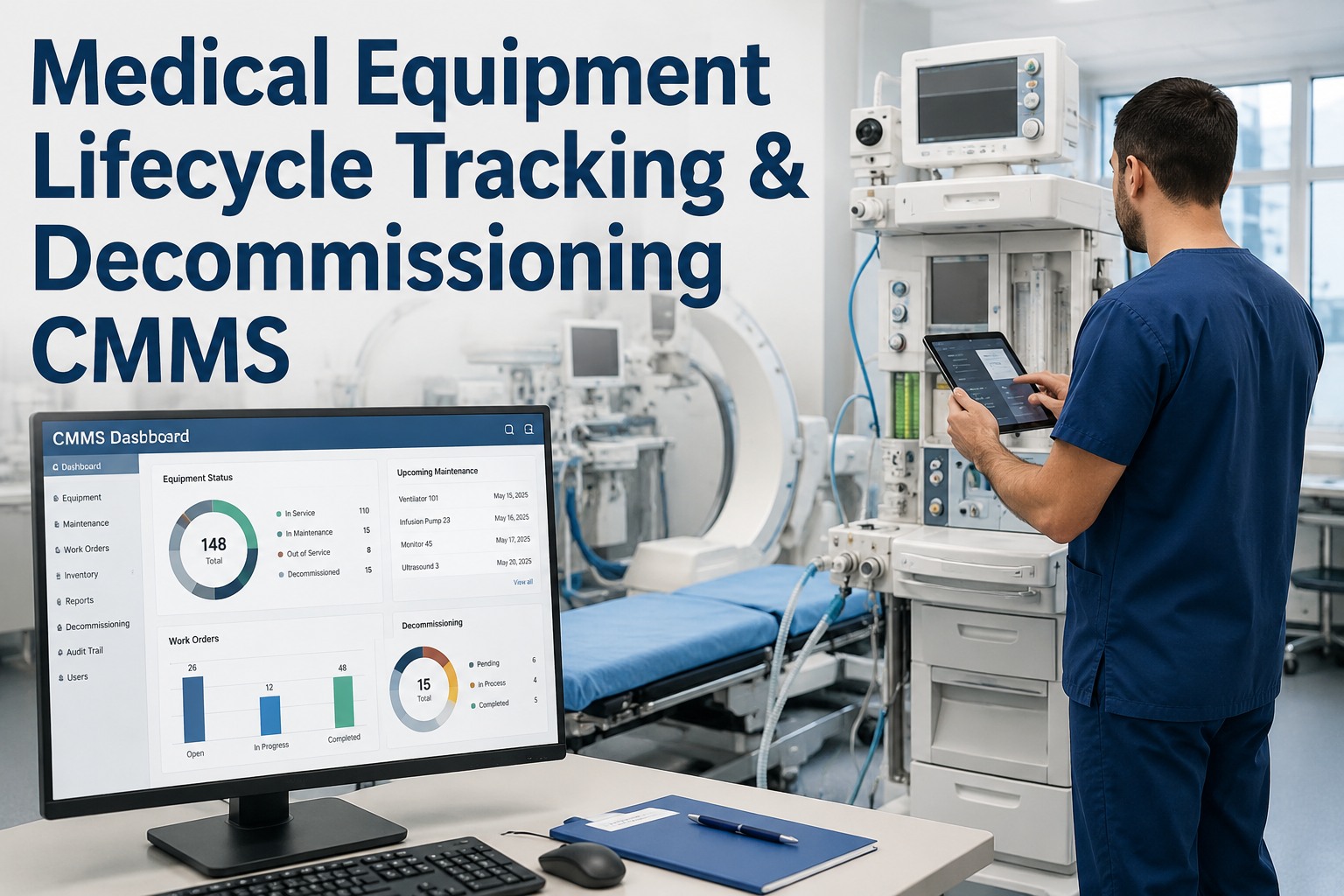
Every hospital floor has a version of this problem: a nurse needs an infusion pump, the closest one is missing, and staff spend 20–45 minutes searching the building before borrowing from another ward. The equipment was there all along — just invisible. Medical equipment tracking using RFID, RTLS, and barcode systems eliminates that invisibility. This guide breaks down how each technology works, where it fits, and what your facility gains when assets stop disappearing. If your biomedical or facilities team is ready to move beyond spreadsheets, start a free trial with Oxmaint or book a demo to see how real-time asset visibility works inside a unified maintenance platform.
RFID, RTLS & Barcode Tracking for Hospital Equipment
Real-time visibility. Zero missing assets. Lower capital spend. Here is everything your facilities and biomedical engineering team needs to know — and act on.
Know Where Every Asset Is. Always.
Medical equipment tracking is the practice of monitoring the real-time location, condition, usage status, and maintenance history of clinical and biomedical assets across a healthcare facility. It replaces manual logs, visual checks, and guesswork with automated systems that tell you exactly where every infusion pump, ventilator, wheelchair, or defibrillator is — and when it was last serviced.
Hospitals track anything mobile and high-value: infusion pumps, ventilators, cardiac monitors, portable ultrasounds, surgical instruments, wheelchairs, and IV stands. Without tracking, these assets become invisible the moment they leave a department. Inefficient management, hoarding, and non-strategic placement push utilization rates into the low 30% range — meaning a hospital owns three times as many devices as it actively needs, just to guarantee availability. If you want to see how Oxmaint connects tracking data to preventive maintenance and asset lifecycle decisions, start a free trial or book a demo with our team.
Three Technologies. Different Strengths.
Not every asset needs the same tracking approach. Choosing the right technology depends on asset mobility, required accuracy, budget, and operational context. Here is how the three primary systems compare — side by side.
What Happens When Equipment Disappears
These are not hypothetical risks. They play out across hospital floors every day when tracking systems are absent or broken.
From Asset Signal to Maintenance Action — On One Platform
Knowing where equipment is solves half the problem. Knowing its condition, service history, and next PM date solves the other half. Oxmaint connects real-time tracking data to a full asset lifecycle platform — so location visibility becomes maintenance intelligence. Your biomedical and facilities teams work from the same record, not separate systems. Hospitals using Oxmaint report faster PM compliance and fewer emergency repairs because the platform makes proactive maintenance the path of least resistance. Ready to see it live? Start a free trial and explore the asset registry, or book a demo to walk through a live hospital asset dashboard.
What Changes When You Track Everything
| Operational Area | Without Tracking | With RFID / RTLS / Barcode |
|---|---|---|
| Equipment Location | Staff walk floors searching, avg. 20–45 min per incident | Pinpointed on dashboard in seconds |
| Asset Utilization | 30–35% of owned devices actually in use at any time | 65%+ after RTLS deployment — same asset count, higher throughput |
| PM Scheduling | Calendar-based, disconnected from actual usage hours | Usage-triggered — tied to real cycles and run hours |
| Inventory Accuracy | Manual counts, error-prone, often weeks out of date | 82% improvement in tracking accuracy reported post-RFID deployment |
| Capital Purchasing | Over-purchasing to buffer invisible inventory gaps | Data-justified purchases — one hospital cut IV pump orders by 35% |
| Compliance Records | Incomplete, siloed across spreadsheets, difficult to retrieve | Full digital trail per asset, retrievable in under 60 seconds |
| Emergency Response | Crash carts and defibrillators located by memory or radioing departments | Exact location displayed in real time on any mobile device |
| Recall Management | Manual search across wards, hours to locate all affected devices | 64% improvement — RFID isolates affected asset locations instantly |
The Numbers That Justify the Investment
Which Tracking System Fits Your Hospital?
There is no single right answer. The optimal tracking approach depends on your asset mix, infrastructure, budget, and compliance needs. Use this framework to match technology to operational context — and build toward the coverage level your facility actually requires.
Questions Your Team Is Already Asking
01 Do we need full RTLS or will barcode scanning work for a smaller facility?
02 How does RFID tracking connect to preventive maintenance scheduling?
03 What is the difference between active and passive RFID for hospital use?
04 How does Oxmaint support accreditation readiness through asset tracking?
Stop Managing Assets You Cannot See
Equipment that cannot be found cannot be maintained. Equipment that is not maintained fails at the worst possible time. Oxmaint connects RFID, RTLS, and barcode tracking data to a full preventive maintenance platform — so your hospital knows where every asset is, what condition it is in, when it was last serviced, and when it is due again. No separate systems. No documentation gaps. No missing equipment on the floor when it counts most. If your team is still running asset management from spreadsheets, it is time to see what a connected platform looks like — start a free trial or book a demo and we will walk through your specific asset mix live.