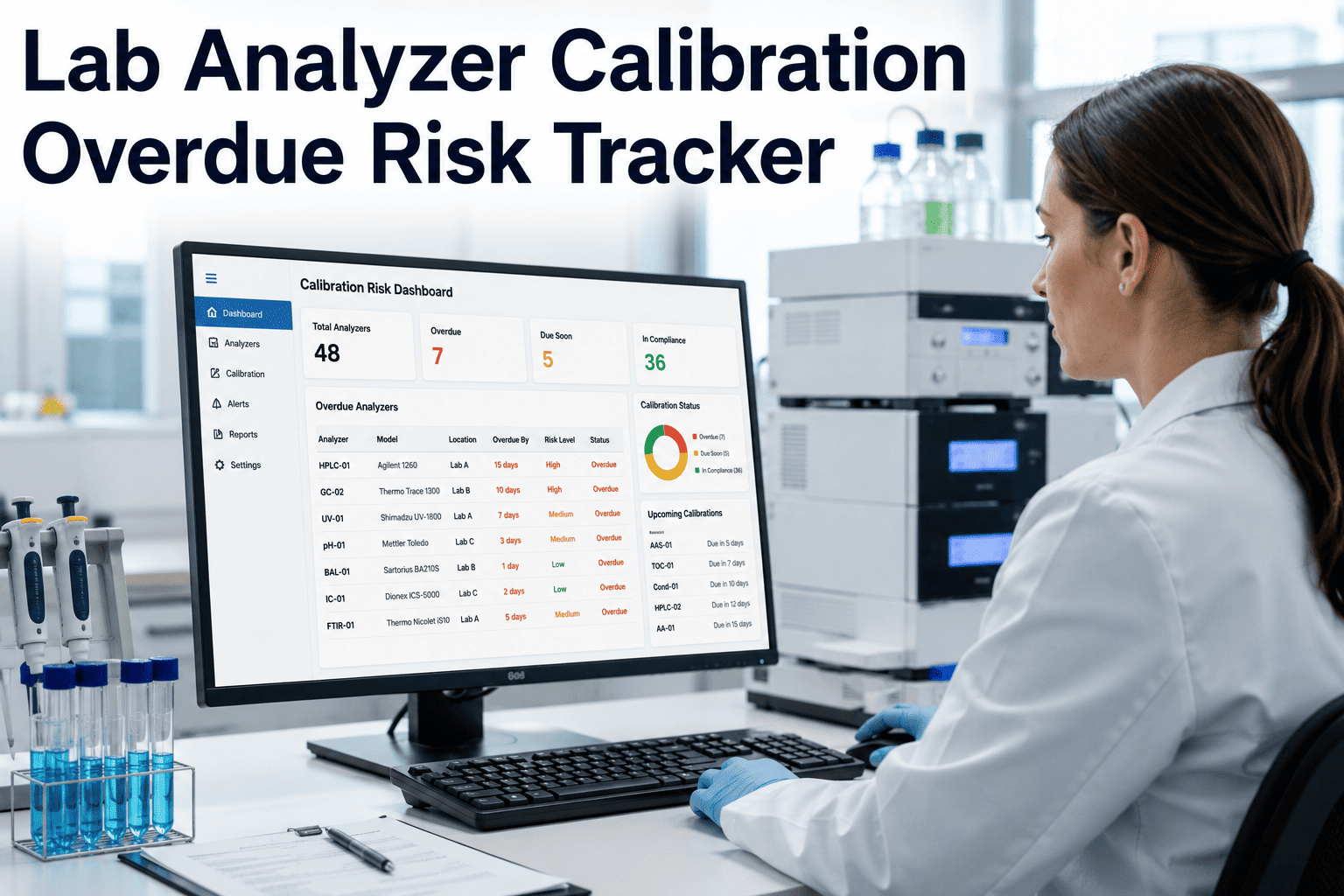
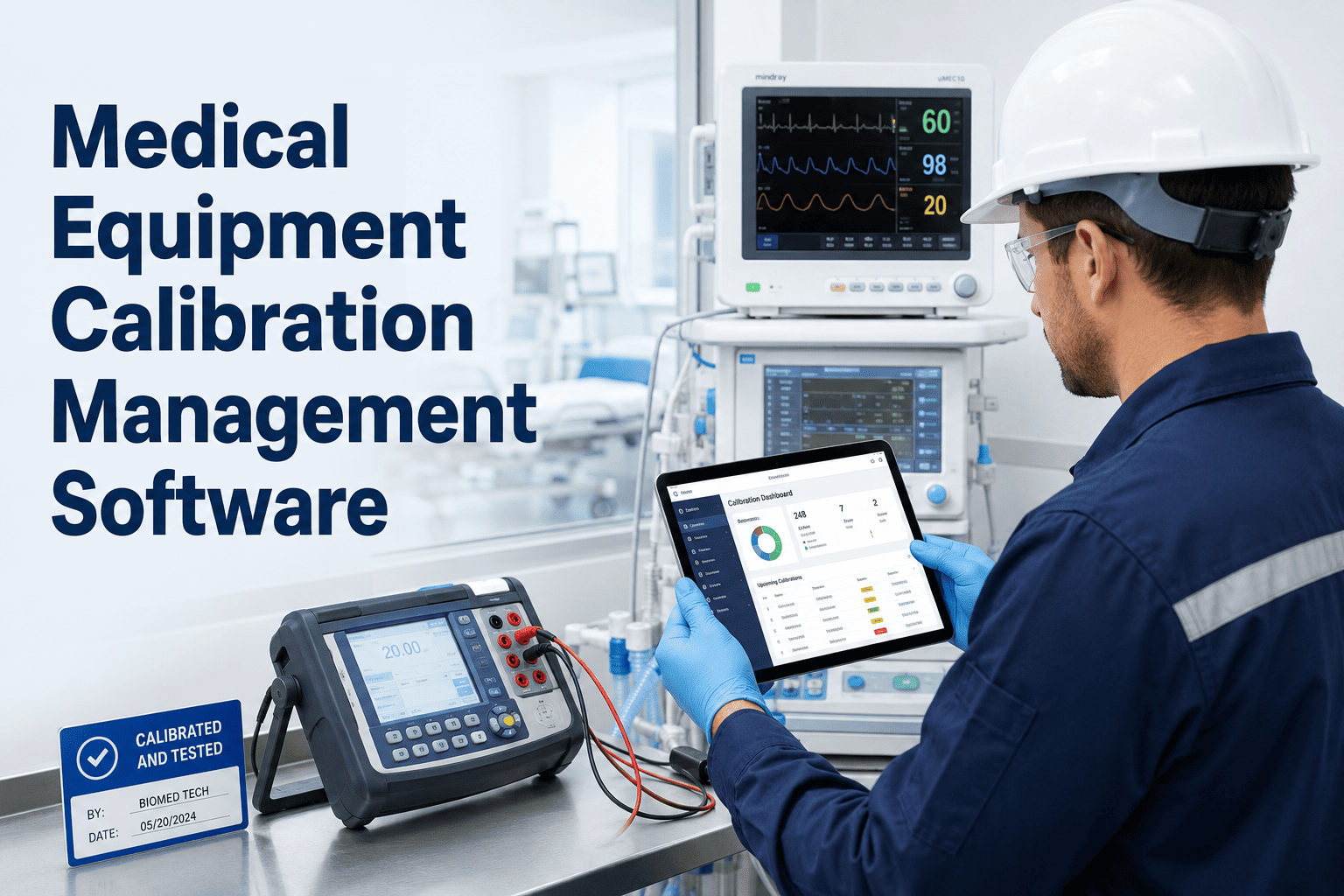
Clinical laboratories operate on a fundamental principle: every result must be accurate, every time. Yet across diagnostic centers worldwide, equipment calibration lapses, missed preventive maintenance, and fragmented compliance records quietly erode result integrity — until a patient outcome or a CAP audit makes the cost undeniable. Laboratory managers overseeing analyzers, centrifuges, spectrophotometers, and incubators know that equipment reliability is not a support function — it is the core of diagnostic quality. To see how a modern CMMS transforms lab maintenance, start a free 30-day trial with Oxmaint or book a demo with our healthcare team today.
Laboratory Equipment Maintenance Guide
Calibration, Compliance & Accuracy in Clinical Diagnostics
A field-level resource for Lab Directors, Laboratory Managers, and Clinical Engineers managing diagnostic accuracy, CLIA compliance, and CAP accreditation across clinical and research environments.
Your Lab Deserves More Than a Spreadsheet
Oxmaint replaces fragmented calibration logs, paper PM checklists, and reactive repair cycles with a unified platform purpose-built for clinical and diagnostic environments. Calibration schedules, compliance records, and work orders — all in one place, all audit-ready.
What Is Laboratory Equipment Maintenance — and Why Does It Differ From Standard Facilities?
Laboratory equipment maintenance is the structured, documented process of keeping diagnostic instruments — analyzers, centrifuges, spectrophotometers, incubators, biosafety cabinets, and refrigeration units — operating within manufacturer-specified tolerances and regulatory performance standards. Unlike commercial facility maintenance where tolerance for drift is relatively wide, clinical lab equipment operates to exacting measurement accuracy requirements where a 2% deviation in a hematology analyzer can alter a patient's diagnosis.
Three distinct maintenance activities govern lab operations: Preventive Maintenance (PM) — scheduled servicing based on time intervals, usage cycles, or manufacturer protocols; Calibration — the formal adjustment and verification of instrument measurement accuracy against traceable standards; and Calibration Verification — the periodic confirmation that calibration remains within acceptable limits between full recalibrations. CLIA mandates all three, and CAP-accredited labs must demonstrate documented compliance for every instrument in scope. To manage all three without administrative burden, start a free trial with Oxmaint or book a personalized demo with our lab operations specialists.
Critical Lab Equipment Categories & Their Maintenance Requirements
Each instrument class carries distinct PM intervals, calibration requirements, and failure modes. Understanding the difference determines whether your maintenance program is CLIA-compliant or audit-vulnerable.
4 Maintenance Failures That Compromise Lab Accuracy and Compliance
These are not edge cases. They are the daily operational realities in labs running on manual maintenance processes — each one a direct risk to diagnostic accuracy, accreditation standing, and patient outcomes.
CLIA & CAP Calibration Requirements — What You Must Document
Calibration in clinical diagnostics is not optional or best-effort. Federal CLIA regulations (42 CFR Part 493) mandate specific documentation for every test system. These are the requirements that determine your accreditation standing.
How Oxmaint Manages Lab Equipment Maintenance End-to-End
Oxmaint is built for the precision requirements of clinical and diagnostic lab operations — where every maintenance record doubles as a compliance document, and where calibration scheduling cannot tolerate gaps. Start a free 30-day trial to explore the full feature set, or book a live demo with our lab specialists to see every layer in action.
Manual Lab Maintenance vs. CMMS-Managed Operations
The operational gap between paper-based lab maintenance and a purpose-built CMMS is not incremental. It is the difference between audit-ready and audit-exposed — across every process your accreditation body will scrutinize.
| Process | Without Oxmaint | With Oxmaint |
|---|---|---|
| Calibration Scheduling | Manual calendar reminders — missed when technicians are absent | Auto-triggered on time, lot change, or post-repair events |
| PM Documentation | Paper checklists, handwritten logs, filing cabinet storage | Digital checklists with timestamps and e-signatures per step |
| CLIA Calibration Verification | Tracked manually — 38% of labs report missed 6-month windows | Automatic scheduling with escalation if window approaches unacknowledged |
| Corrective Action Logging | Separate paper form — often incomplete, signatures missing | Structured digital workflow linked to the instrument record |
| Audit Preparation | 2–3 days assembling binders and locating missing records | One-click export — fully structured, under 4 hours to compile |
| Equipment History Access | Multiple binders, no search — hours to locate specific records | Full instrument timeline searchable in seconds from any device |
| Multi-Site Visibility | No consolidated view — each site operates as a silo | Portfolio dashboard with live compliance status across all labs |
| Reagent Lot Change Management | No automatic link between lot change and calibration trigger | Lot change automatically fires recalibration work order per CLIA rules |
ROI of Purpose-Built Lab CMMS in Clinical Diagnostics
These are the operational and financial metrics Lab Directors and VP Operations use to build the internal case for upgrading from manual maintenance management to a CMMS platform.
Frequently Asked Questions
What is the difference between calibration and calibration verification under CLIA regulations? +
Calibration is the process of adjusting an instrument's measurement system to produce accurate results by using calibrators with known analyte concentrations traceable to national reference standards. It is typically performed when a new reagent lot is introduced, after major instrument repairs, or when QC indicates a systematic bias. Calibration verification, by contrast, is the periodic confirmation that the existing calibration remains accurate — performed using at minimum two levels of calibration verification material across the analytical measurement range. CLIA mandates calibration verification at minimum every 6 months for all quantitative test systems. Both activities require fully documented records with technologist identification, date, lot numbers, acceptance criteria, and results. Oxmaint automates scheduling for both and links every record to the instrument asset, making the distinction operationally clear and compliance-ready. To see this in action, start a free trial or book a demo to walk through our calibration module.
How does Oxmaint handle reagent lot change calibration triggers automatically? +
When a technician logs a reagent lot change against an instrument in Oxmaint, the system evaluates the instrument's configured calibration policy for that test system. If the manufacturer protocol or lab SOP requires recalibration on lot change, Oxmaint automatically generates a calibration work order and assigns it to the appropriate certified technologist — with the lot number, expiration date, and acceptance criteria pre-populated from the instrument record. This eliminates the manual step of checking whether a recalibration is required and removes the risk of lot changes proceeding without documented calibration, which is a common CLIA deficiency finding during surveys. Labs can configure exception rules for instruments where manufacturer documentation supports lot-to-lot use without recalibration, maintaining full auditability of that decision.
Can Oxmaint support CAP accreditation documentation requirements specifically? +
Oxmaint documentation templates are configurable to align with CAP checklists and accreditation requirements across the Analytical section, Pre-Analytical, and Post-Analytical domains relevant to equipment management. Each instrument record can be mapped to the applicable CAP checklist questions, and every maintenance, calibration, and corrective action record is stored with the structured fields required for CAP inspection — instrument identification, technologist credentials, QC performance context, corrective action linkage, and supervisor review signatures. During a CAP inspection cycle, labs can pull instrument-specific compliance histories, QC trend data linked to maintenance events, and corrective action closure documentation in a single export — significantly reducing the manual effort of inspection preparation.
How long does implementation take for a mid-size diagnostic lab with 40–60 instruments? +
For a clinical laboratory with 40–60 instruments, Oxmaint implementation typically completes in 5–10 business days from data import to live scheduling. The process involves three phases: asset registry setup (instrument records, serial numbers, and manufacturer PM protocols imported via CSV or manual entry); calibration schedule configuration (calibration intervals, verification windows, and lot change rules configured per instrument or instrument class); and technician onboarding (mobile app training averaging 2–3 hours per user). Oxmaint does not require a long implementation engagement or external consultants — most lab teams reach full operational use within two weeks, with no disruption to ongoing testing operations.
From Paper Logs to Audit-Ready — Without the Heavy Lift
Oxmaint gives clinical labs the structured maintenance platform they need to stay CLIA-compliant, CAP-ready, and diagnostically accurate — without legacy implementation timelines or complex onboarding. Your instrument records, calibration schedules, PM workflows, and compliance documentation in one connected system.
Trusted by healthcare operations teams across the USA, UK, Australia, UAE, and Germany. Up and running in under 10 business days. No implementation fees.