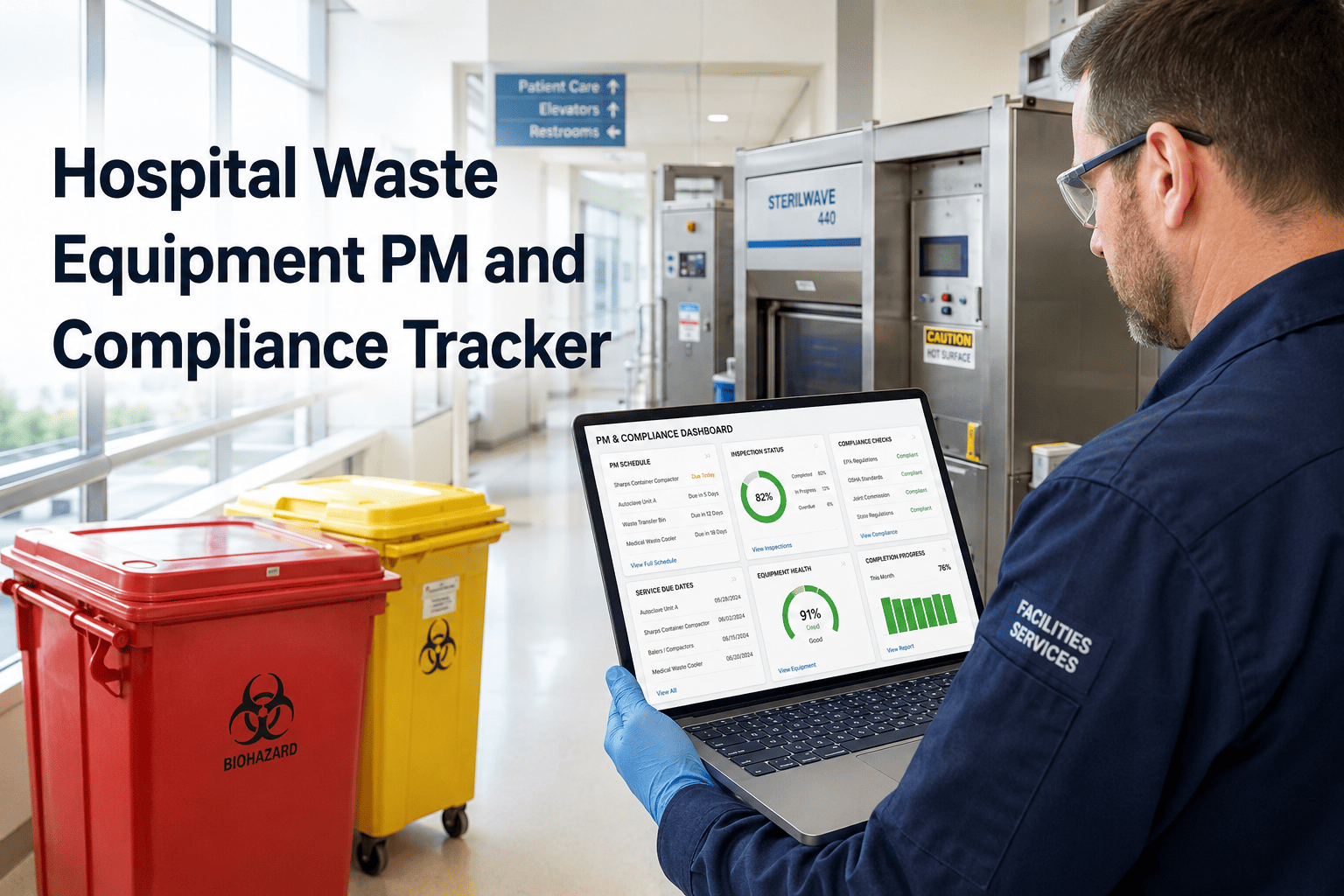
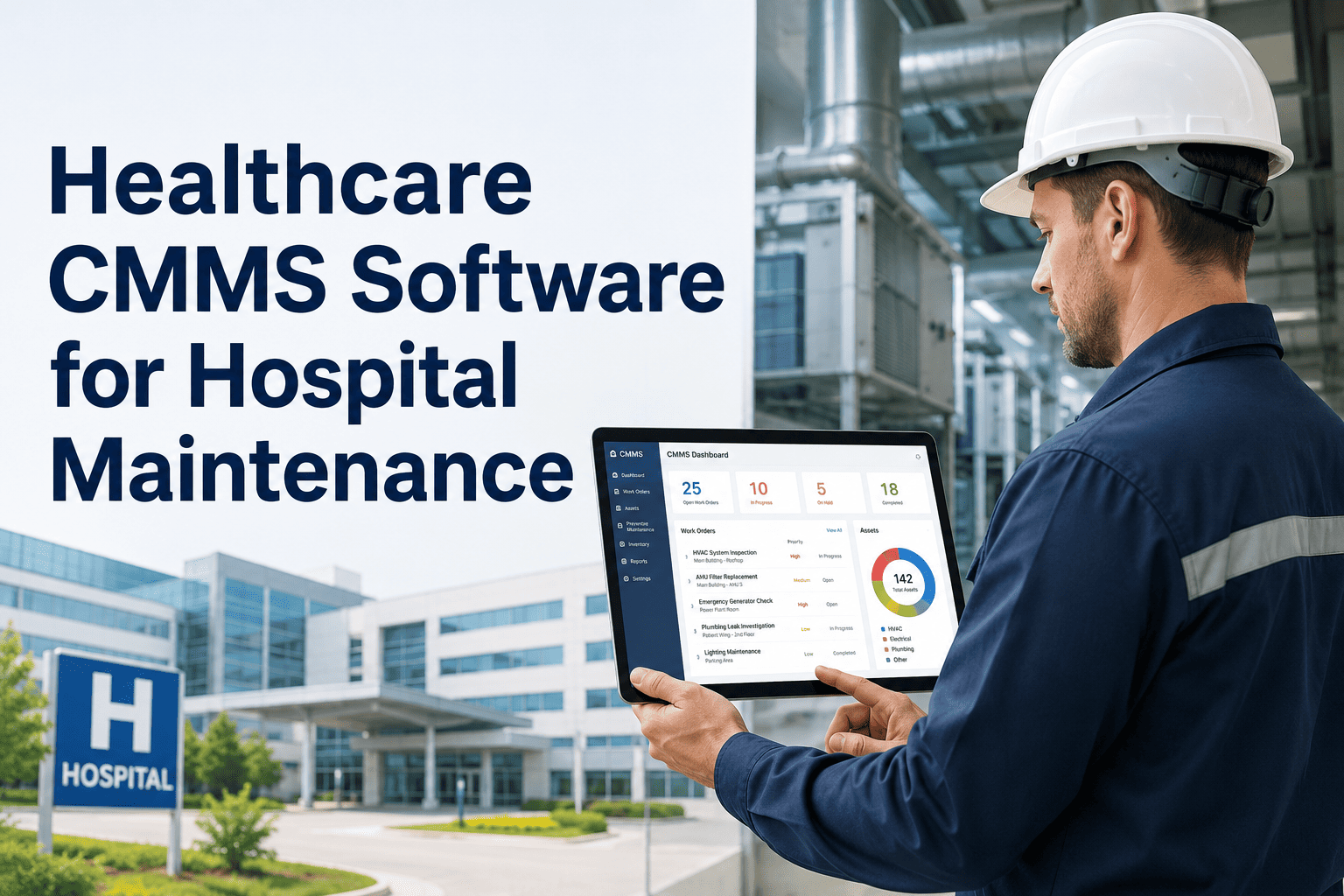
Hospital waste management is one of the most heavily regulated and liability-sensitive maintenance areas in healthcare facility operations. Compactors, autoclaves, sharps containers, pharmaceutical waste handlers, and regulated medical waste treatment units operate under overlapping inspection mandates from the Joint Commission, OSHA, and state environmental agencies — and a single undocumented equipment failure can trigger regulatory findings, patient safety events, and costly remediation. OxMaint gives hospital facilities teams a structured way to track preventive maintenance schedules, document service history, log inspection evidence, and generate compliance reports for every waste equipment asset across every building location — so your team is never caught unprepared before an audit or after an equipment failure creates an infection control incident.
Compactor Failures
Unscheduled compactor downtime creates waste accumulation, odor complaints, and pest risk in loading docks — often escalating to infection control team involvement.
Autoclave Non-Compliance
Missed spore test cycles or undocumented steam sterilization runs can trigger Joint Commission findings and RMW disposal violations under state environmental rules.
Missing Service Records
Paper-based equipment logs scattered across departments make it impossible to prove maintenance compliance during surprise inspections or insurance audits.
HOSPITAL COMPLIANCE CMMS
One Dashboard for Every Waste Equipment PM and Inspection Record
Track compactors, autoclaves, sharps units, and treatment equipment with OxMaint — location-aware, audit-ready, and accessible from any device.
Waste Equipment Asset Types OxMaint Tracks in Hospitals
C
Waste Compactors
PM: Monthly blade inspection, hydraulic fluid check, ram seal condition
Compliance: Vendor service log, weight ticket records, spill containment check
A
Steam Autoclaves
PM: Weekly spore test, daily Bowie-Dick test, annual pressure vessel inspection
Compliance: State DPH steam sterilizer registration, cycle log retention 5 years
S
Sharps Containers & Handlers
PM: Collection route schedule, container integrity check, overfill prevention audit
Compliance: OSHA Bloodborne Pathogen Standard 29 CFR 1910.1030 documentation
P
Pharmaceutical Waste Units
PM: Container labeling audit, segregation check, DEA-controlled substance log
Compliance: DEA 222 forms, state hazardous waste manifests, EPA RCRA records
R
RMW Treatment Equipment
PM: Temperature validation, cycle effectiveness check, filter replacement schedule
Compliance: State environmental agency treatment technology permits
L
Loading Dock Waste Areas
PM: Spill kit inventory, secondary containment integrity, pest exclusion inspection
Compliance: Infection control rounding documentation, environmental services logs
Recommended PM Frequencies by Equipment Type
| Equipment |
Daily |
Weekly |
Monthly |
Annual |
| Waste Compactor |
Visual leak check |
Ram cycle test |
Hydraulic & blade PM |
Full vendor service |
| Steam Autoclave |
Bowie-Dick test |
Spore test |
Drain strainer clean |
Pressure vessel cert. |
| Sharps Containers |
Fill level check |
Route collection |
Container audit |
Program review |
| Pharma Waste Unit |
Segregation check |
Label audit |
Manifest reconcile |
DEA audit prep |
| RMW Treater |
Temperature log |
Effectiveness test |
Filter change |
State permit renewal |
EXPERT REVIEW
Colleen Maguire, CHC, CHSP
Certified Healthcare Safety Professional — 18 Years Hospital Environment of Care
Joint Commission Environment of Care surveyors routinely cite hospitals for two waste management failures: missing PM records and undocumented corrective actions after equipment malfunctions. Both are preventable with a properly configured CMMS. The moment a compactor service call is closed without attaching the vendor report to the asset record, you've created a compliance gap you won't discover until a surveyor asks for it. Digital maintenance systems that enforce record attachment at work order close are the only reliable way to ensure your evidence exists when you need it.
Stop Managing Waste Equipment Compliance on Spreadsheets
OxMaint centralizes PM schedules, inspection records, and compliance documentation for every waste asset — by location, by building, by department.
Frequently Asked Questions
How does OxMaint track waste equipment compliance across multiple hospital buildings or campuses?
OxMaint organizes assets by location hierarchy — campus, building, floor, and room — so your waste compactors in the surgical pavilion and autoclaves in the sterile processing department are tracked separately with location-specific PM schedules. Compliance dashboards let facilities managers see overdue inspections or open corrective actions at any level of the location tree. Multi-campus health systems can roll up compliance status across all sites in a single
OxMaint dashboard view.
Can OxMaint generate the equipment maintenance records required for Joint Commission Environment of Care reviews?
Yes. OxMaint stores all PM completion records, technician sign-offs, vendor service reports, and corrective action histories against the equipment asset record. During Joint Commission preparation, facilities teams can export a complete maintenance history for any equipment asset showing all inspections, dates, responsible parties, and findings — exactly the format surveyors review during EC.02.05.01 tracer activities.
Book a demo to see the compliance report output.
How do we handle emergency corrective work orders when a waste compactor fails outside business hours?
OxMaint's mobile app lets any team member create an emergency work order from the field, with photos, asset location, and urgency level — immediately notifying the on-call facilities supervisor. The work order is tracked from creation through vendor dispatch to equipment return-to-service, creating a documented incident record showing response time and resolution. This response trail is valuable for root cause analysis and for demonstrating due diligence if an infection control incident is investigated.
Can OxMaint integrate with hospital vendor portals to capture third-party service reports automatically?
OxMaint supports vendor work order management where external service contractors receive work orders through the platform and upload completion reports, photos, and service records directly — which automatically attach to the asset record without any manual filing by your facilities team. This eliminates the common gap where vendor service happens but the report ends up in someone's email rather than the equipment's compliance file.