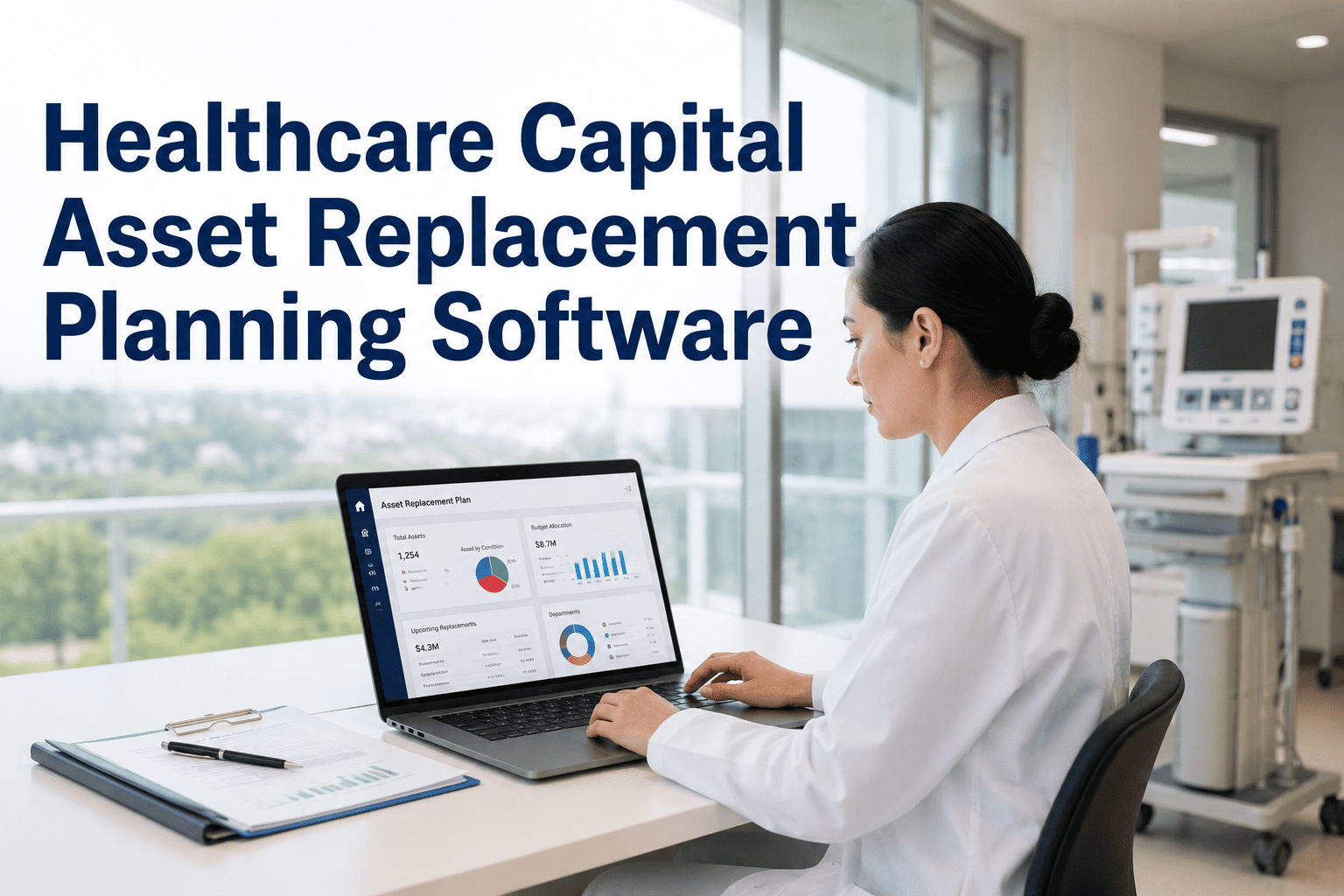
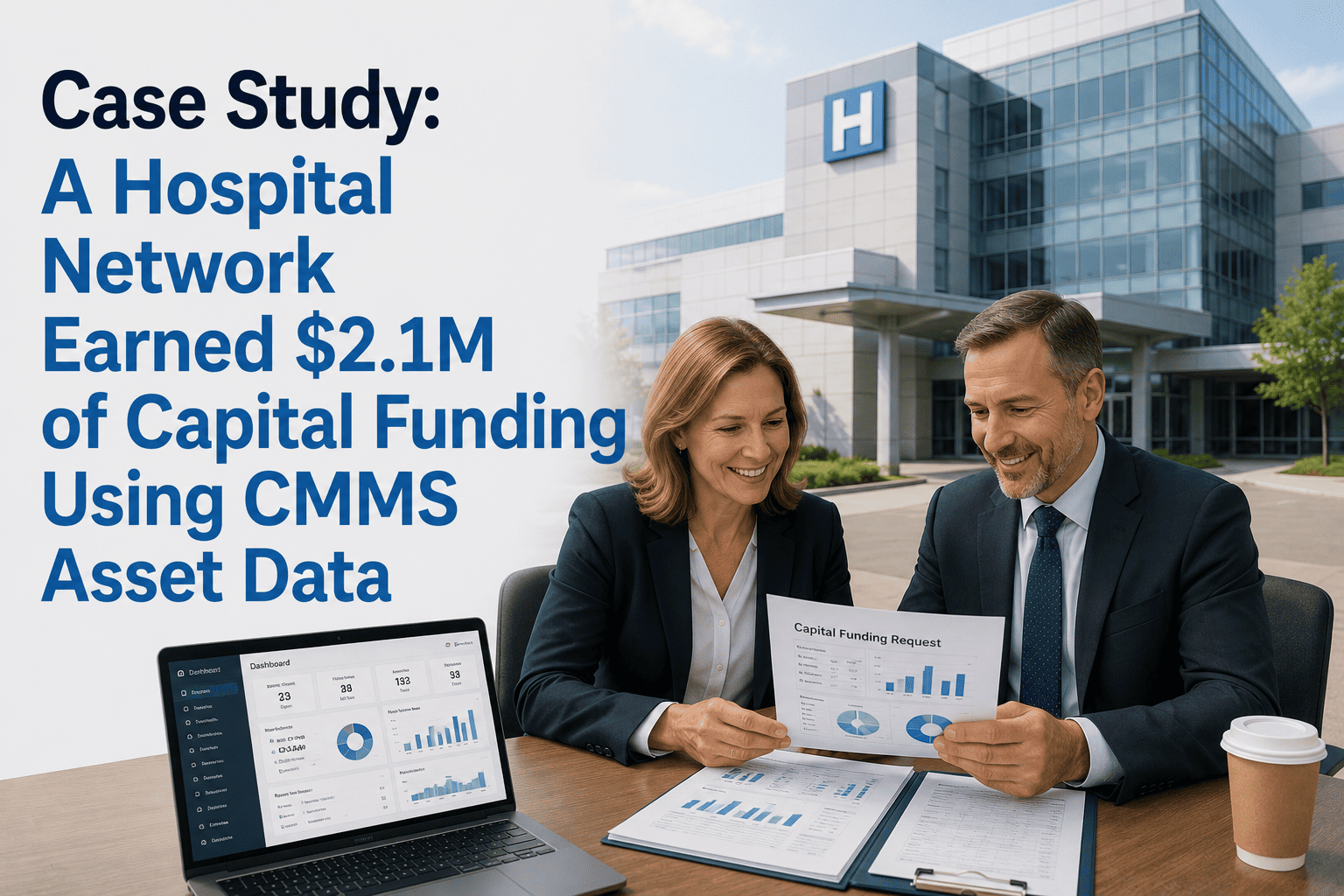
Hospital finance teams approve millions in capital expenditures every budget cycle based on the same unreliable inputs: equipment age, manufacturer estimates, and departmental lobbying. A 2025 ASHE Capital Planning Benchmark revealed that 67 percent of healthcare CFOs report limited or no visibility into actual maintenance cost history and real-time asset condition at the time annual capital budgets are assembled. That gap is where budget surprises originate — mid-year emergency replacements that destroyed the capital plan, assets swapped out years early because nobody tracked total cost of ownership, or critical infrastructure deferred too long because condition data was never captured. A modern CMMS transforms that dynamic completely. When every work order, parts cost, labor hour, downtime event, and inspection result is systematically captured against each asset record, your maintenance database becomes a capital planning engine — one that quantifies total cost of ownership, flags assets approaching replacement thresholds, and generates rolling multi-year CapEx forecasts grounded in real performance data, not vendor projections. For hospital CFOs and finance directors ready to replace budget guesswork with asset intelligence, start a free 30-day trial with Oxmaint to explore CapEx forecasting tools built specifically for healthcare portfolios, or book a capital planning demo with our healthcare finance team and walk through a live 5-year CapEx forecast generated from real asset maintenance data in under five minutes.
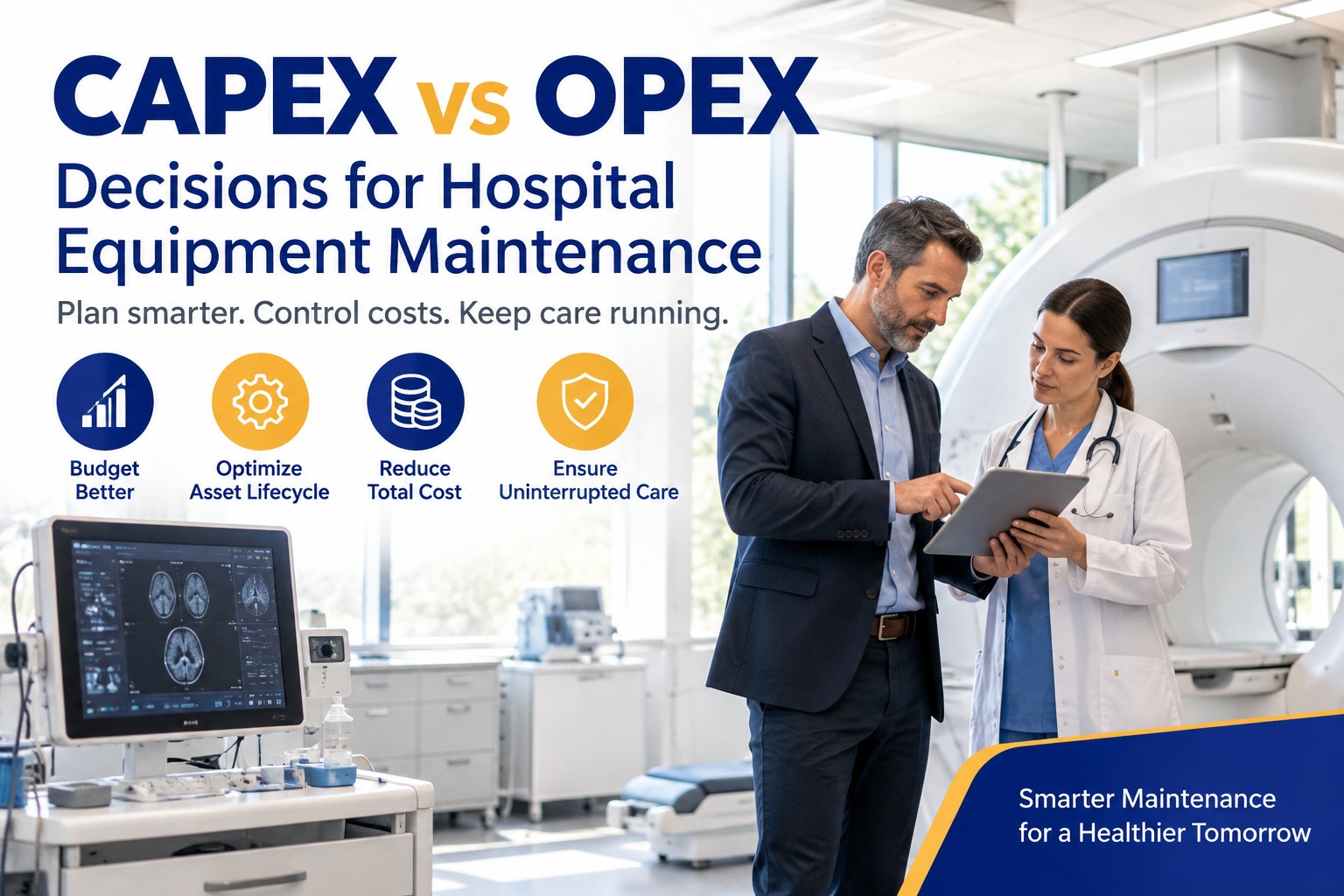
Healthcare Resource Planning: Data-Driven CapEx Decisions Using CMMS
67% of hospital CFOs lack equipment condition data at budget time. The result: $4.8x more expensive unplanned replacements, mid-year CapEx overruns, and capital wasted on assets that still had years of useful life. CMMS data closes that gap permanently.
Turn Your Maintenance Records Into a 5-Year Capital Investment Plan
Oxmaint connects every work order cost, downtime incident, and asset condition score to your capital planning cycle — generating defensible CapEx forecasts that finance teams and boards can trust. No more budget surprises. No more emergency replacements that blow the capital plan. Start seeing your assets the way your balance sheet needs to.
What Is CMMS-Driven Healthcare CapEx Planning?
Healthcare resource planning is the process of aligning capital expenditure decisions with the real operational lifecycle of medical and facility assets. Traditionally, hospitals have budgeted CapEx using two inputs: equipment age and manufacturer-recommended replacement schedules. Both are proxies. Neither reflects actual condition. An MRI unit that has been well-maintained for 12 years may have four years of productive life remaining. A ventilator fleet showing three years of age may be generating repair costs that already exceed its replacement value. Without systematic maintenance cost data, finance teams cannot see the difference — and both end up in the same capital plan.
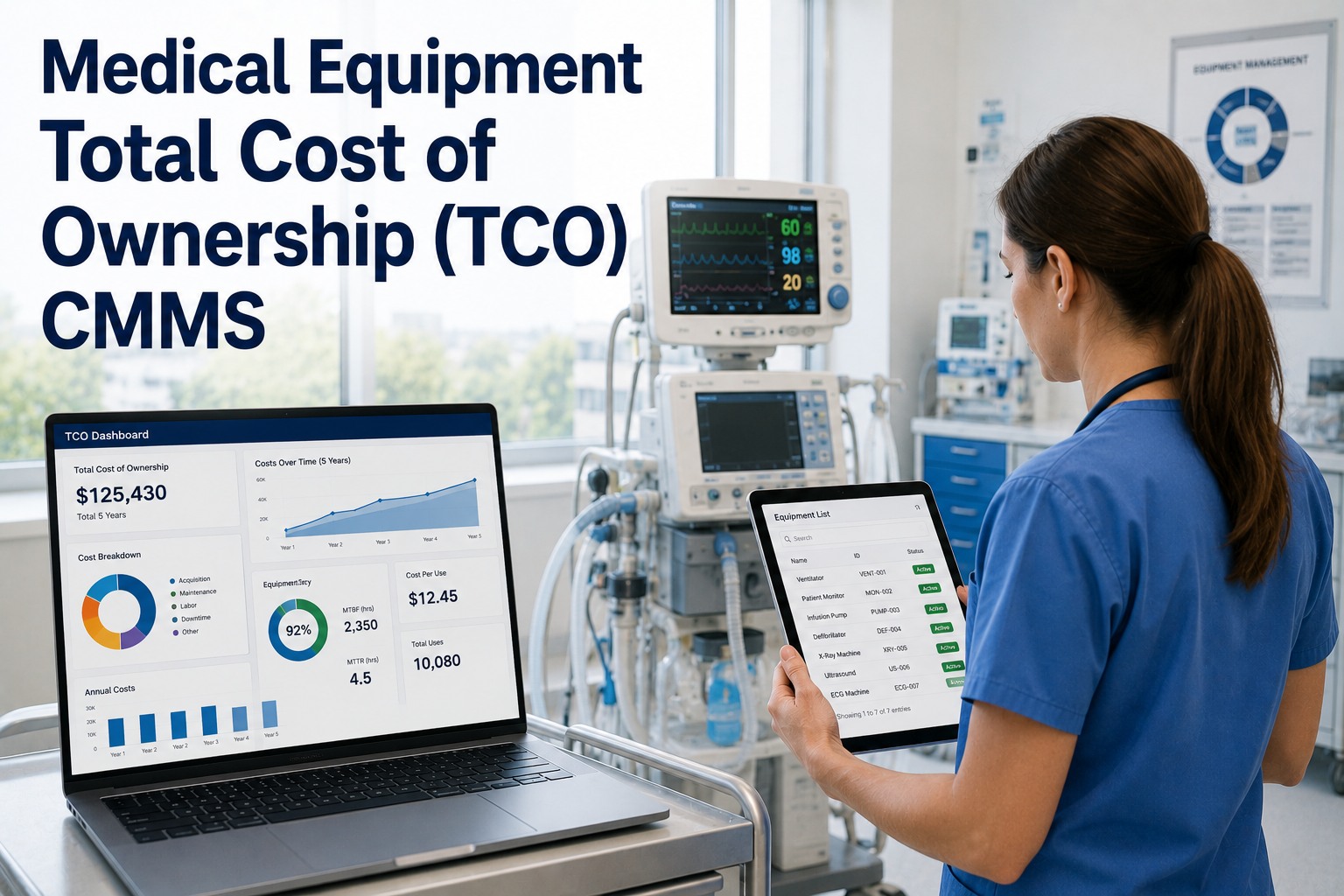
CMMS-driven CapEx planning replaces proxies with evidence. When a CMMS captures every service event, repair cost, parts expense, and condition inspection against each asset record, it builds a total cost of ownership profile over time. That profile — cost per operating hour, repair-to-replacement value ratio, downtime frequency trend — gives finance teams the data to make repair-versus-replace decisions objectively, prioritize capital investments by actual ROI, and forecast 5-10 year CapEx requirements with a level of accuracy that proxy-based methods cannot approach. Want to see this in practice? Start a free 30-day trial with Oxmaint and explore rolling CapEx forecasting tools built for healthcare, or book a live capital planning demo and see a multi-year asset investment forecast built from real maintenance data.
6 Core Pillars of Data-Driven Healthcare CapEx Planning
A CMMS-backed capital planning program is built on six interconnected data disciplines. Together, they transform maintenance records into a financial planning instrument that finance directors, asset managers, and board-level stakeholders can act on with confidence.
4 Capital Planning Failures Costing Hospitals Millions Every Year
These are not edge cases. They are the standard operating conditions for the majority of hospital finance teams working without structured CMMS-backed asset data — and every one of them is preventable.
How Oxmaint Transforms Maintenance Data Into CapEx Intelligence
Oxmaint connects every maintenance activity to your capital planning framework — building the asset intelligence that finance teams need to make defensible, data-backed investment decisions. Ready to see it working in your facility? Start a free 30-day trial today or book a CapEx planning demo with our healthcare team and walk through a real multi-year capital forecast built from live maintenance data.
Ad-Hoc CapEx Planning vs CMMS-Driven Capital Intelligence
The performance gap between reactive and data-driven capital planning is measurable — in forecast accuracy, budget overrun frequency, and total annual spend. This comparison reflects aggregate industry benchmarks from ASHE, IFMA, and independent healthcare CMMS studies.
| Planning Activity | Ad-Hoc / Age-Based Planning | Oxmaint CMMS-Driven Planning |
|---|---|---|
| CapEx Decision Basis | Equipment age and vendor recommendation | Total cost of ownership + condition score |
| Forecast Horizon | 1 year, assembled at budget time | Rolling 5-10 years, updated continuously |
| Repair-vs-Replace Decisions | Departmental pressure and intuition | Automated threshold analysis per asset |
| Emergency Replacement Rate | 15-25% of annual capital events are unplanned | Under 5% with condition-based forecasting |
| Multi-Site Capital Visibility | Isolated per facility, no consolidated view | Portfolio-level dashboard, all sites unified |
| Budget Accuracy | 40-60% overspend on emergency events | 22% average CapEx overspend reduction |
| Board Reporting Quality | Narrative estimates, difficult to defend | Data-backed forecasts with full audit trail |
| Lifecycle Extension Capability | No systematic mechanism to identify | Condition data identifies 2-3 yr extensions |
The ROI of CMMS-Driven Healthcare Capital Planning
These figures reflect documented outcomes from healthcare facilities that replaced age-based capital planning with CMMS-backed asset intelligence — sourced from ASHE benchmarks, IFMA healthcare studies, and independent CMMS performance analyses across USA, UK, and Australian healthcare systems.
Frequently Asked Questions
How does CMMS data specifically improve hospital CapEx planning accuracy?
CMMS data improves CapEx accuracy through three mechanisms. First, it replaces age estimates with actual total cost of ownership data — showing finance teams exactly how much each asset has consumed in repair spend relative to its replacement value, rather than relying on manufacturer lifecycle projections that don't account for actual operating conditions. Second, it enables trend-based forecasting: by tracking whether an asset's annual maintenance cost is rising 8%, 15%, or 30% year-over-year, the system can project when repair costs will cross replacement thresholds with actuarial precision. Third, it systematically identifies lifecycle extension opportunities — assets that are aging but performing well, where deferring replacement 2-3 years frees capital for higher-priority investments. Together, these three mechanisms consistently produce 3-year forecast accuracy improvements of 30-40 percent over age-based methods. Want to see what CMMS-driven CapEx forecasting looks like in a live healthcare environment? Start a free 30-day trial with Oxmaint or book a capital planning demo and walk through a live asset TCO analysis built from real maintenance data.
What is the correct repair-vs-replace threshold for healthcare equipment?
The standard repair-versus-replace threshold in healthcare asset management is when cumulative annual maintenance cost reaches 40-50 percent of current equipment replacement value. At that crossover point, continued repair spend statistically delivers lower financial outcomes than capital replacement on a 5-year net present value basis — factoring in avoided downtime, improved reliability, and warranty coverage of new equipment. However, the threshold is not universal. High-criticality equipment (operating room systems, life-safety infrastructure) often warrants replacement at lower thresholds — typically 25-35 percent — because downtime costs and patient safety risk premium dramatically alter the NPV calculation. Oxmaint's repair-versus-replace module allows finance teams to configure thresholds by asset category and criticality level, automatically flagging assets for capital review when they cross their specific threshold — rather than applying a single blanket rule across the full portfolio.
How quickly can a hospital finance team start using Oxmaint for CapEx planning?
Most hospital facilities and finance teams are actively using Oxmaint's CapEx forecasting module within 5-10 business days of onboarding. The implementation sequence is straightforward: import your asset inventory with purchase dates and replacement cost benchmarks, configure asset categories and criticality levels, set repair-versus-replace thresholds by category, and import historical maintenance cost data from prior spreadsheets or legacy systems. The platform begins building TCO profiles and condition scores immediately as maintenance activity is logged. Unlike enterprise CMMS implementations that require months of consultant-led configuration and six-figure setup fees, Oxmaint is built for rapid deployment — no extended onboarding contracts, no heavy implementation overhead. Finance teams can generate their first rolling CapEx forecast within the first two weeks, and refine accuracy as more historical data is migrated and current-period maintenance records accumulate.
Can Oxmaint support CapEx planning across a multi-hospital health system?
Oxmaint is purpose-built for multi-site healthcare portfolios. Health systems managing multiple hospitals, surgery centers, and outpatient facilities operate from a single platform — with a portfolio-level CapEx dashboard showing condition scores, repair cost trends, replacement forecasts, and investment prioritization rankings across every site simultaneously. System-level CFOs and capital planning directors can drill from portfolio view to individual asset records without switching platforms or consolidating separate reports. For board and investment committee reporting, the platform generates consolidated CapEx packages covering all facilities — showing aggregate 5-10 year capital requirements, site-level priorities, and total portfolio CapEx exposure in standardized formats that can be submitted directly to finance committees without manual compilation. Health systems currently managing capital planning across fragmented spreadsheets, legacy software, and per-facility processes consistently report this consolidated visibility as the highest-impact change in their first year with Oxmaint.
Stop Budgeting on Estimates. Start Planning on Asset Intelligence.
Oxmaint gives healthcare finance teams the maintenance data infrastructure they need to make capital investment decisions with confidence — total cost of ownership analysis, repair-versus-replace modeling, and rolling 5-10 year CapEx forecasts built from real asset performance data. No more mid-year emergency replacements. No more capital wasted on assets with years of useful life remaining. No more board presentations built on estimates.
Trusted by Facility Managers, Finance Directors, and Capital Planning Teams across the USA, Canada, UK, Australia, UAE, and Germany. Built for multi-site healthcare portfolios with full CapEx forecasting, asset lifecycle tracking, and investor-grade capital reporting included from day one.