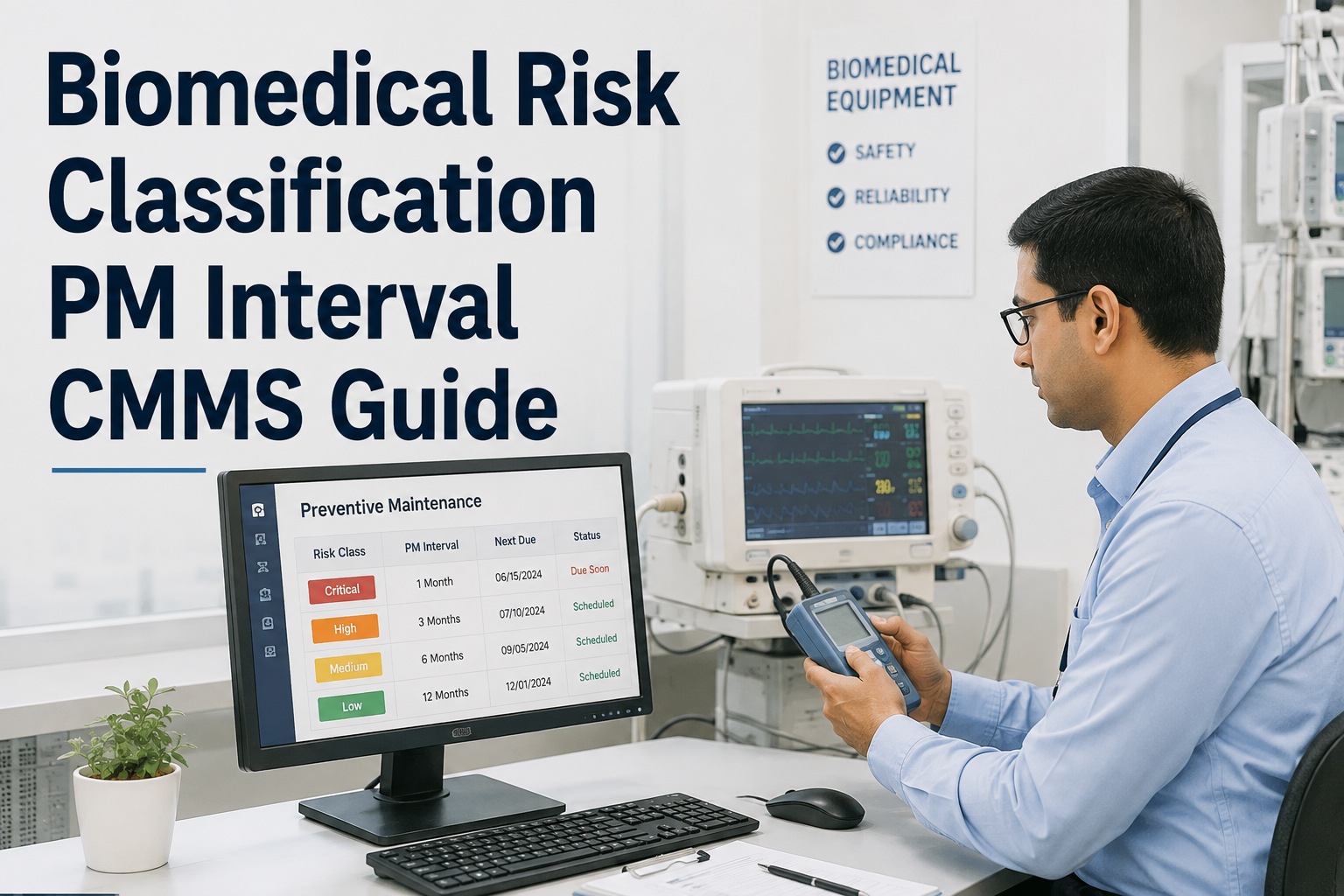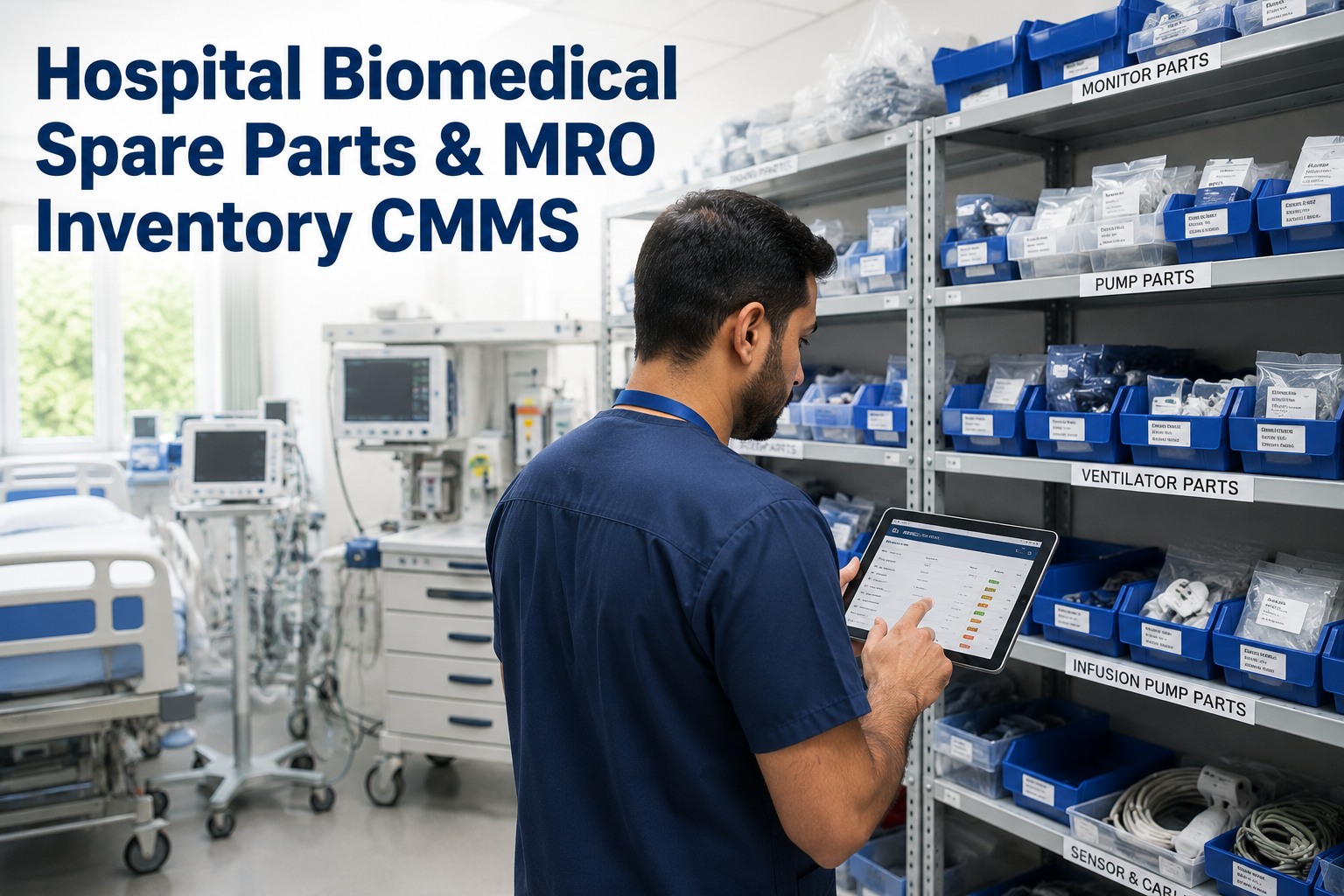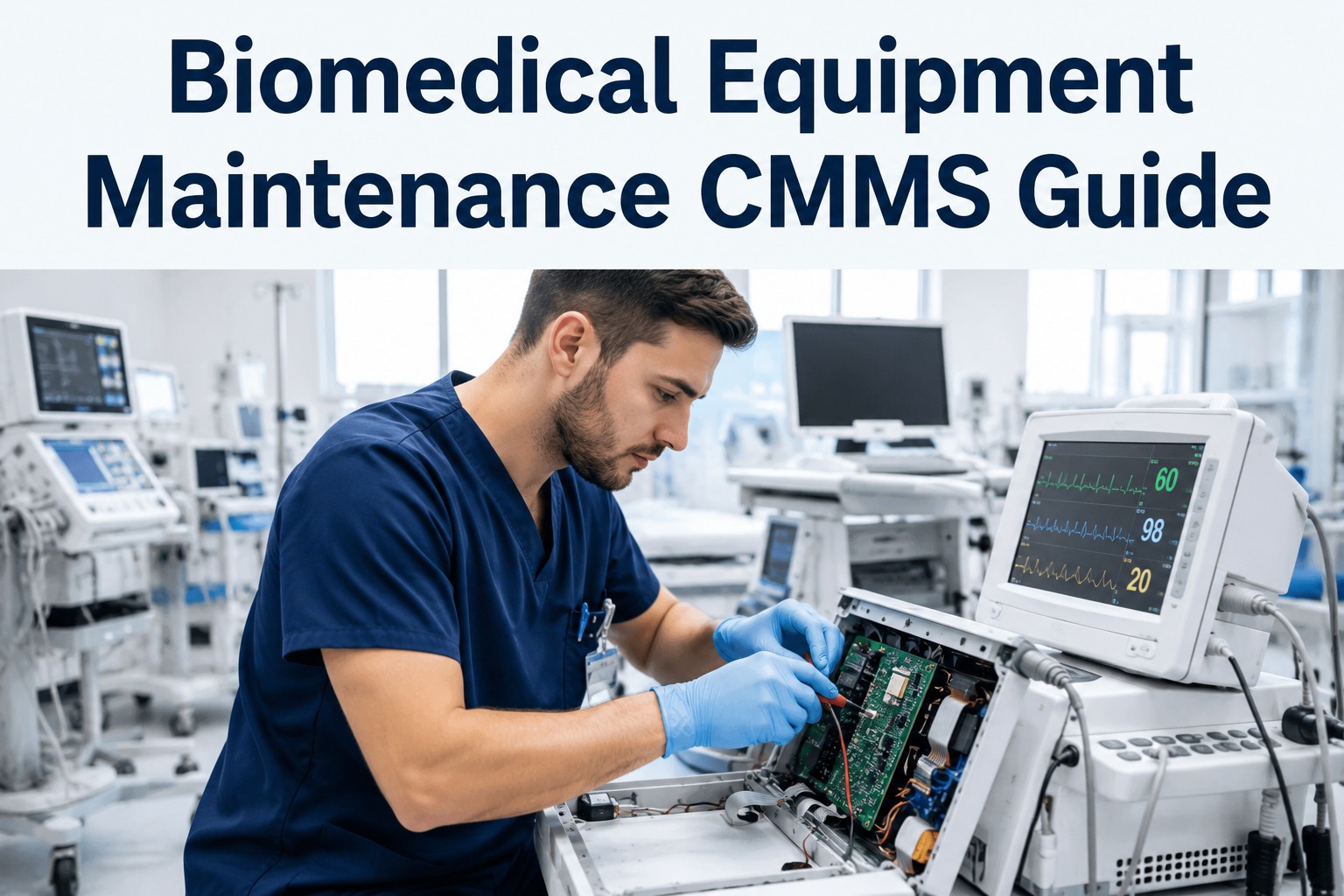
There is a sentence in the accreditation guidance that reorganizes how a clinical engineering department should think about its entire PM programme: if you are not following every maintenance activity and every PM frequency in the manufacturer's service manual, then by definition that device is on an alternative equipment maintenance programme — whether you have identified it as one or not. There is no third category. A hospital either maintains a device exactly to manufacturer specification, or it runs a formally documented, risk-assessed AEM programme for it. And both branches demand a 100% completion rate. That is the fork every biomedical equipment maintenance decision passes through, and it is where most Environment of Care citations originate: PM intervals that quietly differ from the manufacturer's, with no written criteria, no risk assessment, and no qualified individual's determination behind them. The average hospital manages more than 35,000 medical devices across roughly 500 equipment categories, each needing a defensible interval and a retrievable service history. This guide covers how to build that programme — risk classification, AEM eligibility, and CMMS-based clinical engineering. Start a free Oxmaint trial and configure risk-classified PM intervals per device category, or book a demo to see AEM evidence reports generated from real maintenance data.
Healthcare · Clinical Engineering · Biomed CMMS
Biomedical Equipment Maintenance CMMS Guide
Risk-classified PM intervals, manufacturer specification compliance, and CMMS-based clinical engineering — how biomed departments build a defensible maintenance programme that survives a Joint Commission survey and a CMS inspection.
-
100%
PM completion required — OEM interval or written AEM alike
-
35,000+
devices in an average hospital across ~500 categories
-
68% → 95%
on-time PM completion lift with automated scheduling
-
25–30%
PM workload reduction on AEM-eligible devices
There Is No Third Option
Manufacturer Spec, or a Documented AEM
Every device on the inventory sits on one of two branches. What makes this dangerous is that a department can end up on the right-hand branch by accident — by simply running a PM interval that differs from the service manual — without any of the documentation that branch requires.
- Manufacturer Specification AEM Programme
- Follow every activity and frequency in the service manual Intervals set from your own performance data
- No written justification needed Written criteria, risk assessment, qualified individual's determination
- Applies to all high-risk equipment by default Only for eligible, non-high-risk devices
- 100% completion rate required 100% completion rate required — strict adherence to your own schedule
Without the structure of an AEM, alternatives to manufacturer maintenance are simply not defensible — the flexibility comes from the programme, not from the deviation. Book a demo to see AEM enrollment tracked at device-type and model level.
Risk Decides the Branch
High-Risk Equipment Never Leaves the Manual
The Joint Commission says "high-risk," CMS says "critical," and the definitions are identical: equipment for which there is a risk of serious injury or death to a patient or staff member should it fail. That classification is the gate. It decides which devices can even be considered for an alternative interval.
-
High-Risk / Life Support
Ventilators, defibrillators, anesthesia machines, bypass machines, infusion pumps. Highest priority classification, immediate supervisor escalation when overdue, and manufacturer intervals by default unless a formal AEM determination exists. -
Non-High-Risk, AEM Eligible
Devices whose failure does not risk serious injury or death, with sufficient maintenance history to justify an interval derived from actual performance data. This is where the 25–30% PM workload reduction lives. -
Excluded From AEM Entirely
Four categories cannot go on an AEM: equipment where law or Conditions of Participation mandate manufacturer adherence; imaging and radiologic devices; medical laser devices; and new equipment without sufficient maintenance history.
Risk scores should be assigned on function, physical risk, and maintenance history — and the CMMS must differentiate AEM eligibility set at device-type level from eligibility set at model level. Sign up for Oxmaint to risk-classify the full device inventory.
Where Surveys Actually Fail
The Citations Are Documentation, Not Maintenance
Surveyors rarely find that the work was not done. They find that it cannot be proven — and under EC.02.04.03, lack of documentation equals non-compliance regardless of whether testing occurred. These are the recurring gaps.
| Gap | What Triggers It | Fix |
|---|---|---|
| Undocumented interval deviation | PM differs from OEM with no written AEM criteria | Formal AEM with risk assessment |
| Records not retrievable | History cannot be produced within ~20 minutes | Central digital inventory |
| No pre-use verification | New or post-repair device placed into service | Documented safety & functional test |
| Missing competency records | Technician or vendor qualifications unproven | Training records on file |
| Silent missed PM | Technician pulled to an emergency, no escalation | Automatic overdue escalation |
A 400-bed hospital took two days to compile ICU ventilator PM records for an unannounced CMS survey; the resulting Condition-level deficiency and corrective action cost over $340,000. Book a demo to see any device's full history retrieved in seconds.
The Evidence Has to Exist Before They Ask
An AEM Programme Is Only as Good as the Data Defending It
The reason AEM programmes fail inspection is not that the intervals were wrong. It is that the facility could not produce the evidence that they were right. An AEM requires the risk assessment and written criteria up front — but it also requires ongoing proof: PM completion rate, failure rate, and performance data per device category, demonstrating that the alternative interval is working as intended and that device performance supports it. That evidence cannot be assembled retroactively from paper work orders and spreadsheets. It has to accumulate as a by-product of every PM closed, every failure logged, and every device tracked. When it does, the AEM programme evidence report is generated from real maintenance data rather than reconstructed under survey pressure — and the 25–30% workload reduction on eligible devices is defensible instead of risky.
Oxmaint for Clinical Engineering
How Oxmaint Runs Biomedical Maintenance
-
Dual Interval Logic
OEM and AEM, Side by Side
Schedule PM by manufacturer recommendation, regulatory interval, or the facility's AEM programme parameters simultaneously — calendar-based, usage-based, or condition-triggered, per device class.
-
AEM Evidence
The Report Writes Itself
PM completion rate, failure rate, and performance data per device category accumulate automatically — producing the programme evidence report that shows risk-based intervals are working when the AEM is inspected.
-
Risk Priority
Life Support Escalates First
Ventilators, defibrillators, and infusion pumps carry the highest priority classification with immediate supervisor escalation when a PM goes overdue — a missed PM is never silent.
-
Exclusion Guardrails
Ineligible Devices Blocked
Keep lasers, imaging and radiologic devices, CoP-governed equipment, and new devices without maintenance history off the AEM inventory — with eligibility distinguished at device-type and model level.
-
Mobile Biomed
Signed at the Bedside
Technicians close work orders from the point of service with barcode and QR device identification and photo documentation per step — ending the shift spent transcribing paper and calling nursing stations to find equipment.
-
Survey Ready
Any Device, Any Date Range
Timestamped, technician-signed records with audit trails and role-based access, retrievable in seconds for any device and any inspection — the audit trail generated as a by-product of normal work.
Frequently Asked
Biomedical Maintenance Questions
When is a device considered to be on an AEM programme?
The moment you stop following every maintenance activity and every PM frequency in the manufacturer's service manual. By definition that device is on an alternative equipment maintenance programme — whether it has been identified as one or not. That is why undocumented interval deviation is such a common citation: the department did not think it was running an AEM, so none of the required written criteria, risk assessment, or qualified-individual determination exists to defend it. Sign up for Oxmaint to identify AEM enrollment explicitly.
What equipment cannot go on an AEM programme?
Four categories. Equipment for which other federal or state law, or the Conditions of Participation, requires adherence to manufacturer recommendations or sets specific requirements. Imaging and radiologic devices, which must be maintained per manufacturer recommendations. Medical laser devices, governed by the FDA. And new equipment without sufficient maintenance history to support an alternative interval — a guard against a facility adopting a lower maintenance standard the moment a project is commissioned. High-risk equipment defaults to manufacturer intervals absent a formal determination.
Does an AEM reduce the required PM completion rate?
No. It changes the interval, not the obligation. All planned maintenance activities on medical equipment must be completed and completed on time, whether the frequency comes from the manufacturer's recommendation or from the organization's AEM programme. CMS interprets "strict adherence" to mean completing 100% of the activities at the frequency the organization itself identified. The benefit of an AEM is flexibility in setting the interval, not permission to miss it. Book a demo to see 100% completion held on both branches.
Why isn't a general-purpose CMMS enough for biomed?
Because clinical engineering compliance depends on things a generic platform does not model: clinical risk classification, AEM enrollment identified at device-type versus model level, exclusion of ineligible device classes, FDA recall tracking against the inventory, electrical safety test logs, and completion-rate reporting that surveyors accept. A hospital also needs any device's full service history retrievable within minutes rather than days — the gap that turns a routine survey request into a Condition-level deficiency. Sign up for Oxmaint to use clinical-grade CMMS features.
Classify · Justify · Complete · Prove
Every Interval Needs a Reason and a Record
Every PM interval that quietly differs from the service manual, every device history buried in a filing cabinet, and every missed PM that nobody escalated is an accidental AEM with no defence behind it. Oxmaint gives clinical engineering one platform to risk-classify the inventory, run manufacturer and AEM intervals side by side, block ineligible devices from AEM, escalate overdue life-support PMs immediately, and generate the programme evidence a Joint Commission or CMS surveyor asks for — from the maintenance data the department already produces.