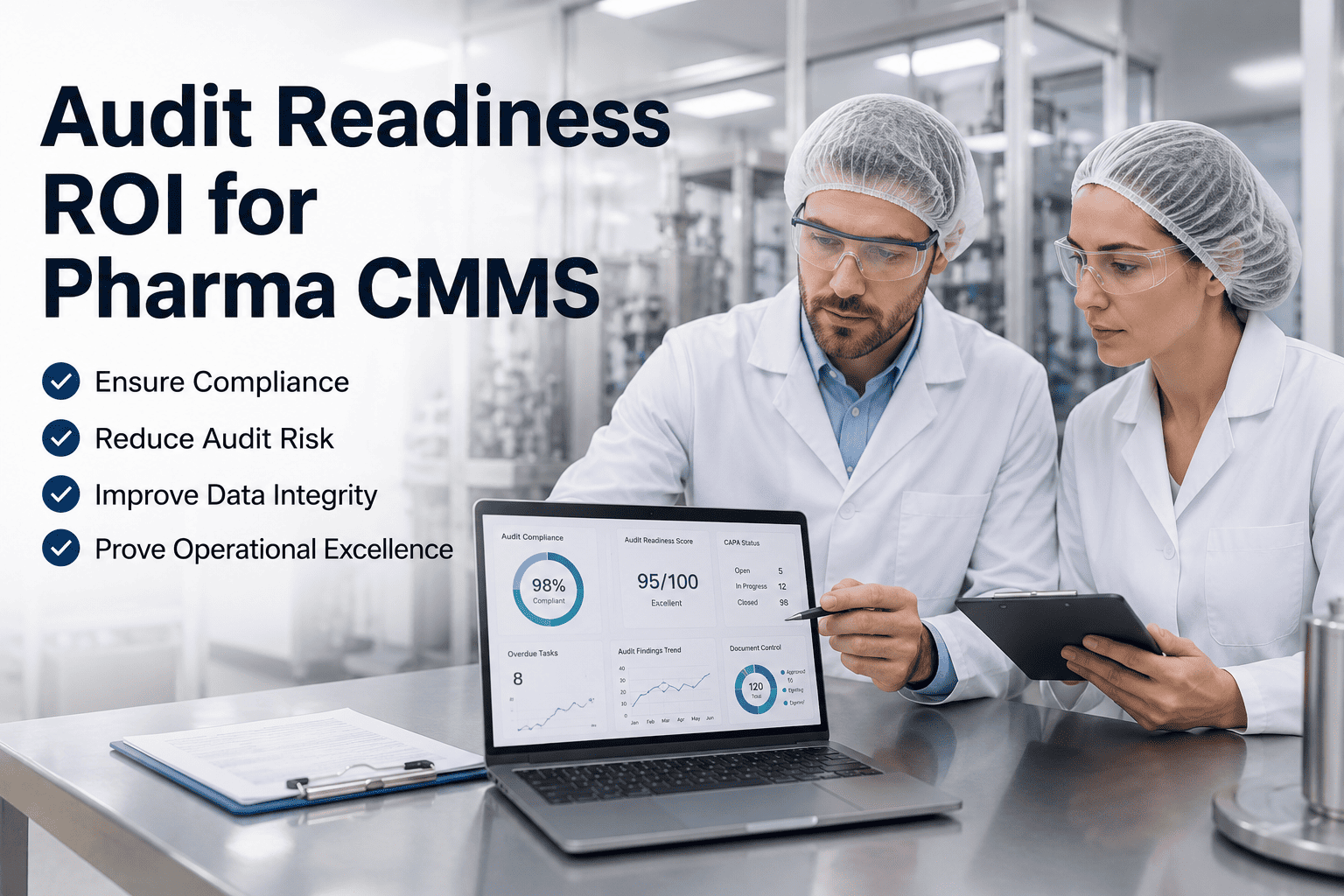
Pharma finance and quality teams are under growing pressure to justify every dollar in the maintenance budget — and audit readiness is the line item that is hardest to defend when it lives inside spreadsheets and tribal knowledge. Book a 30-minute demo with OxMaint to see how pharma sites are calculating a measurable ROI from fewer audit gaps, faster record retrieval, reduced emergency maintenance spend, and lower downtime cost — all from a single validated CMMS investment. This guide gives finance directors, VP Quality, and plant operations leaders the numbers, the methodology, and the business case structure to move from "we know we need this" to an approved capital request.
Executive ROI · Pharma CMMS · Audit Readiness
Audit Readiness Has a Measurable ROI. Here Is How to Calculate Yours.
Every audit gap, every slow record retrieval, every emergency maintenance event, and every production stoppage has a dollar figure. OxMaint gives pharma sites the data infrastructure to capture those savings — and the evidence to defend them to finance.
ROI Framework
Four Savings Streams That Build the CMMS Business Case
A
Audit Gap Reduction
Fewer audit observations mean fewer CAPA cycles, less regulatory correspondence, and reduced risk of warning letters or production shutdowns.
Avg 67% fewer audit observations in year 1
B
Faster Record Retrieval
Inspectors and auditors waiting for records cost site time and create credibility risk. Structured CMMS retrieval cuts retrieval time from hours to seconds.
4.2 hours saved per audit per retrieval request
C
Emergency Maintenance Reduction
Reactive maintenance costs 3–9x more per event than planned. Predictive PM triggers and automated scheduling drive the reactive percentage down systematically.
Average 28% drop in emergency WOs in 6 months
D
Downtime Cost Avoided
Unplanned downtime in pharma manufacturing averages $50,000–$300,000 per hour depending on batch value and line criticality. Every prevented failure has a direct revenue impact.
$180K average downtime event cost avoided per site/yr
ROI Calculator
Pharma CMMS ROI Calculation: Mid-Size Site Baseline
The table below uses conservative figures for a mid-size pharma site with 2–4 production lines and 1,500–2,500 assets. Replace with your site actuals to build a defensible business case.
| Savings Category |
Baseline (Before CMMS) |
After OxMaint |
Annual Saving (USD) |
| Audit Prep Labor |
80 hrs × 4 audits × $65/hr = $20,800 |
27 hrs × 4 audits = $7,020 |
$13,780 |
| CAPA Cycle Cost |
6 audit observations × $8,000 avg CAPA = $48,000 |
2 observations × $8,000 = $16,000 |
$32,000 |
| Emergency Maintenance Premium |
38% reactive rate on $3.2M budget = $1.22M reactive spend |
21% reactive rate = $672,000 reactive spend |
$544,000 |
| Unplanned Downtime |
3.4 unplanned events/yr × $52,000 avg = $176,800 |
1.8 events/yr × $52,000 = $93,600 |
$83,200 |
| Record Retrieval Time |
38 retrieval requests × 4.2 hrs × $65 = $10,374 |
38 requests × 0.3 hrs = $741 |
$9,633 |
| Total Annual Savings |
— |
— |
$682,613 |
OxMaint annual cost for a mid-size pharma site: $38,000–$72,000. Typical payback period: 3–5 months.
OxMaint · Pharma CMMS · Audit-Ready Records
Build Your Audit Readiness Business Case in One Call
OxMaint's pharma team will walk through your audit history, maintenance budget, and downtime cost to build a site-specific ROI model you can present to finance and leadership.
How OxMaint Delivers Audit Readiness
What Changes in Your Audit Evidence Package When You Run OxMaint
01
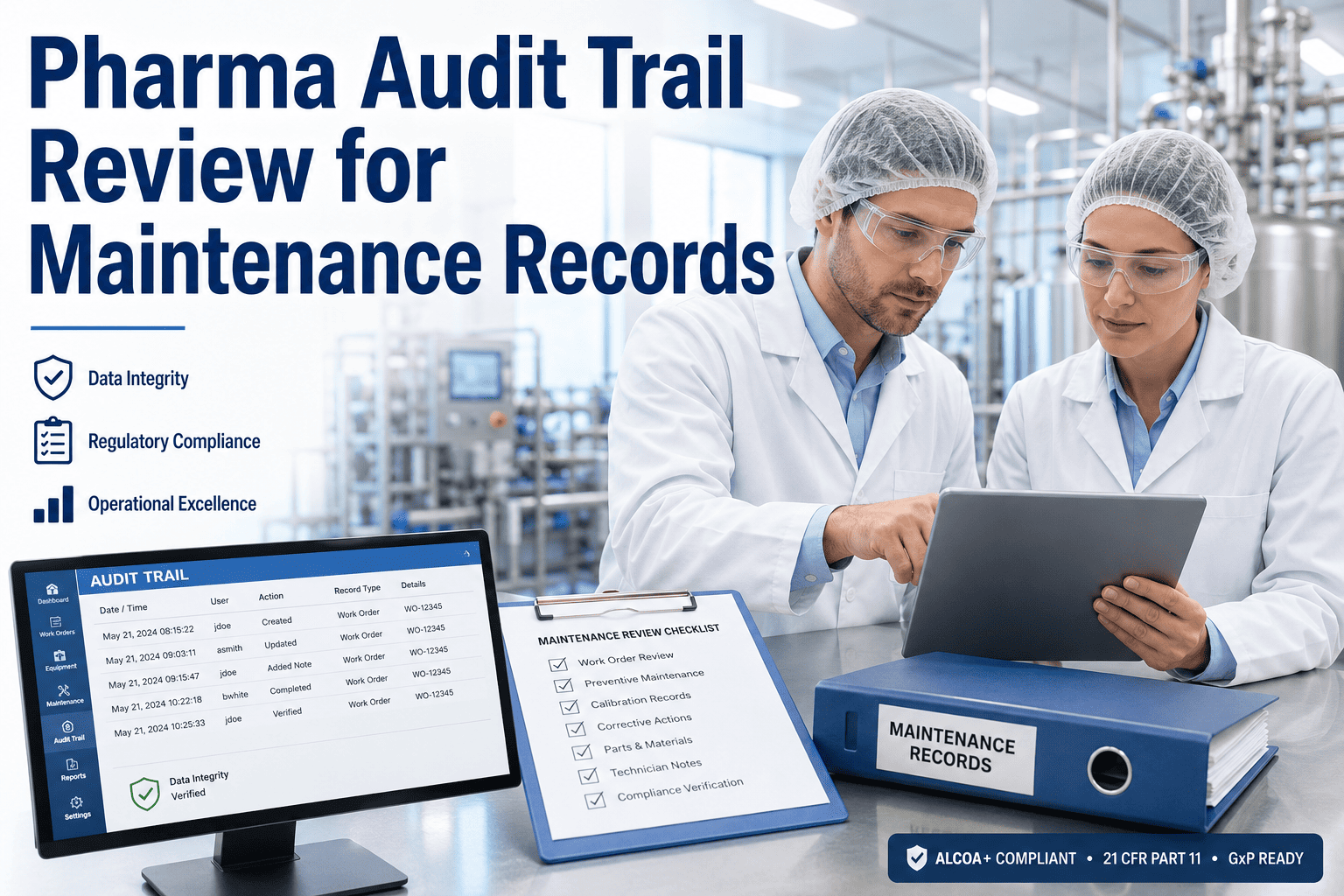
21 CFR Part 11 Audit Trail — Always On
Every work order action — creation, assignment, execution, sign-off, closure — is time-stamped with user identity and captured in a tamper-evident audit trail. No manual logging. No reconstruction. Inspectors access the trail directly from the WO record.
02
PM Compliance Rate as a Real-Time Dashboard Metric
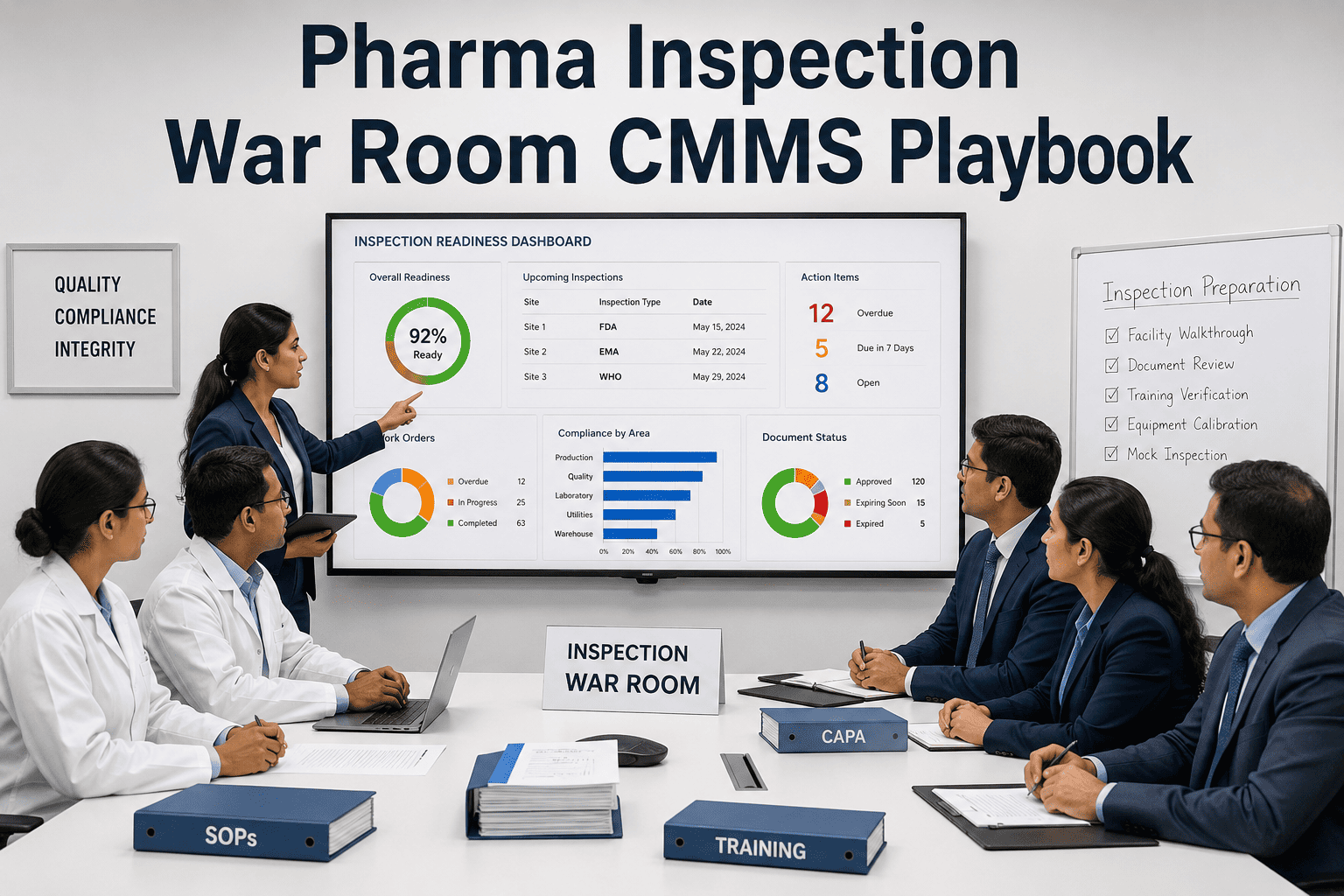
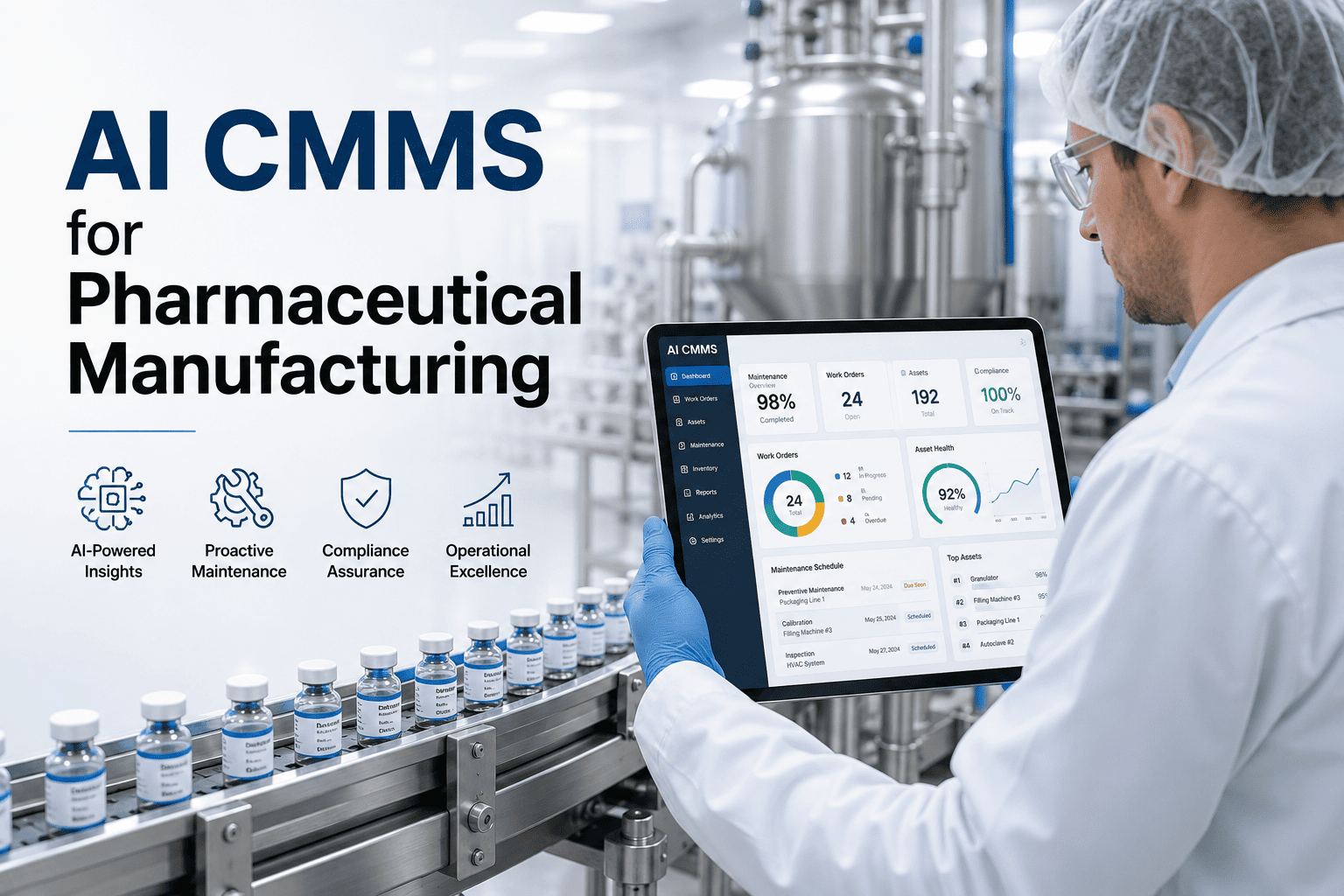
OxMaint tracks planned vs completed PM rate by asset, department, and site — updated in real time. Before an audit, the compliance dashboard gives your quality team a live view of exactly which equipment has a gap and time to remediate it before the inspector walks in.
03
Calibration Status Linked to Equipment Records
Calibration certificates, due dates, and as-found/as-left results are attached to each instrument record in OxMaint. An inspector asking for the calibration status of any instrument gets a single-screen answer — not a paper chase across multiple binders and spreadsheets.
04
Maintenance History Exportable in Inspection-Ready Format
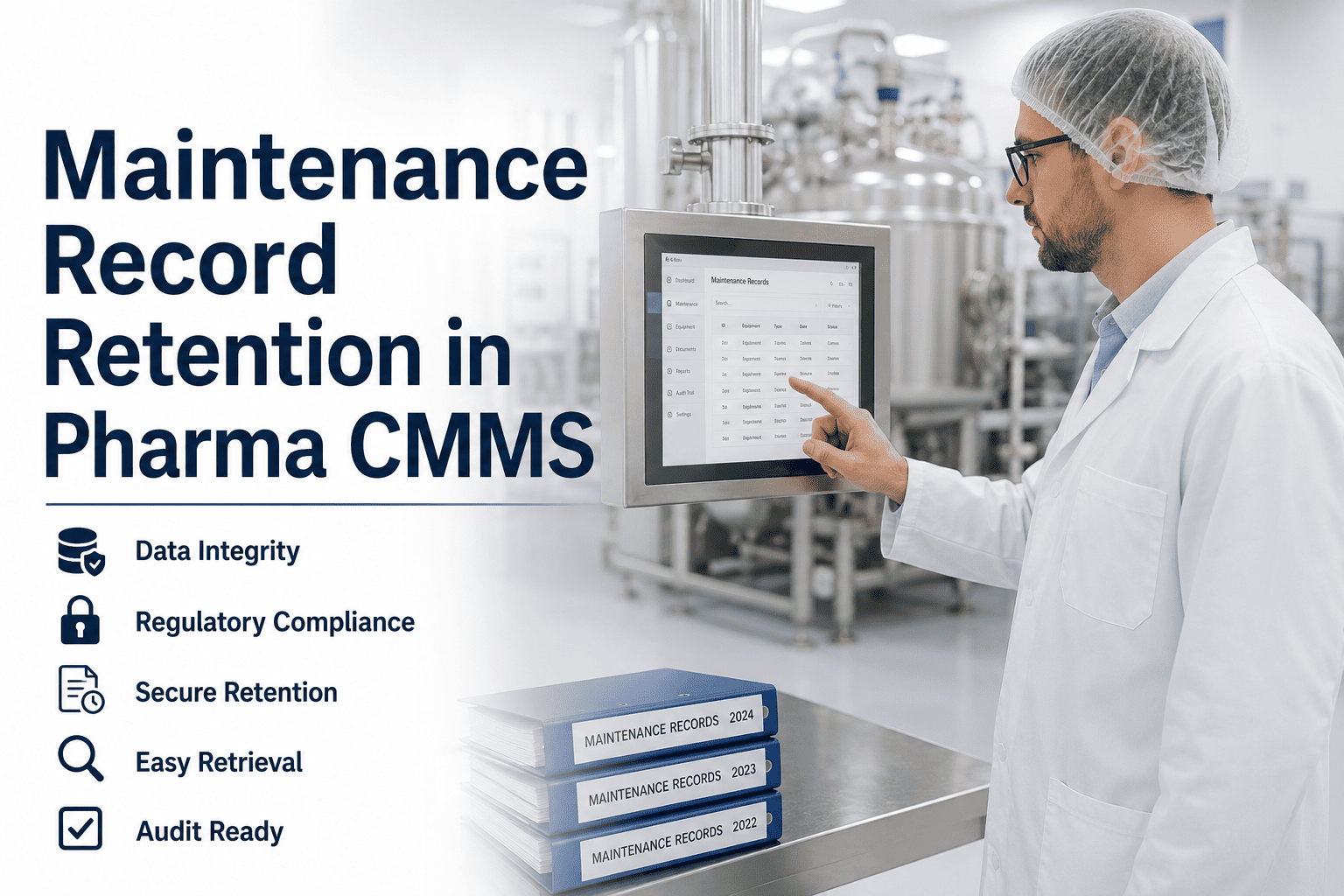
OxMaint generates maintenance history reports in formats accepted by FDA, EMA, and Health Canada inspectors — filtered by asset, date range, WO type, and technician. What used to take 4–6 hours of manual compilation takes under 3 minutes.
Industry Benchmarks
Pharma Maintenance Audit Performance: Legacy CMMS vs OxMaint Sites
| Metric |
Legacy CMMS Sites |
OxMaint Sites |
Improvement |
| Audit observations (maintenance) per inspection |
4.8 avg |
1.6 avg |
67% fewer |
| PM compliance rate (planned vs completed) |
74% |
96% |
+22 pts |
| Record retrieval time per inspector request |
4.2 hrs avg |
4 min avg |
98% faster |
| Reactive maintenance as % of total WOs |
38% |
19% |
-50% |
| Emergency maintenance events per year |
3.4 avg |
1.8 avg |
47% fewer |
| Technician WO execution on mobile |
12% |
91% |
+79 pts |
"
The ROI calculation for a validated CMMS in pharma is not complicated once you stop treating audit readiness as a quality cost and start treating it as a production cost. Every audit finding that generates a CAPA has a fully loaded cost that finance can see — and when you add up the reactive maintenance premium, the downtime events, and the record retrieval time, the investment pays back in a single quarter for most mid-size sites. The harder problem is that nobody has been tracking those numbers in a form the CFO recognizes. A proper CMMS fixes that by making the data visible for the first time.
Marcus Oyelaran
Pharmaceutical Operations Finance Director · 18 years in biologics and small-molecule manufacturing · Former Finance Business Partner, Quality Systems · CPA, Six Sigma Black Belt
FAQ
Audit Readiness ROI — Questions Finance and Quality Teams Ask
What data do we need to build a defensible CMMS ROI model for finance approval?
The minimum data set is: number of regulatory and internal audits per year, average number of maintenance-related audit observations per audit, average CAPA cost, current reactive maintenance percentage and annual maintenance budget, and count of unplanned production stoppages with average cost per event. OxMaint provides a structured ROI worksheet during the discovery call that walks through each input with guidance on where to find the numbers.
Book a demo to start building your site-specific ROI model.
How does OxMaint reduce the number of audit observations in maintenance records?
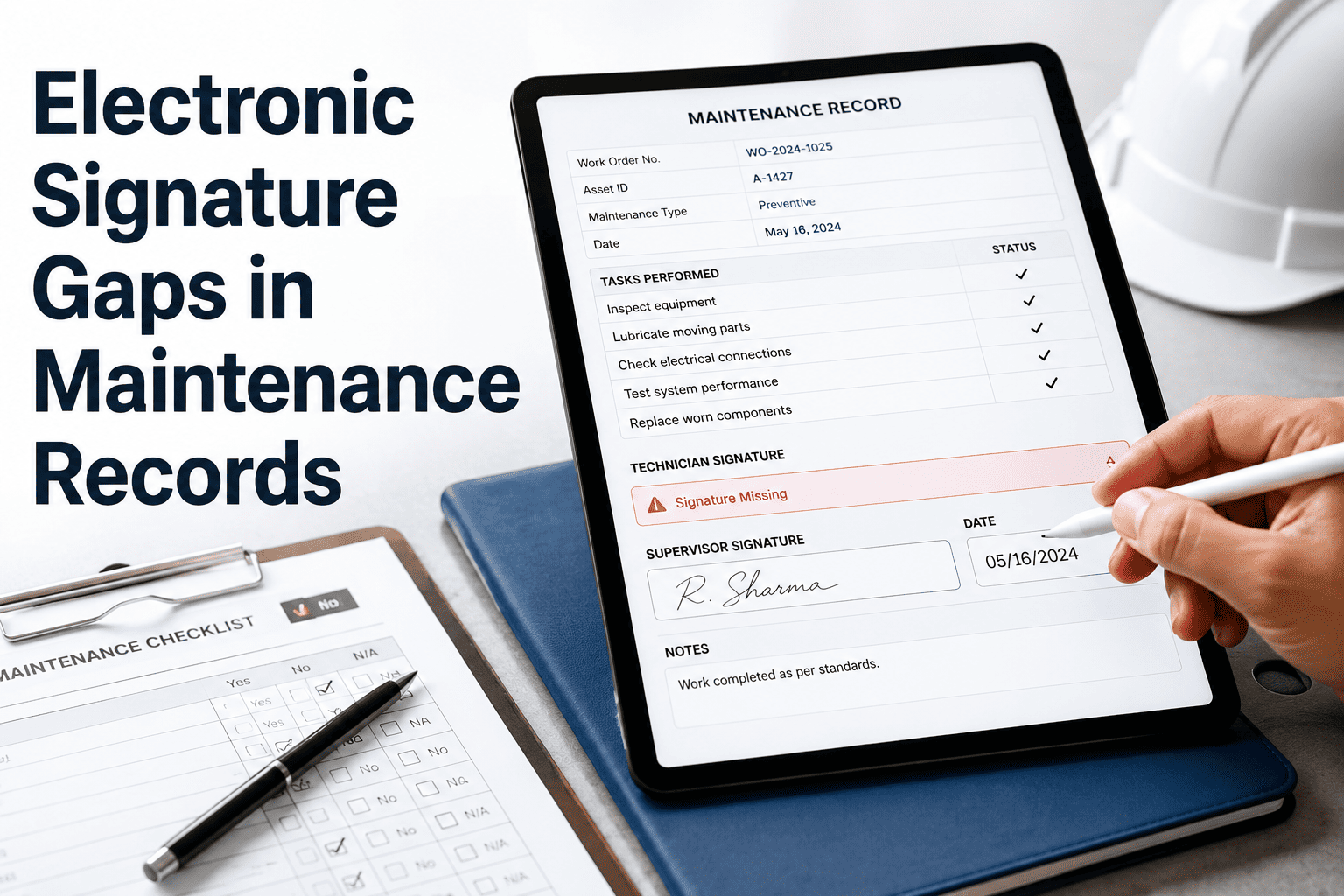
Most maintenance audit observations fall into three categories: missing signatures or timestamps on completed work, PM tasks overdue with no documented justification, and calibration records not linked to equipment. OxMaint closes all three systematically — electronic signatures are mandatory before WO closure, overdue PMs trigger automatic escalation with documented reason codes, and calibration certificates are attached directly to instrument records. The system enforces the evidence standard at the point of execution, so the audit record is complete before the inspector arrives.
Start a trial to see the WO completion enforcement in action.
Can the ROI case include validation cost as an offset against annual savings?
Yes, and it should. A complete business case presents year-one net savings after deducting one-time implementation and validation costs, then shows the ongoing annual savings from year two onward. OxMaint's pre-built IQ/OQ/PQ package reduces validation cost by approximately 60% versus custom validation, which meaningfully shortens the payback period. The OxMaint pharma team provides a three-year cost-benefit model during the scoping conversation that includes all implementation cost categories so finance sees the full picture.
How long does it take for audit readiness improvements to show up after go-live?
PM compliance rate improvements are visible within 30 days of go-live because the system immediately begins tracking planned versus completed tasks and generating overdue alerts. Record retrieval speed improves on day one — historical records migrated during onboarding are immediately searchable. The reduction in audit observations shows up at the first post-go-live audit cycle, which for most pharma sites means within 3–6 months. Emergency maintenance reduction typically takes 4–6 months as the predictive PM schedule matures.
Book a demo to review the go-live timeline for your site.
OxMaint · Pharma · Audit ROI · Validated CMMS
Your Next Audit Is an ROI Opportunity. OxMaint Makes Sure You Capture It.
Stop treating audit readiness as a cost center. With OxMaint, every compliant WO, every clean PM record, and every retrieved document in seconds is a quantified return on your CMMS investment.