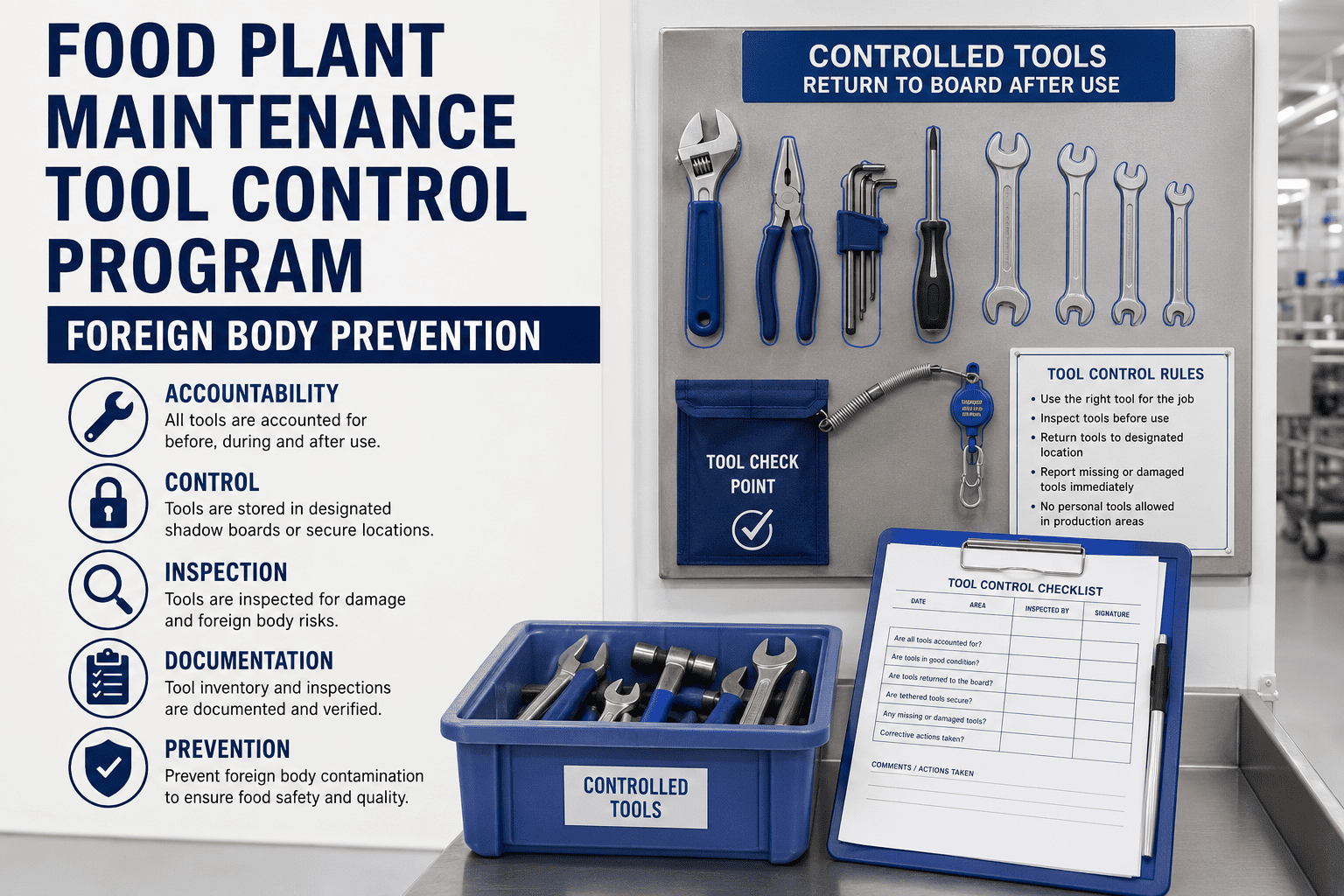
A food plant maintenance tool control program is the structured process for tracking every tool, fastener, and small part that enters a production area during repair work — and confirming all of it leaves again before the line restarts. It's one of the simplest controls to implement and one of the most common gaps auditors and recall investigators find, since a single missing washer near open product is enough to trigger a foreign-body event.
See how digital tool check-in/check-out closes the foreign-body gap — in a 30-minute walkthrough.
Trusted by teams managing 10,000+ assets · Live in days, not months.
What Is a Food Plant Maintenance Tool Control Program?
A food plant maintenance tool control program is a documented system for counting tools and small parts in and out of food-contact and open-product areas during maintenance work, preventing foreign-body contamination from lost or forgotten items. It typically combines tool inventories, shadow boards, and sign-off logs tied to each work order.
BRCGS, SQF, and most major food safety standards expect some form of this control wherever maintenance work occurs near exposed product, making it a core part of broader safety and compliance programs rather than an optional add-on.
A single tool unaccounted for after a repair is one of the most cited root causes in foreign-body contamination investigations.
Core Elements of a Tool Control Program
How a Tool Control Workflow Runs Step by Step
QR scan opens the job and pulls the required tool checklist automatically.
Each tool taken from the shadow board is logged against the technician and work order.
Work proceeds with the full tool list visible and tracked in the open work order.
Every item is confirmed returned before the work order can be marked complete.
Only a fully reconciled checklist allows hygiene clearance and equipment restart.
Manual paper-based tool counts are frequently incomplete under time pressure, which is exactly when contamination risk is highest.
Common Gaps in Manual Tool Control Programs
Paper sign-out sheets get lost, skipped under time pressure, or filled in retroactively, defeating their purpose.
Without system-level controls, equipment can be restarted before tool counts are actually verified.
Tool logs kept separately from maintenance records make audits and investigations slower and less reliable.
When a foreign-body event happens, tracing it to a specific tool, technician, or job becomes guesswork.
A digital tool control workflow closes these gaps automatically — start a free trial to see it running on your work orders.
How OxMaint Supports Tool Control
Work order management ties tool checklists directly to each job, scanned in and out by technicians.
Parts and inventory tracking extends to small tools, flagging anything not returned before closeout.
Inspection management enforces hygiene clearance and tool reconciliation before restart approval.
Analytics and reporting surface tool-loss trends across technicians, shifts, and lines for proactive correction.
Manual Tracking vs Digital Tool Control
| Control Point | Manual / Paper Tracking | OxMaint Digital Tracking |
|---|---|---|
| Tool check-out record | Handwritten, easily skipped | Logged automatically per work order |
| Missing-item detection | Relies on technician memory | System flags before restart is allowed |
| Link to work order | Separate log, often disconnected | Built into the same digital record |
| Audit trail for investigations | Manual reconstruction | Full history available instantly |
| Trend visibility across shifts | Not typically tracked | Reported automatically |
Outcomes from Digital Tool Control Programs
Frequently Asked Questions
What is a tool control program in a food manufacturing plant?
It's a documented process for tracking tools and small parts in and out of food-contact areas during maintenance, ensuring nothing is left behind that could contaminate product.
Why is tool control important for foreign-body prevention?
Lost tools, fasteners, or small parts near open product are a leading cause of physical contamination events and recalls, making tool accountability a core food safety control.
What should a tool control checklist include?
A tool inventory with unique IDs, a check-out/check-in log tied to each work order, missing-item escalation procedures, and periodic full inventory audits.
Can a CMMS automate tool control for maintenance teams?
Yes. A CMMS with QR-scanned work orders can log tool check-out and check-in automatically, flag missing items before equipment restart, and maintain a full audit trail per job.
Stop Leaving Foreign-Body Risk to Memory
Every tool not tracked back is a contamination event waiting to be discovered. OxMaint makes tool accountability an automatic part of every work order, not a separate manual process.
Trusted by teams managing 10,000+ assets · Live in days, not months.


