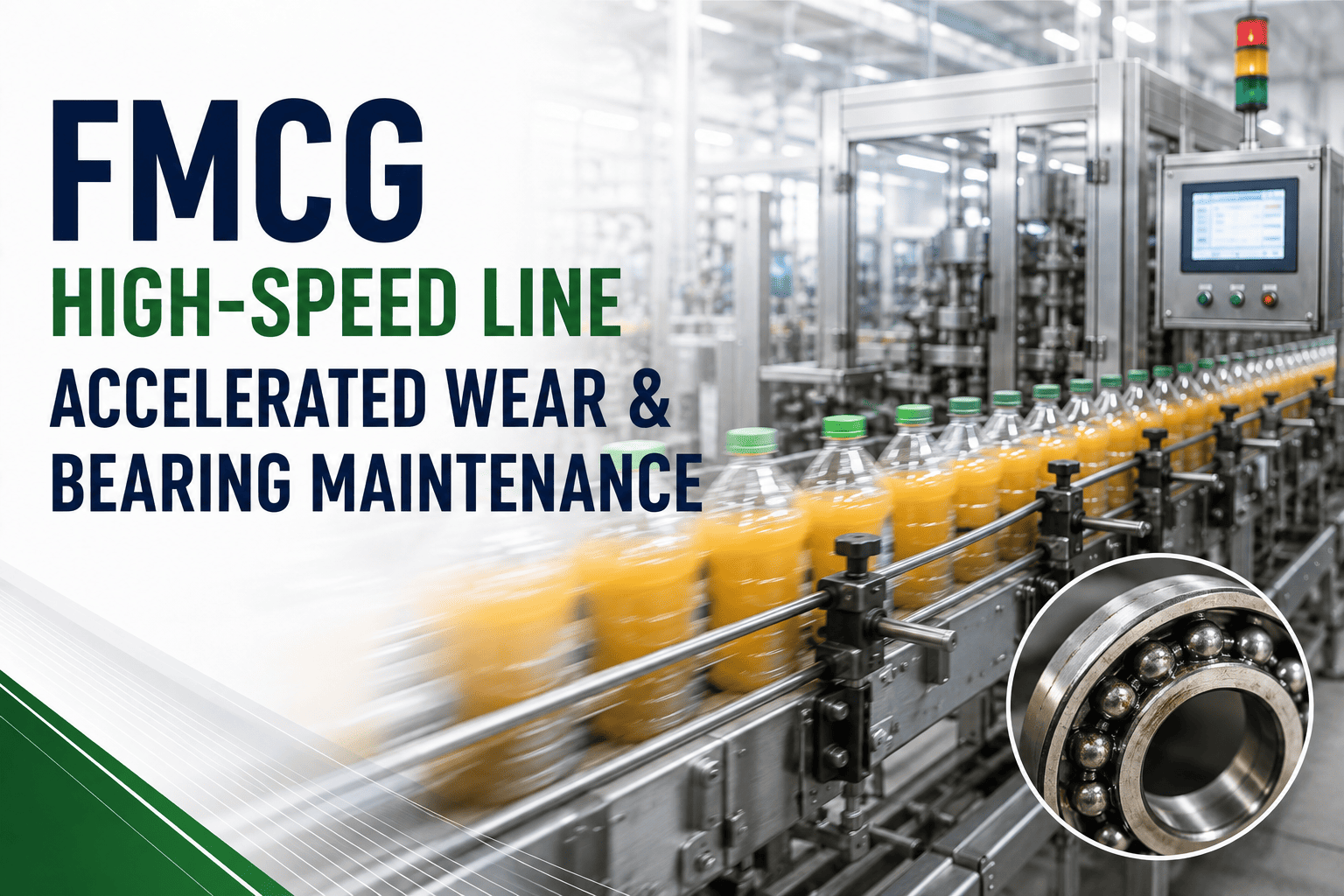
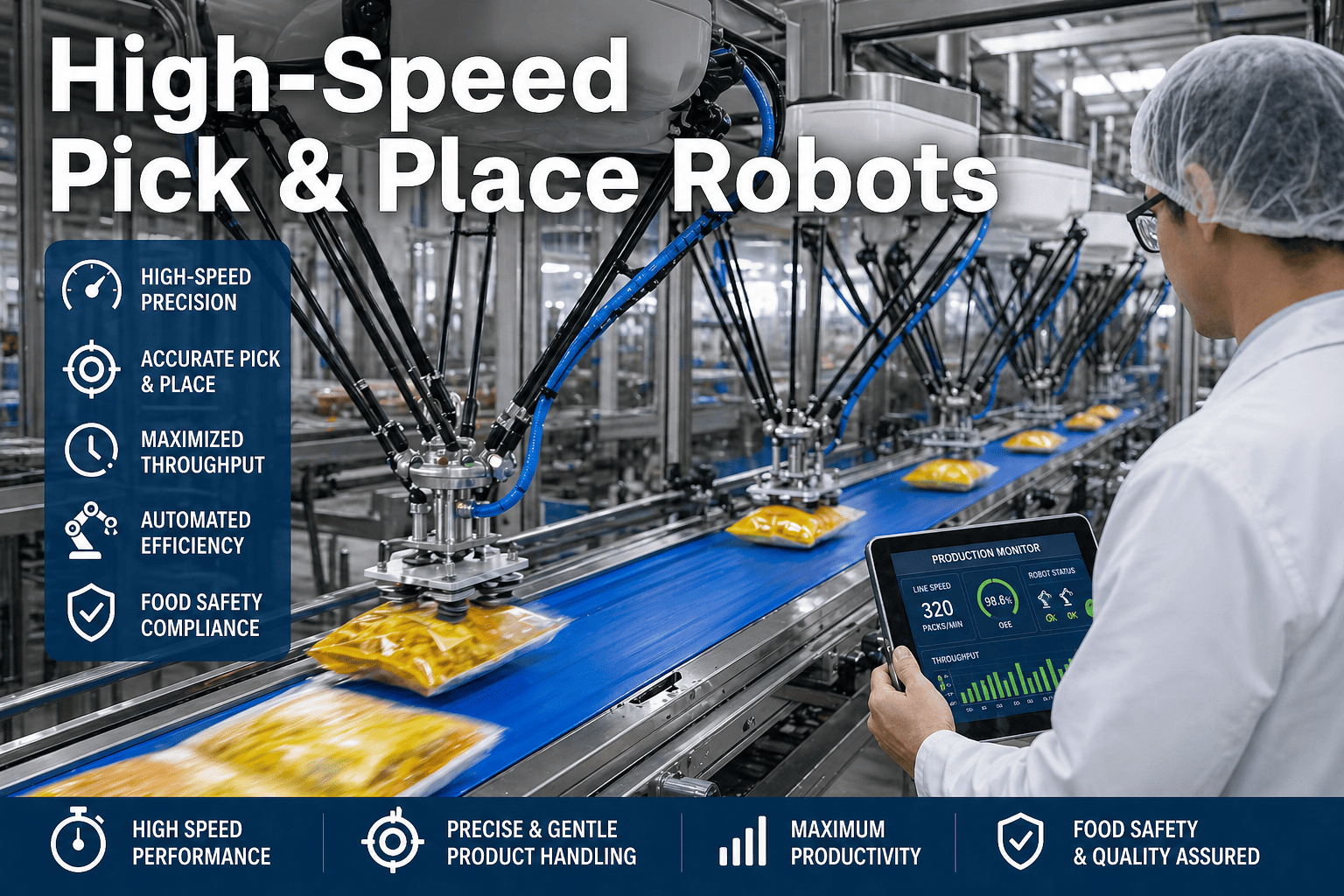
High-Speed Filling Line Robotics: FMCG Maintenance
By Oxmaint on February 13, 2026
Every minute your high-speed filling line is down, you are not just losing product — you are losing $5,000 to $15,000 in unrealized revenue, burning through expedited shipping budgets to meet retailer delivery windows, and eroding the OEE metrics that justify your capital investment. In Q1 2025, a mid-Atlantic beverage manufacturer lost 72 hours of production across two filling lines when a servo motor failure on a rotary filler cascaded into a conveyor jam that damaged 4,200 bottles of finished product. The emergency repair cost $38,000. The lost production cost $540,000. The root cause: a vibration anomaly that had been building for six weeks but was invisible because the maintenance team tracked PMs on a shared spreadsheet with no condition-based triggers. In FMCG manufacturing, high-speed filling robotics represent the single highest concentration of capital, throughput risk, and quality exposure on your production floor. A 600-bottle-per-minute rotary filler running at 85% OEE generates $2.4 million more annual output than the same filler running at 65% OEE. The difference between those two numbers is almost never the equipment — it is the maintenance program behind it. Schedule a free consultation to discover how Oxmaint helps FMCG manufacturers plan, track, and optimize their filling line maintenance from a single platform.
What Makes a Filling Line Maintenance Program Succeed or Fail
A filling line maintenance program is not just a calendar of PM work orders. It is the operational discipline that governs how your most capital-intensive production assets — servo-driven rotary fillers, capping heads, labelers, robotic case packers, and palletizers — deliver consistent throughput shift after shift. When the program works, OEE climbs steadily, cost-per-unit drops, and your operations team spends their energy on improvement rather than firefighting. When it fails, problems compound in ways that are invisible on a P&L until the quarter closes: seal failures cascade into product contamination holds, worn servo motors create fill-weight drift that triggers retailer chargebacks, and unplanned stops during peak season cost you shelf placement that took years to earn.
Reactive Filling Line Maintenance
Run-to-failure approach: equipment runs until it breaks, then emergency repair at 3x normal cost
Unplanned downtime averaging 8-14% of scheduled production hours across filling lines
Spare parts stockpiled "just in case" — $200K+ in dead inventory tying up working capital
OEE stuck in the 55-65% range with no visibility into which of the Six Big Losses is dominant
Proactive CMMS-Driven Maintenance
Condition-based PM triggered by servo runtime hours, cycle counts, and vibration trending
Unplanned downtime below 3% with automated escalation on overdue work orders
Data-driven parts inventory tied to actual consumption rates, lead times, and criticality
OEE consistently 82-90% with real-time dashboards decomposing Availability, Performance, and Quality
The Numbers Behind Filling Line Optimization
Maintenance improvements on high-speed filling robotics deliver measurable results across every FMCG segment — beverages, personal care, household chemicals, dairy, and food. Here is what industry research and real-world CMMS deployments consistently show when manufacturers transition from reactive to proactive maintenance on their filling operations.
45%
Reduction in unplanned downtime through condition-based PM on servo systems, fill heads, and capping stations
22%
Average OEE improvement within the first year of structured CMMS implementation on filling lines
$340K
Average annual savings per high-speed line from avoided emergency repairs, waste reduction, and optimized PM intervals
Want results like these on your filling lines? Oxmaint gives you real-time OEE tracking, automated PM scheduling, and work order management purpose-built for high-speed FMCG production environments.
Choosing the Right Maintenance Strategy for Each Filling Line Component
There is no single maintenance approach that fits every component on a high-speed filling line. The right strategy depends on the failure mode, the consequence of failure, and the cost of intervention versus the cost of downtime. World-class FMCG operations blend multiple approaches across their robotic filling systems, assigning each component to the strategy that delivers the best risk-adjusted return.
Foundational
Time-Based Preventive (PM)
Scheduled maintenance at fixed calendar or runtime intervals regardless of measured equipment condition. Covers lubrication cycles, filter changes, belt and chain replacements, torque checks on capping heads, and gasket inspections on fill valves.
Best fit: Wear items with predictable degradation curves — seals, gaskets, O-rings, belts, filters, nozzle tips, and star wheel guides
Advanced
Condition-Based Maintenance (CBM)
Maintenance triggered by real-time sensor data — vibration analysis on servo motors and bearings, thermal imaging on VFDs and electrical panels, fill-weight drift trending on volumetric and gravimetric fillers, and torque curve monitoring on capping heads.
Best fit: Servo drives, pumps, bearings, gearboxes, and any component where failure is preceded by measurable performance degradation
Predictive
AI-Driven Predictive (PdM)
Machine learning models analyze historical failure patterns, operating conditions, environmental factors, and real-time telemetry to predict remaining useful life and schedule intervention at the optimal point between too-early and too-late.
Best fit: High-value robotic palletizers, multi-axis case packers, and rotary filling carousels where a single unplanned failure exceeds $50K in total impact
Intentional RTF
Run-to-Failure (RTF)
A deliberate strategy for non-critical, low-cost, easily-replaced components where the cost of preventive maintenance exceeds the cost of replacement on failure. Requires that spare parts are stocked and replacement procedures are documented.
Best fit: Indicator lights, non-safety proximity sensors, conveyor guide rails, cosmetic covers, and cable management trays
From Reactive Chaos to Predictive Confidence: The Implementation Roadmap
Building a world-class filling line maintenance program is a structured process that typically spans 6-12 months. Following this proven methodology prevents the common trap of buying CMMS software and hoping it fixes everything — the transformation requires equal investment in process discipline, technician capability, and data infrastructure.
Rank every filling line component by its impact on production throughput, product quality, and operator safety using a formal criticality matrix. Establish baseline OEE (Availability × Performance × Quality) for each line by collecting a minimum of 30 days of production data. Identify the top 5 downtime contributors through Pareto analysis — these become your first PM targets and deliver the fastest ROI.
Phase 2
PM Program Design & Work Order Digitization
Convert OEM maintenance manuals into structured digital PM work orders with clear task instructions, required parts lists, estimated completion times, and skill-level requirements. Configure three trigger types in your CMMS: calendar-based for wear items (every 90 days), runtime-based for servos (every 2,000 operating hours), and condition-based for critical pumps and motors (vibration threshold exceeded).
Install vibration sensors on critical servo motors and bearings, thermal monitoring on VFDs and motor control centers, and flow-rate trending on volumetric and gravimetric fillers. Connect sensor data directly to your CMMS so threshold exceedances automatically generate work orders with the specific asset, location, and probable failure mode — not just dashboard alerts that get buried in email.
Phase 4
OEE Analytics & Six Big Losses Decomposition
Implement real-time OEE tracking that categorizes every minute of lost production into the Six Big Losses framework: equipment failure, setup and adjustment, idling and minor stops, reduced speed, process defects, and startup rejects. This decomposition tells you whether your OEE gap is primarily Availability-driven (breakdowns, changeovers), Performance-driven (speed losses, micro-stops), or Quality-driven (defects, startup waste) — and where to invest next.
Phase 5
Continuous Improvement & Predictive Maturity
Use 6+ months of CMMS data to build failure prediction models for your highest-impact assets. Optimize PM intervals based on actual wear and drift data — extending intervals on components that consistently pass within tolerance and shortening them on failure-prone items. Sign up with Oxmaint to recapture 15%+ of your maintenance budget through data-driven interval optimization while simultaneously reducing unplanned downtime.
Ready to build your filling line maintenance roadmap? See how Oxmaint coordinates PM scheduling, OEE analytics, and work order management across every filling line in your facility.
Six Principles That Separate World-Class Filling Line Maintenance From Average
These are the non-negotiable operational principles that leading FMCG manufacturers build into every filling line maintenance program. Skip any one and your OEE ceiling drops, your cost-per-unit climbs, and your teams spend more time reacting to failures than preventing them.
01
Criticality-Based PM Allocation
Not every component deserves the same maintenance intensity. Rotary filler servo drives and fill valves that directly impact product quality and line throughput get condition-based monitoring. Conveyor guide rails get inspected monthly. Indicator lights get replaced on failure. A formal criticality matrix ensures your maintenance budget flows to where it prevents the most downtime per dollar spent.
02
OEE as the Universal Language
OEE (Availability × Performance × Quality) is the single metric that connects maintenance actions to business outcomes. When your maintenance team sees that a 2% improvement in Availability translates to $180,000 in additional annual output, PM compliance stops being a checklist item and becomes a revenue driver. Track OEE per line, per shift, and per product SKU.
03
Changeover Time as a Maintenance KPI
On a high-speed filling line producing multiple SKUs, changeover time is the single largest controllable Availability loss. SMED (Single Minute Exchange of Die) principles applied to filler format changes, labeler adjustments, and capper tooling swaps can reduce changeover time by 40-60%. Your CMMS should track changeover duration as a maintenance metric, not just a production metric.
04
Autonomous Maintenance by Operators
TPM Pillar 1: operators own daily cleaning, inspection, and basic lubrication of their filling line equipment. This catches early-stage deterioration — loose guards, leaking seals, unusual vibrations — weeks before condition monitoring sensors flag them. A CMMS supports this with digital operator checklists that route anomalies directly to maintenance technicians with photos and timestamps.
05
Spare Parts Tied to Failure Data
Stocking $200K+ in spare parts "just in case" is not a strategy — it is a symptom of an unpredictable maintenance program. Use CMMS consumption data to right-size your inventory: high-turn critical spares (fill valve diaphragms, servo encoder batteries) stocked based on MTBF and lead time; low-turn items ordered against vendor-managed inventory agreements. Target: 95%+ first-time fix rate with 30% less inventory investment.
06
Sanitary Design Maintenance Integration
FMCG filling lines operate under FDA 21 CFR Part 110 (or equivalent) sanitary requirements. Maintenance procedures must integrate with CIP (Clean-in-Place) and SIP (Sterilize-in-Place) schedules. Your CMMS should enforce the sequence: CIP completion verified before PM begins, and post-PM sanitary release documented before production restarts. Skipping this sequence is how you get product contamination holds.
Matching Maintenance Strategy to Your Filling Line Profile
Use this reference to quickly identify which maintenance strategy and CMMS configuration aligns with your specific filling line characteristics and production environment.
Filling Line Maintenance Strategy Matrix
Filling Line Type
Speed Range
Primary PM Strategy
Key Monitored Parameters
Typical OEE Target
Rotary Volumetric
300-1,200 BPM
CBM + Time-Based
Fill accuracy, servo vibration, valve response time
85-92%
Gravity / Overflow
60-300 BPM
Time-Based PM
Nozzle flow rate, seal integrity, foam control
80-88%
Piston / Positive Disp.
30-200 BPM
CBM + Predictive
Piston seal wear, cylinder pressure, stroke accuracy
82-90%
Aseptic / Ultra-Clean
200-800 BPM
Predictive + Regulatory
Sterility barrier integrity, H2O2 concentration, seal temp
BPM = Bottles Per Minute. CPM = Cases Per Minute. Most FMCG facilities operate multiple filler types and should configure their CMMS with strategy templates per line type rather than a one-size-fits-all PM schedule.
Five Filling Line Maintenance Mistakes That Quietly Drain Your OEE
These errors are common because they are not obvious in daily operations. They only reveal themselves in the OEE data — or worse, in a product quality event that triggers a retailer audit.
1
Treating PM Compliance as the Goal Instead of OEE Improvement
A 100% PM completion rate means nothing if your unplanned downtime is not declining. The purpose of preventive maintenance is to prevent failures — if failures are not decreasing, the PM tasks are wrong, the intervals are wrong, or the execution quality is insufficient. Track PM effectiveness (ratio of planned to unplanned work orders), not just PM completion.
2
Ignoring Micro-Stops Because They Are "Minor"
A 600 BPM filler that micro-stops for 3 seconds every 90 seconds loses 3.3% of its throughput — equivalent to $165,000 per year on a single line. Micro-stops (bottle jams, label misfeeds, cap orienter hesitations) are Performance losses that rarely generate work orders but collectively represent the largest OEE gap on most filling lines. Your CMMS should capture micro-stop frequency by station and trigger root cause investigation when rates exceed thresholds.
3
Running Filling Lines Below Design Speed "To Be Safe"
Operators often reduce line speed after a breakdown to "prevent it from happening again." This intentional derating is a Performance loss that never gets recorded as maintenance-related but is directly caused by lack of confidence in equipment reliability. A structured PM program backed by condition monitoring data gives operators the confidence to run at design speed — which is where the equipment is actually engineered to operate most reliably.
4
Scheduling PM During Production Rather Than Planned Downtime
Every PM event that interrupts production is an Availability loss. World-class operations schedule all non-emergency maintenance during planned downtime windows — shift changes, CIP cycles, weekend maintenance blocks — so that PM completion never competes with production output. Your CMMS should integrate with the production schedule to automatically slot PM work orders into available maintenance windows.
5
No Linkage Between Quality Rejects and Maintenance Root Cause
When fill weights drift out of specification, the quality team quarantines product and adjusts the filler. But without a CMMS linking the quality event to a specific asset condition — a worn check valve, a drifting load cell, a degrading servo encoder — the root cause is never addressed. The same quality event repeats in 2-4 weeks. Connecting quality data to maintenance history converts recurring quality losses into permanent corrective actions.
Stop losing OEE points to preventable filling line failures. Sign up for Oxmaint and start tracking asset performance, automating work orders, and monitoring OEE across every filling line in real time.
How a CMMS Keeps Your Filling Lines Performing After Implementation
The best maintenance program degrades without the right operational backbone. A CMMS becomes the system of record that ensures every filling line asset continues to deliver the throughput, quality, and reliability the maintenance program was designed to achieve — shift after shift, season after season.
Real-Time OEE Dashboards With Six Big Losses Decomposition
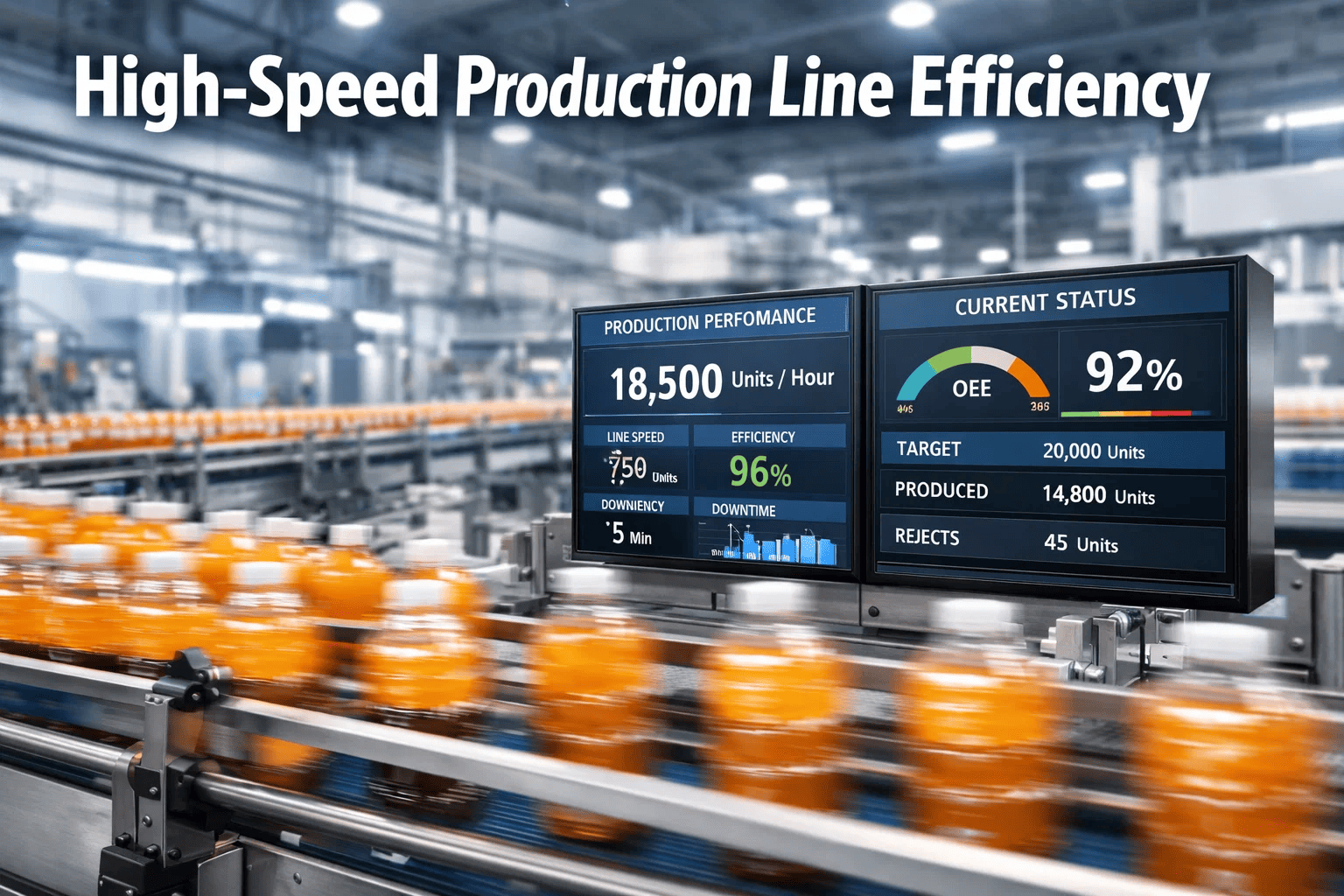
Track Availability, Performance, and Quality per line, per shift, and per SKU in real time. Automatically categorize every downtime event and speed loss into the Six Big Losses framework so your improvement team always knows where the next percentage point of OEE is hiding.
Multi-Trigger PM Scheduling Aligned to Production Windows
Configure PMs by calendar, runtime hours, cycle count, or condition threshold — then automatically schedule them into planned downtime windows so preventive maintenance never competes with production. Escalation rules ensure overdue tasks reach the right manager before they become emergency repairs.
Condition Monitoring Integration & Automated Work Order Generation
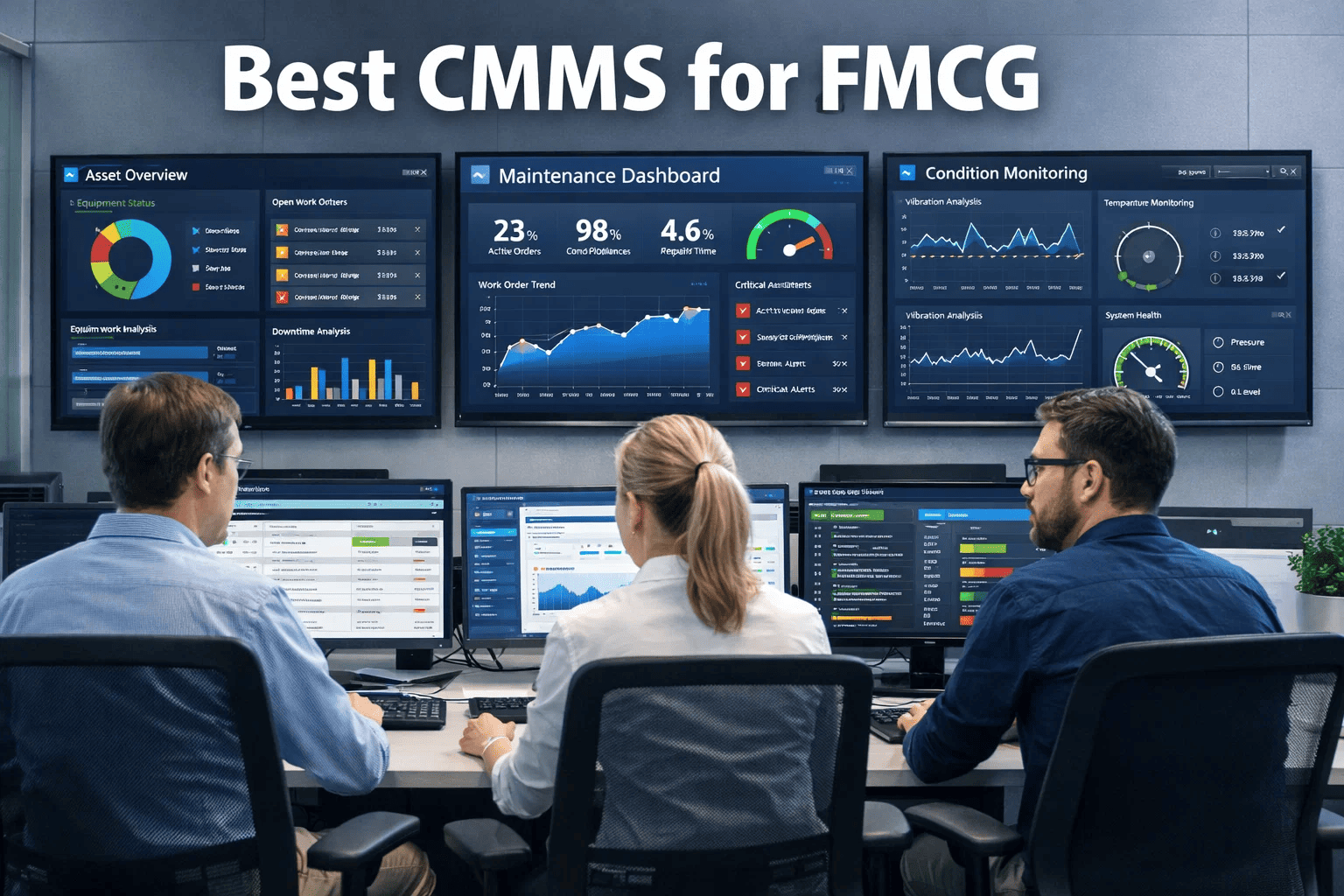
Connect vibration sensors, thermal cameras, and fill-weight trending systems directly to Oxmaint. When a servo motor's vibration signature exceeds its baseline by 15%, the CMMS auto-generates a work order specifying the asset, the anomaly, the probable failure mode, and the required parts — before the technician even knows there is a problem.
Spare Parts Optimization Tied to Failure History
Right-size your filling line spare parts inventory using actual consumption data from completed work orders. Automatically reorder critical spares when stock drops below minimum thresholds. Eliminate the $200K+ dead inventory problem by stocking based on MTBF, lead time, and criticality — not fear.
Your Filling Line OEE Is Only as Good as the Maintenance System Behind It
Oxmaint gives FMCG manufacturers the tools to schedule condition-based PMs, track OEE in real time, automate work orders from sensor data, and optimize spare parts inventory — all from a single platform purpose-built for high-speed production environments. Request a 15-minute operational walkthrough tailored to your filling line configuration.
What is a realistic OEE target for a high-speed FMCG filling line?
World-class OEE for high-speed filling lines in FMCG typically falls between 85-92%, depending on product complexity, SKU changeover frequency, and line age. A newly commissioned rotary filler running a single SKU may achieve 90%+. A 15-year-old multi-format line running 12 SKUs with 6 changeovers per shift is doing well at 82%. The critical metric is not the absolute number but the trajectory — you should see consistent quarter-over-quarter improvement once a structured PM program is in place. If OEE plateaus, re-decompose the Six Big Losses to find the next improvement lever. Book a demo to see how Oxmaint tracks OEE improvement over time.
How do we integrate condition monitoring with our existing filling line PLC systems?
Most modern filling line PLCs (Siemens S7, Allen-Bradley, Beckhoff) already collect servo torque, motor temperature, and cycle count data that can be extracted via OPC-UA, Modbus TCP, or the PLC vendor's native API. External vibration and thermal sensors communicate via MQTT or LoRaWAN to IoT gateways. A CMMS like Oxmaint connects to these data sources through standard protocol adapters — no PLC reprogramming required. The implementation typically takes 2-4 weeks per line for basic condition monitoring and 8-12 weeks for full predictive analytics integration.
What is the difference between OEE and TEEP, and which should we track on filling lines?
OEE (Overall Equipment Effectiveness) measures performance against scheduled production time — it tells you how well your line performs when it is supposed to be running. TEEP (Total Effective Equipment Performance) measures performance against total calendar time (24/7/365) — it tells you how much capacity you are actually using. For filling line maintenance purposes, OEE is the primary metric because it isolates equipment and maintenance performance from business decisions about scheduling. TEEP is useful for capital planning and capacity decisions. Track both, but hold your maintenance team accountable for OEE.
How do we handle PM scheduling on filling lines that run 24/7 with no planned downtime?
True 24/7 operations require creative PM scheduling that exploits natural production gaps: CIP/SIP cycles (typically 2-4 hours), mandatory product changeovers, and planned format changes. A CMMS should integrate with the production schedule to identify these windows and auto-slot PM work orders into them. For critical tasks that require more time, coordinate with production planning to schedule monthly 4-8 hour maintenance blocks during lowest-demand shifts. The key is making PM a scheduled production event, not an interruption — which requires the maintenance planner and production scheduler to use the same planning platform.
What ROI should we expect from implementing CMMS on our filling lines?
FMCG filling line CMMS implementations typically deliver 3-5x ROI within the first 12-18 months, driven by three primary sources: reduced unplanned downtime (45% average reduction = $150K-$400K per line annually), optimized spare parts inventory (20-30% inventory reduction = $40K-$80K freed capital), and improved OEE (each percentage point of OEE on a high-speed line is worth $50K-$150K annually depending on product margin). Secondary benefits include reduced quality holds, lower maintenance overtime, and extended equipment life. Sign up for free to run an ROI estimate on your specific filling line configuration.