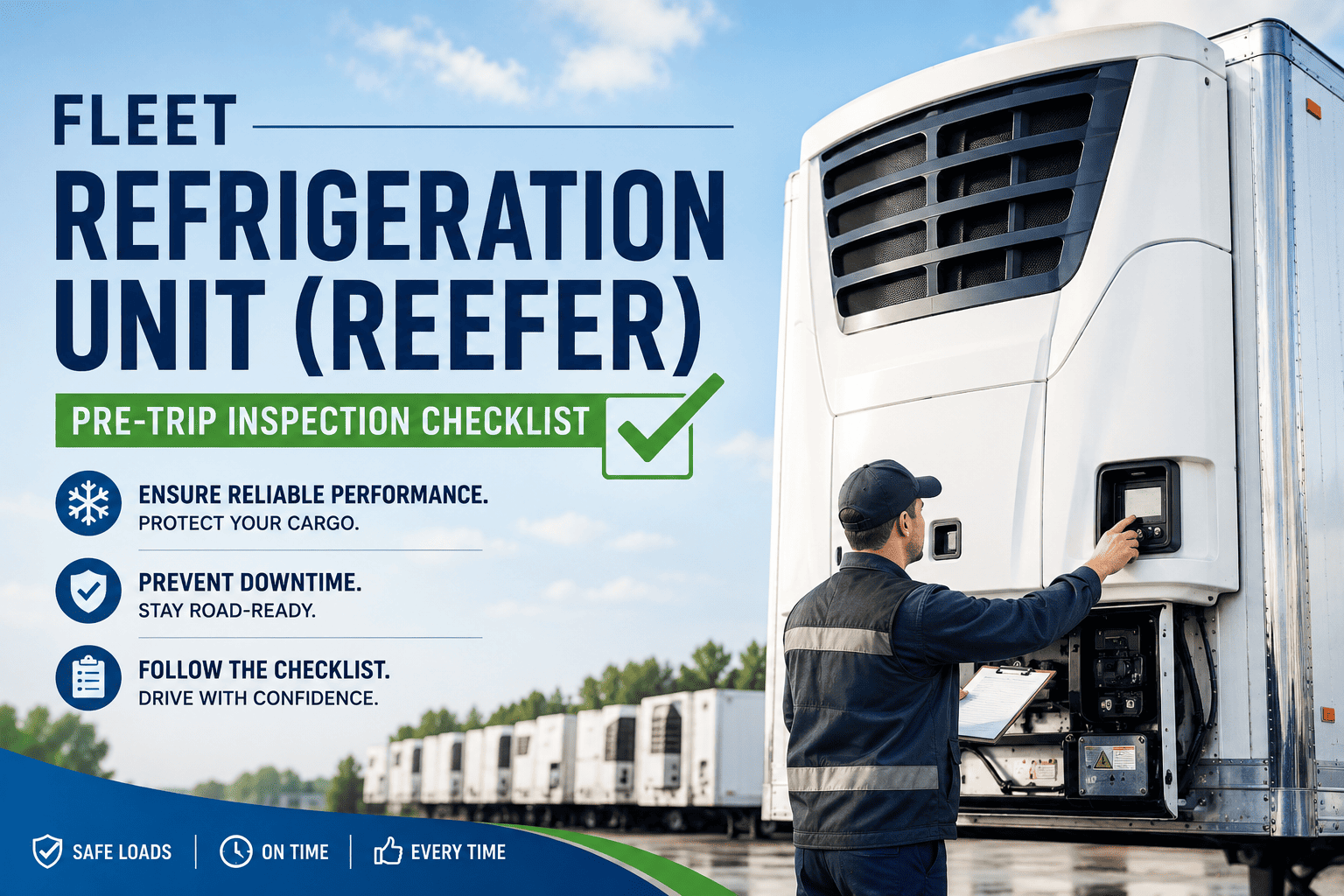
A reefer trailer hauling a full load of frozen chicken rolled into a Georgia distribution center eleven hours late after its refrigeration unit lost setpoint outside Knoxville, and nobody caught the drift until the driver's dash alarm lit up at a fuel stop. The load was rejected at the dock — roughly $41,000 in product gone, because a condenser that should have been cleaned three weeks earlier finally gave out under summer heat. The same week, a different trailer in the same fleet was pulled off a rural route for a cracked tail lamp lens that never made it onto a paper DVIR, a small fine that still cost four hours of downtime waiting on a bulb. Two trailers, two failures, one root cause: nobody was tracking what each trailer actually needed until it was already too late to prevent it. Reefer breakdowns and lighting violations are the two problems that quietly drain trailer fleets the most, and both are preventable with a maintenance schedule built around real usage instead of the calendar — see how at app.oxmaint.ai.
Where Trailer Maintenance Dollars Actually Disappear
Know Which Trailer Needs Service Before the Cargo Finds Out
Oxmaint schedules reefer and trailer maintenance by operating hours, calendar intervals, and inspection defects together — so a high-cycle reefer and a low-cycle dry van never share the same schedule again.
The Two Trailer Problems That Actually Cost Fleets Money
Trailers do not fail like tractors. There is no engine light on the dash for most drivers to notice, and the two most expensive trailer problems — a failing refrigeration unit and an unreported lighting defect — both hide in plain sight until a load spoils or a roadside inspector finds them first.
The Cold Chain Has No Room for Guesswork
Produce, dairy, and frozen cargo each hold a narrow temperature band, and a reefer unit does not need to fail completely to ruin a load — a sustained drift of just four to five degrees is enough to trigger spoilage, bacterial growth, or a rejected delivery.
A unit that drifts outside any of these bands for more than a few hours can trigger a food safety hold, an FSMA documentation gap, and a cargo insurance dispute — all from one missed PM cycle.
Fixed Calendar Scheduling vs. Oxmaint Dual-Trigger PM
A high-cycle reefer running frozen freight around the clock can log nearly three times the operating hours of a low-cycle unit in the same fleet, yet a fixed calendar treats them identically.
| Trailer Scenario | Fixed Annual Calendar | Oxmaint Dual-Trigger PM |
|---|---|---|
| High-cycle frozen reefer, 2,200 hrs/yr | Serviced once a year regardless of hours logged | Serviced at 750-hour inspection and 1,500-hour full service automatically |
| Low-cycle seasonal reefer, 800 hrs/yr | Same annual service — often unnecessary and costly | Interval stretches to match actual hours, cutting wasted labor |
| Trailer lighting defect reported by driver | Waits for paper DVIR to reach dispatch | Digital defect converts to a work order within minutes |
| Refrigerant leak certification | Tracked manually on a spreadsheet, easy to miss | Calendar-based alert fires regardless of hours logged |
| Cold chain compliance documentation | Paper logs, difficult to produce during an audit | Temperature and service records generated automatically per load |
Run the Numbers on Your Reefer Fleet Before the Next Compressor Fails
Bring your trailer count, average reefer hours, and last year's emergency repair invoices — we will show you exactly where a dual-trigger schedule would have caught the failure earlier.
What Oxmaint Tracks on Every Trailer and Reefer Unit
What Fleets Gain With Usage-Based Trailer PM
Frequently Asked Questions
How often should a reefer unit actually be serviced?
What does an emergency compressor failure actually cost compared to preventive service?
Can we track the tractor and the trailer as separate maintenance records?
How does a small lighting defect turn into a real cost?
What records do we need for cold chain and refrigerant compliance?
Stop Finding Out About Trailer Problems From a Rejected Load
Dual-trigger reefer scheduling, two-system digital DVIR, cold chain compliance records, and fuel waste tracking — all in one platform that goes live in days, not months.


.png)