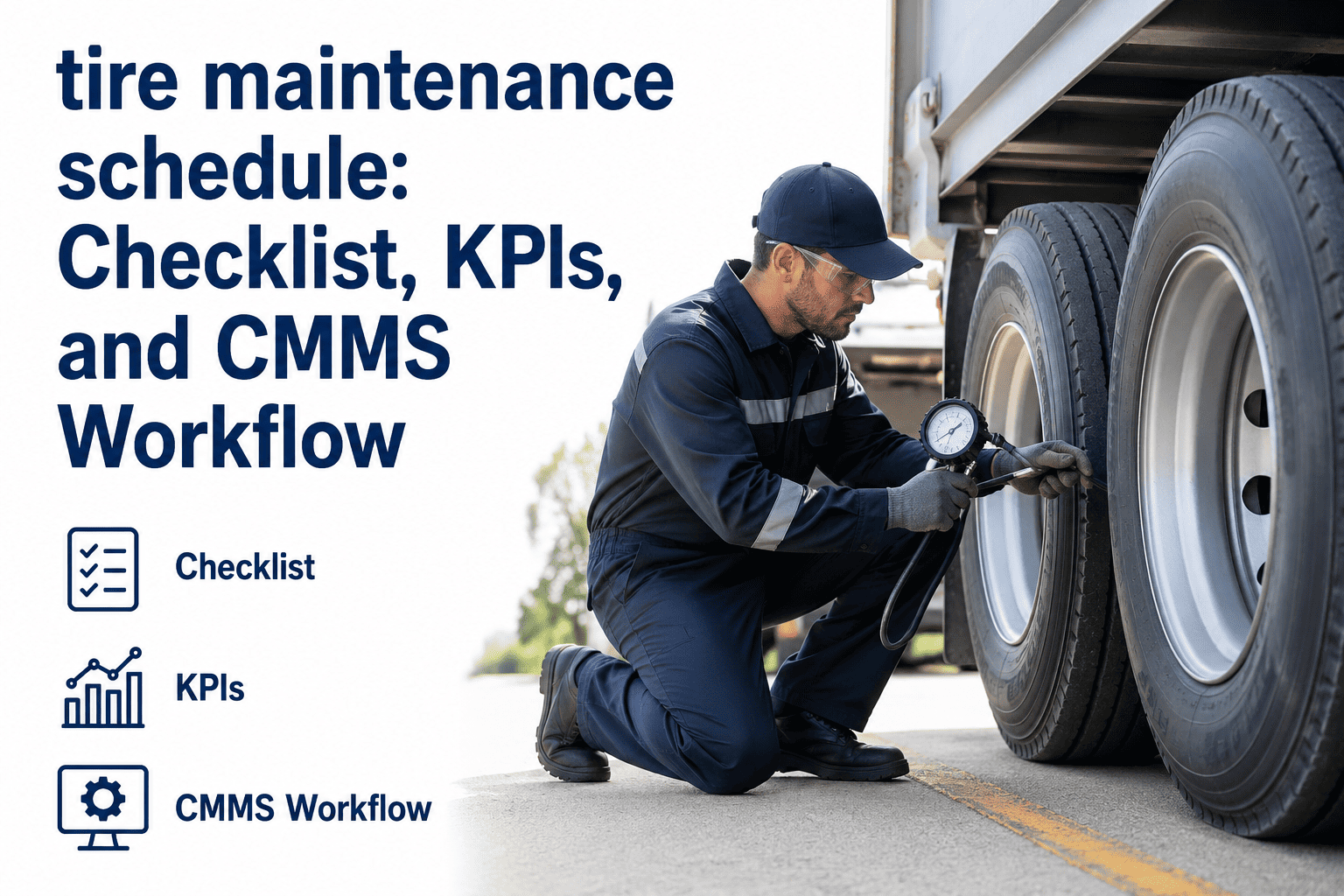
Tire failure is one of the leading causes of unplanned downtime and roadside breakdowns in commercial fleets — yet most tire-related incidents are entirely preventable with a structured maintenance schedule. A missed rotation here, an uninspected tread depth there, and you are looking at a blowout, a DOT violation, or a costly replacement that could have waited another 20,000 kilometres. Fleet maintenance teams managing tires reactively pay two to three times more per unit than those running a proactive CMMS-driven tire program. A proper tire maintenance schedule captures every inspection interval, pressure check, rotation cycle, and replacement threshold in one auditable system — so nothing slips through. OxMaint's AI Predictive Maintenance module automates tire service triggers based on actual mileage, wear data, and asset type, giving your team a complete tire management workflow in one platform.
Stop Reactive Tire Replacements
OxMaint tracks every tire's pressure, tread, rotation, and replacement history — and triggers work orders automatically before problems become failures.
Why Tire Maintenance Schedules Fail Without a CMMS
Most fleets have a tire policy — it lives in a spreadsheet or a printed SOP that nobody updates. The real problem is execution: who checked tyre pressure on unit 47 last Tuesday? When is the next rotation due on unit 12? What is the tread depth baseline for the rear axle tires installed three months ago? Without a CMMS, these questions have no fast answer. With OxMaint, every tire on every axle on every vehicle has a logged history, a scheduled next action, and an AI-triggered alert when thresholds are crossed.
Tire Maintenance Schedule — Master Checklist
Every item below should be completed on its defined interval and recorded in your CMMS. Missed intervals compound — a skipped rotation accelerates the wear that makes the next tread inspection a replacement order.
Driver walks all axles before departure — looking for visibly low, bulging, or flat tires. Any concern gets flagged in OxMaint as a pre-trip defect before the vehicle moves. OOS if flat or bulging
Check for cuts, cracks, exposed cords, or missing chunks on all tire sidewalls. Sidewall damage is non-repairable — immediate replacement required. Critical — no dispatch
Use a calibrated digital gauge, not a stick gauge. Record cold inflation pressure for each position against OEM specification. Pressure deviating more than 10 PSI from spec triggers a CMMS alert. Required weekly
Check for loose wheel nuts, missing lug nuts, or signs of wheel separation. Loose fasteners cause catastrophic wheel-off incidents. Record torque readings in OxMaint work order. OOS — loose fasteners
Measure tread depth at three points across each tire: inside, centre, and outside. Uneven wear indicates misalignment or inflation issues — address the cause, not just the symptom. Log in OxMaint wear map. Required interval
Rotate tires according to vehicle-specific rotation pattern. Record the before and after positions in OxMaint to maintain full position history for each tire unit. Never skip rotations — irregular wear is almost always caught here first. Schedule in CMMS
Misalignment is the single most expensive hidden tire cost in fleet operations — it destroys tires 30–40% faster. Check alignment at 15,000 km intervals or after any significant road event (pothole, kerb strike). Interval service
DOT requires steer axle tires have minimum 4/32" tread depth. OxMaint AI flags steer tires approaching 5/32" to allow lead time for procurement before the OOS threshold is reached. OOS below 4/32"
Drive and trailer tires must maintain 2/32" minimum per 49 CFR 393.75. Budget for replacement based on OxMaint wear rate projections — avoid emergency purchasing at inflated prices. OOS below 2/32"
We used to discover tire problems at the roadside or during DOT inspections. Since we moved to OxMaint's tire tracking, our technicians catch wear issues two rotations before they become replacements. We have cut emergency tire purchases by 60%.
Tire Maintenance KPIs Your CMMS Should Track
KPIs without data are guesses. OxMaint captures the raw data behind every tire interaction — so your KPI dashboard reflects what is actually happening in your fleet, not what you hope is happening.
| KPI | Target | Warning Zone | OOS / Action |
|---|---|---|---|
| Tire Cost per Kilometre (CPK) | < $0.015 / km | $0.015–$0.022 / km | > $0.022 — audit program |
| Tire Life vs. OEM Spec | ≥ 95% of spec | 80–95% of spec | < 80% — alignment / inflation issue |
| PM Compliance Rate | 100% | 90–99% | < 90% — CMMS schedule review |
| Roadside Tire Incidents | 0 per quarter | 1–2 per quarter | 3+ — root cause audit |
| Tread Depth Compliance | 100% above limit | Any tire at 5/32" steer | Any tire below DOT min — OOS |
| Pressure Deviation Rate | < 5% of checks | 5–10% of checks | > 10% — inspection audit |
How OxMaint AI Predictive Maintenance Changes Tire Management
Traditional CMMS triggers tire service at fixed intervals. OxMaint's AI layer goes further — it analyses wear rate trends across your fleet, compares current tire performance against historical baselines for that vehicle type and route profile, and predicts when a specific tire will reach its replacement threshold. Instead of scheduling rotations for unit 31 because 15,000 km have passed, OxMaint tells you that the front-left steer tire on unit 31 is wearing 22% faster than the fleet average for that route — and generates a work order before you lose another 5,000 km of tire life chasing a pressure or alignment issue.
Your Tire Program. Fully Automated. Fully Auditable.
OxMaint captures every pressure check, rotation, tread reading, and replacement — and predicts the next failure before it happens. Set up your tire maintenance program in under 30 minutes.
Frequently Asked Questions
Common questions from fleet maintenance teams about tire schedules, CMMS setup, and DOT compliance thresholds.
Every Tire. Every Check. Every Kilometre.
OxMaint makes tire maintenance as auditable as your vehicle registrations. Start your free trial and have your first tire maintenance schedule configured today.