Every fleet manager knows the undercarriage is where the most dangerous problems hide. Corrosion silently eats through frame rails, hydraulic lines develop micro-leaks invisible to the naked eye, and structural fatigue goes undetected until a roadside breakdown brings operations to a halt. Traditional manual undercarriage inspections require technicians to crawl beneath multi-ton vehicles, working in awkward positions with limited visibility. Robotic undercarriage inspection is changing this equation entirely, combining AI-powered sensors with autonomous scanning platforms to detect what human eyes simply cannot see, all while keeping your team safe and your fleet compliant.
Robotic Undercarriage Inspection for Heavy Vehicles
AI-Powered Scanning That Sees What Human Eyes Miss
Why the Undercarriage Is the Most Neglected Danger Zone
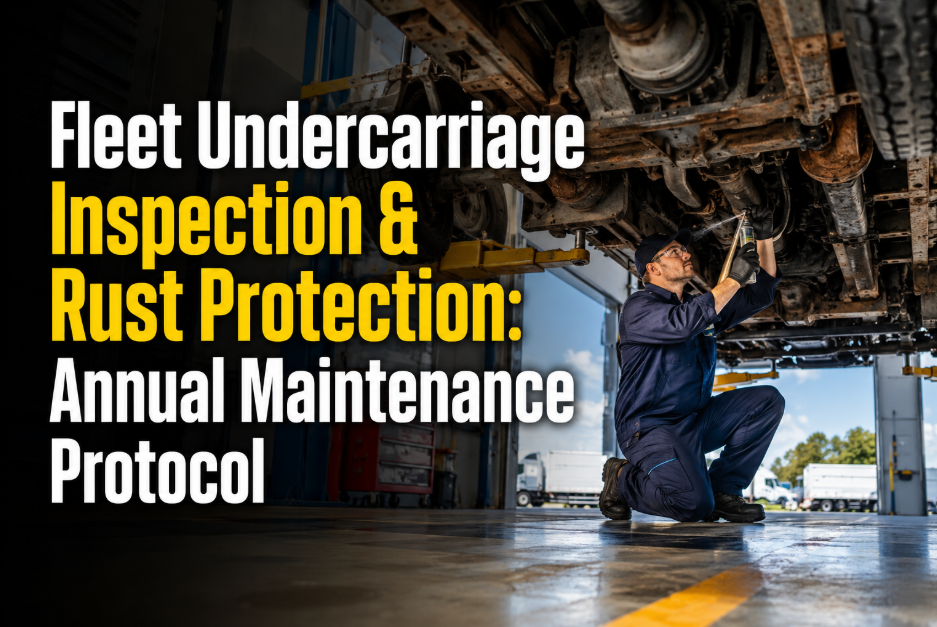
The undercarriage of a heavy vehicle endures relentless punishment. Road salt, gravel impacts, water exposure, chemical runoff, and constant vibration create a hostile environment where corrosion and fatigue develop rapidly. Despite this, undercarriage inspections remain one of the most challenging and frequently shortcut maintenance tasks in fleet operations. Technicians must physically position themselves beneath vehicles, often in poorly lit conditions, making it nearly impossible to achieve consistent, thorough coverage across every frame rail, cross-member, brake line, and exhaust component.
The consequences of missed undercarriage defects are severe. A corroded frame rail can lead to catastrophic structural failure at highway speeds. A leaking brake line compromises stopping power without any dashboard warning. Worn suspension mounts create handling instability that puts drivers and surrounding traffic at risk. For fleet operations managing dozens or hundreds of heavy vehicles, the compounding risk of inadequate undercarriage inspection is a compliance nightmare and a safety liability. This is precisely where robotic inspection systems step in, and platforms like OxMaint (Sign Up Free) help you manage every finding through automated CMMS workflows.
How Robotic Undercarriage Inspection Works
Vehicle Positioning
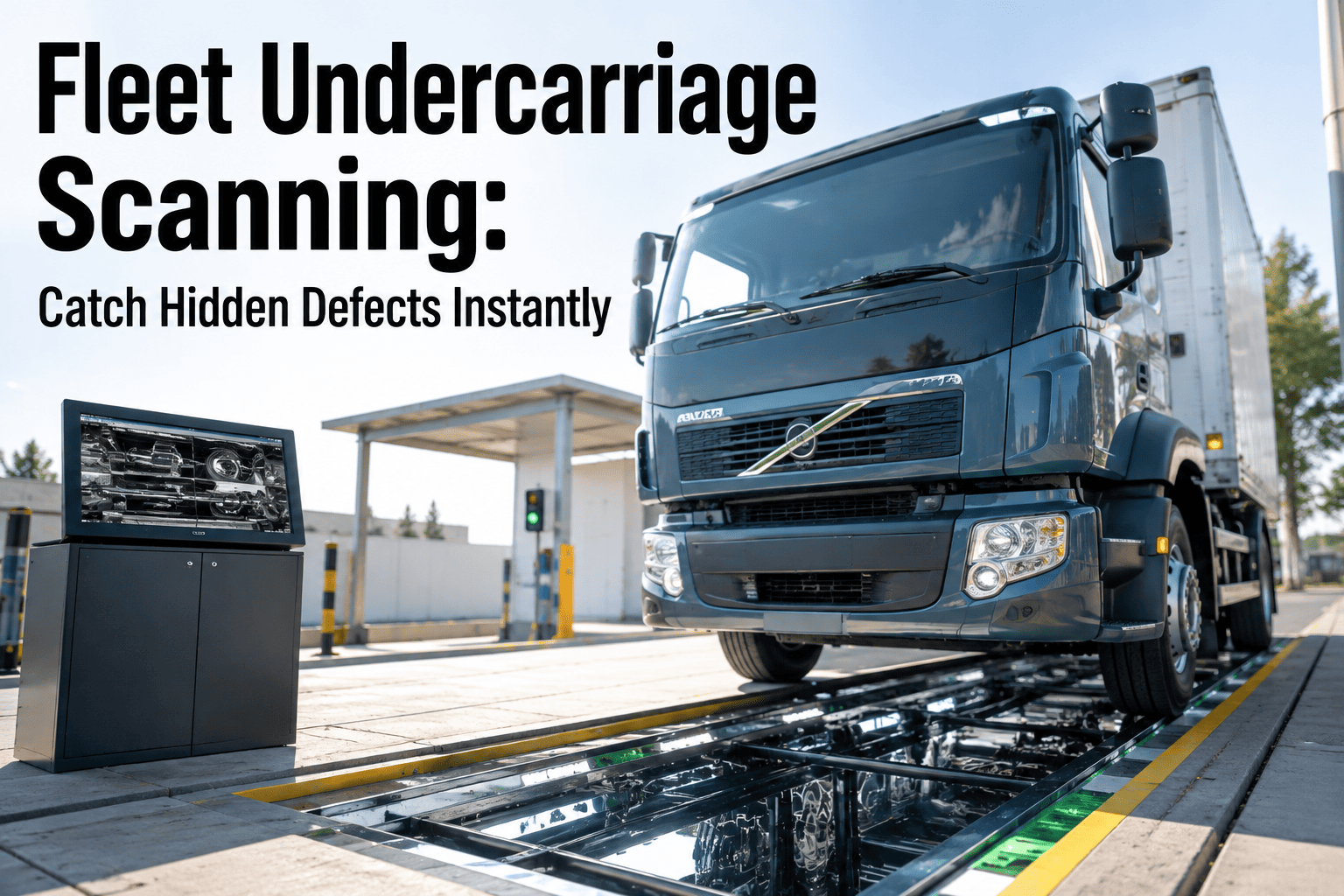
The heavy vehicle drives over or parks above a scanning platform embedded in the shop floor or deployed as a portable station. No lifting or pit access required.
Multi-Sensor Scanning
High-resolution cameras, 3D laser profilers, thermal imaging sensors, and ultrasonic probes capture a complete digital map of the entire undercarriage in minutes.
AI-Powered Analysis
Machine learning algorithms compare the scan against baseline data, identifying corrosion progression, fluid leaks, structural deformation, loose components, and wear patterns.
Automated Reporting & Work Orders
Findings are instantly classified by severity and pushed into your CMMS as actionable work orders, complete with annotated images and repair recommendations.
What Robotic Systems Detect That Manual Inspections Miss
The precision gap between robotic and manual undercarriage inspection is substantial. Human inspectors working in confined spaces with flashlights can identify obvious damage, but they consistently miss early-stage defects that are the real value of preventive maintenance. Robotic systems equipped with AI vision and multi-spectral sensors detect micro-cracks in frame welds before they propagate, identify surface corrosion patterns that indicate internal material degradation, spot fluid seepage from brake lines and hydraulic fittings that appears as nothing more than a slight discoloration, and measure suspension component wear down to sub-millimeter precision.
AI algorithms track rust progression across scans, predicting when surface corrosion will compromise structural integrity, allowing proactive frame treatment before replacement becomes necessary.
Thermal imaging identifies temperature anomalies from brake fluid, coolant, oil, and hydraulic leaks invisible to the naked eye, catching failures weeks before they become dangerous.
3D laser profiling measures micro-deformations in frame rails, cross-members, and mounting brackets, flagging metal fatigue before cracks develop.
Comparative scan data tracks progressive wear on brake pads, suspension bushings, exhaust hangers, and driveshaft components across their entire service life.
Every detection feeds directly into maintenance planning. When you connect robotic inspection data with a CMMS like OxMaint, each finding becomes a tracked work order with priority levels, assigned technicians, and compliance documentation. Book a Demo to see how this integration eliminates the gap between inspection and action.
Stop Guessing. Start Seeing What's Beneath Your Fleet.
OxMaint integrates with robotic inspection workflows to turn every scan into trackable, compliant maintenance action. Automate work orders, track corrosion trends, and stay ahead of DOT audits.
The Business Case: ROI of Robotic Undercarriage Inspection
The financial argument for robotic undercarriage inspection is compelling when you consider the full cost picture. Undercarriage-related repairs on heavy equipment can run between $35,000 and $85,000 for major component replacements. Emergency roadside breakdowns caused by undetected undercarriage failures cost even more when you factor in towing, lost revenue from vehicle downtime, driver delays, and potential DOT violations. Robotic inspection systems that catch problems early routinely deliver ROI within 12 to 18 months through avoided catastrophic repairs and reduced compliance penalties.
Beyond direct repair savings, robotic inspection strengthens your compliance posture. Every scan creates a timestamped, image-documented record that satisfies DOT audit requirements. Fleet managers using OxMaint (Sign Up Free) can pull complete inspection histories for any vehicle in seconds, demonstrating due diligence during regulatory reviews.
Integrating Robotic Inspection With Your CMMS Workflow
The true power of robotic undercarriage inspection is realized when scan data flows directly into your maintenance management system. Without this integration, even the most advanced robotic scanner produces findings that sit in a separate system, requiring manual transfer and creating gaps where critical issues fall through the cracks. A connected workflow means every detected defect automatically generates a prioritized work order, assigns the right technician, schedules parts procurement, and tracks resolution to completion.
OxMaint is built for exactly this kind of integration. Inspection findings from robotic systems feed into the platform as structured data, complete with severity classifications, annotated images, and recommended repair procedures. Maintenance teams see new findings in their dashboards immediately, and fleet managers get real-time visibility into the health status of every vehicle's undercarriage. Historical scan data builds a predictive maintenance profile for each asset, enabling data-driven decisions about repair versus replacement timing. Book a Demo to see how OxMaint turns inspection data into maintenance intelligence.
Industry Applications: Where Robotic Undercarriage Inspection Matters Most
Road salt, highway debris, and extreme mileage accelerate undercarriage deterioration. Robotic scanning at terminal checkpoints catches corrosion and fatigue before DOT roadside inspections do.
Off-road environments subject undercarriages to rock impacts, mud infiltration, and chemical exposure. Automated scans after each project cycle prevent compounding damage from going unnoticed.
Extreme dust, vibration, and abrasive conditions make mining vehicle undercarriages among the most failure-prone. Robotic inspection enables shift-change scanning that manual methods cannot match.
Bus fleets operating on fixed routes with tight schedules need rapid, reliable inspections. Drive-over scanning platforms inspect every bus in the fleet during overnight parking without adding labor hours.
Regardless of your industry, the principle is the same: consistent, thorough undercarriage visibility prevents the failures that manual methods miss. And when those findings connect to a maintenance platform like OxMaint (Sign Up Free), your entire operation moves from reactive firefighting to proactive fleet management.
Safety Benefits: Protecting Your Technicians
One of the most compelling reasons to adopt robotic undercarriage inspection has nothing to do with cost savings or compliance. It is about keeping your people safe. Manual undercarriage inspection requires technicians to work beneath heavy vehicles, often in awkward positions that create ergonomic injuries over time. Musculoskeletal disorders from repeated overhead work and confined-space positioning are a documented occupational hazard in fleet maintenance. Robotic systems eliminate this exposure entirely. The vehicle drives over the scanner, the scan completes in minutes, and your technician reviews the findings from a workstation screen rather than from underneath a 40-ton truck.
As experienced inspectors retire, they take decades of institutional knowledge with them. Robotic systems capture and standardize that expertise in AI algorithms that apply consistent, objective evaluation criteria to every scan. New technicians can review annotated scan results and learn to identify failure patterns without years of hands-on experience. Book a Demo to explore how OxMaint supports this transition with guided workflows and knowledge retention tools.
Ready to Modernize Your Fleet Inspections?
Join forward-thinking fleet operations using OxMaint to connect robotic inspection data with intelligent maintenance workflows. Reduce risk, cut costs, and stay compliant automatically.
Frequently Asked Questions
What is robotic undercarriage inspection for heavy vehicles
Robotic undercarriage inspection uses autonomous scanning platforms equipped with high-resolution cameras, 3D laser profilers, thermal sensors, and AI algorithms to examine the underside of heavy vehicles. The vehicle drives over or parks above the scanning station, and the system captures a complete digital map of the undercarriage, detecting corrosion, leaks, structural damage, and component wear without requiring technicians to physically crawl beneath the vehicle.
How accurate are robotic undercarriage inspections compared to manual inspections
AI-powered robotic inspection systems achieve detection accuracy rates exceeding 90%, with some implementations reaching above 99.5% for known defect types. Manual inspections, by contrast, are limited by human visual capabilities, inconsistent lighting, fatigue, and physical access constraints. Digital inspection tools have been shown to reduce missed defects by approximately 35% compared to paper-based manual checklists.
What types of defects can robotic systems detect on a vehicle undercarriage
Robotic undercarriage scanners detect a wide range of issues including surface and subsurface corrosion, frame rail cracking and weld fatigue, hydraulic and brake fluid leaks, exhaust system deterioration, suspension component wear, loose or missing fasteners, structural deformation from impacts, and abnormal wear patterns on driveshaft and drivetrain components. Thermal imaging can also identify overheating components that indicate impending failure.
How does robotic inspection data integrate with a CMMS like OxMaint
Robotic inspection systems produce structured data including severity classifications, annotated images, and location-specific findings. OxMaint receives this data and automatically generates prioritized work orders, assigns technicians, schedules parts, and tracks repairs to completion. Historical scan data builds predictive maintenance profiles for each vehicle, enabling fleet managers to make data-driven repair and replacement decisions.
What is the ROI timeline for implementing robotic undercarriage inspection
Most fleet operations see ROI from robotic undercarriage inspection within 12 to 18 months. The return comes from avoided catastrophic repairs that can cost $35,000 to $85,000 per incident, reduced emergency breakdown expenses, lower DOT compliance penalties, decreased technician injury claims, and improved vehicle uptime. Fleets operating in harsh environments like construction, mining, or northern climates with road salt exposure typically see faster returns.
Is robotic undercarriage inspection suitable for all fleet sizes
Yes. While large fleets benefit from fixed drive-over scanning stations, portable robotic inspection units are available for smaller operations. The key factor is not fleet size but the cost and risk profile of your vehicles. Any fleet operating heavy vehicles where undercarriage failures create significant safety, compliance, or financial risk can benefit from automated inspection technology paired with a CMMS like OxMaint to manage findings efficiently.