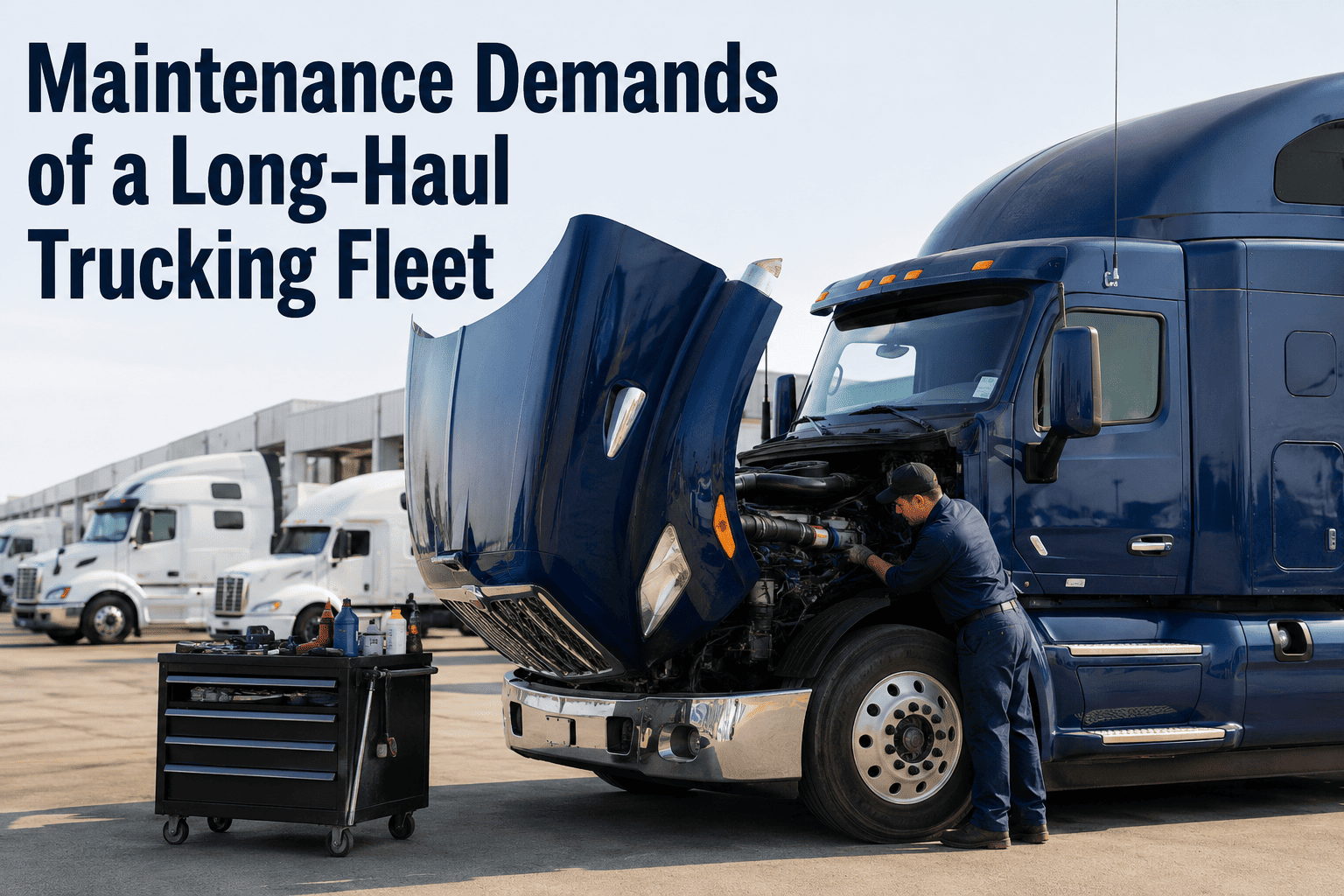
Long-haul trucking fleets face some of the most demanding maintenance requirements in the transportation sector, with each tractor accumulating 100,000 to 150,000 miles annually across multiple states and climate zones. A long-haul fleet maintenance program must manage strict FMCSA compliance, extended time away from the home terminal, and rapid component wear — all while keeping downtime costs, which can exceed $1,200 per day per truck, firmly in check. This guide breaks down the critical maintenance demands of long-haul trucking for 2026 and shows how modernizing your workflow with an AI-powered CMMS can cut unplanned downtime by up to 40%. Ready to modernize your fleet maintenance? You can Start Free Trial today or book a personalized walkthrough to see the platform in action.
Long Haul Fleet Guide 2026
Are Roadside Breakdowns Draining Your Long-Haul Fleet's Profitability?
Managing a long-haul trucking fleet means battling high mileage, multi-state regulatory exposure, and unscheduled downtime that costs thousands per day. Transition from reactive repairs to predictive fleet maintenance.
$1,200
Avg. Downtime Cost / Tractor / Day
150K
Annual Miles Per Long-Haul Unit
25%
Reduction in Unplanned Repairs w/ CMMS
The Core Challenge
What Makes Long-Haul Trucking Fleet Maintenance Unique?
Unlike regional or vocational fleets, long-haul trucks operate continuously across varying terrains, extreme weather conditions, and jurisdictions with different regulatory enforcement priorities. A single tractor in a trucking long-haul fleet may pass through five states in a week, accumulating wear on brakes, drivetrains, and suspension systems at an accelerated rate. When a unit is 1,000 miles from the home terminal, coordinating preventive maintenance, securing approved vendor networks, and tracking spare parts inventory becomes a massive logistical hurdle that legacy spreadsheet systems simply cannot handle.
3-5
States crossed per week, exposing fleets to variable DOT inspection standards and roadside enforcement.
40%
Of total fleet operating costs tied directly to maintenance and fuel, making PM optimization critical.
8-10
Hours lost per breakdown event when coordinating remote towing, vendor approvals, and parts sourcing.
Maintenance Strategy
Critical Long-Haul Maintenance Guide: PM Intervals by Mileage
Long-haul maintenance demands strict adherence to preventive schedules. Pushing a tractor past its oil analysis threshold or ignoring DPF load percentages invites catastrophic failure. Below is a standard trucking fleet long-haul guide for component replacement and inspection intervals based on 125,000 annual miles.
| Component / System | Inspection Interval | Replacement Threshold | Failure Risk if Ignored |
|---|---|---|---|
| Engine Oil & Filters | 15,000 - 25,000 mi | 50,000 mi (Synthetic) | Turbo failure, catastrophic engine wear |
| Brake Pads & Drums | Weekly visual / 25K mi | 50% pad wear | DOT violation, out-of-service order |
| DPF & SCR System | 50,000 mi | 250,000 - 400,000 mi | Forced regen, loss of power, EPA fines |
| Driveline & Transmission | 100,000 mi | 500,000 mi (Fluid change) | Highway breakdown, towing costs |
| Steering & Suspension | 25,000 mi | Per wear specs | Loss of control, accident liability |
Operational Impact
The Real Cost of Reactive Maintenance in Trucking Fleets
When long-haul fleets rely on run-to-failure strategies, the cost of a single roadside event cascades rapidly. Consider a 100-tractor long-haul fleet experiencing 12 unplanned breakdowns per month. Between towing, hotel stays for stranded drivers, expedited parts, and lost freight revenue, a single event averages $4,500. Over a year, that is $648,000 in preventable expense. By shifting to a predictive maintenance model, a fleet long-haul 2026 strategy can recapture those losses and improve driver retention by minimizing seat-time disruptions.
Annual Reactive Cost Formula
(Breakdowns per Month × Average Cost per Event × 12) + Lost Freight Revenue = Total Reactive Cost
Platform Capabilities
How OxMaint Optimizes Long-Haul Fleet Maintenance
OxMaint eliminates the chaos of remote maintenance management. By centralizing work orders, automating PM schedules, and applying AI to predict component failures, long-haul trucking fleets gain total visibility over assets regardless of their location. Here is how OxMaint transforms your maintenance operations:
Automated PM Scheduling
Trigger work orders automatically based on telematics data, engine hours, or odometer readings. Eliminate missed PMs and keep your long-haul guide 2026 compliance on track.
AI-Powered Predictive Analytics
Analyze historical failure data and real-time fault codes to predict breakdowns weeks before they happen. Cut unplanned roadside events by up to 30-50%.
Remote Vendor & Parts Portal
Approve external repair estimates and track spare-parts inventory in real-time. Reduce remote repair approval times from hours to minutes.
FMCSA Audit Readiness
Digitize Driver Vehicle Inspection Reports (DVIRs) and store all maintenance records in the cloud. Achieve 100% compliance and breeze through DOT audits.
See OxMaint on Your Assets
Book a 30-Min Demo and Transform Your Fleet Maintenance
Discover how OxMaint centralizes your long-haul trucking maintenance, ensures FMCSA compliance, and drives down roadside breakdown costs.
Frequently Asked Questions
Long-Haul Fleet Maintenance FAQs
What is the biggest maintenance challenge for long-haul trucking fleets?
The biggest challenge is managing preventive maintenance and unexpected breakdowns when tractors are thousands of miles from the home terminal. Without a centralized CMMS, tracking engine hours, approving remote vendor repairs, and ensuring FMCSA compliance becomes highly reactive and costly. You can Start Free Trial of OxMaint to instantly centralize this data.
How often should a long-haul truck receive preventive maintenance?
For a long-haul fleet accumulating 100,000+ miles annually, standard PM intervals typically fall between 15,000 and 25,000 miles for oil and filter changes, with comprehensive inspections every 50,000 miles. Using a long-haul maintenance 2026 strategy, these intervals should be automatically triggered by telematics data rather than manual tracking.
How does a CMMS improve FMCSA compliance for long-haul fleets?
A CMMS like OxMaint digitizes Driver Vehicle Inspection Reports (DVIRs) and maintains an immutable, time-stamped record of all repairs, parts replacements, and PMs. This ensures you are always audit-ready and helps maintain a low CSA (Compliance, Safety, Accountability) score by preventing vehicle defects from reaching the road.
Can predictive maintenance actually reduce long-haul downtime?
Yes. By analyzing trends in fault codes, fluid analysis, and historical component lifespans, AI-driven predictive maintenance flags potential failures weeks before a roadside breakdown occurs. To see how this works on your specific assets, Book a Demo with our team.
Is it difficult to switch from spreadsheets to fleet maintenance software?
Switching is straightforward with OxMaint. Our onboarding team helps import your existing asset lists, PM schedules, and parts inventory directly into the platform, allowing your maintenance and reliability teams to transition from spreadsheets to a fully automated CMMS in just a few days.
Ready to Eliminate Roadside Breakdowns?
Join the long-haul fleets using OxMaint to predict failures, automate work orders, and maximize asset uptime. Start your free trial or book a demo today.
Free 14-day trial · No credit card


