Fleet Utilization Optimization: Getting More Revenue from Every Vehicle
By Alex Jordan on March 30, 2026
Fleet utilization is the single most leveraged financial metric in commercial fleet operations — a fleet running at 68% utilization is carrying 32% of its capital cost, insurance, depreciation, and overhead as pure waste. Most fleets don't measure utilization per vehicle, which means the bottom 20% of underperforming assets sit invisible in the fleet register, consuming budget while the operations team requisitions additional vehicles to cover availability gaps. OxMaint's CMMS tracks vehicle availability, downtime, and utilization per asset — giving operations and finance directors the data to right-size the fleet, identify idle assets, and make replacement decisions from evidence rather than instinct.
Fleet Operations · Article ·
Fleet Utilization Optimization: Getting More Revenue from Every Vehicle
Measuring utilization rates, identifying underperforming assets, right-sizing strategies, seasonal demand planning, vehicle sharing, and CMMS data for utilization-informed replacement decisions — the financial analyst's guide to fleet asset performance.
68%Average commercial fleet utilization — 32% of asset cost generating no revenue
$18KAnnual cost of an idle vehicle — capital, insurance, and depreciation
+22%Revenue increase achievable by optimising utilization in under-performing fleets
4.1×ROI on fleet right-sizing — cost reduction vs. CMMS data investment
Fleet Utilization by Vehicle Category — Where Your Assets Stand
Utilization performance varies dramatically across vehicle categories within the same fleet — and the problem is almost always invisible until you measure it by asset. Heavy articulated units typically run at 78–88% utilization because dispatch prioritises them for high-value loads. Light vans in the same fleet often run at 42–58% because they're held as "available backup" that never gets actively deployed. The ranked utilization chart below shows industry benchmark utilization rates by vehicle category — with the threshold bands that define whether each category is performing at target, underperforming, or qualifying for disposal review. OxMaint calculates utilization per vehicle from dispatch and downtime data — generating the ranked report automatically each month.
Fleet Utilization by Vehicle Category — Industry Benchmark Rates
The Asset Decision Matrix — What to Do With Each Vehicle
Every vehicle in a fleet sits in one of four positions defined by two variables: utilization rate (how often it works) and cost-per-mile (how expensive it is to operate). The four quadrants of the decision matrix below tell operations and finance directors exactly what action each vehicle position requires — from protecting high-value assets to eliminating cost drains. Most fleets have vehicles in all four quadrants simultaneously and don't know it because they track neither utilization nor cost per asset. OxMaint calculates cost-per-mile and utilization per vehicle automatically — placing every asset in the correct quadrant for management decision.
Fleet Asset Decision Quadrant — Utilization vs. Cost-Per-Mile
← High Cost · Low Cost →
High Utilization
Low Utilization
⭐ Star Asset
High Use · Low Cost
Generating maximum revenue at minimum cost. Protect — schedule preventive PM aggressively to maintain performance.
Action: PM priority. Late replacement.
⚠ Cost Review
High Use · High Cost
Working hard but expensive to run. Investigate: maintenance backlog, spec mismatch for route, or ageing drivetrain.
Action: PM audit. Spec review.
? Improve Deploy
Low Use · Low Cost
Cheap to run but sitting idle. Can be activated through scheduling optimisation, vehicle sharing, or redeployment to higher-demand route.
Action: Redeploy or share.
? Dispose / Replace
Low Use · High Cost
The worst position — not working and expensive when it does. Disposal, downsizing to smaller spec, or replacement with fit-for-purpose asset.
Action: Immediate disposal review.
Utilization Improvement Scoring — Where Is Your Fleet Programme?
Utilization management maturity follows a clear spectrum — from fleets that don't measure it at all, to fleets that track every asset in real time and make deployment decisions from live data. The scoring framework below lets operations and finance teams assess their current utilization management capability — identifying the specific gaps that are costing revenue and capital efficiency right now.
Fleet Utilization Management Maturity Scoring
Score 5 = maximised revenue per asset · Score 1 = no utilization visibility
5
AI-Optimised · Real-Time Deployment
Per-vehicle utilization tracked live. AI Digital Twin models optimal deployment. SAP integration shows cost-per-mile per asset. Replacement decisions data-driven.
Profile: Maximum revenue per asset. Fleet size optimised to actual demand with zero idle capital waste.
4
CMMS-Tracked · Monthly Reporting
Utilization reported monthly per vehicle from CMMS dispatch data. Underperforming assets flagged. Right-sizing decisions made on data rather than instinct.
Profile: Strong performance. 15–25% better utilization than industry average. Disposal decisions justified with evidence.
3
Fleet-Level Tracking · No Asset Breakdown
Total fleet miles and revenue tracked but not per vehicle. Can't identify individual underperformers. Replacement decisions based on age or breakdown frequency.
Gap: Per-vehicle tracking is the priority. CMMS implementation delivers this within 30 days of deployment.
2
Informal Tracking · Spreadsheet-Based
Some mileage data available in spreadsheets. No downtime tracking. No cost-per-vehicle calculation. Fleet size determined by historical allocation, not demand analysis.
Risk: Significant idle capital. Carrying 20–35% excess vehicles in most cases. CMMS deployment is the immediate priority.
1
No Utilization Measurement
Fleet size and composition managed entirely by operational feel. No data on which vehicles work, which sit idle, or what each costs to operate per mile.
Risk: Maximum capital waste exposure. Competitors with data-driven utilization operate at 30–40% lower cost per vehicle mile.
Technology Stack: AI Digital Twin, OBD, SAP, and AI Camera
Utilization optimization is powered by the same technology stack that drives predictive maintenance — with a different analytical focus. AI Digital Twin models per vehicle calculate the optimal deployment schedule based on vehicle health, route type, and cost-per-mile profile — recommending which assets should be assigned to which route categories to maximize revenue per vehicle mile. OBD telematics tracks actual active time, idle time, and mileage per vehicle — the raw data that CMMS converts into utilization rate. AI Camera Vision verifies pre-dispatch vehicle condition in seconds, eliminating the pre-trip inspection delay that reduces daily vehicle availability by an average of 18 minutes per unit. SAP and ERP integrations make cost-per-mile visible to finance directors alongside revenue-per-vehicle — enabling the profitability-per-asset analysis that drives right-sizing decisions. PLC integrations extend utilization tracking to depot infrastructure — ensuring workshop lifts, fuel bowsers, and charging points are available when vehicles need them, not adding to vehicle downtime.
AI Digital Twin
Optimal Deployment
Asset-to-route matching by health + cost
Recommends which vehicles to deploy to which routes based on current health score and cost-per-mile profile — maximising revenue per mile across the whole fleet.
OBD Telematics
Utilization Data
Active time + idle time per vehicle
Every engine-on, engine-off, and mileage event logged per vehicle. CMMS converts raw OBD data into utilization rate, downtime rate, and cost-per-mile automatically.
AI Camera Vision
+18 Min / Day
Pre-trip clearance in seconds not minutes
Automated pre-trip condition check eliminates 18-min average delay per unit. Across a 50-vehicle fleet that's 15 hours of daily availability recovered.
SAP / ERP
Profitability View
Revenue vs. cost per vehicle to CFO
CMMS maintenance cost data merges with SAP revenue and depreciation — giving CFOs profit-per-vehicle visibility that transforms fleet size and composition decisions.
"
We were running 48 vehicles across our distribution network. When we deployed OxMaint and tracked utilization per asset for the first time, we found 11 vehicles averaging below 55% utilization. We disposed of 7 and redeployed 4 to higher-demand routes. Fleet went from 48 to 41 vehicles — and our total revenue actually increased by 8% because the remaining fleet was deployed more intelligently. The data paid for itself in month two.
Operations Director — Regional distribution company, 41 vehicles, Queensland, Australia
Frequently Asked Questions
How is fleet utilization rate calculated?
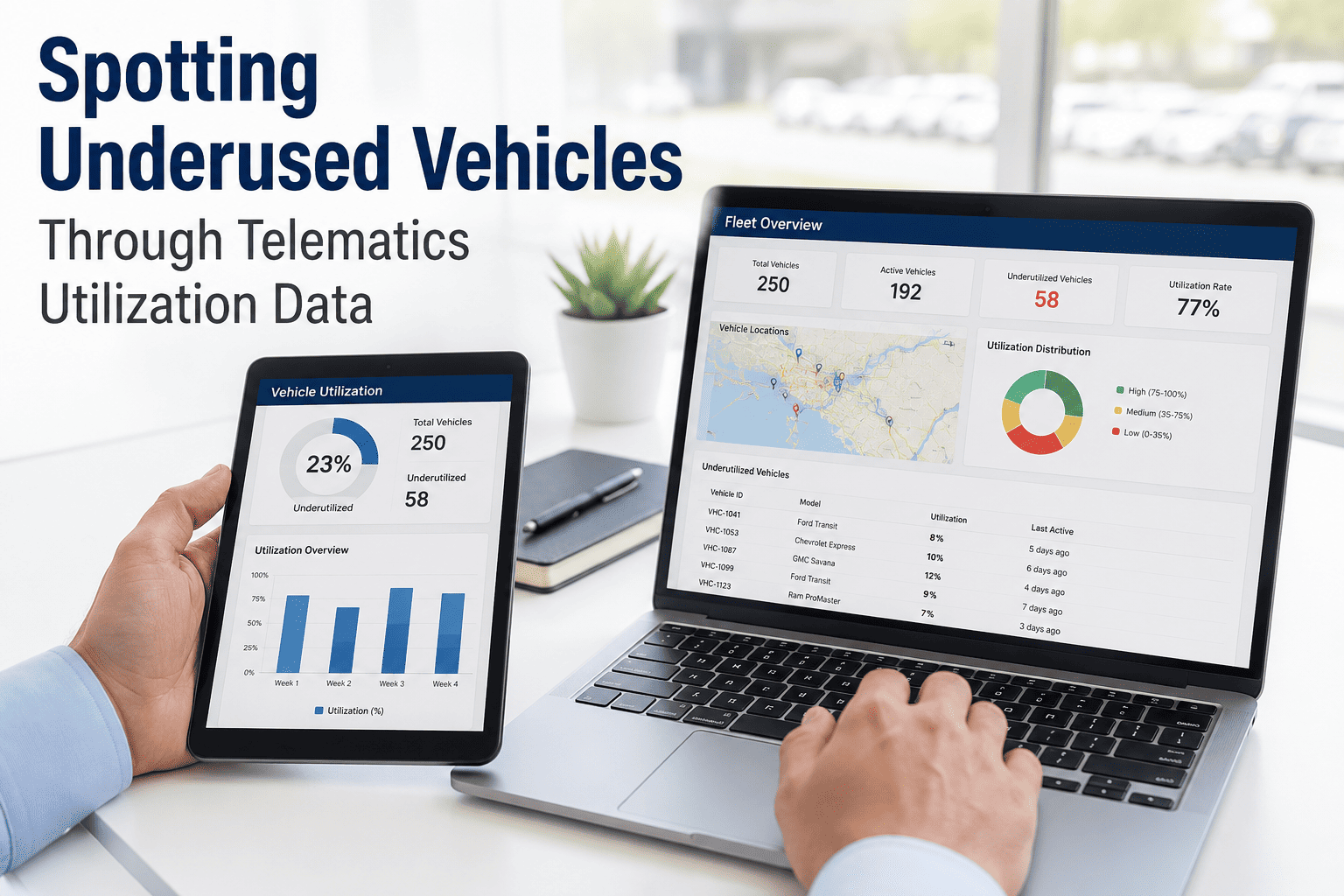
Utilization rate = (actual working hours or miles ÷ available working hours or miles) × 100. OxMaint calculates this per vehicle from OBD dispatch data and scheduled availability — generating monthly utilization reports without manual data collection. Start free and get your first utilization report.
What utilization rate should fleet vehicles target?
HGV articulated: 80–90%. Rigid trucks: 72–82%. Light commercials: 65–78%. Vehicles below 60% should enter disposal review — they are consuming capital at a rate that no revenue optimisation can justify.
How does AI Digital Twin help with fleet utilization?
Digital Twin models each vehicle's health and cost profile — recommending which asset is the best fit for each route type. High-health, low-cost vehicles are matched to high-revenue routes. Ageing high-cost vehicles are systematically moved to lower-utilization assignments while disposal is arranged.
Can SAP integration show profit per vehicle?
Yes — OxMaint CMMS maintenance cost feeds into SAP alongside revenue data. Finance directors see total cost (maintenance + depreciation + fuel) vs. revenue per vehicle — enabling the profitability-per-asset analysis that drives right-sizing decisions at board level.
Find Out Which Vehicles Are Costing More Than They Earn.
OxMaint tracks utilization and cost per vehicle automatically. Free to start.





.png)
-(1).png)