Corrosion costs commercial fleet operators more than $3 billion annually in the United States alone — making it one of the most expensive and most preventable threats to vehicle body integrity across van and truck fleets. Salt exposure, road spray, pooled moisture under roof racks, and untreated impact damage are the four primary drivers of accelerated body deterioration, and each one is controllable with a structured inspection and treatment schedule. Fleets that run body condition checks on a defined cycle, apply rust inhibitor coatings before corrosion starts, and track damage by vehicle and body zone in a CMMS consistently outperform reactive fleets on resale value, insurance outcome, and total lifecycle cost. If your fleet currently has no formal body maintenance program, start a free trial or book a demo to see how Oxmaint tracks body condition across every vehicle in your portfolio.
Fleet Roof Rack and Body Maintenance: Corrosion Prevention for Commercial Vans
Corrosion is a slow capital destroyer. Structured body inspection programs, surface treatments, and CMMS-tracked condition scoring extend van body life by 3 to 5 years and protect resale value across the entire fleet portfolio.
Body Damage Is Invisible Until It Is Expensive
A van with no formal body inspection program accumulates seam moisture, stone-chip rust, rack mount corrosion, and undercoating failures over 18 to 30 months — none of which appear on a work order until a body shop bills $2,400 for panel repair. Oxmaint tracks body condition by zone per vehicle, schedules treatment intervals, and flags damage for corrective action before it escalates. Ready to build that system? Start a free trial or book a demo.
The 4 High-Risk Corrosion Zones on Commercial Vans and Trucks
Not all body surfaces corrode at the same rate. Effective fleet body programs treat each zone differently — with different inspection frequencies, different treatment products, and different damage thresholds for corrective action.
Metal-on-metal contact between rack feet and van roof traps moisture and accelerates galvanic corrosion. Mounting holes are the first place water penetrates the roof panel. Inspect every 6 months. Apply frame sealant and check isolation pads at each inspection cycle.
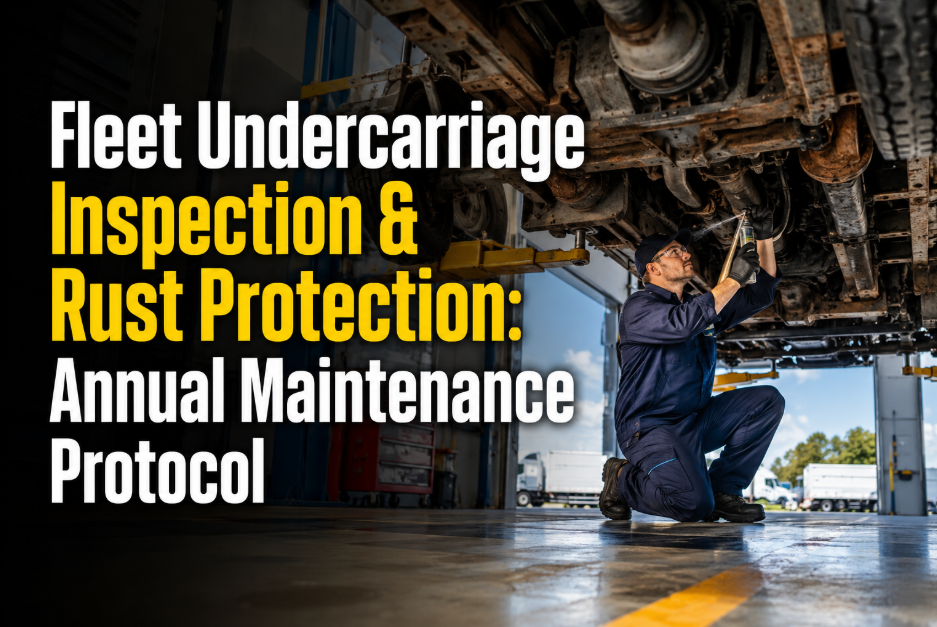
Road salt, stone chips, and water accumulation in wheel arch seams create the fastest-moving corrosion on commercial vans. Underbody coating typically lasts 3 to 5 years depending on climate and route. Annual undercoating inspection is minimum — bi-annual in salt-belt regions.
Rear cargo door hinges, door seam welds, and step plate edges are high-impact, high-moisture surfaces that lose paint protection within 18 months of heavy use. Seam sealer failure allows moisture ingress that corrodes from inside the panel outward — invisible until it is advanced.
The bottom 12 inches of all body panels are the highest-frequency stone impact zone. Each chip is a corrosion initiation point. Touch-up paint programs applied within 30 days of chip formation prevent surface rust from developing. Untreated chips become rust blisters within 6 to 12 months.
Commercial Van Body Maintenance: Service Intervals and Treatment Types
A complete body protection program uses layered treatments applied on different schedules — not a single annual wash and wax event. The table below shows the recommended service types, intervals, and what Oxmaint automates for each.
| Treatment Type | Target Zone | Recommended Interval | Expected Outcome | Oxmaint Tracking |
|---|---|---|---|---|
| Underbody coating inspection | Full undercarriage | Annually / bi-annual (salt belt) | Detects coating failure before rust initiates | Auto-scheduled PM per vehicle |
| Rust inhibitor recoat | Underbody, wheel arches | Every 3–5 years | Extends underbody protection lifespan | Lifecycle-linked service reminder |
| Roof rack mount inspection | All mounting points and seals | Every 6 months | Catches isolation pad failure and seam gaps | Semi-annual PM with photo checklist |
| Stone chip touch-up | Lower panels and bumpers | Every 90 days | Prevents surface rust at chip initiation points | Quarterly driver inspection form |
| Seam sealer inspection | Door edges, cargo openings | Annually | Detects seam failure before internal panel rust | Annual body inspection work order |
| Paint condition scoring | Full exterior | Annually | Condition-based replacement and resale planning | Body condition score on asset record |
6 Body Maintenance Failures That Cost Fleets the Most
Missing isolation pads allow aluminum rack feet to contact steel roof panels, creating galvanic corrosion at every contact point. This failure mode is common on field-installed racks and typically produces visible roof rust within 18 to 24 months of installation.
Factory-applied underbody coating is not a permanent treatment. It chips, cracks, and disbonds — especially around suspension mounting points. Fleets that do not inspect the coating annually lose 2 to 3 years of chassis life to corrosion that started under an intact-looking exterior surface.
Driver pre-trip inspection forms often capture body damage — but the notes go into a binder and no corrective work order is generated. Chips untreated for 90 days in humid or salted environments typically show surface rust. After 12 months, the rust is structural.
Without a condition score attached to each vehicle's asset record, fleet managers cannot prioritize treatment spend, identify the highest-risk vehicles, or plan body work into the annual budget. Reactive body repair consistently costs 40% more than scheduled preventive treatment.
Rear door hinges on commercial vans operate under significant load and weather exposure. Without scheduled lubrication and seam sealer checks, hinge fastener corrosion transfers to the door skin and frame — a repair that averages $800 to $1,800 per door and is entirely preventable.
Fleets that do not track body condition history cannot demonstrate a maintenance record to buyers or lessors at disposal. A vehicle with documented annual inspections, treatment records, and corrective work orders commands 8% to 14% higher resale than a comparable vehicle with no body maintenance history.
How Oxmaint Manages Fleet Body Condition and Corrosion Prevention
Oxmaint turns body maintenance from an informal walk-around habit into a systematic, documented, data-driven program. Every vehicle carries a body condition score, every treatment is scheduled as a recurring PM, and every damage finding creates a corrective work order — linked to the asset record permanently. Teams managing van fleets can start a free trial or book a demo to see the full body condition workflow.
Assign and update a zone-by-zone body condition score for each vehicle — roof, underbody, panels, doors, rack mounts. Scores trend over time and link to treatment history, giving managers a true picture of fleet body health without relying on memory or paper logs.
Configure underbody, rack mount, paint chip, and seam sealer inspections on their own schedules per vehicle — quarterly, semi-annual, or annual. Work orders generate automatically at the scheduled date and route to the assigned technician without supervisor intervention.
Technicians and drivers capture damage photos directly in the Oxmaint mobile app — attached to the specific vehicle asset record with zone label, severity, and date. At resale, the complete photo history provides documented maintenance evidence that supports premium pricing.
When an inspection flags a stone chip cluster, seam failure, or rack mount corrosion, Oxmaint creates a corrective work order with priority, assignment, and parts requirement — ensuring no damage finding sits in a binder without a follow-up repair planned and tracked.
Fleet managers see body condition scores, overdue treatments, open damage work orders, and treatment spend by vehicle, by location, or by body zone — across the entire fleet portfolio from one dashboard. Budget planning and replacement decisions use real condition data.
Body condition score trends connect to Oxmaint's rolling CapEx model — vehicles approaching poor body condition ratings surface in the replacement planning queue before they reach the point of uneconomical repair, giving procurement and operations teams time to plan replacement cycles.
Reactive Body Program vs. Oxmaint-Managed Corrosion Prevention
What Structured Body Programs Deliver Across a Fleet Portfolio
Early detection and treatment costs a fraction of panel replacement — the difference between a $45 chip repair and a $1,800 rust repair on the same panel
Structured treatment programs extend commercial van body serviceable life before structural corrosion forces premature replacement or retirement
Documented body maintenance records and photo histories command premium pricing at disposal compared to vehicles with no maintenance evidence
Every inspection, treatment, damage finding, and repair logged in CMMS — exportable for insurance claims, disposal documentation, and fleet reviews
Frequently Asked Questions
How often should roof racks on commercial vans be inspected for corrosion?+
What is the most cost-effective rustproofing treatment for commercial fleet vehicles?+
Can driver pre-trip inspections be used to track body damage in Oxmaint?+
How does body condition scoring connect to vehicle replacement decisions?+
Stop Discovering Body Damage at the Body Shop
Every untreated chip, every missed rack mount check, and every underbody coating failure that goes undetected is a compounding cost event. Oxmaint makes body condition visible, treatment schedules automatic, and damage findings actionable — before they become expensive. No long implementation. First body inspection work orders live in week one.