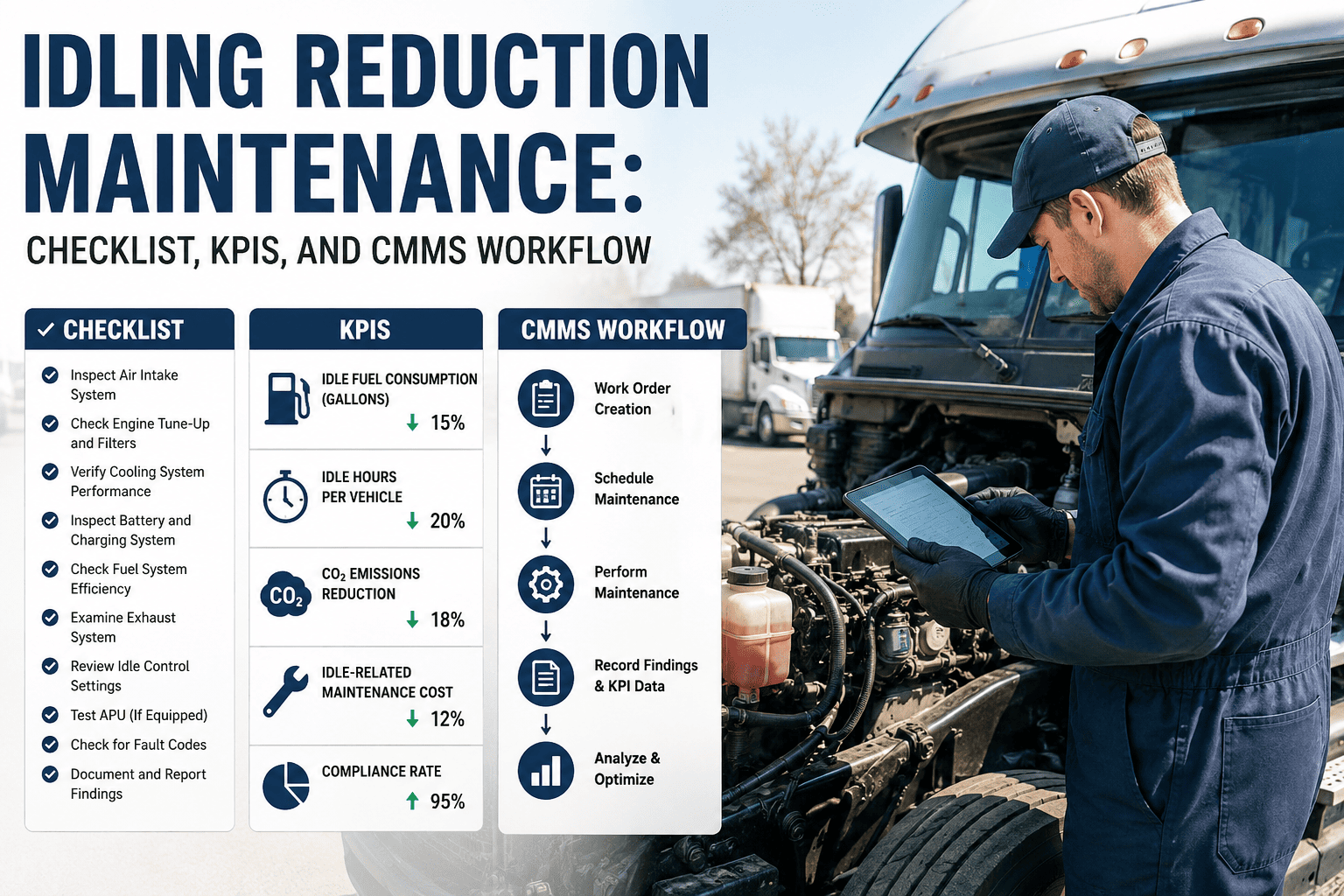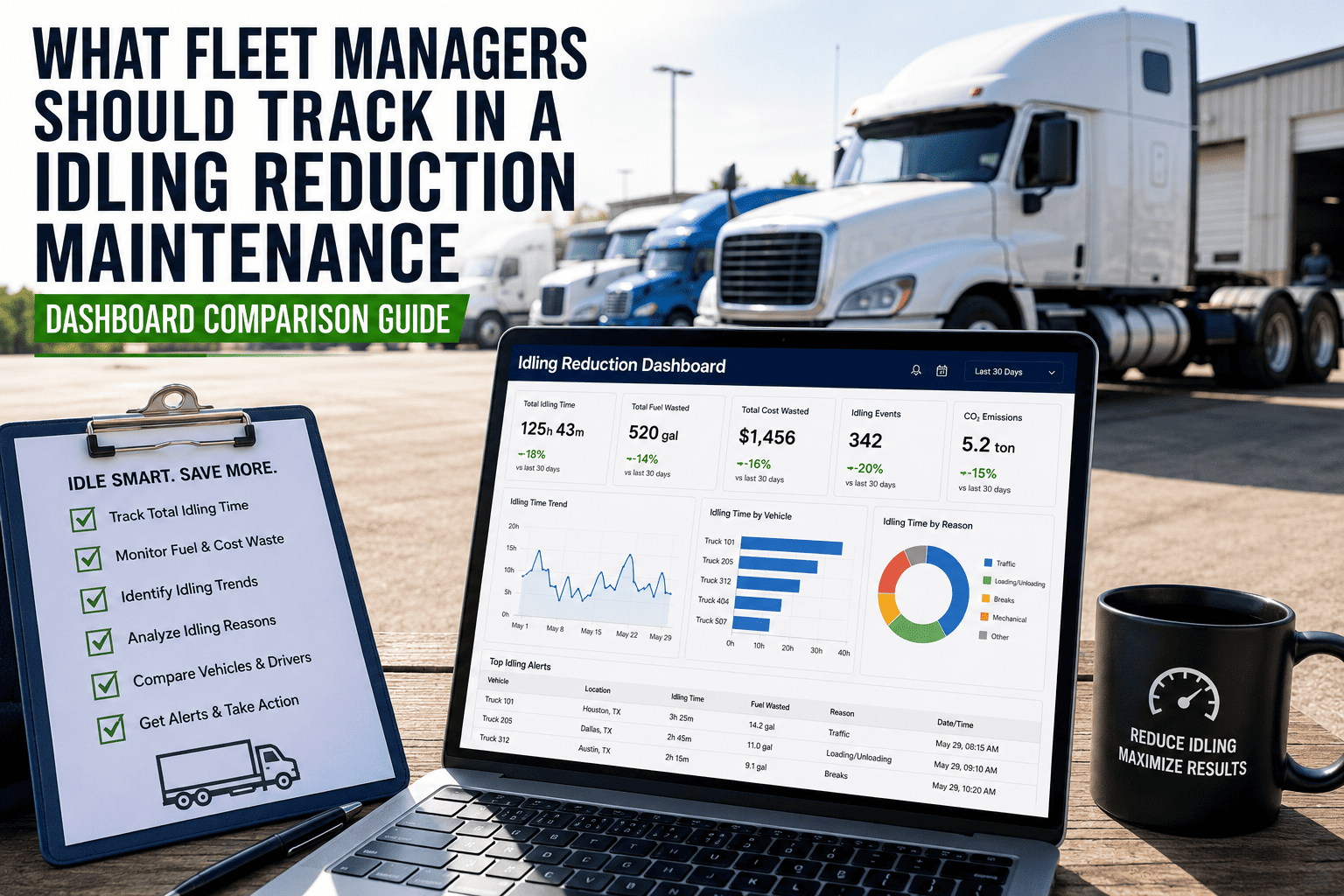
A truck sitting at idle for two hours a day burns fuel for zero miles driven, and most fleets never see that cost until the fuel bill arrives weeks later. Drivers idle to run the heater, wait between stops, or warm up the cab, and none of it shows up as a single line item anyone tracks. Across a full fleet, that invisible habit adds up to thousands of dollars in wasted fuel, faster engine wear, and emissions nobody budgeted for. See exactly how much idling is costing your fleet right now by trying Oxmaint free.
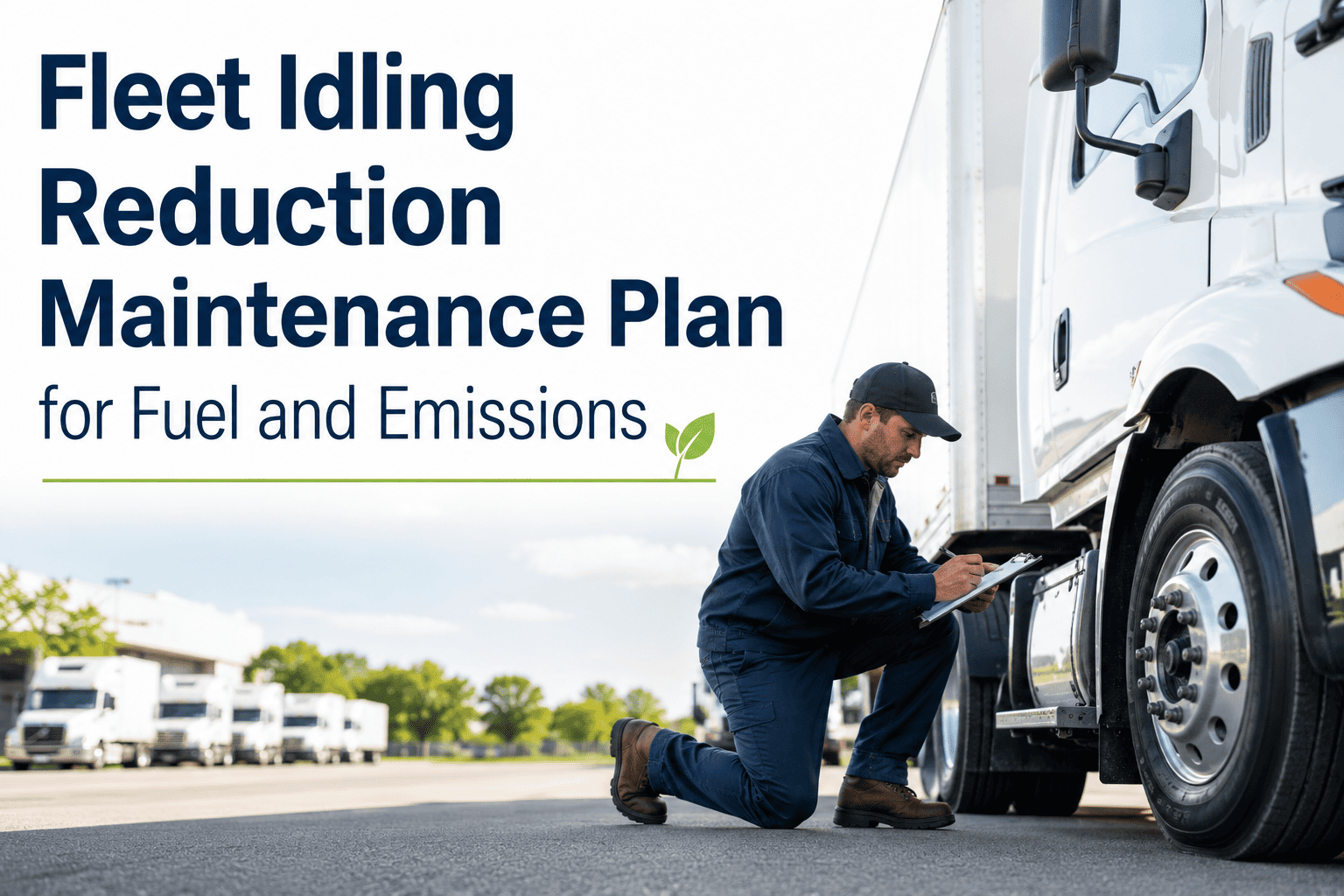
Fleet Idling Reduction Maintenance Plan for Fuel and Emissions
The idle data, maintenance triggers, and driver habits a tracking plan needs to cut fuel waste, slow emissions-system wear, and keep idling off your maintenance budget.
Why Idling Costs More Than the Fuel Gauge Shows
Idling feels harmless because the truck isn't moving, but the engine keeps running, the emissions system keeps working overtime, and fuel keeps burning the entire time. Fleets that don't track idle hours separately from drive hours end up budgeting for fuel waste and accelerated wear as if they were unavoidable, when most of it is preventable.
8 Things an Idling Reduction Plan Should Track
A plan only cuts fuel waste if the data behind it shows exactly where idle hours are coming from.
Daily and weekly idle time logged separately from drive time for every vehicle in the fleet.
Whether idling came from a delivery stop, traffic, HVAC use, or a driver break, not just a total number.
Gallons consumed while stationary, converted directly into a dollar figure per vehicle and per route.
Emissions-system stress that builds up faster on engines that idle heavily between short trips.
Whether automatic shutdown timers are firing as configured or being overridden by drivers.
Which drivers consistently idle longer than their route requires, for targeted coaching.
Cold-start warm-ups and summer cab cooling tracked separately so seasonal spikes don't get blamed on drivers.
Oil and filter intervals adjusted for engine hours, not just mileage, on high-idle vehicles.
Idle Cost by Vehicle Type
Idle fuel waste scales with engine size, so a fleet-wide average hides where the real cost is coming from.
| Vehicle Type | Typical Idle Burn Rate | Annual Cost at 2 Hrs/Day Idle |
|---|---|---|
| Passenger Car | 0.16-0.39 gal/hr | Roughly $230-$560 per vehicle |
| Light Delivery Van | 0.25-0.4 gal/hr | Roughly $470-$750 per vehicle |
| Medium-Duty Truck | 0.44-0.84 gal/hr | Roughly $820-$1,570 per vehicle |
| Heavy-Duty Truck | 0.8-1.0 gal/hr | Roughly $1,500-$1,870 per vehicle |
| Refrigerated / Reefer Unit | 1.0+ gal/hr with reefer running | Often $2,000+ per vehicle |
Habits That Quietly Drive Up Idle Hours
These four patterns show up across almost every fleet that hasn't put idle tracking in place.
Drivers leave the engine running for heat or air conditioning during breaks instead of using cab power options.
Engines run far longer than needed to warm up, especially in winter months with no policy limit set.
Engines stay on through long loading or delivery waits instead of shutting down for the duration.
Without an automatic timer, the decision to shut off the engine is left entirely to the driver, every time.
Idle Reduction Results, by the Numbers
Stop Paying for Fuel That Goes Nowhere
Oxmaint tracks idle hours by vehicle and driver, flags emissions-system wear early, and turns idle data into a maintenance plan you can act on.
How Oxmaint Builds Your Idling Reduction Plan
Engine hours separate into idle and drive time automatically, no manual log entry required.
Idle hours convert into a dollar figure per vehicle, route, and driver so the cost is never hidden.
Maintenance intervals adjust for vehicles running high idle hours, ahead of emissions-system failures.
Weekly idle rankings highlight where coaching will save the most fuel, fleet-wide.
Frequently Asked Questions
How quickly can a fleet see savings from idle reduction?
Most fleets see measurable fuel savings within the first 30 days once idle hours are visible and drivers get direct feedback. Start a free trial to see your own idle data.
Does idling actually damage the engine, or just waste fuel?
Both. Extended idling accelerates wear on emissions components and can lead to earlier, more expensive repairs.
Can the plan separate necessary idling from avoidable idling?
Yes. Idle events are tagged by cause, such as delivery stops or cab comfort, so policy changes target the avoidable portion. Book a demo to see cause-level reporting.
How does idling affect maintenance scheduling?
Engine-hour based intervals shift earlier for high-idle vehicles, since idle hours wear components even without added mileage.
Can drivers see their own idle performance?
Yes. Individual idle reports support coaching conversations instead of blanket policy enforcement across the whole fleet. Try it free to set up driver-level reporting.
Turn Idle Hours Into Fuel Budget You Keep
Stop treating idling as a fixed cost of doing business. Start free with no credit card, or walk through your own fleet's idle data on a live call.