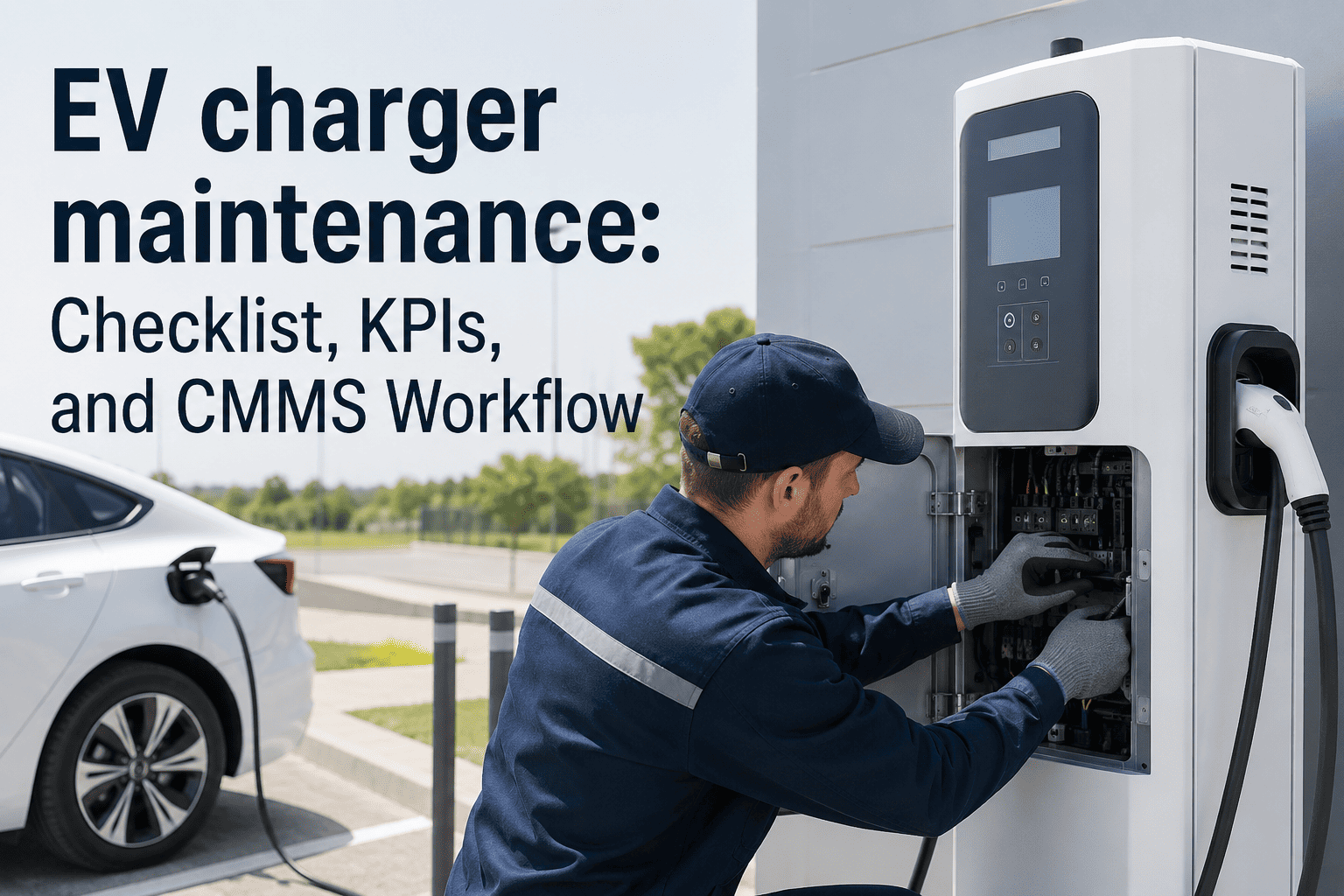
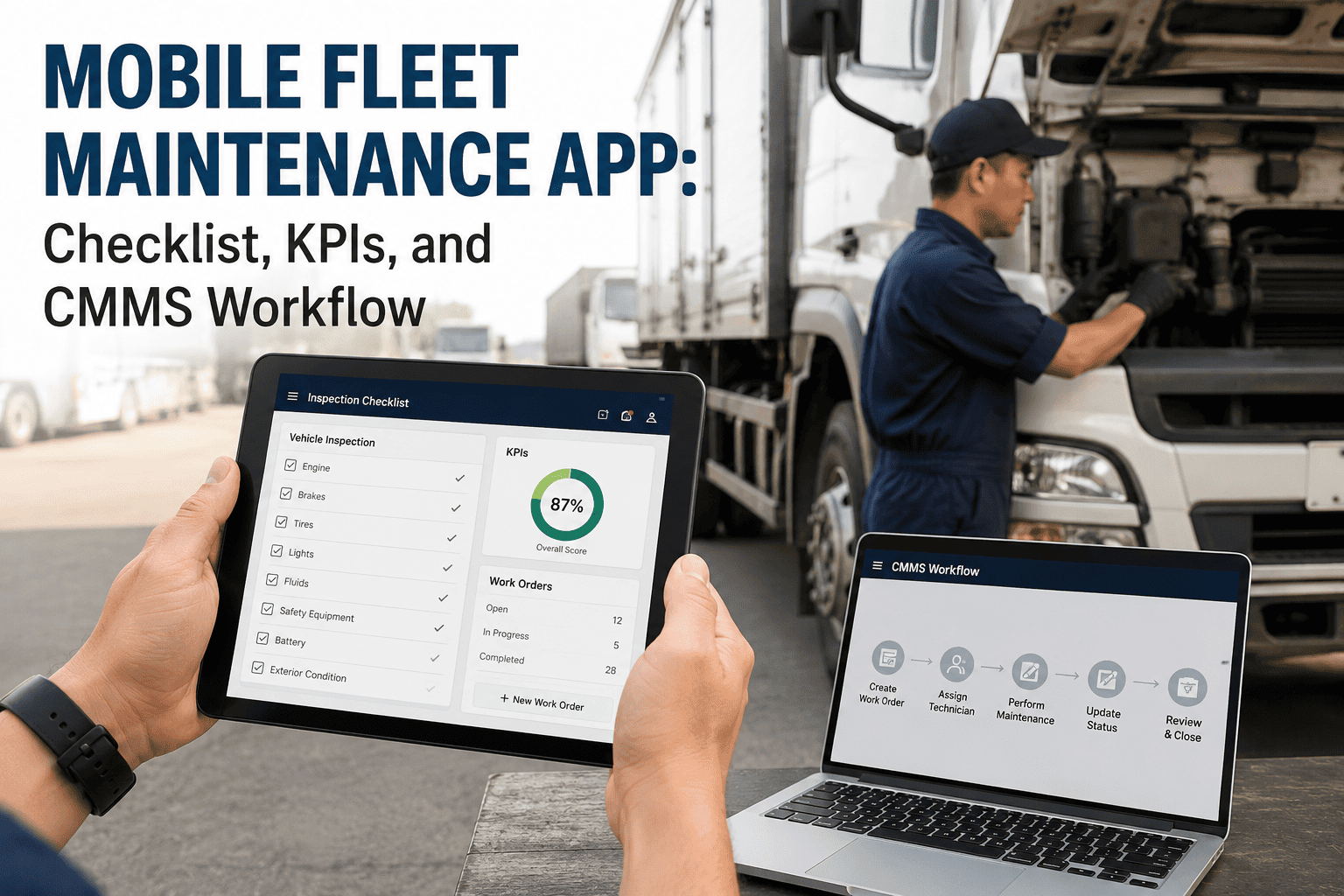
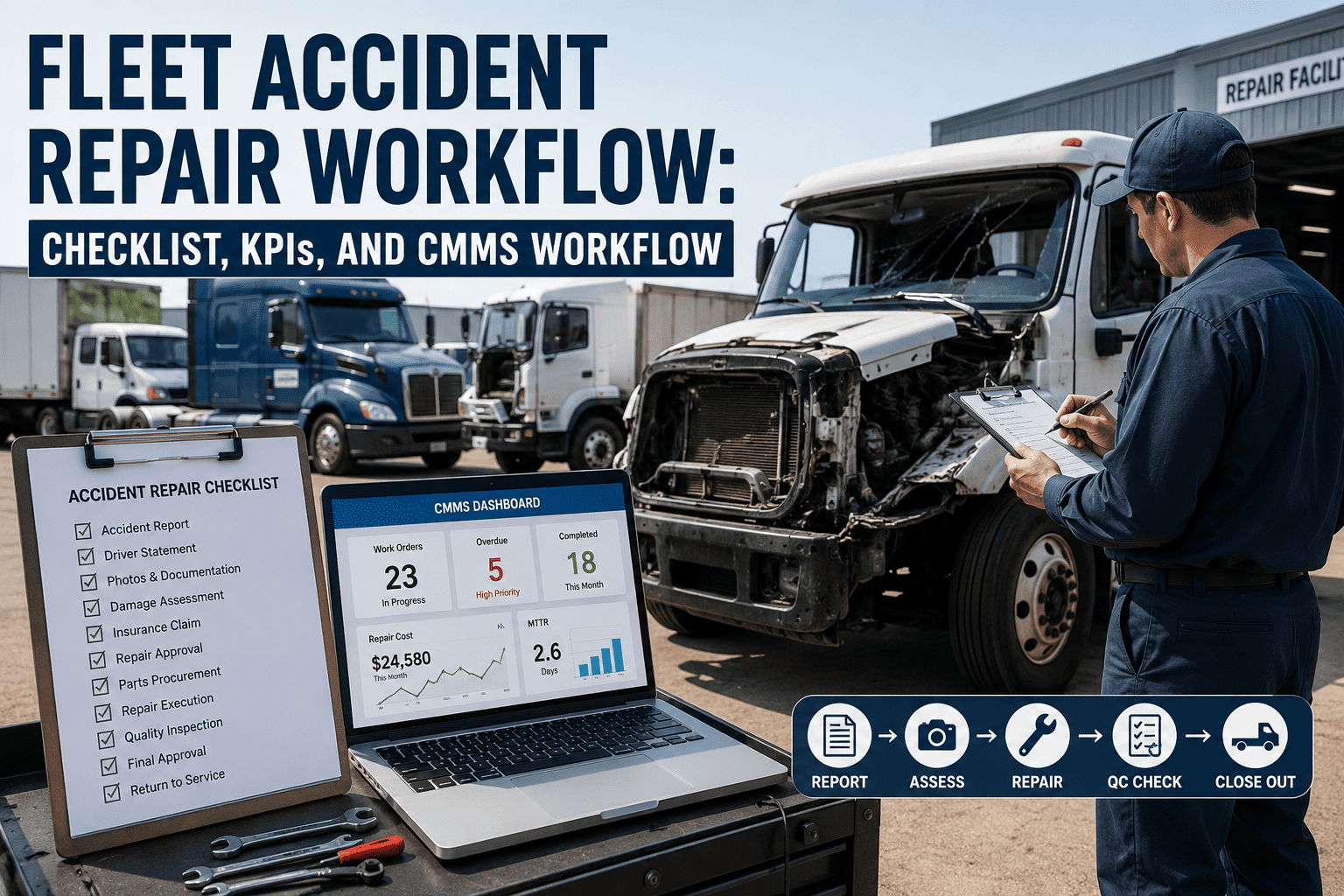
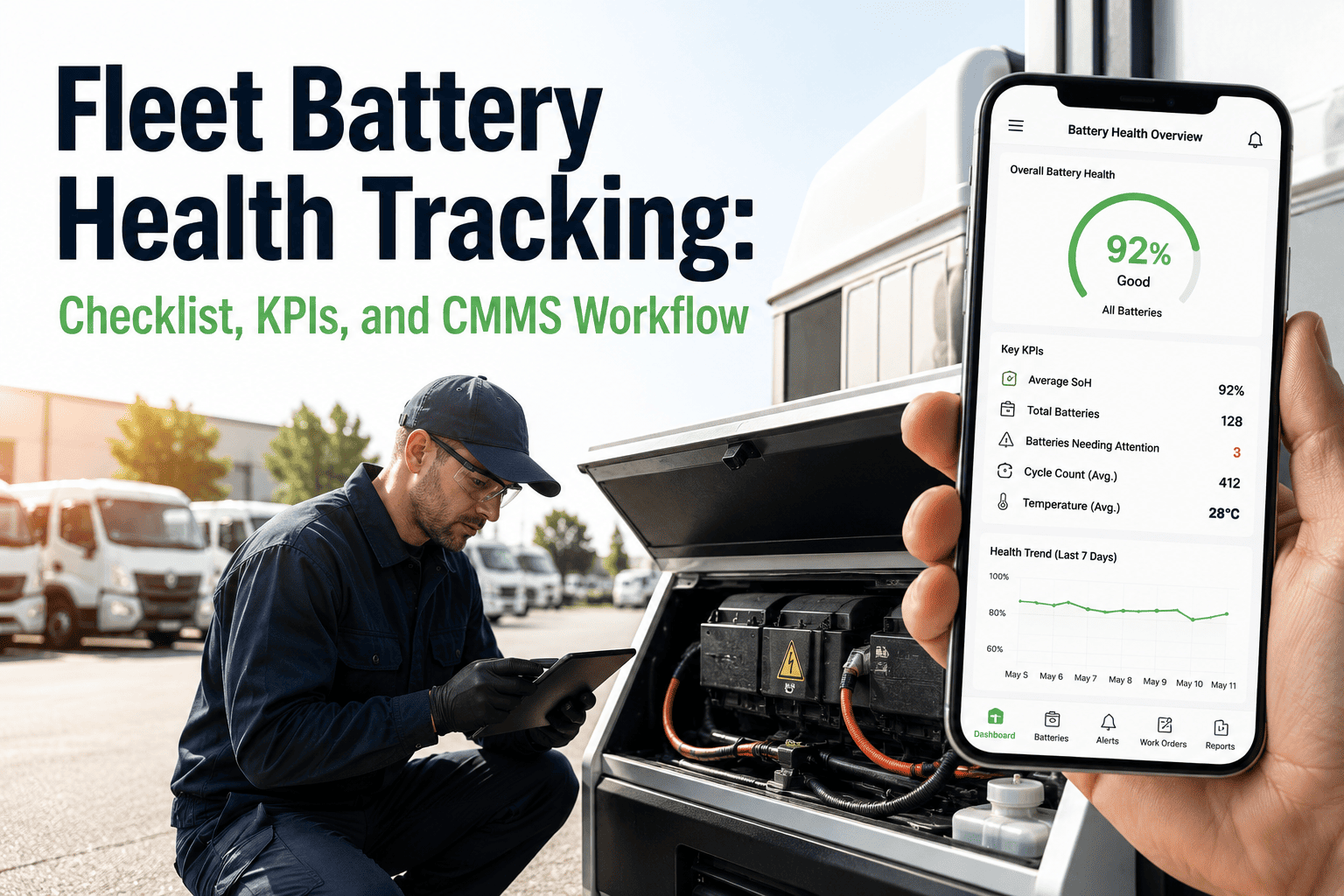
An EV charging station that goes offline during a driver's scheduled charging window does not just inconvenience the driver — it cascades through dispatch, delays the next shift, and in a managed-charging fleet, triggers an unplanned grid demand event that costs more than the repair. EV charger maintenance is different from other fleet equipment maintenance because failures are invisible until they are total: a charger that reports ready may be delivering 20% of rated power due to a corroded contact or a thermal derating condition. Fleets running electric vehicles without a structured charger maintenance program are not managing uptime — they are reacting to breakdowns. OxMaint gives EV fleet teams a charger inspection checklist, fault log, and PM schedule that integrates with vehicle charging records to predict failure before the session never completes.
Manage EV Charger Maintenance on OxMaint
Schedule charger PM, log faults per station, track connector wear, and link charger health to vehicle uptime — all in one fleet CMMS built for mixed EV and ICE fleets.
23%
of EV fleet downtime attributed to charger faults, not vehicle faults
40%
of charger failures are connector or cable wear — preventable with monthly inspection
$4,200
average cost of an emergency DCFC repair vs $180 for a scheduled PM visit
6 mo
maximum interval between full electrical safety inspections per IEC 60364
EV Charger Types — What to Inspect Differs by Hardware
Not all chargers fail the same way. A Level 2 AC charger fails differently from a DC fast charger — and fleet managers who use a single inspection checklist for both miss the failure modes specific to each type. The comparison below maps inspection priorities to charger type so nothing is carried over from the wrong category.
Level 2 AC — EVSE
6–19 kW / J1772 or Type 2
Pilot signal and proximity circuit check
Connector and inlet pin wear — 3,000-cycle inspection
Cable jacket for cuts, abrasion, and UV degradation
Earth fault and RCD trip test — monthly
Thermal scan of connection terminals annually
Display and UI panel function test
Primary failure mode: connector pin corrosion and cable jacket damage from repeated coiling and traffic exposure.
DC Fast Charger — DCFC
50–350 kW / CCS or CHAdeMO
Cooling system — coolant level, pump, and heat exchanger
Power module fault log review — all error codes
CCS connector contact force and retention latch
Cabinet ventilation and filter condition
Ground isolation resistance — quarterly
Communication protocol test — OCPP session log review
Primary failure mode: thermal derating from blocked ventilation and coolant degradation — power delivery drops without visible fault.
Wireless / Pantograph
Depot inductive and overhead
Pad alignment markers — wear and visibility
Foreign object detection system test
Transfer efficiency log — flag sessions below 88%
Pantograph contact pads — wear measurement
Communication link to vehicle BMS — session log
Weather seal and enclosure inspection
Primary failure mode: misalignment and pad wear causing efficiency loss — the charger reports a completed session but the vehicle has not received full energy.
EV Charger Maintenance Checklist — Monthly and Quarterly Tasks
Use these checklists per station ID — not per charger model. A fleet depot with 12 chargers needs 12 station records, because fault history, connector cycle counts, and PM compliance are tracked per unit, not per hardware type. Record findings in OxMaint per station with photos of connector condition at every monthly visit.
Safety
Earth fault and RCD test — trip and reset function
Use the test button on the RCD and verify trip within 30ms. A RCD that does not trip on test is a personnel safety failure — the charger must be taken offline immediately and an electrician called before any vehicle connects.
Safety
Connector and inlet pin condition — corrosion and mechanical wear
Inspect all pins under direct light — green or white oxidation on CCS pins increases contact resistance and causes thermal events inside the vehicle inlet. Any pin corrosion requires connector replacement before the next session.
Maintenance
Cable jacket — full length inspection for cuts, abrasion, and kinking
High-power cables that have been driven over, kinked at the same point repeatedly, or caught in door closures develop internal conductor damage that does not show on the surface. Any jacket breach requires cable replacement.
Maintenance
Charging session log review — failed or incomplete sessions
Pull the OCPP session log from each charger and flag any sessions that ended before reaching target SOC without a driver-initiated stop. More than 3 incomplete sessions per station per month is a fault indicator requiring investigation.
Maintenance
Physical enclosure — doors, seals, and ingress protection
Verify enclosure door gaskets are intact and the cabinet closes flush. Any gap in the enclosure seal of an outdoor charger allows moisture ingress into the power electronics — especially critical for coastal and high-humidity depots.
Operations
Display, UI, and RFID card reader function test
A charger with a working power module but a failed display or RFID reader is unusable by drivers. Test all UI functions including error display and emergency stop button operation at every monthly visit.
Safety
Ground isolation resistance test — measurement and log
DCFC systems require ground isolation resistance above 1 MOhm between DC output and chassis. Below this threshold indicates insulation degradation in the cable or connector — OOS condition until repaired by a qualified EV technician.
Maintenance
Cooling system — coolant level, colour, and pump operation
Liquid-cooled DCFC units lose 5–8% of coolant annually through slow evaporation. Coolant that has turned yellow or brown has degraded inhibitor content — replace the full cooling circuit, not just top up. A pump that cycles more than twice per hour at idle indicates a cooling leak.
Maintenance
Ventilation filter replacement and heat exchanger cleaning
A blocked inlet filter increases ambient temperature inside the DCFC cabinet by 8–12°C — triggering thermal derating that drops power delivery by 30–50% without showing a fault code. Replace filters at every quarterly PM without waiting for visual blockage.
Safety
Thermal scan of all power terminals and bus connections
Use an infrared camera to scan all accessible terminal connections with the charger under load. Any connection running more than 10°C above ambient is a loose or corroded joint — a thermal event at high current is a fire risk.
EV Charger KPIs — What to Track in Your CMMS
Charger availability is the output metric. Everything below it is a leading indicator that tells you why availability is dropping before it shows up as a missed charging window. Track these six KPIs per station in OxMaint and review weekly during depot briefings.
Station Availability
Target: above 95% — calculate as (total session-ready hours) / (total scheduled charging hours) per station per month
Session Completion Rate
Target: above 97% — sessions that end before target SOC without driver action signal intermittent faults before total failure
Mean Time Between Faults
Target: above 90 days between fault events — stations below 60-day MTBF need root cause investigation, not reactive repair
PM Compliance Rate
Target: 100% of scheduled PM completed on time — each missed PM adds to fault probability for that station in the following 30 days
Connector Cycle Count vs Replacement Schedule
Replace CCS connectors at 3,000 cycles or 18 months — track per station, not per fleet average, because high-utilisation stations reach this faster
Emergency Repair as % of Total Charger Spend
Target: below 15% — a fleet spending more than 30% of charger maintenance budget on emergency repairs has a PM compliance problem, not a hardware problem
Charger Downtime Costs More Than the Repair
Every hour a charger is offline is an hour a vehicle is not charging. OxMaint tracks station availability, fires PM work orders before faults happen, and logs every connector cycle count.
Frequently Asked Questions
How often should EV chargers in a fleet depot be inspected?
Monthly visual and safety inspections for all charger types, quarterly full electrical inspections for DCFC units, and annual thermal imaging of all power terminals. High-utilisation stations serving more than 20 sessions per day should have monthly connector inspections regardless of type.
OxMaint schedules charger PM by utilisation, not just calendar date.
What causes EV chargers to deliver less power than rated?
Thermal derating from blocked ventilation or degraded coolant is the most common cause — the charger reduces output to protect power modules without showing an error. Corroded connector pins, degraded cable contacts, and a communication fault with the vehicle BMS also cause partial power delivery. A charger that passes a connectivity test can still derate significantly during a session.
When should a CCS connector be replaced on a fleet DC fast charger?
At 3,000 mating cycles or 18 months, whichever comes first — for a depot DCFC averaging 15 sessions per day, that is approximately 6 months. Any connector showing visible pin corrosion, a damaged retention latch, or difficulty mating requires replacement immediately regardless of cycle count.
Book a demo to see how OxMaint tracks connector cycles per station.
Can EV charger maintenance be tracked in the same CMMS as vehicle PM?
Yes — and linking charger maintenance records to vehicle charging records is where CMMS value multiplies for EV fleets. When a vehicle consistently shows incomplete charging sessions, the CMMS can correlate which station served that vehicle and whether a PM was overdue on that station at the time of the fault.
What safety checks are mandatory for fleet EV charger inspection?
RCD trip test at every monthly inspection, ground isolation resistance measurement at every quarterly inspection for DCFC units, and thermal imaging of all accessible terminals annually. Any charger where the RCD fails to trip on test must be taken offline immediately — this is a personnel safety condition, not a maintenance defect rating.
Build a Charging Infrastructure Your Fleet Can Rely On
OxMaint connects charger PM, fault logging, and vehicle charging records into one EV maintenance workflow — so your depot is ready every time a vehicle plugs in.