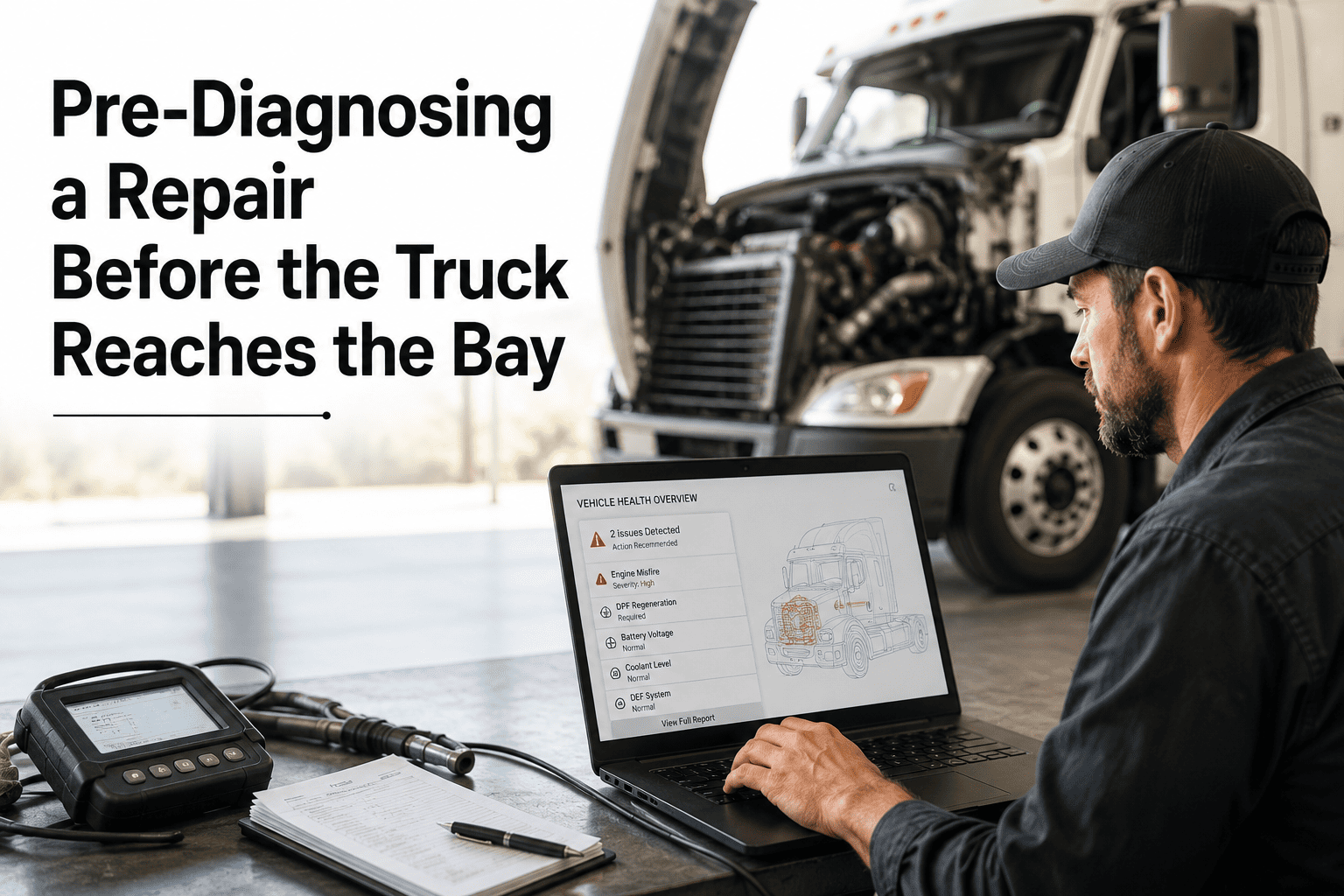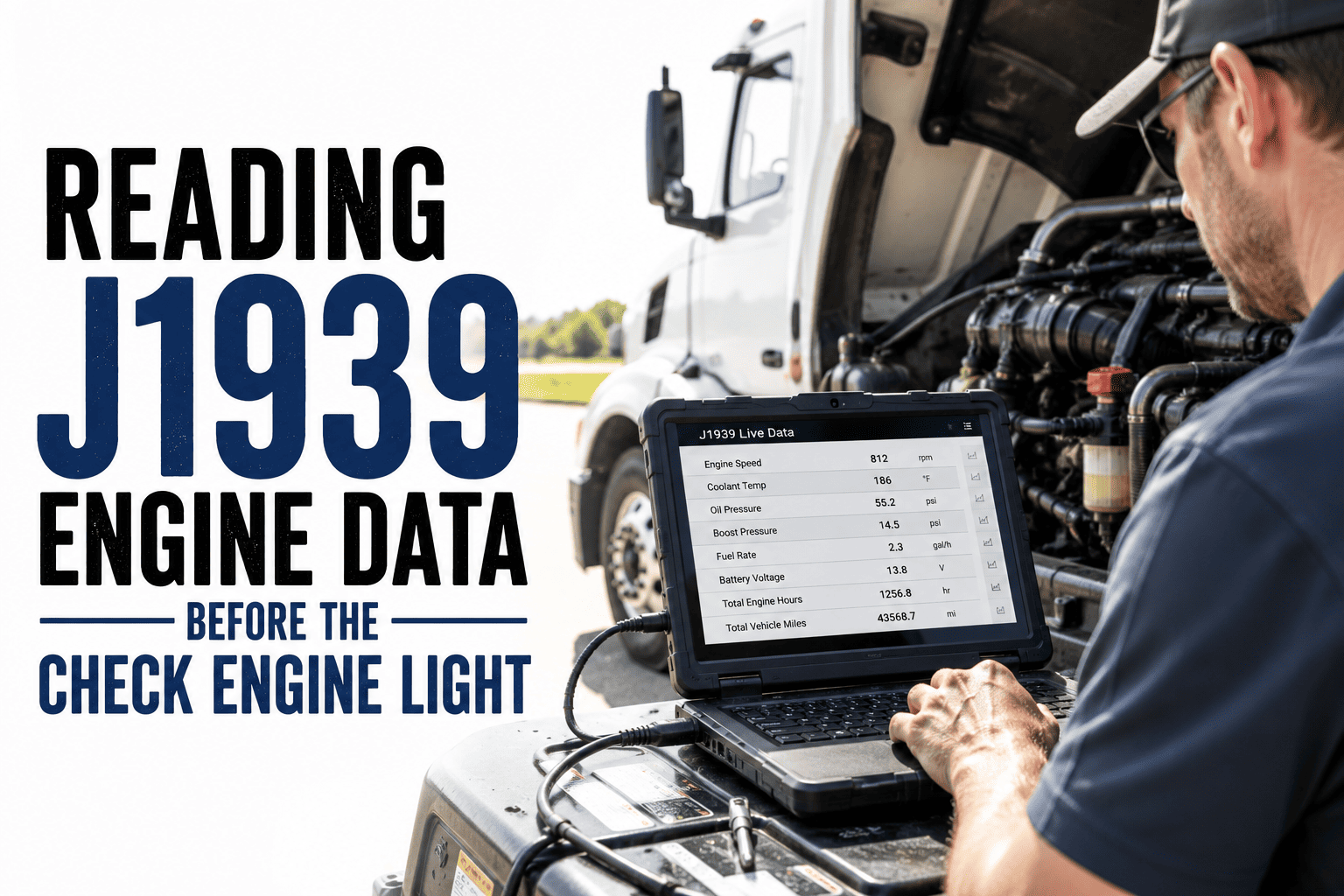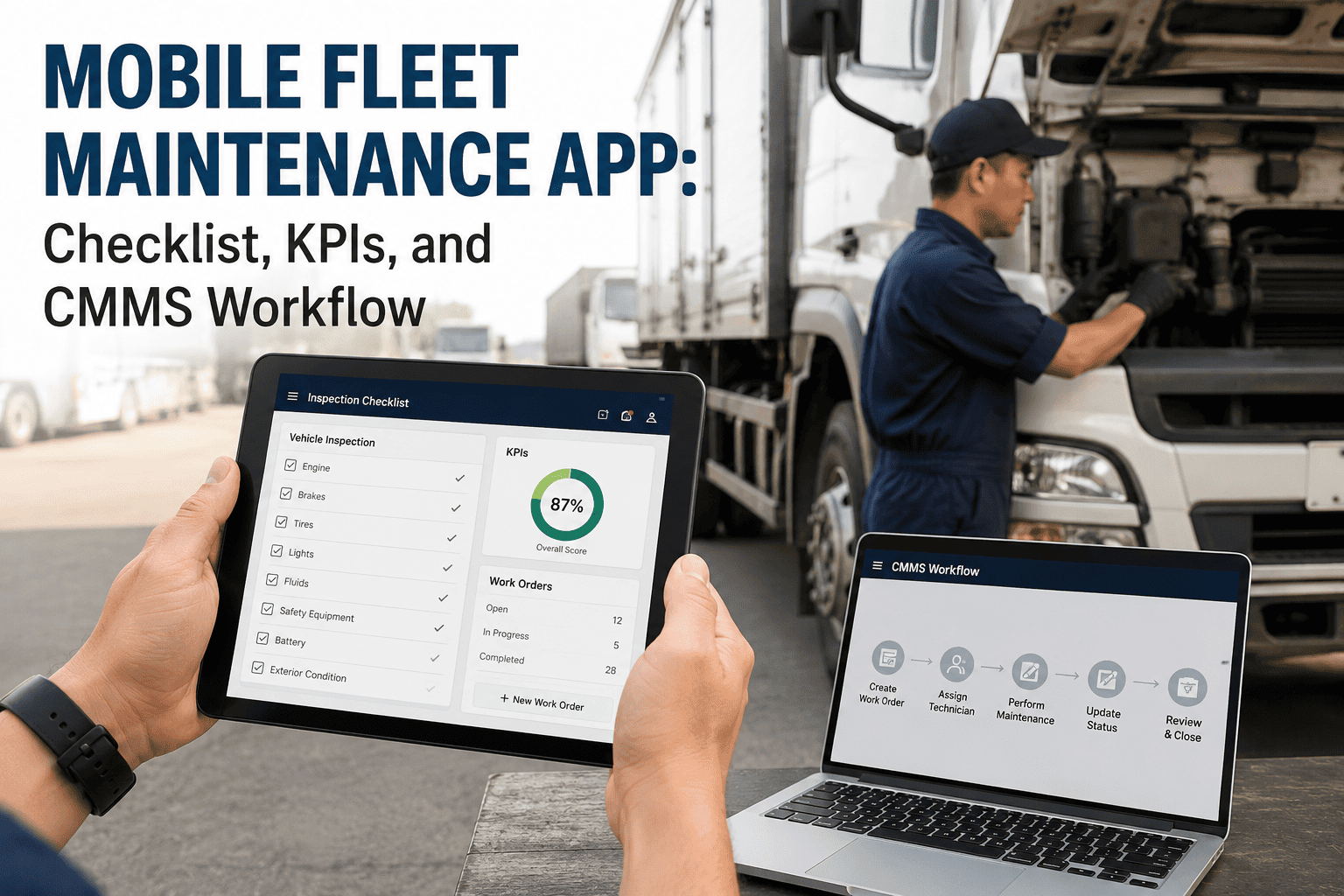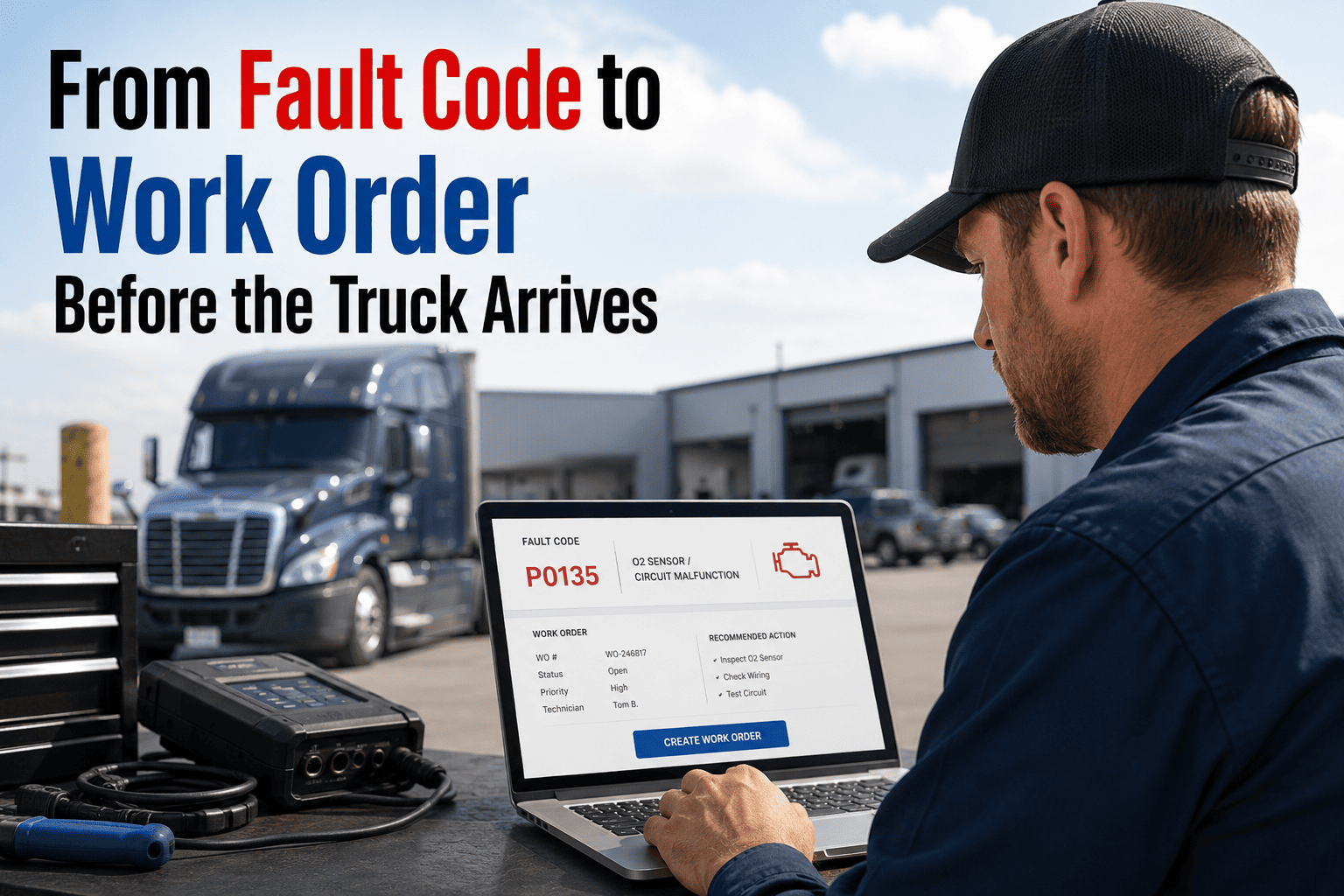
A check engine light is not a warning — it is a message your fleet is already ignoring. The moment an engine control unit senses a reading outside its normal range, it logs a diagnostic trouble code, often weeks before a driver notices anything different. A single truck can throw 300 to 400 of these codes a month, and most fleets have no way to tell which one means "schedule it next week" and which one means "pull it off the road now." The fix isn't more dashboards — it's routing every code straight into a scored, prioritized work order the moment it fires. See how that routing works by booking a demo with our team.
From Check Engine Light to Work Order — Before the Truck Even Arrives
Every diagnostic trouble code your engines generate is an early warning. The only question is whether anyone — or anything — is reading it in time.
Reading a Code Today vs. Discovering It on the Shoulder
The same underlying fault costs a fleet a completely different amount depending on when it gets caught. A code read at the depot and a code discovered 400 miles from the nearest shop are not the same repair — they are two different financial events.
Emergency repairs triggered by an ignored fault code typically run 3–9x higher than the same repair completed as a scheduled visit, and unplanned breakdowns now cost fleets $448–$760 per vehicle per day in lost use.
The Pipeline From Sensor to Scheduled Repair
A sensor reading drifts outside its normal range and the ECU logs a code via OBD-II or J1939 — often before any dashboard light appears.
Your existing GPS hardware streams the code instantly. Critical codes transmit the moment they're detected, not on the next 15-minute sync.
The raw code is decoded into plain language and ranked — so 300 monthly codes become the handful someone actually needs to act on.
Critical and serious codes generate a work order automatically, with vehicle ID, location, and probable cause attached — no manual transcribing.
The shop sees the fault before the truck rolls in, pre-stages the right part, and closes the loop before a small issue becomes a breakdown.
Not Every Code Means Pull Over — But Some Do
Treating every fault code the same way is how urgent ones get lost in a flood of minor ones. A structured severity model tells your team exactly how fast to move.
Engine overtemperature, low oil pressure, brake system faults — the kind of code that can turn into catastrophic damage within minutes.
A confirmed, stored fault that needs attention soon but doesn't require stranding the vehicle mid-route.
A pending code — parameters drifting outside range intermittently. Catching it here prevents escalation into a hard fault.
Minor sensor irregularities worth tracking for patterns, but not worth a shop visit on their own.
OBD-II vs. J1939 — Which Protocol Talks to Your Fleet
Standard on Class 1–5 vehicles — vans, pickups, and light delivery trucks. Codes follow a simple letter-plus-number format tied to a fixed component list.
Semi-tractors and heavy equipment pair a Suspect Parameter Number identifying the component with a Failure Mode Identifier describing the failure type.
| Code Type | Example | What It Points To | Typical Response |
|---|---|---|---|
| Emissions / SCR | SPN 3226 | Aftertreatment SCR catalyst fault | Urgent — risk of engine derate |
| Oil pressure | P0524 | Low oil pressure sensor reading | Critical — stop immediately |
| Coolant temp | P0217 | Engine overtemperature condition | Critical — stop immediately |
| Sensor drift | P0171 | Fuel system running lean (pending) | Moderate — schedule inspection |
| Network / U-code | U0100 | Lost communication with ECM | Urgent — service within 48 hrs |
Stop Reading Codes One Truck at a Time
Oxmaint decodes OBD-II and J1939 faults from every engine platform in your fleet — Cummins, Detroit Diesel, PACCAR, Volvo, and more — into one prioritized queue, with a work order attached before your technician even looks up.
What Fleets See After Automating Fault Response
Fault Code Alert Questions
Do I need new hardware to start monitoring fault codes?+
What is the difference between a pending code and a stored code?+
Can I just clear a fault code and keep driving?+
Why do so many fault codes get ignored by maintenance teams?+
How fast can a fleet get fault code alerts running?+
The Next Fault Code Your Fleet Ignores Could Be a $200 Fix — or an $8,000 Breakdown
Connect your telematics, let every code get scored and routed automatically, and give your shop the head start it needs before the truck even pulls in.