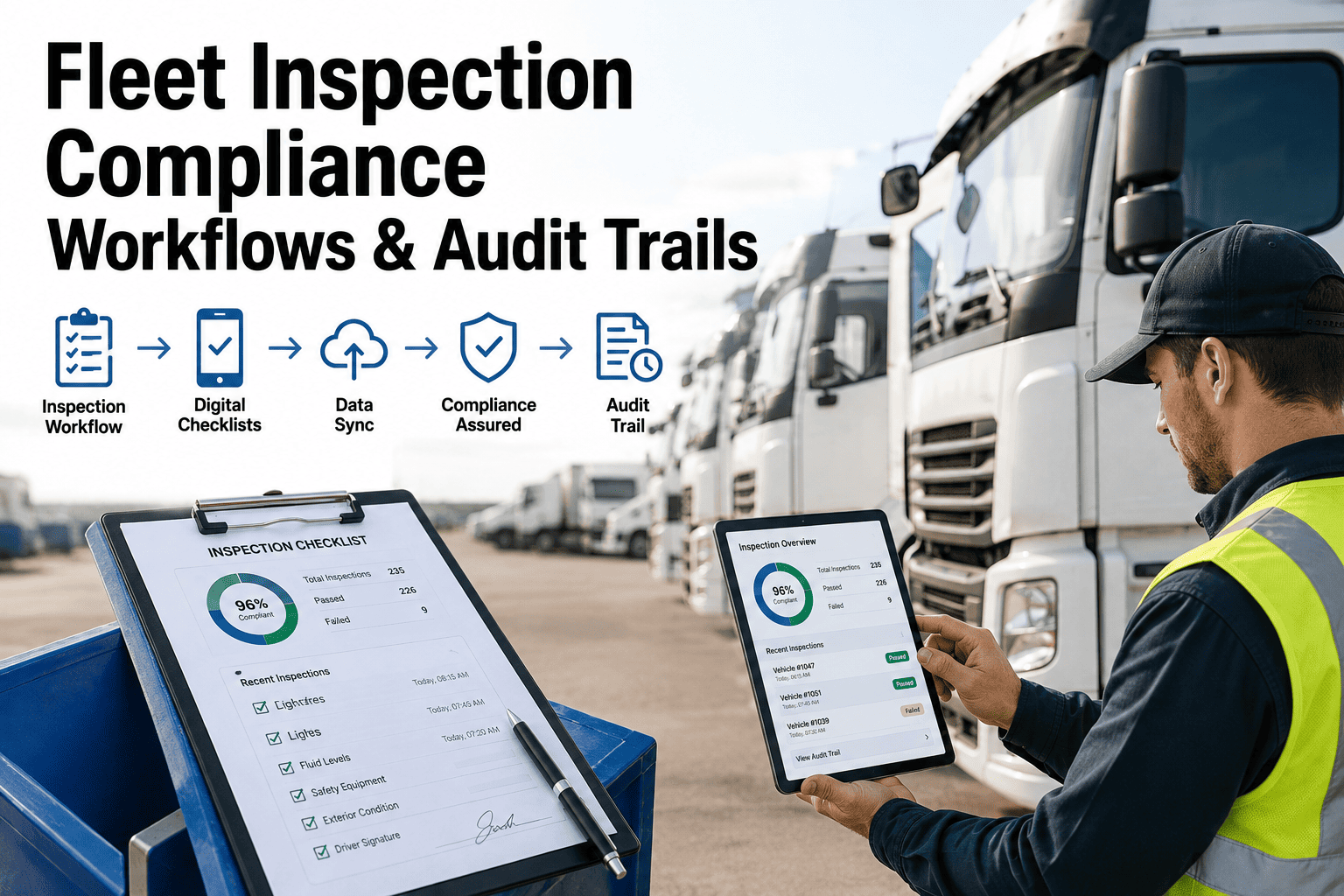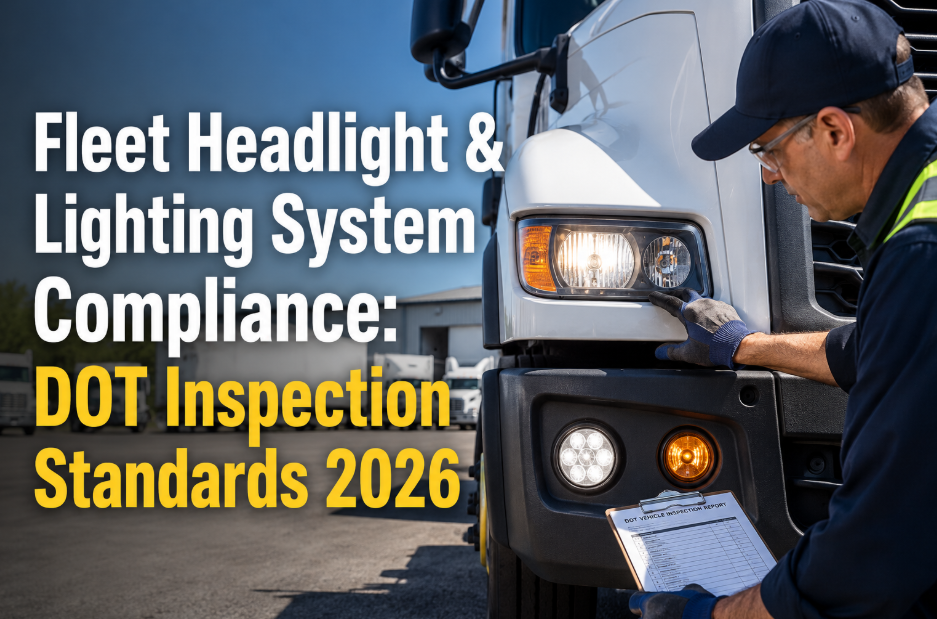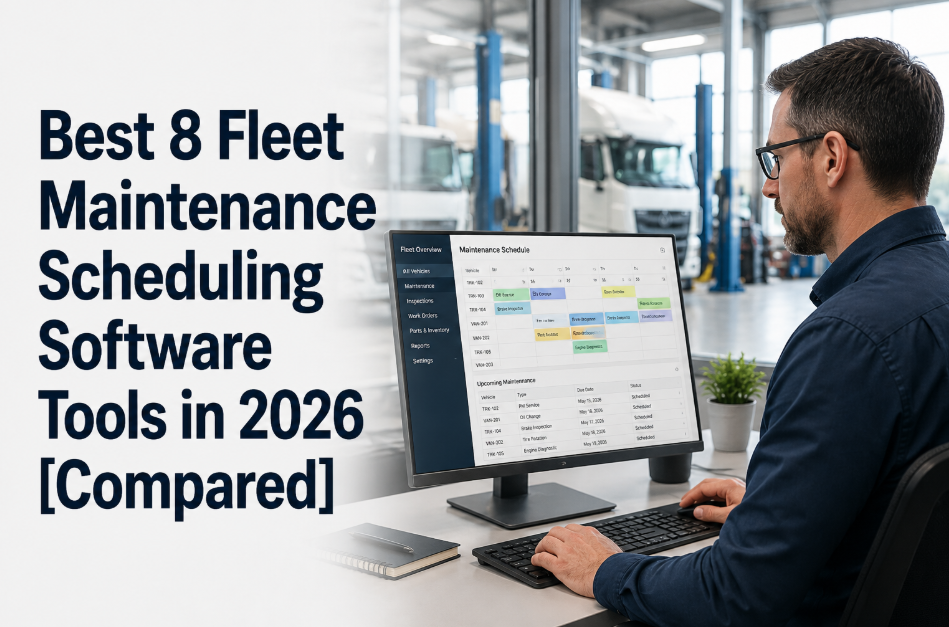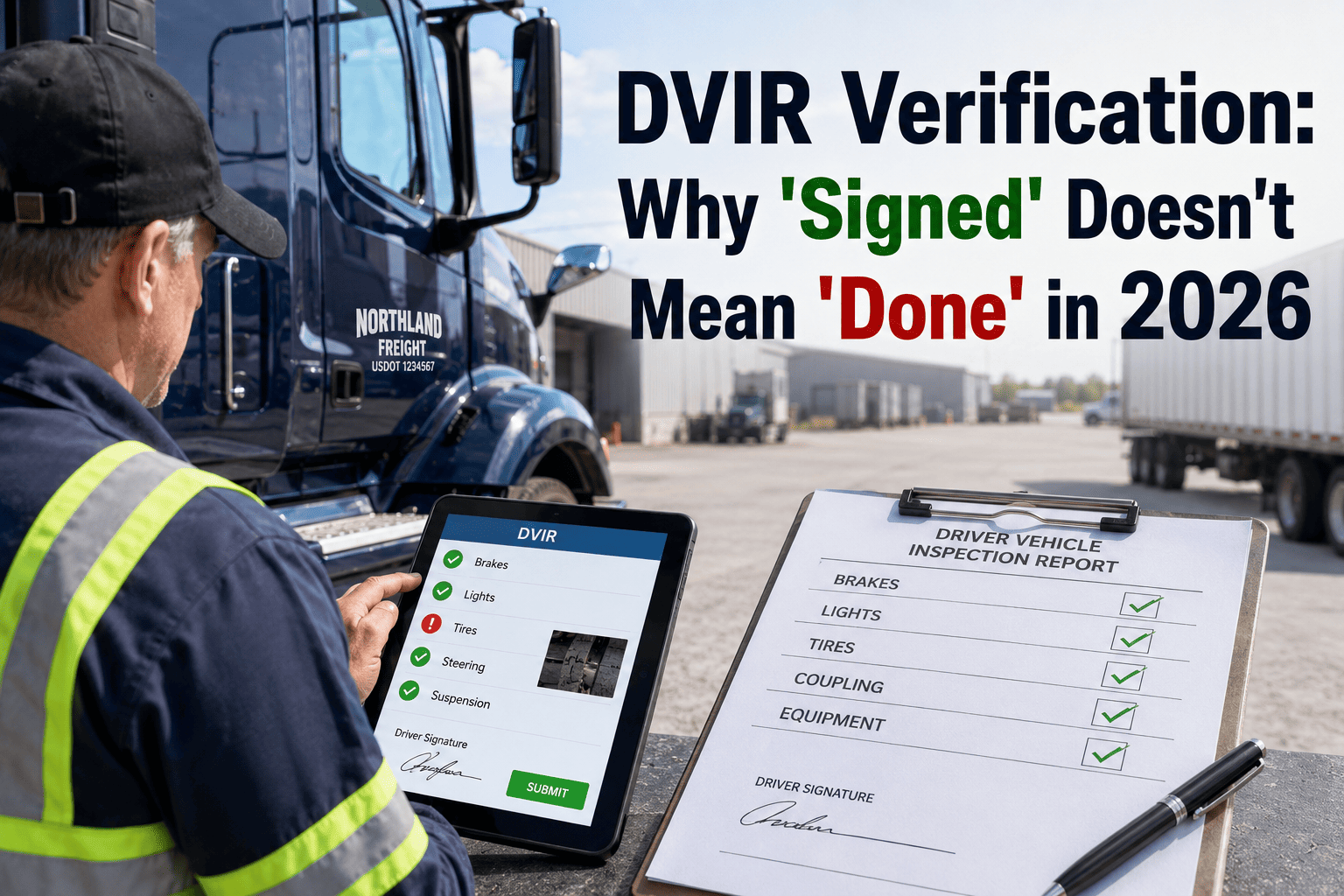
A signed DVIR tells you a driver touched a form. It does not tell you they touched the brakes, checked the tires, or looked twice at the lights. Pencil-whipped inspection reports are one of the most common findings in DOT compliance reviews, and in 2026 enforcement teams are cross-checking signature timestamps against GPS location, ignition data, and dwell time at the vehicle to catch reports that were completed in seconds instead of minutes. Fleets that treat a signature as proof of a real inspection are finding out, usually during a roadside stop or an intervention audit, that "signed" and "done" are two very different things. That gap shows up later as CSA points, out-of-service orders, and repeat violations that trigger deeper scrutiny. Start a free trial with Oxmaint to see what a genuinely verified DVIR record looks like.
DVIR Verification: Why "Signed" Doesn't Mean "Done" in 2026
Pencil-whipped DVIRs pass on paper and fail on the road. Here are the six verification signals that separate a real inspection from a box-ticking exercise, and how to build a record that survives an audit.
Why a Signature Is the Weakest Link in Your Inspection Program
A pre-trip inspection is supposed to take a driver around the vehicle checking brakes, tires, lights, coupling devices, fluid levels, and a dozen other items. Done properly, it takes several minutes. Done as a formality, it takes fifteen seconds and a signature. Paper logs and basic e-DVIR apps cannot tell the difference between the two, because both produce the exact same output: a completed form with a name attached to it. The form looks identical whether the driver walked the full circle check or signed it while still sitting in the cab.
This is what "pencil-whipping" means in practice, and it is not usually malicious. Drivers under time pressure, running behind on a tight dispatch window, or simply desensitized by months of nothing-ever-goes-wrong routine will default to the fast path. The problem is that the fast path is invisible to a fleet manager reading a stack of signed reports, and it is exactly what a DOT investigator looks for when a vehicle with a "clean" DVIR history shows up with a bald tire or a cracked brake chamber during a roadside inspection.
The trouble compounds over time because a clean-looking DVIR history becomes a liability rather than a protection. Investigators reviewing a fleet's records after a crash or a complaint are not just checking whether forms exist, they are checking whether the forms are believable. A driver who reports zero defects for eighteen months straight, on a vehicle that has clocked 90,000 miles, does not read as diligent, it reads as unverified. Fleets that assume a stack of signatures equals a defensible safety record often discover the opposite is true the moment someone actually looks closely at the pattern behind the paperwork.
6 Signals That Separate a Real Inspection From a Box-Ticking Exercise
A genuine circle check of a Class 8 tractor-trailer takes roughly 3 to 7 minutes. Reports completed in under a minute, especially on a repeating pattern, are a near-certain sign the driver never left the cab.
The inspection timestamp should match the vehicle's GPS location at the yard or lot, not a location miles down the highway. A mismatch means the DVIR was submitted after the trip had already started.
Tire tread, brake components, lights, and fluid levels captured as timestamped photos create a record that cannot be reproduced without physically being at the vehicle. Text-only checklists can be completed from memory.
A driver or vehicle that reports zero defects across hundreds of consecutive inspections is a statistical outlier, not a sign of a well-maintained fleet. Real inspections surface minor issues on a regular basis.
Fault codes, ABS warnings, and low tire pressure alerts from the vehicle's own telematics system should show up in the following DVIR. When they consistently do not, the inspection is not catching what the truck is reporting.
Identical checklist patterns, identical durations, and identical wording across weeks of reports from the same driver suggest a routine of signing without checking rather than genuine variation from trip to trip.
How DOT and FMCSA Are Catching Pencil-Whipped Reports in 2026
Enforcement in 2026 relies far less on catching a driver mid-inspection and far more on pattern analysis after the fact. Investigators pull historical DVIR data, compare it against roadside inspection findings and telematics fault history, and look for the specific mismatches that indicate a checklist was completed without a real inspection taking place. The table below outlines the main channels through which these mismatches typically surface.
| Enforcement Method | What It Detects | Typical Trigger |
|---|---|---|
| Roadside Inspection Cross-Check | Defects present on the vehicle that were not on the last DVIR | Standard Level 1 or Level 2 inspection |
| CSA Data Pattern Review | Repeated vehicle maintenance violations from the same unit or terminal | BASIC score threshold exceeded |
| Compliance Review Audit | Inspection duration and timing inconsistent with claimed completion | Post-crash or complaint-driven review |
| Intervention Audit | Systemic pattern of signed-but-unverified inspection records | Two or more flagged violations within 12 months |
| New Entrant Safety Audit | Absence of documented, time-stamped inspection process | Standard new-entrant review window |
What a Pencil-Whipped DVIR Actually Costs When It Surfaces
The immediate cost of a missed defect is obvious: a breakdown on the highway, a delayed load, a tow bill, and possibly an injured driver if a brake or tire failure happens at speed. The less obvious cost shows up weeks or months later, when that same missed defect becomes a documented pattern that an auditor uses to argue the entire inspection program is unreliable. One flagged violation is a data point. A pattern of them, especially across multiple drivers or a single terminal, is treated as a systemic failure rather than an isolated mistake.
Systemic findings carry a different weight than individual violations. They are what triggers a compliance review, and a compliance review that concludes a fleet's inspection program is not credible can lead to a conditional safety rating, insurance premium increases, and lost contracts with shippers who require a satisfactory rating as a condition of doing business. None of that starts with a dramatic incident. It starts with a signature that did not mean what it was supposed to mean, repeated often enough that a pattern becomes impossible to explain away as a one-off oversight.
Moving to Verified DVIRs Without Slowing Down Dispatch
Rather than requiring photo verification on every single checklist item from day one, apply it first to brakes, tires, and lights, the three categories responsible for the majority of out-of-service violations, then expand once drivers are comfortable.
Configure minimum expected inspection duration per vehicle class so flags are based on genuine outliers, not arbitrary thresholds that frustrate drivers who are doing the work correctly but happen to be efficient.
A weekly review cadence gives managers enough data to spot genuine patterns without turning every fast inspection into an individual confrontation, which tends to build resentment rather than compliance.
Most flagged drivers are not trying to deceive anyone, they are rushing. Treating the first flag as a training moment rather than a disciplinary one keeps the program credible with the workforce and improves long-term buy-in.
Stop Guessing Whether Your DVIRs Are Real
Oxmaint captures duration, location, defect history, and photo evidence for every inspection, so a signature is backed by a verifiable record instead of standing alone. Build an inspection program that holds up during an audit, not just on paper.
How Oxmaint Turns a Signature Into a Verified Record
Verification does not mean adding friction for the sake of it. The goal is to capture the handful of data points that prove an inspection actually happened, without turning a five-minute circle check into a fifteen-minute bureaucratic exercise that drivers resent and eventually work around anyway.
Every DVIR logs the exact start and end time of the inspection alongside the driver's location, flagging reports completed faster than a full circle check reasonably allows for review.
Configure specific inspection items, tires, brakes, lights, and fluid levels, to require a timestamped photo before the checklist item can be marked complete, creating physical proof of presence.
Fleet-wide dashboards surface drivers and vehicles with abnormally low defect reporting rates, so managers can coach specific individuals instead of reviewing every report manually.
Active fault codes from the vehicle automatically cross-reference against the submitted DVIR, closing the gap between what the truck reports and what the driver documents.
Any reported defect instantly generates a prioritized work order with technician assignment, removing the delay between a driver noticing an issue and a mechanic addressing it.
Generate a complete, time-stamped inspection history for any vehicle or driver in seconds, formatted for a compliance review or roadside documentation request.
What Fleets See After Switching to Verified DVIRs
The shift from signature-based inspections to verified ones tends to show measurable results within the first reporting quarter. Inspection durations rise to a realistic range, defect discovery rates climb because drivers are actually looking for problems, and the time it takes to respond to a compliance request drops from days to seconds. The figures below reflect what fleets typically report after a full rollout.
Which Fleets Are Most Exposed to Pencil-Whipping Risk
Pencil-whipping risk is not evenly distributed across a fleet. It tends to cluster around a few predictable conditions, and recognizing them is the first step toward targeting a verification rollout where it will matter most instead of applying blanket rules everywhere at once. Fleet managers who map risk by shift, route type, and vehicle age generally see faster improvement than those who roll out identical requirements to every driver on day one.
Drivers starting before sunrise with limited visibility and less supervisory oversight on site are statistically more likely to shorten or skip physical checks compared to daytime shifts.
Routes with narrow delivery windows and back-to-back dispatch create direct time pressure that pushes drivers toward the fastest possible path through the checklist.
Drivers assigned to units they expect to be replaced soon sometimes under-report defects, assuming the vehicle is on its way out rather than worth flagging for repair.
Frequently Asked Questions
What exactly counts as a pencil-whipped DVIR?
Any inspection report that is signed and submitted without the driver actually performing the corresponding physical checks. It looks identical to a genuine report on paper, which is why duration and location data matter more than the signature itself, and why relying on signatures alone leaves a fleet blind to the problem until an audit exposes it.
Can Oxmaint require photo proof for specific inspection items?
Yes. Fleet managers can configure mandatory photo checkpoints for high-risk items like tires and brakes, so the checklist step cannot be marked complete without a timestamped image. Book a demo to see checkpoint configuration.
How does the platform flag suspiciously fast inspections?
Every DVIR logs a start and end timestamp against the vehicle's known location. Reports completed well below the expected duration for that vehicle type, or submitted from a location that does not match the yard, are automatically flagged on a manager dashboard for follow-up or driver coaching.
Does this replace our existing e-DVIR app?
Oxmaint can operate as your primary DVIR system or layer verification signals on top of existing driver workflows, depending on your current setup. Start a free trial to see both options.
What happens when a driver reports a real defect?
The system automatically generates a prioritized work order and notifies the assigned technician, so the vehicle is addressed before it goes back out on a route with an unresolved issue, and the resolution is timestamped as part of that vehicle's permanent maintenance history.
Build an Inspection Record That Holds Up Under Scrutiny
Oxmaint captures duration, location, photo evidence, and defect history for every DVIR, turning a routine signature into a verified compliance record. Join fleets replacing pencil-whipped paperwork with audit-ready data, free trial, no credit card required.